
Why Is My Electric Bill So High in the Summer, Even When the AC Works? A Huntsville, AL Homeowner's Guide
August 4, 2026
What it is. A thermostat mounted where it doesn't sense the true average temperature of the home — in direct afternoon sun, on an exterior wall, near a sunny window, or above a heat-producing appliance.
Why it causes this symptom. A thermostat only knows the temperature at its own spot on the wall. If the afternoon sun lands on it, or it sits on a wall that heat-soaks late in the day, it reads warmer than the rest of the house and keeps calling for cooling it may never feel "satisfied" delivering — so the system runs and runs without ever clicking off. It can also work the other way, where a poorly placed thermostat shuts the system off early and lets distant rooms drift. Either way, the thermostat's afternoon reading is part of the story even when the equipment is healthy.
What should be measured or checked:
- A second thermometer placed in the main living area, compared against what the thermostat reports.
- Whether sun ever falls directly on the thermostat during the afternoon.
- Thermostat location relative to supply registers, exterior walls, and appliances.
More likely vs. less likely. More likely if the thermostat is on a sunny wall, near a window, or in a spot that clearly feels different from the rest of the house. Less likely if it sits on a shaded interior wall and matches a handheld thermometer.
Homeowner vs. pro:
Comparing the thermostat to a separate thermometer is an easy homeowner check. Relocating a thermostat is a small pro job, and worth doing only after the bigger capacity and load questions are ruled out.
The bill shows up in early July and it's a couple hundred dollars more than you expected. Nothing is broken. The house holds 72. The vents blow cold. Nobody is complaining. And yet the number on the statement looks like something went wrong.
That combination — comfortable house, uncomfortable bill — confuses a lot of homeowners, because we're trained to think of a high bill as evidence of a failure. It usually isn't. A high summer bill is almost never a sign that your air conditioner is broken. It's a sign that your air conditioner is running more hours, or drawing more power per hour, than it should have to in order to keep you comfortable. That's a different problem, and it's a measurable one.
Here's the honest framing we use with homeowners: the bill is a symptom, not a diagnosis. It's one of the few whole-house measurements you already get every month for free. Read correctly, it tells you something real about your equipment, your ducts, and your building envelope. Read incorrectly, it sends people out to buy a bigger, "more efficient" system that doesn't fix the underlying reason the old one had to work so hard.
Quick Answer
- What the symptom usually means: Your AC is doing its job, but it's spending more run time (or more watts per hour of run time) than the house should require. The cooling is fine; the cost of producing that cooling is high. That points to lost equipment capacity, lost conditioned air in ducts, excess heat and moisture entering the house, or simply more billed days and hotter weather than last month.
- Most likely causes (in plain language):
- Ducts in a hot attic or vented crawlspace leaking conditioned air and soaking up heat, so you pay to cool air that never reaches a room.
- The system has quietly lost capacity — a dirty outdoor coil, a low refrigerant charge, or restricted airflow — so it runs far longer to deliver the same cooling.
- The house is taking on too much heat and humidity through air leakage, thin attic insulation, unshaded west-facing glass, and a damp crawlspace.
- A heavy humidity (latent) load eats capacity that never shows up as a temperature drop, extending run time.
- Something else entirely — a stuck electric water heater element, a pool pump, an EV charger, a portable dehumidifier, or a heat pump running electric backup heat it shouldn't be.
- Safe homeowner checks:
- Compare kWh used, not dollars, against the same month last year. Then check the number of billing days — a 33-day cycle costs more than a 28-day cycle for the same house.
- Look at your filter. A packed filter chokes airflow and stretches run time.
- Walk outside and make sure the outdoor coil isn't matted with pollen or grass clippings and the fan is moving strong air.
- Note whether the system now runs nearly nonstop on days it used to cycle off. A change in pattern is more meaningful than a change in dollars.
- Check your utility's current rate schedule and fuel cost adjustment — part of the increase may be price, not usage.
- When to call a pro:
If usage in kWh is clearly up year over year on similar weather, or the system runs far more than it used to. A thorough diagnosis should measure static pressure, delivered airflow (CFM), temperature split across the coil, refrigerant superheat and subcooling at real outdoor conditions, duct leakage, whole-home air leakage (blower door), and indoor relative humidity — with a Manual J load calculation before anyone recommends different equipment.
What This Article Is About — and What It Is Not
This post is for homeowners in Huntsville and the surrounding North Alabama area whose air conditioning works — the house reaches and holds the thermostat setting, the air is cold, nothing is frozen or leaking — but whose summer electric bill is higher than it should be.
This is not an article about:
- A system that runs all afternoon and still can't reach the thermostat setting. That's a capacity-versus-load problem, and it has its own diagnosis — see Why Won't My AC Reach the Thermostat Setting in the Afternoon?
- Air that isn't actually cold coming out of the vents. Start with Why Is My AC Not Blowing Cold Air?
- A system that's iced over. Frost on the coil or line set is its own failure — see Why Is My AC Frozen Up in the Summer?
- A house that hits temperature but feels clammy and sticky. That's a humidity problem — see Why Does My House Still Feel Sticky at 72°F?
If the comfort is acceptable and the bill is the complaint, you're in the right place.
Step One: Read the Bill Before You Blame the Equipment
Before we touch a single piece of HVAC, it's worth ruling out the boring explanations — because in a meaningful share of "my bill doubled" calls, part of the increase has nothing to do with the air conditioner. Do this first. It costs nothing and it tells you how much of the jump is actually yours to fix.
Billing days aren't always the same length
Utility billing cycles are not calendar months. A cycle can run 28 days or 34 days depending on when meters get read. A 34-day summer cycle can carry roughly 20% more usage than a 28-day one for a house that behaved identically. Find the "days in billing period" line on your statement and compare it to the previous bill before you conclude anything.
North Alabama rates are tiered — heavy months cost more per kWh
This one surprises people. Huntsville Utilities' residential schedule uses a tiered energy charge: kilowatt-hours above a monthly threshold are billed at a higher rate than the ones below it, on top of a fixed monthly customer charge. As of the schedule effective February 1, 2026, that threshold sat at 1,400 kWh, with usage above it billed at a higher per-kWh energy rate.
The practical effect: in July, when your usage climbs well past that threshold, your bill rises faster than your usage does. A 30% increase in kilowatt-hours doesn't produce a 30% increase in dollars — it produces more. That's not a penalty for doing something wrong; it's just how the schedule is built. But it explains why a moderately higher-usage month can feel like a shockingly higher-cost month. (Rate schedules change — check your provider's current residential rates rather than trusting a number in a blog post.)
The TVA fuel cost adjustment moves every mont
Local utilities across the Tennessee Valley pass through a TVA fuel cost adjustment that changes monthly based on what it costs TVA to generate power. It's a meaningful slice of the total bill and it tends to run higher in the high-demand summer and winter months. So two identical Julys, two years apart, can cost different amounts even with identical usage.
Compare weather, not months
Comparing July to May is meaningless. Compare this July to last July, in kWh, and — if you want to be rigorous — look up cooling degree days for both periods. A hotter-than-normal summer legitimately costs more. If this July was 15% hotter than last July and your usage rose 15%, your house is behaving exactly as expected and there's nothing to chase.
What you're looking for is a gap: usage up more than the weather and the billing days can account for. That gap is the part worth diagnosing — and everything below is about where it comes from.
The One Equation That Explains a Summer Bill: Runtime × Draw
Almost everything else in this article follows from one simple idea.
The electricity your cooling system consumes is basically how many hours it runs multiplied by how much power it draws while running.
That's it. So when the bill goes up and the house is still comfortable, only two things can have happened: it ran longer, or it drew more while it ran. Usually it's the first one.
Why run time is the bigger lever. Your air conditioner doesn't have a "cost" setting. It has a job: remove the heat (and moisture) that entered your house, at the pace it's entering. If your house gains heat faster — because of leaky ducts, a leaky envelope, or a hot attic — the system doesn't get less efficient in a mechanical sense. It just runs more hours to keep up. The equipment is fine. The house is asking for more.
Why draw matters too. A system that has to fight for airflow, or that's operating at abnormally high pressures because the outdoor coil is filthy, pulls more amps for every hour it runs. That's a smaller effect than run time in most homes, but it's real, and it's measurable with a clamp meter.
Here's the part that reframes the whole problem:
a high bill on a comfortable house means the waste is happening somewhere you can't feel. You can feel a system that won't hold setpoint. You cannot feel 25% of your cooled air blowing into the attic through a duct seam. The bill is often the only place that shows up.
The Most Likely Causes, Ranked
These are the patterns we find most often on high-bill calls around Huntsville, Madison County, and the surrounding North Alabama area — roughly in order of how frequently they turn out to be the real driver. Most homes have two or three of these stacked, each adding run time.
1. Duct Losses in a Hot Attic or Vented Crawlspace
What it is. Supply and return ducts routed through unconditioned space — an attic, a vented crawlspace — where they leak air at seams and boots, gain heat through thin or missing insulation, and (on the return side) pull hot outside air directly into the system.
Why it drives the bill. This is the single biggest hidden money leak we find, because it's invisible and it's worst exactly when you're using the system most. A North Alabama attic can exceed 130°F on a July afternoon. Air you paid to cool to 55°F, traveling through a duct in that space, arrives at the register warmer than it left. Any supply leak is conditioned air dumped straight into the attic. Any return leak is 130°F attic air injected into the system, which then has to be cooled again — you're paying to air condition your attic. None of this makes the house uncomfortable if the system has enough capacity to compensate. It just makes it run much longer.
What should be measured or checked:
- Total duct leakage, tested with a duct pressurization test (Duct Blaster) or pressure pan readings — a number, not a guess. Leakage in the range of 20–30% of system airflow is not unusual in older North Alabama homes.
- Supply temperature at the registers compared to the temperature leaving the air handler. A several-degree rise between the two is duct gain you're paying for.
- A visual inspection of joints, boots, flex runs, and insulation for disconnects, crushed sections, and missing wrap.
- Return-side integrity in particular — building cavities used as returns (panned joists, wall stud cavities) are notorious leakers.
More likely vs. less likely. More likely in homes built before duct testing became common, homes with ducts in a vented crawlspace, and anywhere attic work has been done since the ducts were installed. Less likely in newer, tested homes with ducts inside conditioned space.
Homeowner vs. pro: You can look for an obviously disconnected duct in the attic (watch your footing). Measuring leakage and sealing it properly — including the returns — is pro work, and it's usually the highest-value fix on this list.
2. The System Has Quietly Lost Capacity (Dirty Coil, Low Charge, Restricted Airflow)
What it is. Equipment that still cools, but not at the capacity it was designed for: an outdoor condenser coil matted with pollen and grass clippings, a refrigerant charge that's drifted low from a slow leak, a dirty indoor coil, or a loaded filter starving airflow.
Why it drives the bill. This is the classic "works fine, costs more" scenario. If your system can only deliver, say, 80% of its rated capacity, it doesn't fail — it just needs 25% more run time to remove the same heat. And a system with a dirty condenser runs at elevated head pressure, so the compressor draws more amps for every one of those extra hours. You get hit on both sides of the equation at once, which is why this cause shows up on the bill disproportionately to how "fine" the system feels.
What should be measured or checked:
- Temperature split across the indoor coil (return air minus supply air) — typically 18–22°F on a moderate day. A low split points toward charge or airflow.
- Static pressure at the air handler. A well-set-up system should generally land around 0.15"–0.30" WC and should not exceed the equipment's rating (commonly 0.5" WC). High static means a restriction, and a blower fighting high static burns more watts.
- Refrigerant superheat and subcooling, measured with gauges at actual outdoor conditions — not judged by how cold the line feels.
- Compressor and blower amp draw, compared to nameplate.
- Condenser coil condition and outdoor fan operation.
More likely vs. less likely. More likely if the system is several years old, has never had documented maintenance, sits under trees or in tight landscaping, or has had refrigerant "topped off" before. Less likely on a system with a clean coil, a documented correct charge, and verified airflow.
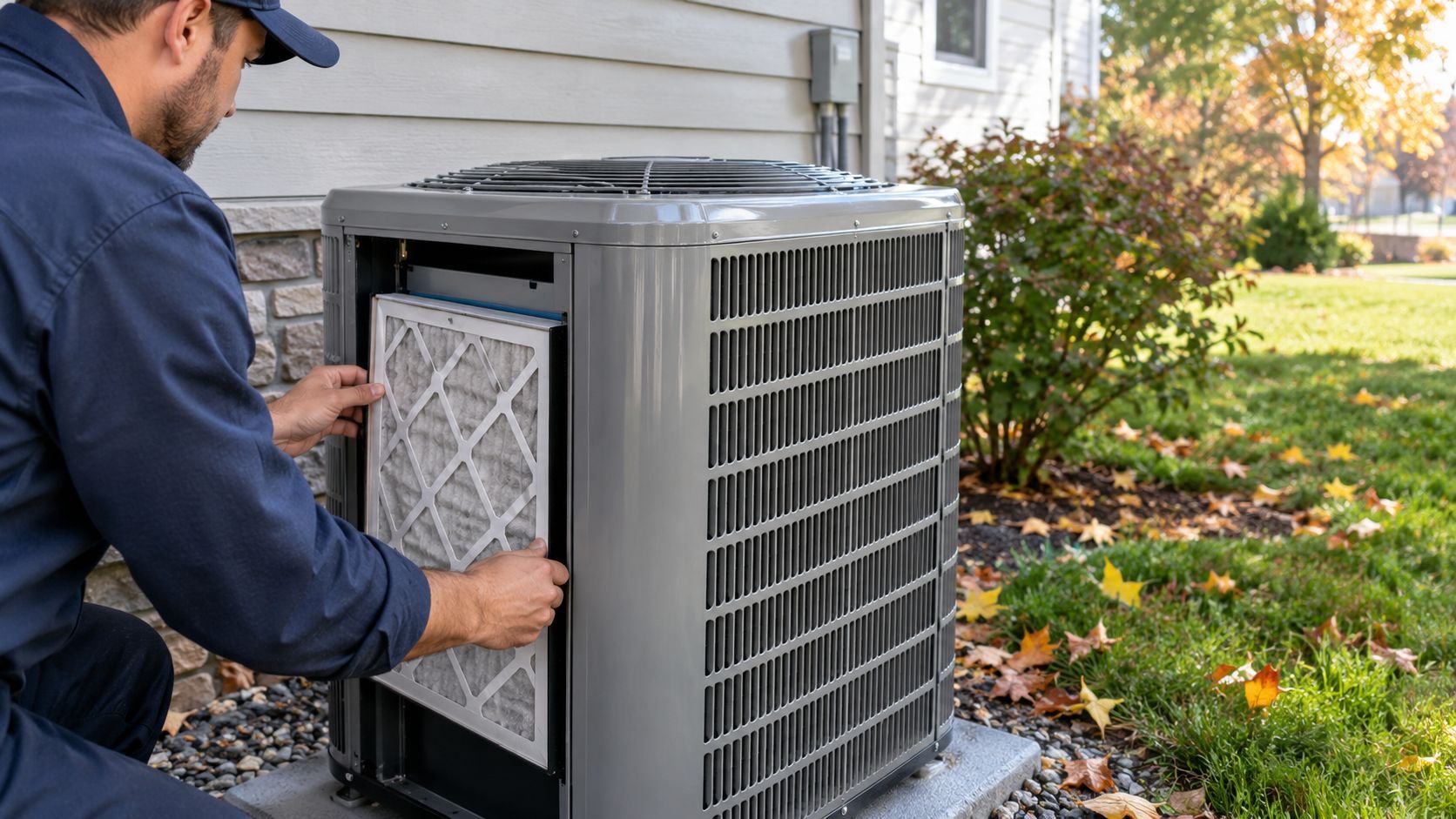
Homeowner vs. pro: Changing the filter and gently rinsing the outside of the outdoor coil with a garden hose (power off at the disconnect, never a pressure washer) is homeowner-level. Anything involving refrigerant requires EPA certification — and a low charge means a leak to find, not a refill to repeat. If you're picking a filter that won't choke airflow, see
What Is the Best HVAC Filter for Allergies and Pollen? and
How Often Should I Change My HVAC Filter During Pollen Season?
3. The House Is Letting in More Heat Than It Should
What it is. The building envelope — attic insulation, air sealing, windows, and the crawlspace — allowing more heat and humid outdoor air into the house than necessary.
Why it drives the bill. Every BTU that gets in has to be removed, and every BTU removed costs run time. A leaky house doesn't feel like a specific defect; it just feels like a house that "uses a lot of electricity." Thin or gapped attic insulation lets the day's roof heat radiate down. Air leakage at top plates, recessed lights, chases, and the crawlspace band joist drags in hot, humid outdoor air continuously. Unshaded west-facing glass adds a large solar load through the afternoon. And in a vented crawlspace, humid outdoor air comes up through the floor system, adding a moisture load the AC then has to remove.
What should be measured or checked:
- A blower door test for whole-home air leakage (CFM50 / ACH50) — the standard way to put a number on "how leaky."
- Attic insulation depth, coverage, and gaps, plus whether attic air sealing was ever done underneath it.
- Thermal imaging on ceilings and walls during peak afternoon heat to find missing or compressed insulation.
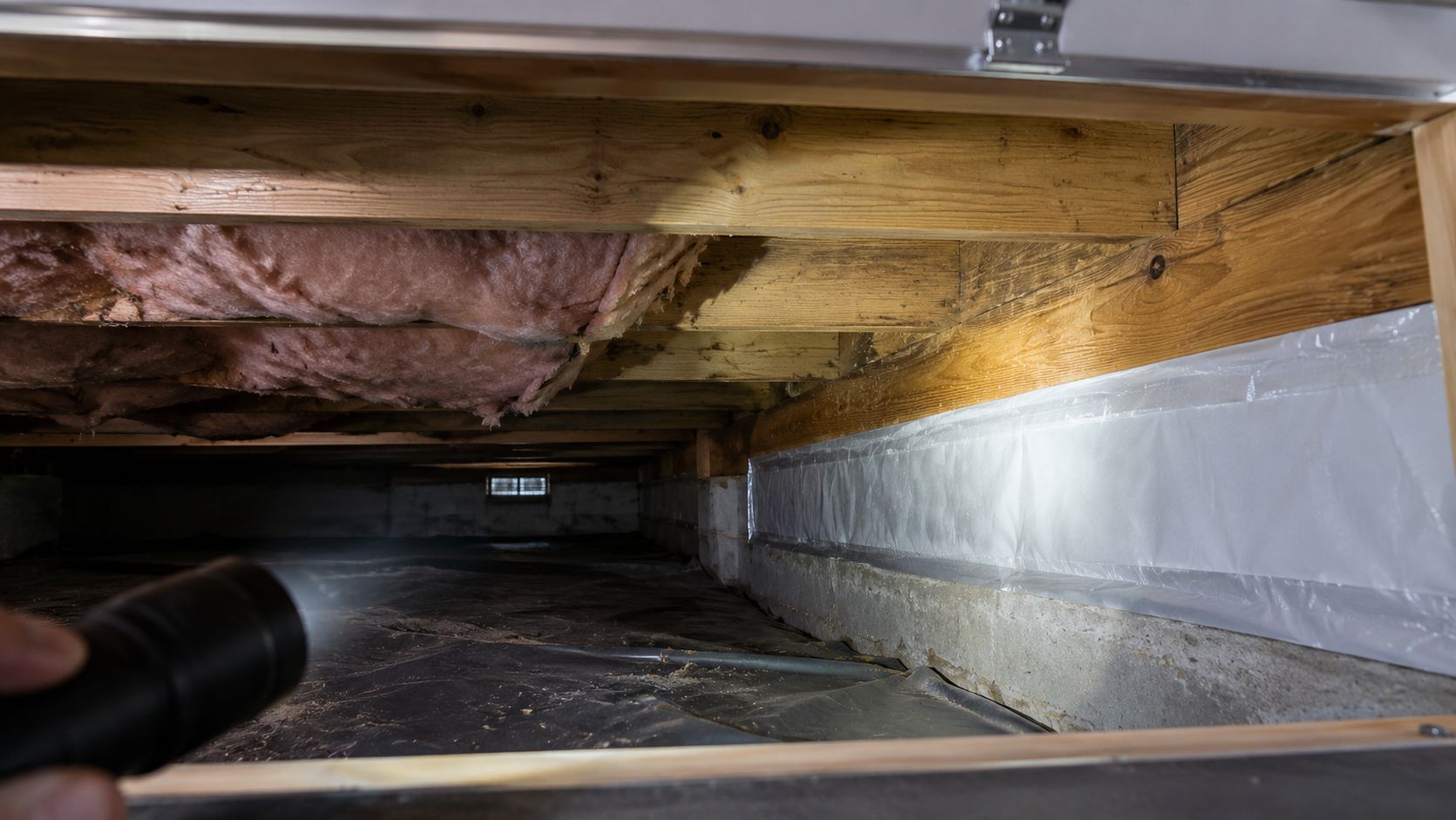
- Crawlspace condition and humidity — ground cover, vents, standing water, insulation falling down.
- Window orientation and shading on the west and southwest sides.
More likely vs. less likely. More likely in homes built before roughly 2000, homes with vented crawlspaces, and homes with large unshaded glass. Less likely in a tight, well-insulated, tested home.
Homeowner vs. pro:
Adding blinds or exterior shade on west glass is a real homeowner-level help. Measuring air leakage, air sealing, insulating, and crawlspace work are pro scopes — and unlike equipment, they reduce the load permanently. For the crawlspace question specifically, see
Vented vs. Encapsulated Crawl Spaces in Alabama.
4. You're Paying to Remove Water, Not Just Heat
What it is. A heavy latent (moisture) load — outdoor humidity infiltrating the house, moisture rising from a damp crawlspace, or a system whose run time is being cut short by oversized equipment.
Why it drives the bill. Your air conditioner spends its capacity on two jobs: dropping temperature (sensible) and wringing out water (latent). Moisture removal is real work that consumes real capacity, and it doesn't move the thermostat at all. So a house with a heavy moisture load runs its system harder for a thermostat reading that looks identical to a drier house's. You're paying for dehumidification whether you asked for it or not.
There's a related trap:
an oversized system. It satisfies the thermostat quickly, shuts off, and never runs long enough to pull much moisture out. The house ends up cool but damp, occupants nudge the thermostat down to feel comfortable, and the lower setpoint drives more run time. In that scenario a "bigger, more efficient" system can actually raise the bill. We wrote about that dynamic in
Why Your North Alabama Home Still Feels Humid With the AC Running and What Should Indoor Humidity Be in a North Alabama Home?.
What should be measured or checked:
- Indoor relative humidity, logged over days rather than spot-checked. Roughly 45–55% RH is the target range in cooling season.
- Crawlspace relative humidity and wood moisture content.
- Run-time and cycling data from the thermostat — short, frequent cycles suggest oversizing.
- A Manual J load calculation to compare the home's actual load to the installed capacity.
More likely vs. less likely. More likely if the house feels sticky at a normal setpoint, if anyone has been running the thermostat at 68–70°F to feel comfortable, or if there's a vented crawlspace under the floor. Less likely in a home holding 45–55% RH comfortably at 74–75°F.
Homeowner vs. pro: A $20 hygrometer in the main living area is a genuinely useful homeowner check, and one of the few numbers we ask homeowners to gather before we arrive. Load calculations, dehumidification strategy, and equipment decisions are pro territory — see
Is a Whole-Home Dehumidifier Worth It in North Alabama?
5. Something Else in the House Is Driving the Draw
What it is. A non-HVAC electrical load that grew without anyone noticing.
Why it matters. We include this because it's honest, and because we've been called out for "HVAC problems" that turned out to be a water heater. Common culprits: a failed electric water heater element or thermostat causing the tank to heat continuously; a pool pump running long hours; an EV charger added recently; a portable dehumidifier running around the clock in a basement or crawlspace; a second refrigerator or freezer in a hot garage; or a heat pump stuck bringing on electric backup heat because of a control or defrost board fault (yes, this can happen in cooling season with a stuck reversing valve or miswired strip heat, and it is expensive).
What should be measured or checked:
- Interval usage data from your utility, if available — hourly or daily kWh will often show whether the load is round-the-clock (water heater, pool pump) or tracks the afternoon heat (HVAC).
- A clamp meter reading at the panel on individual circuits.
- Confirmation that electric strip heat is not energizing during cooling — a straightforward check for a technician.
More likely vs. less likely. More likely if the bill jumped suddenly rather than climbing gradually, if the increase shows up overnight as well as in the afternoon, or if anything in the house changed recently. Less likely if the increase tracks outdoor temperature closely.
Homeowner vs. pro: Pulling your interval usage data is homeowner-level and often revealing. Panel-level measurement is pro work.
6. Equipment or Controls That Were Never Set Up Correctly
What it is. A system that was installed but never commissioned — blower speed left on a default tap, staging configured wrong, the fan left in "on" instead of "auto," a variable-speed system running with factory defaults that don't match the house.
Why it drives the bill. Leaving the fan in continuous "on" is the simplest example: the blower runs 24 hours a day instead of only during cooling calls, and in a humid climate it can also re-evaporate moisture off the coil back into the house between cycles — so you pay for the fan and undo some of your dehumidification. On the equipment side, a variable-speed system set up on defaults may never do the thing you paid a premium for.
This connects to a distinction most homeowners are never told about: variable-speed systems split into communicating and non-communicating types. A non-communicating system (many mini splits fall here) has no humidity input at all — it maximizes run time against temperature only, which sometimes helps humidity and sometimes hurts it. A communicating system can read indoor humidity and run a genuine dehumidification mode, but only when it's actually configured to. Paying for premium equipment and running it on defaults is a common way to end up with high bills and mediocre comfort. Our full take is in Is Variable-Speed HVAC Better for Humidity Control?
What should be measured or checked:
- Thermostat fan setting — "auto" is correct for most homes in cooling season.
- Blower speed tap / delivered CFM versus the equipment's design airflow (commonly around 350–400 CFM per ton for cooling).
- Staging and setup parameters on communicating equipment, including any dehumidification settings.
- Commissioning documentation from the original install — static pressure, airflow, charge, evacuation records.
More likely vs. less likely. More likely if the system was installed as a quick changeout with no measurements taken, or if the bill has been high since the day the new system went in. Less likely if you have documented commissioning numbers.
Homeowner vs. pro: Switching the fan from "on" to "auto" is a five-second homeowner fix that occasionally makes a visible difference. Everything else here is setup work for a technician who measures.
Less Likely, but Worth Ruling Out
These are real, but they're further down the list — chase them after the six above:
- A weak run capacitor or a failing compressor drawing high amps while still cooling.
- A miswired or failing reversing valve on a heat pump causing inefficient operation.
- An aging system in genuine decline. Equipment does lose efficiency, but far more slowly than most sales conversations imply. "It's old" is a reason to test it, not a diagnosis on its own.
- A meter or billing error. Uncommon, but it happens, and utilities will re-read a meter if you ask.
Why Huntsville and North Alabama Homes See This So Often
Several things about our climate and housing stock make the "comfortable house, expensive bill" pattern especially common around Huntsville and Madison County:
- A long, hot, humid cooling season. Our summer design conditions put systems into near-continuous operation for months, not weeks. Any inefficiency that would be a rounding error in a milder climate gets multiplied by thousands of run-time hours here.
- A heavy latent load. Our summer air carries a lot of moisture. That means a meaningful share of every cooling dollar goes to removing water rather than lowering temperature — an invisible cost that never shows up on the thermostat.
- Ducts in the worst possible places. A huge share of North Alabama homes route ductwork through vented attics that exceed 130°F or through vented crawlspaces at high humidity. It's the default around here, and it's the default reason bills run high.
- Vented crawlspaces. Common across Marshall County and the older parts of Madison County, they pump humid outdoor air into the floor system all summer, adding load and moisture risk at the same time.
- A wide mix of housing eras. Huntsville's growth means everything from 1960s ranches with minimal air sealing to brand-new construction sits in the same neighborhoods. The older stock in particular tends to have real, findable envelope losses.
- Equipment sized by square footage instead of calculation. Rule-of-thumb sizing tends to produce oversized systems, which short-cycle, control humidity poorly, and push homeowners toward lower setpoints — more run time, higher bills, and a house that still feels damp.
None of this means a Huntsville home is destined for a punishing summer bill. Plenty of homes here run reasonably. It means the fundamentals — sealed and tested ducts, a correctly charged system with verified airflow, a reasonably tight and well-insulated envelope, and equipment sized to the actual load — matter more here than they would somewhere cooler and drier.
How a Good Contractor Should Diagnose a High Summer Bill
This is the part where homeowners get taken advantage of most often, because "your system is old and inefficient, you need a new one" is an easy sentence to say and an expensive one to act on. If a contractor walks in, looks at the data plate, and quotes replacement without measuring anything, you are being sold — not diagnosed.
A thorough investigation of a high summer bill should include, at minimum:
- Reading the bill properly first: kWh (not dollars) year over year, billing days, current rate schedule, and cooling degree days, so we're only chasing the unexplained portion.
- Interval usage data where the utility provides it, to separate round-the-clock loads from cooling loads.
- Static pressure at the air handler — target roughly 0.15"–0.30" WC, and a red flag above the equipment's rating.
- Delivered airflow (CFM), compared against design (commonly 350–400 CFM per ton in cooling).
- Temperature split across the coil, typically 18–22°F on a moderate day.
- Refrigerant superheat and subcooling measured at actual operating conditions, plus compressor and blower amp draw against nameplate.
- Duct leakage testing and register-versus-plenum temperature readings, to quantify how much conditioned air never reaches a room.
- A blower door test for whole-home air leakage, plus zonal pressure diagnostics to find where it's coming from.
- Attic and crawlspace inspection, including insulation coverage, duct insulation, and crawlspace moisture.
- Thermal imaging during peak afternoon heat.
- Logged indoor temperature and relative humidity over several days, plus run-time data from the thermostat.
- A Manual J load calculation — before, not after, any conversation about equipment size.
For a single, well-defined equipment problem — a filthy condenser, a low charge from a leak, a blower fighting a restriction — that's an HVAC repair visit, and you should expect a clear explanation and a fixed number.
When the bill is high for reasons that stack — some duct leakage, some lost capacity, some envelope load — a single repair won't answer it. That's what our Home Comfort Consult is for: it treats the house as one system (equipment, airflow, ducts, envelope, crawlspace) and produces a written, ranked plan with the measurements behind it, so you can spend money in the order that actually moves the number. If humidity, dust, or odors are part of the picture, the Home Air Health Study adds a week of continuous indoor air monitoring on top of the building assessment.
One more note on efficiency upgrades: there may be local, state, or federal rebates or incentives available for insulation, air sealing, or high-efficiency equipment. Programs change constantly, so check what's currently offered through your utility and TVA rather than relying on a contractor's memory — and be cautious of anyone who quotes an incentive as a certainty in a sales pitch.
When to Act — and What Happens If You Wait
An expensive bill on a comfortable house is not an emergency. But most of the causes above don't hold still:
- Duct leakage tends to get worse, not better. Mastic-free tape joints continue to release, flex runs sag and crush further, and the amount of conditioned air going into the attic grows each season.
- A slow refrigerant leak keeps leaking. Today's modest capacity loss becomes a larger one next summer, and the compressor spends the entire time running hotter than it was designed to — which is how a leak eventually turns into a compressor replacement.
- A system running long hours at elevated pressure is a system under stress. Capacitors, contactors, and compressors fail on the hottest days of the year, which is exactly when you'd least like them to.
- Moisture problems compound. When indoor relative humidity sits above roughly 60% — common in homes with a heavy latent load and a vented crawlspace — conditions where mold growth becomes possible start to appear on cooler surfaces, and the same humid air can carry musty odors into the living space. "Possible" is not "certain," and we don't make claims about anyone's health here — but moisture is a variable that can be measured, and it's easier to manage before it becomes visible.
- The wrong fix is its own expense. Replacing perfectly serviceable equipment to solve a duct-leakage problem spends five figures and leaves the actual cause in place — and an oversized replacement can trade an expensive bill for an expensive bill plus a humidity problem.
And yes: fixing the real cause generally lowers the bill. We put that at the end deliberately. We don't promise a percentage, because the honest answer depends entirely on which causes your house has and how big they are. The reliable reasons to do this work are a house that's comfortable and dry, equipment that isn't running itself to death, and a moisture situation you have control over. A lower bill is a legitimate side benefit — just not a number anyone should quote you before they've measured your house.
The sensible sequence for most homeowners: do the free bill analysis, handle the homeowner-level basics (filter, clear the outdoor unit, fan on "auto," open the registers, shade the west glass), and if the unexplained gap is still there, get a measured diagnosis before anyone quotes equipment. Many of these problems also stay small with regular documented maintenance, which is the point of a
maintenance membership — catching a slipping charge or a fouled coil while it's still a $200 problem instead of a $2,000 summer.
Getting a Real Answer Instead of a Guess
If you've compared kilowatt-hours year over year, accounted for the billing days and the weather, changed the filter, cleared the outdoor unit, and your Huntsville-area home is still using noticeably more electricity than it should for the comfort you're getting, the next step is measurement — not a replacement quote.
An HVAC repair visit is the right call for a single, well-defined equipment failure, and you'll get a clear diagnosis and a fixed price. If the bill is high because several things are stacking — duct losses, a bit of lost capacity, an envelope that leaks more than it should — the Home Comfort Consult is the better path: full diagnostics on the house as a system, and a written, ranked plan with the numbers behind every recommendation. If humidity, musty odors, or dust are part of the story, the Home Air Health Study adds a week of indoor air monitoring and carries our Breathe-Easy Clarity Guarantee — if, at the end of the review, you don't feel clear on what's happening in your home and what to do next, you don't pay.
No scare tactics, no automatic upsell to a bigger unit, no percentages promised before anything is measured. Just a clear picture of where your summer electricity is actually going, and a plan you can act on in whatever order makes sense for your budget.
Schedule an HVAC Repair Visit →
Learn about the Home Comfort Consult →
Frequently Asked Questions
Why is my electric bill so high in the summer if my AC is working fine?
Because a high bill measures how hard your system had to work, not whether it succeeded. A properly functioning air conditioner will keep your house at 72°F whether it takes six hours a day or sixteen — you feel the result, not the run time. The extra hours usually come from cooled air lost through leaky ducts in a hot attic or crawlspace, a system that quietly lost capacity (dirty outdoor coil, low refrigerant, restricted airflow), heat and humidity entering through a leaky building envelope, or a heavy moisture load that consumes capacity without moving the thermostat. Before diagnosing any of that, though, compare kilowatt-hours year over year and check your billing days and rate schedule — some of the increase is often price and weather, not your house.
How much of my summer electric bill should the air conditioner be?
In North Alabama's climate, cooling is typically the largest single line item in a summer bill for an all-electric home — often somewhere around a third to a half of summer usage, though it varies a lot with the house, the equipment, and how many other electric loads you have. That's why the useful comparison isn't "what percentage is my AC" but "how does this July compare to last July in kilowatt-hours, adjusted for weather and billing days." If your utility offers hourly or daily interval data, that's even better: cooling usage rises and falls with the afternoon heat, while a stuck water heater or a pool pump shows up as a flat, round-the-clock load.
Will a new, high-efficiency air conditioner fix my high summer bill?
Sometimes — but it's the most expensive first move, and it fails when the real cause is outside the equipment. If you're losing 25% of your conditioned air into the attic through leaky ducts, a new system loses the same 25%, just at a higher purchase price. If the house is leaky and under-insulated, new equipment still has to remove all that extra heat. And if the replacement is oversized (a very common outcome when systems are sized by square footage rather than a Manual J load calculation), it can short-cycle, control humidity poorly, and push you toward a lower thermostat setting that increases run time. New equipment is genuinely the right answer sometimes; it should just be the conclusion of a measured diagnosis, not the opening offer.
Does turning my thermostat up while I'm at work actually save money?
Generally yes, in the sense that a warmer house gains heat more slowly, so the system runs less while you're gone. But the benefit is smaller in a humid climate than people expect, and it comes with a tradeoff: letting the house drift up several degrees also lets indoor humidity climb, and the system then has to pull that moisture back out when you return. In our climate, a modest setback of a few degrees is reasonable; a deep setback of eight or ten degrees can leave you with a house that's technically at temperature but feels sticky, and the recovery run can eat much of the savings. If your house already struggles with humidity, keeping a steadier setpoint is usually the more comfortable choice — see What Should Indoor Humidity Be in a North Alabama Home?
My bill went up but my usage didn't. What happened?
That's a pricing question, not an HVAC question, and it's worth confirming before you spend anything on your system. Three things commonly explain it: the billing period was longer than the last one (cycles range from about 28 to 34 days); the TVA fuel cost adjustment, which local utilities pass through and which changes monthly, moved up; or your usage crossed into a higher rate tier, since residential schedules in our area bill kilowatt-hours above a monthly threshold at a higher rate. That last one is why a moderate increase in usage can produce a disproportionate increase in dollars. Check your provider's current residential rate schedule, and if the numbers still don't add up, ask for a meter re-read.
About the Author
Tanner Dickerson is the owner of Dickerson Services, a North Alabama HVAC, home performance, and crawl space encapsulation company serving Huntsville, Arab, Guntersville, Albertville, and the surrounding area. He works with homeowners on complex comfort, humidity, and indoor air quality problems by treating the whole house as a system — HVAC, ducts, crawlspace, air sealing, insulation, and ventilation together.
Summary
If your summer electric bill is high in a Huntsville, Alabama home even though the air conditioner is cooling normally, the bill is measuring run time rather than failure — after ruling out longer billing periods, hotter weather, tiered residential rates, and the monthly TVA fuel cost adjustment, the most common causes are conditioned air lost through leaky ducts in a 130°F attic or vented crawlspace, a system quietly running at reduced capacity from a dirty condenser coil, low refrigerant charge, or restricted airflow, excess heat and humidity entering through a leaky building envelope, and a heavy latent load that consumes cooling capacity without moving the thermostat, all of which should be confirmed with static pressure, airflow, duct leakage, blower door, and humidity measurements before anyone recommends replacing equipment.
Climate and Plant Selection
Selecting appropriate vegetation is crucial for the success of green roofs in the Mid-Atlantic region. Native and drought-tolerant plants are ideal, ensuring survival during dry spells and high-intensity storms. Sedums, grasses, and other hardy species maintain runoff retention and resist seasonal stress, supporting regulatory compliance throughout the year.
Share this article