
Why Does My House Still Feel Sticky at 72°F?
July 10, 2026
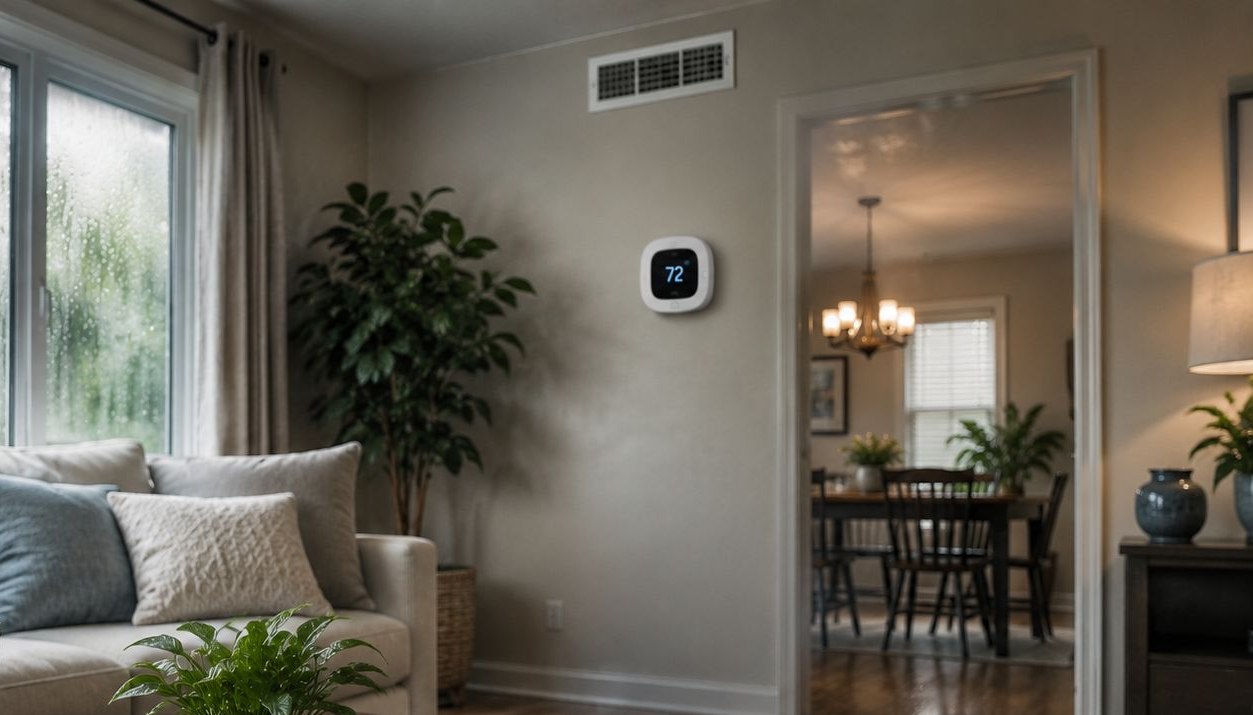
What it is. A thermostat mounted where it doesn't sense the true average temperature of the home — in direct afternoon sun, on an exterior wall, near a sunny window, or above a heat-producing appliance.
Why it causes this symptom. A thermostat only knows the temperature at its own spot on the wall. If the afternoon sun lands on it, or it sits on a wall that heat-soaks late in the day, it reads warmer than the rest of the house and keeps calling for cooling it may never feel "satisfied" delivering — so the system runs and runs without ever clicking off. It can also work the other way, where a poorly placed thermostat shuts the system off early and lets distant rooms drift. Either way, the thermostat's afternoon reading is part of the story even when the equipment is healthy.
What should be measured or checked:
- A second thermometer placed in the main living area, compared against what the thermostat reports.
- Whether sun ever falls directly on the thermostat during the afternoon.
- Thermostat location relative to supply registers, exterior walls, and appliances.
More likely vs. less likely. More likely if the thermostat is on a sunny wall, near a window, or in a spot that clearly feels different from the rest of the house. Less likely if it sits on a shaded interior wall and matches a handheld thermometer.
Homeowner vs. pro:
Comparing the thermostat to a separate thermometer is an easy homeowner check. Relocating a thermostat is a small pro job, and worth doing only after the bigger capacity and load questions are ruled out.
You set the thermostat to 72. You can hear the AC running. By every number on the wall, the house should feel comfortable — and yet the air feels close and damp. Your skin feels tacky. The sheets never feel crisp. A glass of iced tea sweats in minutes, and so do you.
If that's your home here in Guntersville or anywhere across North Alabama, the first thing to know is that your AC may be doing exactly what you told it to. The problem is that the thermostat is only measuring half of what makes a room feel comfortable. Temperature is one half. Moisture is the other — and at 72°F, moisture is almost always the half that's making you feel sticky. Once you understand why the number and the feeling don't match, the fix usually comes into focus.
Quick Answer
What the symptom usually means: Your thermostat is hitting its temperature target, but the air in your home is holding too much moisture. "Sticky at 72" is a humidity problem, not a temperature problem. Indoor relative humidity (RH) is likely sitting above 55–60% when it should be closer to 45–55% in summer.
Why it happens (in plain language):
- Most thermostats only measure air temperature, so they shut the system off once the air is cool — even if the air is still damp.
- An AC cools temperature faster than it removes moisture, so an oversized or short-cycling system can reach 72°F long before it has wrung enough water out of the air.
- Moisture sources you can't see — a damp crawlspace, leaky ducts, humid outdoor air leaking in — keep refilling the air faster than the system can dry it.
Safe homeowner checks:
- Put a $15–$25 hygrometer in your main living area. If it reads above 55–60% RH while the house sits at 72°F, the stickiness is real and measurable, not just a feeling.
- Set the thermostat fan to "AUTO," not "ON." Running the fan constantly re-evaporates moisture off the coil between cooling cycles.
- Time a cooling cycle. If the AC runs only 5–8 minutes and shuts off, short cycling may be leaving moisture behind.
When to call a pro: If indoor RH stays above 55–60% for a full day with the AC working, if you see condensation on registers or windows, or if you notice a musty smell from the crawlspace. A thorough diagnostic should measure RH (and dew point) in several rooms, the temperature split across the coil, system run time, static pressure, and crawlspace humidity — not just glance at the thermostat.
What This Article Is About — and What It Is Not
This post is for homeowners whose AC is running and is holding temperature — the thermostat genuinely reads about 72°F — but the house still feels sticky, damp, or heavy. The goal is to explain why a correct temperature reading can still feel uncomfortable, and what a careful diagnosis looks like.
This is not:
- An article about an AC that won't turn on, won't cool, or can't hold its setpoint. If your house is drifting up to 78°F on a hot afternoon, that's a capacity or mechanical problem — a different conversation.
- A claim that any single gadget will fix the feeling. The cause matters, and the cause has to be measured.
- A guide to a brief muggy spell. A heavy hour right after a summer thunderstorm isn't the same as a house that feels sticky all season.
If your question is more specifically "why does my house feel humid even with the AC running," the mechanical side of that — oversizing, duct leakage, coil and refrigerant issues — is covered in depth in
Why Your North Alabama Home Still Feels Humid With the AC Running. This article is the companion piece that explains the concept underneath it: why 72 and "comfortable" aren't the same thing.
The Key Idea: 72°F Is a Temperature, Not a Comfort Reading
These are the patterns we see most often on "runs all afternoon but won't reach setpoint" calls across Guntersville, Albertville, Arab, and the greater Marshall County area — roughly in order of how frequently they turn out to be the real culprit. Most homes that struggle in the afternoon have two of these stacked together: a little lost capacity and a little too much heat gain, which together push the margin from "comfortable" to "falling behind."
Your thermostat measures heat, not moisture
Most home thermostats measure dry-bulb air temperature — plain air heat — and nothing else. When the air near the thermostat reaches 72°F, the thermostat considers its job done and tells the system to stop, regardless of how much water is in that air. So you can absolutely have a home sitting at a perfect 72°F that is also carrying far too much moisture. The thermostat has no way to "see" the problem, which is exactly why the number on the wall can look right while the room feels wrong.
Why high humidity makes 72°F feel sticky
Your body sheds a large share of its heat by evaporating moisture off your skin. That evaporation is a cooling process — it's how sweating keeps you comfortable, often before you even notice you're sweating. When the surrounding air is already loaded with water, that evaporation slows down. The heat can't leave your skin as easily, so you feel warm, damp, and sticky even though a thermometer in the room reads a mild 72°F.
This is the same reason a 72°F day with dry air feels pleasant, while a 72°F morning in a steamy bathroom feels oppressive. The air temperature is identical. The moisture is not. Your skin is responding to the moisture.
Dew point — the number that actually tracks "stickiness"
Relative humidity tells you how full the air is relative to what it could hold. Dew point tells you how much water is actually in the air — and it lines up much more closely with what your body feels. As a rough guide, a dew point in the low 50s°F feels comfortable and dry; the low 60s starts to feel sticky; the mid-to-upper 60s feels muggy and oppressive.
Here's why that matters at 72°F. At 72°F:
- 45–50% RH puts the dew point around 49–52°F — dry and comfortable.
- 60% RH puts the dew point near 57°F — starting to feel sticky.
- 65% RH puts the dew point close to 60°F — noticeably sticky, the same range that feels muggy outdoors.
So two homes can both read 72°F on the thermostat and feel completely different. The dry one sits near 50% RH. The sticky one has drifted to 60–65%, and your skin notices long before the thermostat does. The temperature didn't change — the moisture did. That gap is the entire reason this article exists.
Why Your House Can Hit 72°F and Still Feel Sticky, Ranked
These are the reasons we see most often when a North Alabama home holds temperature but still feels damp — roughly in order of how frequently they turn out to be the real driver. Most sticky homes have more than one stacked together.
1. The Air Is Holding Too Much Water (High Indoor Humidity)
What it is. This is the headline cause, and the others below are mostly different routes to it: the relative humidity inside your home is simply too high for the temperature. In our climate, comfortable summer indoor RH lands around 45–55%. Sticky homes are usually sitting at 60% or above.
Why it causes the symptom. As covered above, high RH slows the evaporation your body relies on to feel cool. At 72°F and 50% RH you feel fine; at 72°F and 65% RH you feel sticky — same temperature, more water. The thermostat is satisfied either way.
What should be measured or checked:
- Indoor RH, ideally logged over a full day in two or three rooms rather than read once.
- Indoor dew point, which a good monitor will calculate, as a more reliable "stickiness" gauge.
- The setpoint relationship: is RH staying above 55–60% even while the home holds 72°F?
More likely vs less likely. This is the most likely explanation for "sticky at 72" by a wide margin. It's less likely to be the framing if your hygrometer reads 45–50% and the home still feels off — at that point you're looking at surface temperatures or air movement (cause 4) rather than moisture.
Homeowner vs pro: Measuring RH is a homeowner check. Figuring out why it's high — and which of the causes below is feeding it — is where measurement by a pro pays off. For the target ranges and why they matter, see What Should Indoor Humidity Be in a North Alabama Home?.
2. Your AC Reaches Temperature Before It Finishes Removing Moisture
What it is. An air conditioner does two jobs at once: it lowers temperature (sensible cooling) and it pulls water out of the air (latent cooling). Lowering temperature happens fast. Removing moisture takes sustained run time, because water only condenses out while air is moving across a cold, wet coil long enough to drain away.
Why it causes the symptom. If the system is oversized for the house, it cools the air to 72°F in just a few minutes and shuts off — long before the coil has run wet long enough to dehumidify. The temperature target is met; the moisture target never is. A thermostat fan left on "ON" makes it worse by blowing household air back over that wet coil between cycles and re-evaporating the moisture you just removed.
What should be measured or checked:
- Cycle length — healthy cooling cycles on a moderate day usually run 15–25 minutes, not 5–8.
- Temperature split across the coil, typically 18–22°F between return and supply air.
- Thermostat fan setting — it should be on "AUTO" in cooling season.
More likely vs less likely. More likely if the equipment was sized by square footage instead of a Manual J load calculation, if a previous contractor "rounded up to be safe," or if you can hear the system kicking on and off frequently. Less likely if the AC runs long, steady cycles and still can't keep up — that points toward a moisture load that's simply too big (causes 1 and 3).
Homeowner vs pro: You can time cycles and set the fan to "AUTO" yourself. Confirming oversizing and correcting it is pro work. The full mechanical breakdown — coil condition, refrigerant, airflow, sizing — lives in
Why Your North Alabama Home Still Feels Humid With the AC Running, and if you're weighing new equipment,
Is Variable-Speed HVAC Better for Humidity Control? explains why longer, slower run times dry a house better.
3. Hidden Moisture Sources Keep Refilling the Air
What it is. Even a healthy AC can lose the battle if water keeps pouring in from somewhere you can't see. The usual sources are a vented or damp crawlspace, leaky ducts running through a hot attic or humid crawlspace, and ordinary air leakage letting humid outdoor air seep in.
Why it causes the symptom. Warm outdoor air in a North Alabama summer carries a lot of water. When it enters a cool crawlspace, RH there can climb to 80–95%, and through duct leaks, plumbing penetrations, and natural stack effect, a meaningful share of that wet air ends up in your living space. You're effectively asking your AC to dehumidify the ground under your house — and the thermostat still only reads the air temperature, so it shuts off as soon as that's satisfied.
What should be measured or checked:
- Crawlspace RH, logged over several days (a healthy target is below 60%).
- Duct leakage and a visual inspection of duct joints and insulation in attics and crawlspaces.
- Whole-home air leakage via a blower door test, plus a check that bath and dryer vents actually exit the home.
More likely vs less likely. More likely in older homes with vented crawlspaces, exposed dirt, or ducts routed through unconditioned space — common across North Alabama. Less likely in a newer, tightly built home with an encapsulated crawlspace and conditioned-space ductwork.
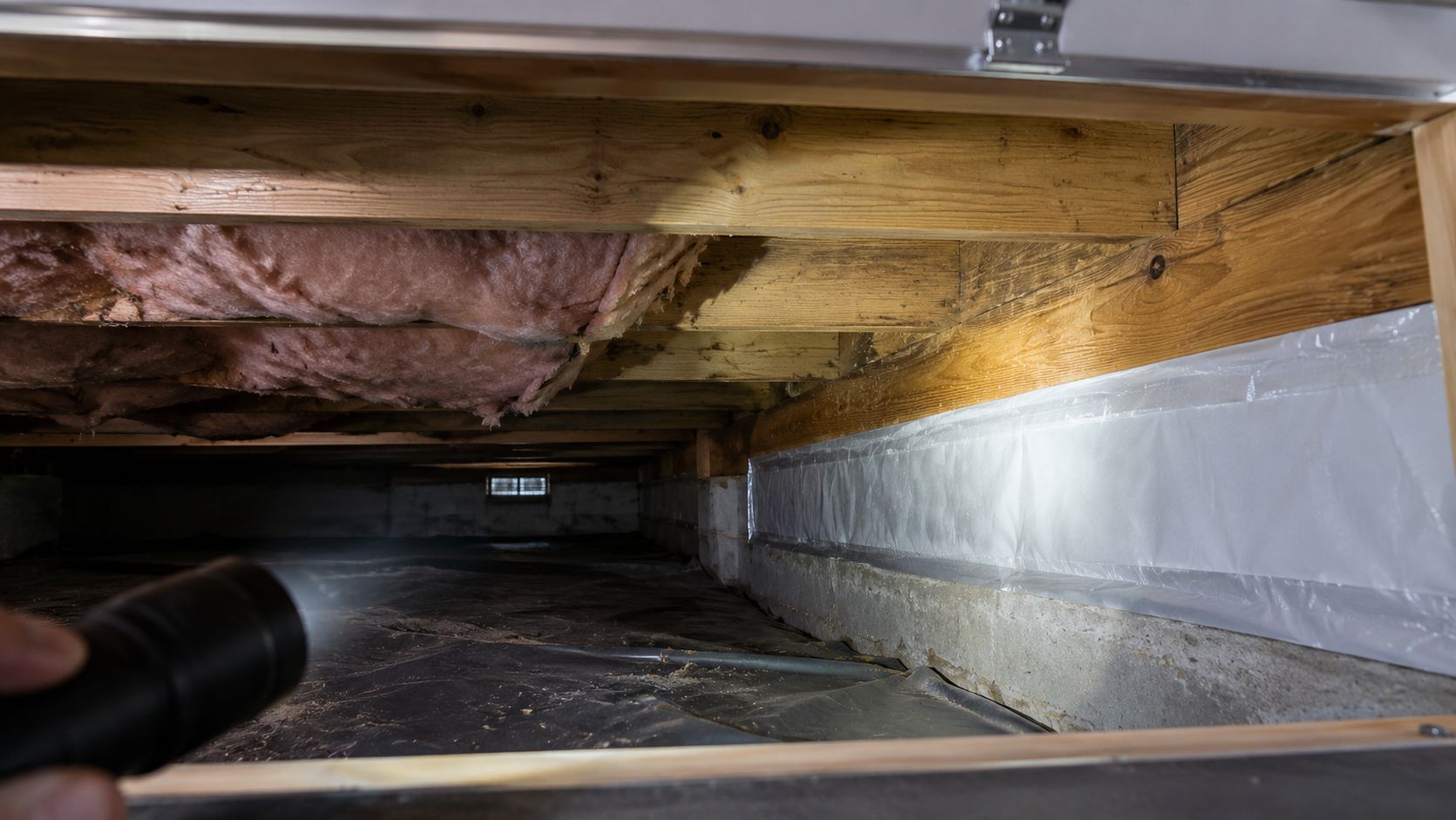
Homeowner vs pro: A flashlight walk of the crawlspace tells you a lot. Quantifying the moisture and designing a fix — encapsulation, drainage, dehumidification — is pro work, addressed directly by our
Crawlspace Encapsulation and Mold Risk & Moisture Control services.
4. Warm Surfaces and Still Air Make 72°F Feel Heavier (Possible)
What it is. Your comfort also responds to the temperature of the surfaces around you and to how much the air is moving. A room with hot walls, hot ceilings under an attic, or large sun-exposed windows radiates heat at you even when the air is 72°F. Add stagnant, motionless air and the room can feel close and heavy.
Why it causes the symptom. Still, warm-surfaced rooms reduce the body's ability to give off heat, which can read as "stuffy" or "heavy" and gets easily mistaken for stickiness. This is usually a secondary contributor layered on top of a real humidity problem rather than the whole story — but in a sunny upstairs room or a bonus room over a garage, it can be a real part of the feeling.
What should be measured or checked:
- Room-by-room temperature and airflow, to find rooms that lag the rest of the house.
- Surface and attic conditions — insulation, sun exposure, and supply airflow to the problem room.
More likely vs less likely. More likely in upstairs rooms, additions, and rooms with lots of west-facing glass. Less likely to be the main cause if your hygrometer is clearly reading high RH — in that case, moisture is the lead and this is a side note.
Homeowner vs pro: You can notice which rooms feel worse and when. Balancing airflow and correcting it is pro work;
Why Is the Upstairs Hotter Than the Downstairs in My North Alabama Home? covers this comfort-balancing side in detail.
5. The 72 on the Wall May Not Be the 72 You're Standing In (Possible)
What it is. A thermostat only knows the conditions at its own location. If it's mounted on an interior hallway wall, in a cool draft, or far from the rooms you actually live in, the "72" it reports may not match where you're sitting.
Why it causes the symptom. This won't create stickiness on its own — humidity does that — but it can widen the gap between what the thermostat claims and what you feel, especially in a multi-level home where one floor runs warmer and damper than another.
What should be measured or checked:
- A second thermometer/hygrometer in the room that feels worst, compared against the thermostat reading.
- Thermostat location relative to vents, doors, and the home's real living spaces.
More likely vs less likely. More likely to be a factor in multi-level homes or where the thermostat sits in an unrepresentative spot. Less likely to be the core issue, which is almost always moisture.
Homeowner vs pro: Comparing readings in different rooms is an easy homeowner check. Interpreting a whole-home pattern is where a diagnostic helps.
Guntersville & North Alabama: Why "Sticky at 72" Is So Common Here
This complaint shows up everywhere in summer, but a few local realities make it especially common around Guntersville and across Marshall County:
- High outdoor dew points for months at a time. North Alabama summers run humid, and the outdoor air often holds enough moisture that any of it leaking inside raises your indoor load. Near Lake Guntersville, the effect is stronger still — a large body of open water keeps near-shore dew points elevated and nights warmer and foggier, so homes get less overnight drying. We cover that specific situation in Why Homes Near Lake Guntersville Have Worse Humidity Problems.
- Vented crawlspaces are still the norm in many older homes. They were standard for their era, but in our climate they tend to act as a moisture source rather than relief, feeding damp air upward into the living space.
- Ducts routed through attics and crawlspaces. That puts the most moisture-sensitive part of the system in the worst part of the building, where leaks pull in hot, humid air.
- Shoulder-season mugginess. In spring and fall, the outdoor air is heavy but mild, so the AC barely needs to run for temperature. The house easily holds 72°F while humidity quietly climbs — the textbook setup for "cool but sticky."
- Equipment sized by rule of thumb. When a system was sized by square footage rather than a load calculation, oversizing — and the short cycling that leaves moisture behind — is the usual result.
None of this means a Guntersville home is stuck feeling damp. Plenty of homes here are comfortable and dry. It does mean the design and condition of the house matter more in our climate than they would somewhere drier, and that small problems with ducts, crawlspaces, or equipment sizing show up faster as that sticky feeling at 72.
How a Good Contractor Should Diagnose "Cool but Sticky"
Anyone can guess. Good diagnosis is measured. If a contractor walks in, glances at the unit, and immediately quotes a dehumidifier or a new system without testing anything, that's a flag — they're treating a symptom they haven't actually located.
A thorough diagnostic for a "holds 72 but feels sticky" complaint should include, at minimum:
- Indoor RH and dew point read at the thermostat and in two to four representative rooms, ideally logged across a full day rather than spot-checked.
- Run-time observation — actually watching how long the system runs and how often it cycles.
- Temperature split across the coil (return vs. supply), typically 18–22°F on a moderate day.
- Static pressure at the air handler, supply and return.
- Crawlspace inspection — RH reading, vapor barrier condition, signs of standing water, musty odor, and wood moisture where relevant.
- Duct inspection for leaks, crushed flex, missing insulation, and disconnected joints in attics and crawlspaces.
- Thermostat fan setting and any installed humidity controls.
For a home where the stickiness has been a long-running problem, or where several of the causes above appear to overlap, a Home Comfort Consult is the more thorough path. It treats the house as a system — load calculation, duct evaluation, blower door, crawlspace assessment, and a written plan that ranks fixes by impact. If indoor air quality and moisture are the bigger worry — musty odors, mold concerns, or family members feeling worse indoors — the Home Air Health Study layers a week of continuous indoor air monitoring on top of the building assessment, so the answer is based on what your air actually does across days and weather, not a single visit.
The goal either way is the same: stop guessing, start measuring, and only spend money on the work the data shows will actually move the needle.
When to Act — and What Happens If You Wait
A house that feels sticky at 72 isn't an emergency. It also isn't a stable condition, and a few realistic consequences are worth knowing about:
- Comfort and your thermostat habits. Sticky air feels warmer than it is, so many homeowners with a humidity problem keep dropping the thermostat — to 70, then 68 — chasing a comfort that lower temperature alone can't deliver. That means longer run times and more wear on the equipment, when the real issue was moisture all along.
- Moisture and mold risk. When indoor RH stays above 60% for long stretches, conditions where mold growth becomes possible can develop on cooler surfaces — behind furniture on exterior walls, in closets, around supply registers, and in the crawlspace. "Possible" is not "certain," but the risk rises the longer a home sits damp.
- Equipment stress. A system that short-cycles against a humidity load it can't resolve wears faster than one matched correctly to the home.
- Air quality concerns. Damp environments can support dust mites and contribute to musty odors, and some people who are sensitive to indoor air report feeling worse in a consistently humid home. We don't promise that managing humidity will resolve any health symptom — that's a medical question — but moisture is one variable that can be measured and controlled.
There can also be a modest secondary benefit once humidity is under control: a drier home feels cooler at the same temperature, so most homeowners can raise the thermostat a degree or two without losing comfort, which tends to ease run times. We mention this last on purpose. It's a real benefit, but it isn't the reason to fix the problem — comfort and moisture control are.
Ready to Find Out Why 72 Still Feels Sticky?
If your Guntersville-area home holds its temperature but still feels damp, and you'd like to actually understand why — not just have someone swap parts — the next step is a measured diagnostic.
For a single, well-defined issue, a standard HVAC service visit is often enough. For a longer-running comfort problem with several suspected causes, the Home Comfort Consult is built for exactly this kind of investigation. If air quality and moisture are the larger concern, the Home Air Health Study adds a week of continuous indoor air monitoring so the answer is based on data, not a single afternoon.
The Study also carries our Breathe-Easy Clarity Guarantee: if at the end of the review you don't feel clear on what's happening in your home and what your next steps are, you don't pay. Our job is to leave you informed, not confused.
Schedule a Home Comfort Consult →
Learn about the Home Air Health Study →
Frequently Asked Questions
Why does my house feel sticky even though the thermostat says 72?
Because the thermostat measures only air temperature, while your comfort depends on temperature and humidity together. At 72°F with high humidity, the air is too full of moisture for sweat to evaporate off your skin efficiently, so you feel warm and sticky even though the temperature is mild. The thermostat reaches its target and shuts the system off, with no idea the air is still damp. In most cases, "sticky at 72" means your indoor relative humidity has drifted above 55–60% when it should be closer to 45–55%.
What should my indoor humidity be at 72 degrees?
In a North Alabama summer, aim for roughly 45–55% relative humidity in the living space, with the crawlspace below 60% year-round. At 72°F, holding around 50% RH keeps the dew point near a comfortable 52°F. Let RH climb to 65% and the dew point rises to about 60°F — the same range that feels muggy outdoors — which is why the house starts to feel sticky without the temperature changing. Our companion article What Should Indoor Humidity Be in a North Alabama Home? explains the ranges in more detail.
If I just lower the thermostat below 72, will the stickiness go away?
Usually not — and it can make things worse. Lowering the setpoint chases a temperature problem you don't have. It may run the AC a little longer and remove a bit more moisture as a side effect, but it also means a colder, often still-damp house and higher run times. The durable fix is to lower the humidity itself, whether that's correcting an oversized or short-cycling system, sealing duct and crawlspace moisture sources, or adding properly sized dehumidification — not turning the dial down.
Is "sticky at 72" worse near Lake Guntersville?
Often, yes. Homes near the lake sit in air with higher dew points, and warm, foggy nights give them less overnight drying than an inland lot a few miles up the hill. That raises the moisture load the home has to manage, so the same equipment and crawlspace weaknesses produce a stickier house. The lake sets the load; your indoor humidity still comes down to the condition of the house. We cover this directly in Why Homes Near Lake Guntersville Have Worse Humidity Problems.
Do I need a dehumidifier, or a new AC?
It depends on what the measurements show, which is why diagnosis comes first. If the AC is oversized or short-cycling, the right answer may be correcting the equipment or, at replacement time, choosing a variable-speed system that runs longer and dries better — see Is Variable-Speed HVAC Better for Humidity Control?. If the moisture is pouring in from a crawlspace or leaky ducts, sealing those sources comes first. A whole-home dehumidifier is often the right tool after the sources are addressed; Is a Whole-Home Dehumidifier Worth It in North Alabama? explains when it makes sense.
About the Author
Tanner Dickerson is the owner of Dickerson Services, a North Alabama HVAC, home performance, and crawl space encapsulation company serving Huntsville, Arab, Guntersville, Albertville, and the surrounding area. He works with homeowners on complex comfort, humidity, and
indoor air quality problems
by treating the whole house as a system — HVAC, ducts, crawlspace, air sealing, insulation, and ventilation together.
Summary
A house that holds 72°F but still feels sticky almost always has an indoor humidity problem rather than a temperature problem — the thermostat measures only air temperature and shuts the system off once the air is cool, even though high relative humidity (above 55–60%) and a dew point near 60°F keep sweat from evaporating off your skin — and the fix is to find and lower the moisture source (an oversized or short-cycling AC, a damp crawlspace, leaky ducts, or humid outdoor air) by measuring indoor and crawlspace RH, run time, temperature split, and static pressure, not by turning the thermostat down.
Climate and Plant Selection
Selecting appropriate vegetation is crucial for the success of green roofs in the Mid-Atlantic region. Native and drought-tolerant plants are ideal, ensuring survival during dry spells and high-intensity storms. Sedums, grasses, and other hardy species maintain runoff retention and resist seasonal stress, supporting regulatory compliance throughout the year.
Share this article