
Why Is the Upstairs Hotter Than the Downstairs in My North Alabama Home?
June 2, 2026
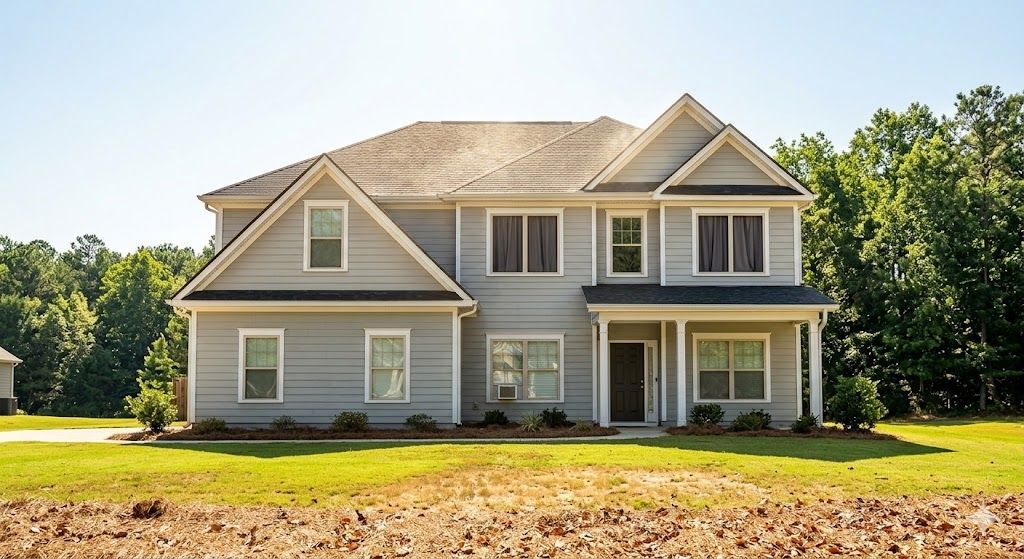
Every summer, the same complaint shows up from two-story homes across Huntsville, Arab, and Guntersville. Downstairs feels great. The thermostat reads 72. But the bedrooms upstairs sit at 78 or 80 by mid-afternoon, the kids' rooms feel stuffy at bedtime, and the master suite is unusable for a nap on a hot Saturday.
This is one of the most common comfort problems in residential HVAC, and it almost never has a single cause. In most homes we see, three or four issues are stacked on top of each other, each making the others worse. The good news: once you know what to actually measure, the fix is usually obvious — and almost never "just add a bigger AC."
Quick Answer
What the symptom usually means: The cooling capacity that's reaching the upstairs rooms is not keeping pace with the heat load on those rooms — typically by 4–10°F at the worst part of the day.
Most likely causes (in plain language):
- One system and one thermostat trying to cool two floors, with the thermostat on the downstairs floor.
- Long duct runs through a hot attic, leaking and gaining heat before air reaches the upstairs rooms.
- Not enough return air pulling heat back out of the upstairs.
- An attic that is under-insulated, poorly air sealed, or both — letting heat pour into the second floor.
- An oversized AC that short-cycles before it can actually pull the upstairs down.
Safe homeowner checks:
- Put a $15 thermometer or hygrometer in the worst upstairs room and compare to the downstairs reading at 3–5 p.m. on a hot day. A 4°F or larger gap is a real, measurable problem.
- Make sure the upstairs supply registers are fully open and not blocked by furniture or rugs.
- Check that the filter is clean and that nothing is blocking the return grilles.
When to call a pro: If the upstairs runs 4°F or more above the downstairs setpoint on a normal summer afternoon, or if rooms on the same floor are wildly different from each other. A thorough diagnostic should include static pressure, room-by-room temperature splits, return-air sizing, duct leakage testing,
attic insulation and air sealing inspection, and thermal imaging.
What This Article Is About — and What It Is Not
This post is for homeowners with a two-story home (or a home with a finished bonus room over a garage) where the upper level is consistently hotter than the lower level during cooling season, even though the system is running.
This is not an article about:
A system that won't turn on at all.
An AC that isn't cooling anywhere — the whole house being warm is a different problem.
A short heat wave where every house in town is struggling for an afternoon.
If your AC isn't cooling the downstairs either, you're chasing a system-wide issue, not a balance issue. If the upstairs is uncomfortable in winter (cold instead of hot), some of the same root causes apply, but the diagnostic priorities shift.
If your downstairs is cool and sticky at the same time the upstairs is hot, you may also want to read
Why Your North Alabama Home Still Feels Humid With the AC Running — humidity problems and second-floor heat often share the same root cause.
The Physics: Why Upstairs Tends to Run Warmer No Matter What
Before we get into specific causes, it helps to understand the baseline working against every two-story home.
Heat rises. Warm air is less dense than cool air. Over the course of a day, heat that builds up inside the house naturally migrates upward, where it collects on the second floor.
The roof is the hottest surface in the building. On a 90°F afternoon, a dark shingle roof in Huntsville can hit 150–170°F. The attic underneath can sit at 120–140°F. The only thing separating that heat from your upstairs ceilings is insulation and air sealing — and if either is weak, the ceiling itself becomes a giant heating panel pouring warmth down into the rooms below.
Solar gain hits the upper floor first. West-facing upstairs bedrooms catch direct sun for hours in the afternoon. If those rooms have large or unshaded windows, the heat load on them can be two to three times higher than the equivalent room downstairs.
In other words, the upstairs is fighting more heat than the downstairs, even in a perfectly designed home. The HVAC system has to deliver more cooling there, not less, to keep up. In most homes we test, it's actually delivering less.
The Most Likely Causes, Ranked
These are the patterns we see most often in two-story homes across North Alabama, roughly in order of how frequently they turn out to be the real culprit. Your home may have one of these, or — more typically — three of them stacked together.
1. One System and One Thermostat Trying to Cool Two Floors
What it is. A single HVAC system, with a single thermostat (almost always located on the downstairs floor near the living room or hallway), is responsible for cooling the entire house.
Why it causes a hot upstairs. The thermostat only measures the air right next to it. Once the downstairs hits 72°F, the system turns off — regardless of what the upstairs is doing. Because heat is rising and solar gain is loading the upper floor, the upstairs can easily sit 6–10°F hotter than the downstairs even with the AC "satisfied."
What should be measured or checked:
- Room-by-room temperature readings at the warmest part of the day. We log multiple rooms at once and look at the spread.
- Whether the system was originally designed as a single zone or had zoning that was disabled or never installed.
- Whether a second system was originally planned for the upper floor. Some two-story homes were built as one-system houses to save on construction cost; others had a second system removed in a past replacement.
More likely vs less likely. This is more likely in homes built in the 1990s–2010s with a single downstairs-located air handler in a closet or garage and a single thermostat. It is less likely in homes that already have two systems, two thermostats, or a properly working zoning setup.
Homeowner vs pro:
You can confirm the symptom yourself with a $15 thermometer in each room. The fix — zoning, a second system, a properly sized mini-split for the upstairs, or rebalancing the existing ductwork — is pro work that requires real load calculations and airflow testing.
2. Ducts Running Through a Hot Attic
What it is. The supply ducts that feed the upstairs rooms run through the attic before they reach the ceiling registers.
Why it causes a hot upstairs. Air leaves the cooling coil at around 55°F. That air then has to travel through ductwork sitting inside a 130°F attic for 20, 30, sometimes 50 feet before it reaches the bedroom register. Two things happen:
- Heat gain through the duct walls. Even with R-6 or R-8 duct insulation, air picks up several degrees of warmth on the trip.
- Duct leakage. Most older homes leak 20–30% of supply air into the attic before it ever reaches the room. That leaked air is replaced by hot attic air being pulled into the return through other leaks — a classic case of paying to cool your attic instead of your bedroom.
What should be measured or checked:
- Duct leakage testing (a duct blaster test) to quantify how much air is escaping into the attic.
- Supply-air temperature at each upstairs register vs the temperature leaving the air handler. A 5–8°F rise is normal. A 12–15°F rise is a duct problem.
- A visual inspection of duct joints, plenum connections, and flex duct seams for daylight gaps, separated joints, or crushed sections.
More likely vs less likely. This is more likely in homes with attic ductwork (almost every two-story home in North Alabama), original ductwork that has never been sealed or replaced, or visible duct sag and damage in the attic. It is less likely in newer homes with sealed mastic joints, R-8 ducts, and a recent duct leakage test on file.
Homeowner vs pro: Walking the attic for a visual is something a careful homeowner can do (carefully — watch your step). Sealing and testing is pro work.
3. Not Enough Return Air Upstairs
What it is. A supply register pushes cool air into a room. A return grille pulls warm air back out, sending it down to the air handler to be cooled again. Many two-story homes have one giant return downstairs and either zero or undersized returns upstairs.
Why it causes a hot upstairs. If there's no return path for the warm air to leave an upstairs room, the cool air can't really get in either — pressure builds up and the supply air gets choked. Even worse, the system ends up sucking its return air primarily from the downstairs, which is already cool. So the AC is cooling air that's already cool while the upstairs simmers.
What should be measured or checked:
- Total return-air square footage vs system airflow requirements (about 6 square inches of return grille area per 100 CFM of system airflow, as a rough rule of thumb).
- Door pressure testing — close the bedroom doors and measure the pressure differential. A bedroom that goes 3+ Pascals positive when its door closes has a return-air problem.
- Static pressure readings at the air handler. High static almost always involves return-side restriction.
More likely vs less likely. This is more likely in homes with only one or two return grilles in the whole house, bedrooms that get noticeably warmer when the door is closed at night, or supply registers that whistle. It is less likely in homes with a dedicated return in every bedroom.
Homeowner vs pro: You can test the door-closed effect yourself by sleeping with a thermometer in the room overnight. Fixing it — transfer grilles, jumper ducts, or new returns — is pro work.
4. An Attic That's Under-Insulated or Leaking Air
What it is. The thermal and air boundary between the attic and the upstairs living space is weaker than it should be. This shows up as low insulation depth, missing insulation near the eaves, gaps around can lights and bath fans, and open chases where wiring or plumbing runs into the attic.
Why it causes a hot upstairs. A 130°F attic radiates and convects heat down into the upstairs ceiling. With R-19 or less in the attic (common in older Huntsville-area homes), the ceiling can become noticeably warm to the touch in the afternoon. Air leaks make it worse — hot attic air gets pulled into the house through gaps, bypassing your insulation entirely.
What should be measured or checked:
- Attic insulation depth and condition (R-38 to R-49 is the current target for our climate zone).
- Air sealing at the attic floor: can lights, top plates, bath fans, plumbing penetrations, attic access hatches, chases.
- Blower door testing to quantify how leaky the whole house is — and where the leaks are concentrated.
- Thermal imaging of the upstairs ceiling on a hot afternoon to spot insulation gaps and leakage paths.
More likely vs less likely. This is more likely in homes built before 2000, homes where you can see the ceiling joists through the insulation, homes with lots of can lights in the upstairs ceiling, and homes that feel notably warmer the moment you walk upstairs. It is less likely in newer, blower-door-tested homes with R-49+ in the attic.
Homeowner vs pro: Measuring insulation depth with a ruler in the attic is homeowner-safe. Air sealing is technical work that affects combustion safety in some homes (especially with gas water heaters or furnaces), so it's best handled by a contractor who knows building science.
5. The AC Is Oversized and Short-Cycling
What it is. The cooling capacity (tons or BTUs) is larger than the house actually needs. The system cools the thermostat's air to setpoint very quickly and shuts off before the rest of the house — especially the upstairs — can catch up.
Why it causes a hot upstairs. Oversized systems run in short bursts: 5–10 minutes on, 20+ minutes off. The upstairs rooms, which are farthest from the air handler and have the highest heat load, never get enough run time to actually pull down. Meanwhile, because the system isn't running long enough to dehumidify, the upstairs often feels both hot and sticky.
What should be measured or checked:
- Cycle length on a moderate summer afternoon (healthy run times are 15–25 minutes per cycle).
- A real Manual J load calculation based on actual home dimensions, insulation, windows, and orientation — not "2.5 tons because it's 2,000 square feet."
- Indoor RH along with temperature. Oversized + humid is a classic signature.
More likely vs less likely. This is more likely if the system runs in short bursts and the house still feels muggy. It is less likely if the system runs nearly continuously on the hottest days and still can't keep up — that points to an undersized or restricted system, not an oversized one.
Homeowner vs pro: You can time the cycles yourself. Confirming oversizing and choosing the right replacement size requires a Manual J and a contractor who actually runs one.
6. Restricted or Kinked Flex Duct to Upstairs Rooms
What it is. Flex duct — the spiral-wire, insulated tubing that runs from the trunk to the room registers — is easy to install but also easy to install badly. Sharp bends, pinched sections, sagging runs draped over framing, and crushed flex behind cabinets all choke airflow.
Why it causes a hot upstairs. Less air = less cooling delivered to that room. A flex duct kinked down to half its diameter can lose two-thirds of its airflow capacity. In a long upstairs run that's already fighting heat gain and attic temperatures, a kink can be the difference between a comfortable room and an unusable one.
What should be measured or checked:
- Airflow (CFM) at each room register with a balometer or anemometer.
- A visual inspection of the duct path in the attic, looking for sags, sharp bends, and crushed sections.
- Supply-air temperature at the register to separate "low airflow" from "warm supply air" problems.
More likely vs less likely. This is more likely when one specific upstairs room is much worse than the others, the register barely "feels" like it's putting out air, or you can see chaotic flex duct in the attic. It is less likely when all upstairs rooms are uniformly warm — that points to a system-wide or design issue, not a localized one.
Homeowner vs pro: Holding your hand over a register tells you whether some air is coming out; it does not tell you whether it's enough. CFM measurement is pro work.
7. Big West- or South-Facing Windows Without Shading
What it is. Large windows on the west or south side of the upper floor, with little or no exterior shading, blinds, or solar film. Common in two-story homes with vaulted master suites, bonus rooms over garages, or upstairs offices.
Why it causes a hot upstairs. A single 4'×6' west-facing window with clear glass can let in around 4,000–6,000 BTU/hr of solar heat on a summer afternoon — roughly the cooling output of a small window AC unit, fighting your central system. Multiply that across several windows and the upstairs is dealing with a much bigger load than the downstairs ever sees.
What should be measured or checked:
- Window orientation, glass type, and size for each affected room.
- Whether interior blinds, exterior shading, or solar film are present.
- Room temperature swings over the course of the afternoon — a room that's fine at noon and 8°F warmer at 5 p.m. is being driven by solar gain.
More likely vs less likely. This is more likely in upstairs west-facing rooms with large clear-glass windows and no exterior shading. It is less likely in rooms that face north or that are shaded by mature trees.
Homeowner vs pro: Solar film, interior cellular shades, or exterior shading are homeowner-doable upgrades. Whether they're enough on their own depends on what else is going on in the home, which is where a real diagnostic helps.
Why North Alabama Two-Story Homes Are Especially Prone to This
A few things about our climate and our housing stock combine to make the upstairs-hotter-than-downstairs problem extra common in Huntsville, Arab, Guntersville, and the surrounding area.
Hot, humid summers. We don't get the dry desert heat that radiates away at night. Once the upstairs warms up, the humid air holds onto that heat well past sunset. A poorly cooled upstairs in our climate doesn't really cool down until 2 a.m.
Attic ductwork is the norm. Most two-story homes here were built with a single downstairs HVAC system and the upstairs ducts run through the attic. That means the worst possible duct location (a 130°F attic) is delivering air to the rooms with the highest heat load.
Vented attics that get extremely hot. The standard vented attic in our climate is essentially an outdoor space with a roof on it. Dark shingles, limited ridge ventilation, and no radiant barrier are common — all of which keep attic temperatures high.
Older insulation packages. A lot of homes in our service area were built with R-19 or R-30 in the attic when current code calls for R-38 to R-49. That gap shows up as a hot upstairs.
One-thermostat-for-two-floors design. Builder-grade two-story homes from the 1990s and 2000s very rarely included zoning. The cheaper choice was a single system, single thermostat, and one downstairs supply trunk feeding the upstairs through attic ductwork. That's the layout we walk into more often than any other.
When you combine a hot, humid climate with attic ducts, modest insulation, and a single-zone design, an uncomfortable upstairs is almost the expected outcome — not a surprise.
How a Good Contractor Should Diagnose an "Upstairs Too Hot" Complaint
This is the section most homeowners never see, and it's where most botched fixes get baked in. A good diagnostic should be data-driven, not a guess. Adding a bigger AC, adding a return, or installing a mini-split without measuring anything first is how you end up with a system that's also oversized, also humid, and still has a hot upstairs.
Here's what a thorough process looks like — and what we walk through during a Home Comfort Consult:
- Sit-down homeowner interview. Which rooms are worst, when in the day, in which weather, when the symptoms started, what's been changed or "fixed" before. The pattern usually tells us where to look.
- Room-by-room temperature and humidity logging. Dataloggers in each affected room for 24–72 hours, capturing how the rooms behave through real day-night cycles.
- Static pressure measurement at the air handler. This is one of the most under-used numbers in residential HVAC and tells us whether the system is choked by undersized returns, dirty coils, restrictive filters, or kinked ducts.
- Temperature splits across the coil and at each register, to confirm the system is actually producing the cooling it's rated for and that it's making it to each room.
- Airflow (CFM) measurements at the supply registers and returns, including a check of the actual blower speed.
- Duct leakage testing (duct blaster) to quantify how much conditioned air is escaping into the attic or crawlspace before it reaches the rooms.
- Blower door testing and zonal pressure diagnostics to understand how leaky the whole house is and where the worst leaks are concentrated — including the attic-to-house boundary.
- Attic inspection: insulation depth and condition, air sealing around penetrations, condition of ductwork, ventilation pathways.
- Thermal imaging of the upstairs ceilings, walls, and floors during the hot part of the day to visually identify insulation gaps, leakage paths, and duct heat loss.
- A real Manual J / Manual D if a system replacement or addition is on the table, so the sizing and duct design are based on the actual house, not a square-footage rule of thumb.
By the end of that process, the homeowner doesn't get a guess — they get a stack of numbers, photos, and a clear ranked list of what's actually driving the problem and what each fix is likely to accomplish.
When to Act — and What Happens If You Wait
A hot upstairs is rarely a true emergency. There's no immediate equipment failure, no flood, no smoke alarm. So most homeowners live with it for years, working around the worst rooms with portable fans, closed doors, and "sleeping downstairs in summer." That's a fine short-term coping plan, but here's what tends to happen the longer it goes:
- Comfort steadily degrades. As the system ages, ducts loosen further, insulation settles, and the gap between upstairs and downstairs slowly widens.
- Equipment runs harder. A system that can't satisfy the upstairs runs longer than it was designed to, accelerating wear on the compressor, blower motor, and capacitors.
- Humidity climbs. Many of the same conditions that cause a hot upstairs — leaky ducts, oversized equipment, poor airflow — also leave the house damp. Sustained indoor humidity above 55–60% raises the risk of mold growth on cool surfaces and degrades indoor air quality. For more on what your indoor humidity should actually be reading, see What Should Indoor Humidity Be in a North Alabama Home?.
- You eventually replace the system without solving the problem. The single biggest waste in our industry is a homeowner spending $12,000+ on a new system that gets installed exactly like the old one — same ducts, same returns, same attic, same hot upstairs. The new system is just shinier.
Acting earlier doesn't have to mean ripping everything out. Often the most cost-effective wins are duct sealing, return-air improvements, and attic air sealing — done before any equipment replacement, so that whatever system you do eventually buy is sized and designed for the house you actually have.
Ready to Get a Real Answer Instead of a Guess?
If your upstairs is consistently hotter than the downstairs and you're tired of band-aids — closing vents, adding fans, sleeping downstairs — the next step is a real diagnostic. Our Home Comfort Consult is a deep, measurement-driven look at the whole house: HVAC, ducts, attic, insulation, air sealing, and room-by-room behavior. You walk away with a clear, ranked plan and an honest read on what's worth fixing and what isn't.
For homeowners whose concerns also include air quality, allergy symptoms, or musty odors stacked on top of the comfort issue, the Home Air Health Study adds a week of indoor air monitoring to the picture. It comes with our Breathe-Easy Clarity Guarantee: if, at the end of the review, you don't feel clear on what's going on in your home and what to do next, you don't pay.
No guessing, no scare tactics, no "we'll just add a bigger AC." Just a real diagnosis and a real plan.
Frequently Asked Questions
How big a temperature difference between upstairs and downstairs is normal?
In a well-designed and well-balanced two-story home, the upstairs should be within about 2°F of the downstairs setpoint on a normal summer afternoon. Up to 3°F is acceptable. A consistent 4°F or larger spread on moderate days is a real problem worth diagnosing, and 6–10°F differences (which we see often in North Alabama two-story homes) point to multiple stacked causes.
Will closing the downstairs vents push more air upstairs?
It's the most common DIY fix, and it usually makes things worse. Closing supply registers raises static pressure in the ductwork, which often causes more duct leakage into the attic and crawlspace — not more air to the upstairs. It can also push the system into short-cycling and reduce humidity removal. In a system with a properly designed duct layout, all the registers are supposed to be open. The right fix is to address why the air isn't getting upstairs in the first place, not to choke off the downstairs.
Do I need to add a second system or a mini-split upstairs?
Sometimes — but it should be the last option considered, not the first. We've seen many two-story homes where the upstairs gets dramatically better after duct sealing, return-air improvements, and attic air sealing, with no change to the equipment at all. Adding a second system or a dedicated mini-split for the upstairs is a great solution when the existing ducts can't realistically deliver the airflow needed, when zoning isn't practical, or when the upstairs has a specific high-load room (like a bonus room over a garage). But it's a bigger investment than fixing the underlying issues, and it should be informed by real load calculations rather than a guess.
Is zoning a good solution for a hot upstairs?
Zoning — dividing the ductwork into separately controlled sections with motorized dampers and a smart controller — can work very well when it's designed and installed correctly. It can also create new problems (high static pressure, noisy registers, short-cycling) when it's added to an existing system that wasn't designed for it. A zoning system should be paired with a bypass strategy or a variable-speed system that can actually modulate airflow. It's a good question for a contractor who can show you measured static pressure before and after, not just a sales pitch.
Why does my upstairs get hot at night even after sundown?
A few reasons. First, the attic stays hot for hours after sunset — the shingles cool, but the attic air mass and the materials in it (framing, decking, ducts) release heat slowly into the night. Second, all the heat absorbed during the day by upstairs walls, ceilings, and contents has to be removed by the AC, and an undersized return or short-cycling system can't keep up. Third, our humid climate means warm, damp air feels heavier and warmer than the same temperature would feel in a dry climate. If your upstairs is also feeling sticky overnight, you're likely looking at a combined heat and humidity issue, which is good news — both tend to share a root cause and a real diagnostic can find it.
Climate and Plant Selection
Selecting appropriate vegetation is crucial for the success of green roofs in the Mid-Atlantic region. Native and drought-tolerant plants are ideal, ensuring survival during dry spells and high-intensity storms. Sedums, grasses, and other hardy species maintain runoff retention and resist seasonal stress, supporting regulatory compliance throughout the year.
About the Author
Tanner Dickerson is the owner of Dickerson Services, a North Alabama HVAC, home performance, and crawl space encapsulation company serving Huntsville, Arab, Guntersville, Albertville, and the surrounding area. He works with homeowners on complex comfort, humidity, and indoor air quality problems by treating the whole house as a system — HVAC, ducts, crawlspace, air sealing, insulation, and ventilation together.
Share this article