
Is a Whole-Home Dehumidifier Worth It in North Alabama?
July 17, 2026
What it is. A thermostat mounted where it doesn't sense the true average temperature of the home — in direct afternoon sun, on an exterior wall, near a sunny window, or above a heat-producing appliance.
Why it causes this symptom. A thermostat only knows the temperature at its own spot on the wall. If the afternoon sun lands on it, or it sits on a wall that heat-soaks late in the day, it reads warmer than the rest of the house and keeps calling for cooling it may never feel "satisfied" delivering — so the system runs and runs without ever clicking off. It can also work the other way, where a poorly placed thermostat shuts the system off early and lets distant rooms drift. Either way, the thermostat's afternoon reading is part of the story even when the equipment is healthy.
What should be measured or checked:
- A second thermometer placed in the main living area, compared against what the thermostat reports.
- Whether sun ever falls directly on the thermostat during the afternoon.
- Thermostat location relative to supply registers, exterior walls, and appliances.
More likely vs. less likely. More likely if the thermostat is on a sunny wall, near a window, or in a spot that clearly feels different from the rest of the house. Less likely if it sits on a shaded interior wall and matches a handheld thermometer.
Homeowner vs. pro:
Comparing the thermostat to a separate thermometer is an easy homeowner check. Relocating a thermostat is a small pro job, and worth doing only after the bigger capacity and load questions are ruled out.
By late June, the question shows up in our inbox almost every week. The house stays at 73, the AC runs plenty, and the air still feels heavy — so a homeowner in Huntsville, Arab, or Guntersville starts pricing out a whole-home dehumidifier and wants to know whether it's worth the money.
The honest answer is: sometimes yes, and it can make a real difference — but for most homes it's the last step in the process, not the first. A whole-home dehumidifier is an excellent tool for removing the moisture your air conditioner can't. It's an expensive and frustrating one if it's bolted onto a house that's still pulling wet air in from a vented crawlspace, leaky ducts, or a system that was oversized from day one.
This article walks through when a dehumidifier genuinely earns its keep in our climate, when your money is better spent elsewhere first, and how to tell the difference before you buy.
Quick Answer
- Short answer: A whole-home dehumidifier can be worth it in North Alabama, especially for tight homes, part-time homes, and homes that stay muggy in spring and fall. But in most cases it should come after the moisture sources are addressed — not instead of fixing them.
- What it does that your AC can't: A dehumidifier removes moisture on its own schedule, independent of whether the house needs cooling. Your AC only dehumidifies while it's actively cooling, so on mild, sticky days — common here in the shoulder seasons — it barely runs and barely dries the air.
- The right order of operations: (1) control the moisture sources (crawlspace, ducts, air sealing, bath fans), (2) make sure the HVAC is correctly sized and set up — the right heat pump with a reheat dehumidification mode handles a lot of this on its own, (3) add a dedicated dehumidifier for whatever moisture load is left.
- Three types, not one: "Dehumidifier" can mean a portable unit, a ducted whole-home unit tied into your HVAC, or a separate crawlspace unit. They solve different problems and are not interchangeable.
- When to bring in a pro: Before buying, the home should be measured — indoor relative humidity (RH) logged over several days, crawlspace RH, duct and airflow condition, and a load calculation. A dehumidifier sized off a guess is the most common way this purchase disappoints.
What This Article Is About — and What It Is Not
This post is for homeowners who already suspect their home has a humidity problem and are weighing whether a whole-home dehumidifier is the right investment — usually after the AC alone hasn't solved it.
It is not:
- A diagnosis of why your house feels humid in the first place. If that's your question, start with Why Your North Alabama Home Still Feels Humid With the AC Running, which walks through the most common causes.
- A guide to what your indoor humidity should be. For the target ranges and why they matter, see What Should Indoor Humidity Be in a North Alabama Home?.
- A product review or brand recommendation. The decisions that matter here — what type, how it's sized, and how it's controlled — come before the brand question, not after.
If your home stays humid because of something specific and fixable, a dehumidifier may turn out to be unnecessary, or much smaller than you expected. That's a good outcome, and it's the reason this article spends as much time on what to do before buying as on the purchase itself.
First, What a "Whole-Home Dehumidifier" Actually Is
The word "dehumidifier" gets used for three very different machines. Knowing which one people mean is the first step, because they solve different problems.
Portable Room Dehumidifiers
These are the units you buy at a hardware store, set on the floor, and empty by hand (or drain to a nearby floor drain). They're inexpensive and fine for a single problem room — a damp basement corner, a closet, a workshop.
Their limits are real: modest capacity, a tank that needs emptying, fan noise in living space, and no connection to the rest of the house. For a true whole-house humidity problem in our climate, a portable is usually bailing water with a bucket — helpful in one spot, but not a system.
Whole-Home (Ducted) Dehumidifiers
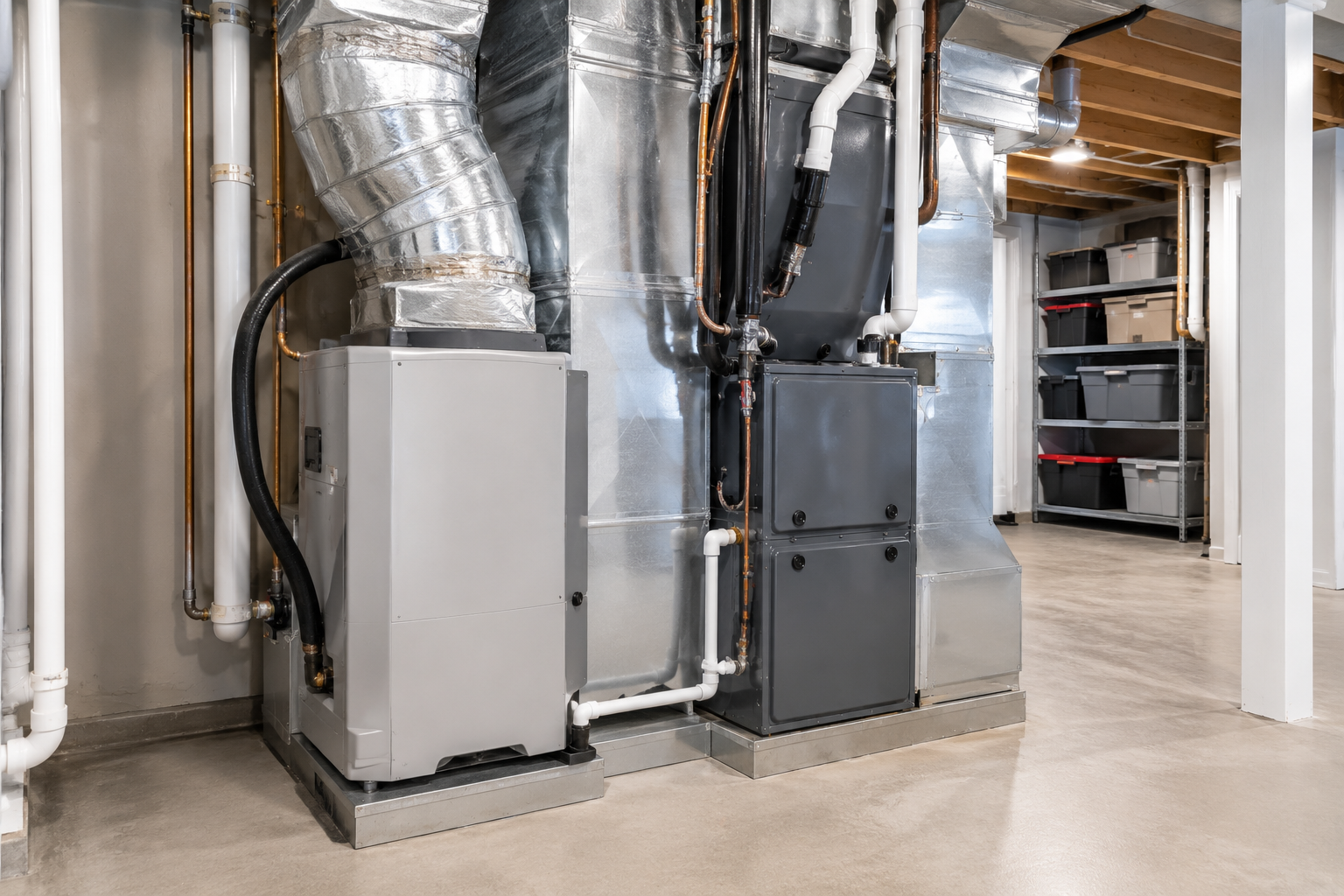
This is what most people mean by "whole-home dehumidifier." It's a dedicated appliance — separate from your AC — that's tied into the ductwork, pulls air from the house, wrings the moisture out, drains the water away automatically to a condensate line, and returns drier air. It's controlled by a humidistat the same way your thermostat controls temperature.
The key advantage is independence: it removes moisture
whenever the air is too humid,
regardless of whether the house needs cooling. That's exactly the gap your AC leaves, and it's why this is the unit that matters for most of the homes asking this question.
Crawlspace Dehumidifiers
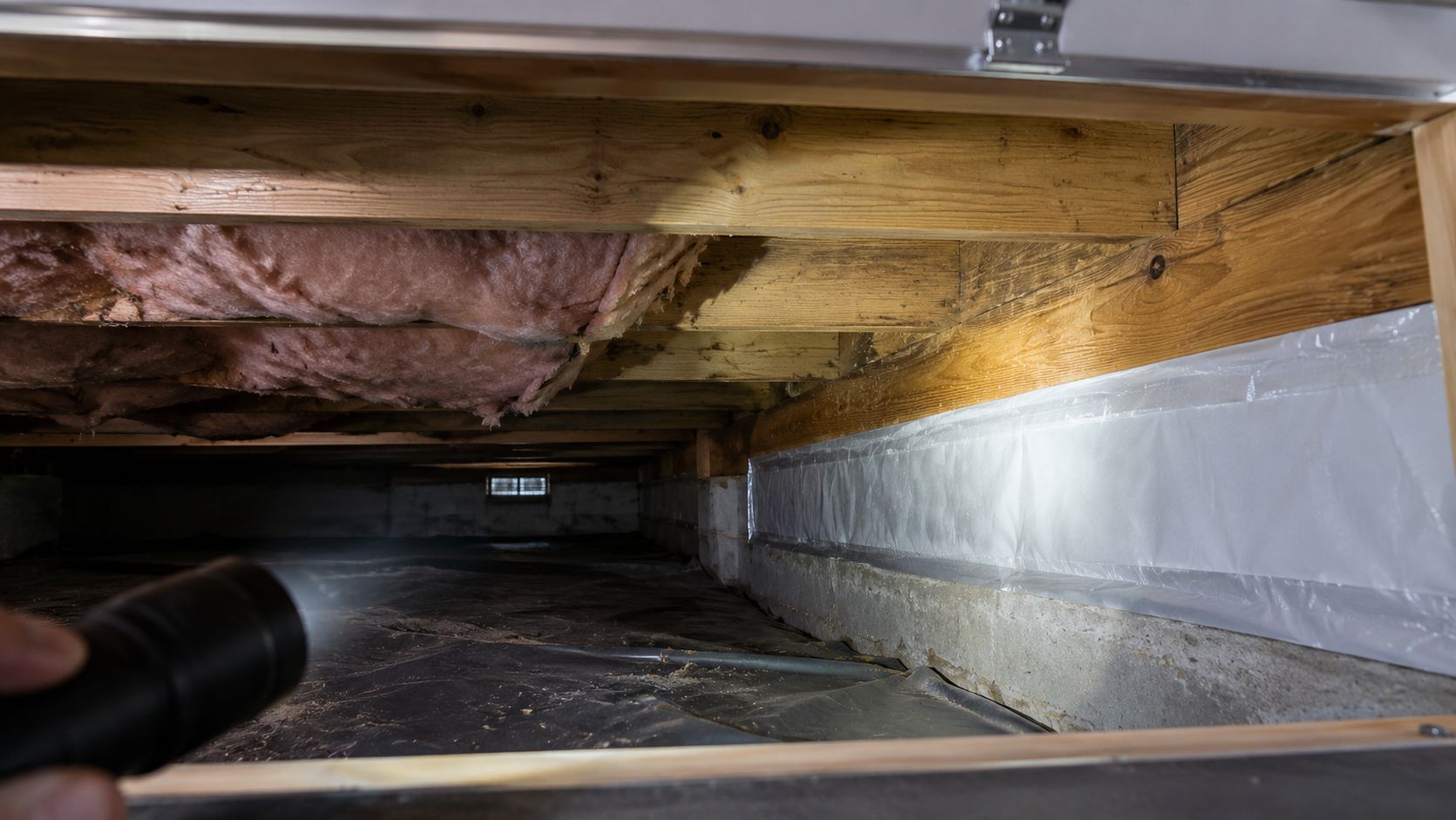
A crawlspace dehumidifier is a separate, ruggedized unit installed in a sealed (encapsulated) crawlspace to hold that space below the level where wood and stored items are at risk. It is not the same thing as a whole-home dehumidifier serving your living area, even though both are "dehumidifiers."
This distinction matters in North Alabama specifically, because for a great many homes here the real moisture source is the crawlspace — and the right fix is sealing and dehumidifying the crawlspace, not adding a unit upstairs. More on that below, and in our Crawlspace Encapsulation and Mold Risk & Moisture Control packages.
Why Your AC Isn't Always Enough Here
To know whether you need a separate dehumidifier, it helps to understand exactly what your air conditioner does and doesn't do with moisture.
An AC removes two kinds of heat. Sensible heat is the temperature you feel and the thermostat reads. Latent heat is the energy locked up in water vapor — humidity. Your AC pulls humidity out of the air by condensing it on a cold coil and draining it away, but only while it's running, and really only after it's been running for a solid 10–15 minutes so the coil is fully cold and wet.
That creates a predictable gap in our climate:
- On hot afternoons, the AC runs long enough to dehumidify reasonably well — assuming it isn't oversized and short-cycling.
- On mild, humid days — most of spring and fall, and many summer mornings here — the outdoor temperature is moderate but the dew point is still high. The house barely needs cooling, so the AC barely runs. Temperature is satisfied; the air stays sticky. This is the single most common scenario where North Alabama homes drift above 60% indoor RH.
A whole-home dehumidifier exists precisely to cover that gap. It doesn't care whether the house needs cooling — if the air is too wet, it runs. That independence is the entire value proposition, and it's why the "is it worth it" answer hinges on how much of that uncovered moisture load your home actually has.
It's worth saying plainly: a dehumidifier is not the only way to close that gap. A properly sized, communicating variable-speed heat pump with a true reheat dehumidification mode addresses a large part of it inside the HVAC system itself — which is the next section's whole point.
The Honest Answer — A Dehumidifier Is Usually the Last Step, Not the First
Here's the part most sales conversations skip. A whole-home dehumidifier is a moisture-removal device. It does nothing about moisture coming in. If your home has a strong, steady moisture source, a dehumidifier will run constantly fighting it — wearing itself out, adding to your electric bill, and often still losing on the worst days.
The durable approach is to work the problem in order.
Step 1 — Control the Moisture Sources
Before adding any equipment, find and reduce where the water is coming in. In our area the usual suspects are:
- A vented or wet crawlspace. This is the big one in North Alabama. A vented crawlspace open to humid outdoor air over damp soil routinely runs 80–95% RH, and a meaningful share of that wet air ends up in the living space through duct leaks and stack effect. Sealing and conditioning the crawlspace (Crawlspace Encapsulation) often does more for indoor humidity than any appliance you could add upstairs.
- Leaky return ducts in a hot attic or damp crawlspace, pulling 80%+ RH air straight into the system.
- Bath fans and dryers venting into the attic or soffit instead of outdoors.
- Air leakage in the envelope letting humid outside air infiltrate.
We've seen homes where simply tightening the envelope and sealing the crawlspace cut the moisture load so far that a dehumidifier that used to run constantly barely needed to turn on — or wasn't needed at all. Fixing sources first doesn't just reduce humidity; it shrinks the size (and cost) of any dehumidifier you do end up adding.
Step 2 — Right-Size and Set Up the HVAC
The next question is whether your cooling system itself is doing all it can.
- Is it oversized? An AC that's too big for the house satisfies the thermostat in 6–8 minutes and shuts off before it has dehumidified. Oversizing is extremely common here because so many systems were sized by square footage instead of a real Manual J load calculation. No dehumidifier should be purchased to paper over an oversizing problem that a correctly sized system would solve.
- Is it the right kind of equipment? This is where the equipment choice matters. As the saying goes around our shop, the right heat pump is one of the best dehumidifiers you can buy — especially if it has reheat. A communicating variable-speed heat pump can run a true dehumidification mode: it overcools to wring out moisture, then gently reheats the air so the room doesn't get cold. For many North Alabama homes, that capability handles the shoulder-season moisture gap without a separate appliance at all. We cover exactly how this works, and which systems actually have it, in Is Variable-Speed HVAC Better for Humidity Control?.
If you're replacing your system anyway, getting Step 2 right can shrink or eliminate the need for Step 3.
Step 3 — Add a Dehumidifier for the Load That Remains
After the sources are controlled and the HVAC is sized and set up correctly, some homes still have a residual moisture load that the AC and reheat can't fully cover. That is the load a whole-home dehumidifier is built for — and when it's sized to that real, remaining load rather than to a guess, it's an efficient, quiet, set-and-forget solution that holds the house in the 45–55% range year-round.
Bought in this order, a dehumidifier is worth it. Bought first, it's a band-aid over a leak.
When a Whole-Home Dehumidifier Is Usually Worth It
There are real cases where a dedicated whole-home dehumidifier is the right call — sometimes even early in the process. The most common in our area:
- Tight, well-built or newer homes. Modern construction reduces heat gain faster than moisture gain, so these homes often hit the temperature setpoint while RH is still high. The sensible load is small, the latent load isn't — exactly the mismatch a dehumidifier solves. This is the classic "good house that still feels clammy" situation.
- Part-time, seasonal, and lake homes. A house that's closed up for stretches with the cooling off can climb toward outdoor humidity for days. A whole-home or crawlspace dehumidifier on a humidistat keeps it in range while you're away. (See Why Homes Near Lake Guntersville Have Worse Humidity Problems for why waterfront homes especially fit this category.)
- Homes that stay muggy in spring and fall. If your complaint is worst in the shoulder seasons — when the AC rarely runs — and an HVAC upgrade with reheat isn't in the budget, a dehumidifier directly targets that gap.
- Encapsulated crawlspaces. A sealed crawlspace generally needs a dedicated dehumidifier (or conditioned air supply) to stay below 60% RH. Here the dehumidifier isn't optional — it's part of doing encapsulation correctly.
- Homes where the sources are already addressed and a residual load remains. When you've done the crawlspace, the ducts, and the air sealing and the house still sits above 55% on humid stretches, the remaining load is small, well-defined, and exactly what a right-sized unit is for.
When It's Probably Not the Right First Move
Just as importantly, here's when buying a whole-home dehumidifier first tends to disappoint:
- When the crawlspace is the real source. Adding a unit upstairs while a vented crawlspace pumps 90% RH air into the floor system is treating the symptom. The crawlspace fix usually delivers more, for less.
- When the AC is oversized and short-cycling. Correct the sizing (or the equipment) and the humidity problem often shrinks dramatically on its own.
- When the fan is set to "ON." A thermostat fan left on "ON" re-evaporates moisture off the coil between cooling cycles and quietly drives RH up. Switching it to "AUTO" is free. It's worth ruling out before spending anything.
- When you're about to replace the HVAC anyway. If a new system is on the horizon, the smart move is to choose equipment that dehumidifies well (the reheat-capable heat pump discussed above) and reassess whether a separate unit is still needed afterward.
None of this means "never buy a dehumidifier." It means measure first, fix the cheap and high-impact things, and let the data tell you how much dehumidification — if any — is actually left to buy.
Why This Question Comes Up So Often in North Alabama
This decision lands harder here than it would in a drier climate, for a few reasons:
- High outdoor dew points for months. From late spring through early fall, the moisture in the air stays high even overnight. That's a long, steady latent load on every home.
- Long, muggy shoulder seasons. Spring and fall routinely bring days that are mild but sticky — the exact conditions where the AC won't run enough to dehumidify, and where a dehumidifier (or a reheat-capable system) earns its keep.
- Vented crawlspaces are everywhere. Much of the housing stock in Huntsville, Arab, Guntersville, and Albertville predates modern building science. In our climate those vents bring in more moisture than they remove for most of the year.
- Ducts run through unconditioned attics and crawlspaces. That puts the system in the worst conditions in the building and makes leakage a direct humidity source.
- Square-footage sizing is still common. The resulting oversizing shortens cooling cycles and undercuts dehumidification — which then gets blamed on the house rather than the sizing.
The takeaway isn't that North Alabama homes are doomed to be damp. It's that humidity here is a system question, and a dehumidifier is one possible component of the answer — not the whole answer by itself.
How a Good Contractor Should Decide Whether You Need One
A whole-home dehumidifier is a real investment, and the decision should be measured, not guessed. If someone quotes you a unit without taking a single reading, that's a flag.
A sound evaluation should include:
- Indoor RH and temperature, logged over several days, in two to four rooms — not a single spot check. The pattern across day and night (and across mild vs. hot days) is where the answer lives.
- Crawlspace RH and condition, including the vapor barrier, any standing water, wood moisture readings, and musty odor. In many homes this is where the problem — and the cheaper fix — actually is.
- A load calculation (Manual J) that separates the sensible load from the latent load. The latent number is what tells you whether the AC can realistically keep up, and how big a dehumidifier would need to be if one is warranted.
- Run-time observation and temperature split across the coil (typically 18–22°F on a moderate day), plus static pressure at the air handler, to confirm the existing system is actually performing.
- Duct leakage and airflow evaluation, since return-side leakage is a frequent hidden moisture source.
- A clear recommendation on order of operations — sources first, equipment second, dehumidifier for the remainder — with honest reasoning for whatever is proposed.
For a home where humidity has been a long-running problem, or where several of these factors overlap, our Home Comfort Consult is built for exactly this kind of decision. It treats the house as a system — load calculation, duct evaluation, blower door for air leakage, crawlspace assessment, and a written plan that ranks fixes by impact, so a dehumidifier (if it's recommended at all) is sized to a measured load rather than a hunch.
If indoor air quality and moisture are the larger concern — musty odors, mold worries, or family members feeling worse indoors than out — the
Home Air Health Study adds a week of continuous indoor air monitoring on top of the building assessment, so the equipment decision is informed by what your air is actually doing across days and conditions.
When to Act — and What Happens If You Wait
This is rarely an emergency, but a home that sits above 60% RH for long stretches isn't in a stable condition either. The realistic consequences of leaving a humidity problem unaddressed:
- Comfort. Sticky air feels warmer than it is, so many homeowners drop the thermostat 2–4 degrees to compensate — longer run times, more wear, and a house that's cold and still damp.
- Moisture and mold risk. When indoor RH stays above 60% for long stretches — or far higher in a damp crawlspace — conditions where mold growth becomes possible develop on cooler surfaces: behind furniture on exterior walls, in closets, around supply registers, and on crawlspace framing. "Possible" is not "certain," but the risk rises the longer a home stays wet.
- Wood and structural moisture. Framing over a chronically damp crawlspace holds more moisture than it should, and sustained dampness is the kind of condition that can lead to decay over time — which is exactly why measuring crawlspace RH and wood moisture is worth doing before it becomes visible.
- Air quality concerns. Damp environments support dust mites and can contribute to musty odors. Some people who are sensitive to indoor air report feeling worse in a consistently humid home. We don't promise that controlling humidity will resolve any health symptom — that's a medical question — but moisture is one variable that can be measured and managed.
There's also a modest secondary efficiency benefit when humidity is brought into range — a drier home feels cooler at the same temperature, so most homeowners can raise the thermostat a degree or two without losing comfort. We mention this last on purpose. It's a real benefit, but it isn't the reason to make this decision; comfort and moisture control are.
Ready to Find Out If Your Home Actually Needs One?
A whole-home dehumidifier is genuinely worth it for some North Alabama homes — and an avoidable expense for others whose money would do more in the crawlspace, the ducts, or the right replacement system. The only way to know which one is yours is to measure.
For a single, well-defined issue, a standard HVAC service visit is often enough. For a longer-running humidity problem with several suspected causes, the Home Comfort Consult is built for exactly this investigation. If indoor air quality and moisture are the larger concern, the Home Air Health Study layers in a week of continuous monitoring so the recommendation is based on data, not a single afternoon.
Both the Consult and the Study come with our Breathe-Easy Clarity Guarantee: if at the end of the review you don't feel clear on what's happening in your home and what your next steps are, you don't pay. Our job is to leave you informed, not pressured — even if the answer turns out to be "you don't need the dehumidifier."
Schedule a Home Comfort Consult →
Learn about the Home Air Health Study →
Frequently Asked Questions
Is a whole-home dehumidifier worth it in North Alabama?
For some homes, yes — particularly tight or newer homes, part-time and lake homes, and homes that stay muggy in spring and fall when the AC barely runs. For many other homes, the better first investment is fixing the moisture source (most often a vented crawlspace), correcting an oversized AC, or choosing a reheat-capable heat pump at replacement time. A whole-home dehumidifier is most worth it as the final step, sized to the moisture load that remains after those things are handled — not as a band-aid bought before the home has been measured.
Why doesn't my air conditioner remove enough humidity on its own?
Your AC only dehumidifies while it's actively cooling, and really only after it's run for 10–15 minutes with a fully cold coil. On hot afternoons that usually works. On mild, humid days — common in North Alabama springs and falls — the house hits the temperature setpoint quickly and the AC shuts off before it has dried the air, so the room is cool but still sticky. An oversized AC makes this worse by short-cycling. A whole-home dehumidifier covers that gap because it runs based on humidity, independent of whether the house needs cooling.
How much does a whole-home dehumidifier cost to run?
Operating cost depends on how hard it has to work, which is the whole reason source control matters. A unit fighting a vented crawlspace and leaky ducts runs nearly constantly and costs more to operate; the same unit in a home where the sources have been addressed runs far less and costs little. That's why we push to reduce the moisture load first — it shrinks both the size of the unit you need and the energy it uses. We'd rather quote a smaller dehumidifier that rarely runs than a large one that never stops.
Do I need a whole-home dehumidifier or a crawlspace dehumidifier?
They solve different problems. A crawlspace dehumidifier keeps a sealed (encapsulated) crawlspace below the moisture level where wood and stored items are at risk. A whole-home dehumidifier conditions the living-space air through your ductwork. In North Alabama, a large share of "humid house" complaints actually trace back to the crawlspace, so for many homes sealing and dehumidifying the crawlspace solves the upstairs problem too. The right answer comes from measuring both spaces — which is part of what a Home Comfort Consult does.
Will a dehumidifier help with allergies or asthma?
We're careful here. High indoor humidity is one variable that affects dust mite populations, mold risk, and how the air feels to people who are sensitive to it, so bringing humidity into the 45–55% range may help some people feel more comfortable indoors. But a dehumidifier is not a cure for any medical condition, and we won't claim it is. If allergy or asthma symptoms are a primary concern, that's a conversation for a physician, and the home side is best handled as part of a broader indoor air quality assessment like our Home Air Health Study.
About the Author
Tanner Dickerson is the owner of Dickerson Services, a North Alabama HVAC, home performance, and crawl space encapsulation company serving Huntsville, Arab, Guntersville, Albertville, and the surrounding area. He works with homeowners on complex comfort, humidity, and indoor air quality problems by treating the whole house as a system — HVAC, ducts, crawlspace, air sealing, insulation, and ventilation together.
Summary
A whole-home dehumidifier can be worth it in North Alabama — especially for tight homes, part-time and lake homes, and homes that stay muggy in the mild shoulder seasons when the AC barely runs — but it works best as the last step after the moisture sources are controlled (most often a vented crawlspace, leaky ducts, or air leakage) and the HVAC is correctly sized, since a properly set-up communicating variable-speed heat pump with reheat already removes much of the moisture an AC alone leaves behind; the decision should be made by measuring indoor and crawlspace RH and the home's latent load, not by guessing.
Climate and Plant Selection
Selecting appropriate vegetation is crucial for the success of green roofs in the Mid-Atlantic region. Native and drought-tolerant plants are ideal, ensuring survival during dry spells and high-intensity storms. Sedums, grasses, and other hardy species maintain runoff retention and resist seasonal stress, supporting regulatory compliance throughout the year.
Share this article