
Why Your North Alabama Home Still Feels Humid With the AC Running
May 30, 2026
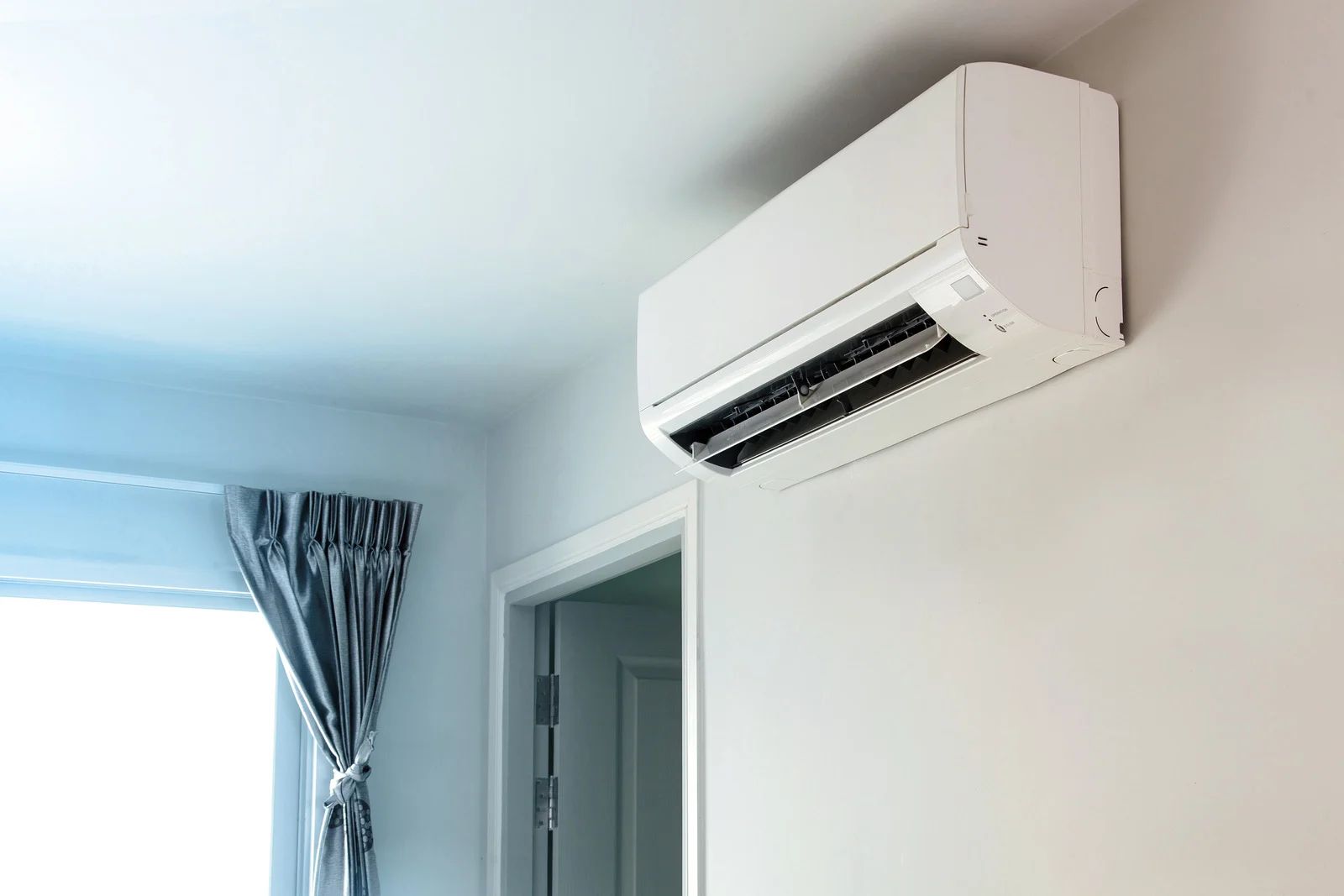
The thermostat says 72. The AC is clearly on — you can hear it. But the air still feels heavy. The leather couch is tacky. Towels never quite dry. The bathroom mirror fogs faster than it should.
If that sounds like your house, your AC isn't necessarily broken. In North Alabama's climate, a system that cools the temperature down can still fail to take enough water out of the air. The two jobs are related, but they are not the same — and once you understand the difference, the fix usually becomes obvious.
Quick Answer
What the symptom usually means: Your AC is removing heat, but not enough moisture. Indoor relative humidity (RH) is probably sitting above 55–60% even though the thermostat reads cool.
Most likely causes (in plain language):
- The AC is oversized and short-cycling, so it never runs long enough to dehumidify.
- The thermostat fan is set to "ON," which re-evaporates moisture off the coil between cycles.
- Leaky or uninsulated ducts are pulling humid air from a hot attic or damp crawlspace.
- A vented or wet crawlspace is feeding moisture into the living space.
Safe homeowner checks:
Put a $15 hygrometer in the living area. If RH is above 55% with the AC running, you have a real humidity problem, not just a perception issue.
Make sure the thermostat fan is on "AUTO," not "ON."
Look at your AC's run cycles — if it kicks on for 5–8 minutes and shuts off, that's a red flag.
When to call a pro: If indoor RH stays above 55% for a full day with the AC working, or you see condensation on registers, sweating ducts, or musty smells from the crawlspace. A thorough diagnostic should include static pressure, temperature split across the coil, RH readings in multiple rooms, crawlspace humidity, and a visual on duct condition.
What This Article Is About — and What It Is Not
This post is for homeowners whose AC is running and is cooling, but the house still feels sticky, muggy, or heavy. We will cover the most common reasons that happens in North Alabama and what a careful diagnostic looks like.
This is not an article about:
- A system that won't turn on
- An AC that isn't cooling at all
- A short-term spike during extreme outdoor humidity (a brief muggy hour after a thunderstorm isn't the same problem as a house that feels damp all summer)
If the AC isn't running or isn't cooling, you're chasing a different problem.
The Most Likely Causes, Ranked
In our experience working on Huntsville, Arab, and Guntersville-area homes, these are the patterns we see most often — roughly in the order of how frequently they turn out to be the real culprit. Your home may have one of these, or more often, two or three stacked together.
1. Your AC Is Oversized for the House
What it is. The cooling capacity (measured in tons or BTUs) is larger than the home actually needs.
Why it causes muggy air. An air conditioner removes humidity by pulling air across a cold coil long enough for water to condense out and drain away. Sensible cooling (temperature) happens fast. Latent cooling (humidity removal) takes time. An oversized system cools the thermostat's air down quickly, satisfies the call, and shuts off — often in under 10 minutes — before the coil has been wet long enough to pull much moisture out.
What should be measured or checked:
- Cycle length: Healthy run times in cooling season are usually 15–25 minutes per cycle on a moderate day.
- Indoor RH at thermostat setpoint: Should land in the 45–55% range. Above 55% with the AC running and the house at setpoint is a strong signal.
- A real load calculation (Manual J): Not a rule-of-thumb size based on square footage.
More likely vs less likely. This is more likely if the system was sized by square footage alone, if a previous contractor "rounded up" to be safe, or if cycles are obviously short. Less likely if the system runs nearly continuously on hot afternoons and still can't keep up — that points the opposite direction.
Homeowner vs pro: You can time the cycles yourself. Confirming oversizing and choosing the right replacement size is pro work.
2. The Thermostat Fan Is Set to "ON" Instead of "AUTO"
What it is. Most thermostats have a fan setting. "AUTO" runs the blower only when the system is actively cooling. "ON" runs the blower continuously.
Why it causes muggy air. When the compressor cycles off, water is still sitting on the evaporator coil waiting to drain. If the blower keeps running, it blows house air across that wet coil and re-evaporates the moisture back into the home before it can drip away. You essentially undo part of the dehumidification you just paid for.
What to check: Walk to the thermostat. Make sure the fan is set to AUTO during cooling season.
More likely vs less likely. This is one of the quickest wins to rule in or out — and one of the most overlooked. If your home has been feeling muggier than usual and someone changed the fan to "ON" for circulation reasons, this alone can drive RH up several points.
Homeowner vs pro: Pure homeowner check.
3. Duct Leakage in a Hot, Humid Attic or Crawlspace
What it is. Gaps, disconnected joints, or porous duct board allowing humid outdoor-temperature air to leak into the return duct system — or pulling humid crawlspace air into the supply path.
Why it causes muggy air. The duct system is supposed to be a closed loop. When the return side leaks, it sucks in attic or crawlspace air that may be 80%+ RH. That moisture-laden air goes through the coil, but a leaky system also means less of the home's actual air is being conditioned per cycle. Net effect: high latent load, lower effective dehumidification.
What should be measured or checked:
- Static pressure at the air handler — high static is often a sign of restrictions or undersized return.
- Visual inspection of duct joints, mastic seals, and insulation in attics and crawlspaces.
- Duct leakage test (Duct Blaster or pressure pan) for a real number, not a guess.
More likely vs less likely. More likely in homes with ducts in vented attics or crawlspaces — common in North Alabama — and in homes 15+ years old where the original duct sealing has degraded. Less likely in newer, tightly built homes with conditioned-space ductwork.
Homeowner vs pro: Spotting obvious disconnected ducts is fine. Measuring leakage and sealing it properly is pro work.
4. A Vented or Wet Crawlspace Feeding Moisture Upstairs
What it is. A traditional vented crawlspace that's open to outdoor air, often with exposed dirt, standing moisture, or wet insulation.
Why it causes muggy air. Warm outdoor air in summer carries a lot of water. When that air enters a cool crawlspace, RH spikes — sometimes to 80–95%. Through return leaks, plumbing penetrations, and natural stack effect, a meaningful fraction of that crawlspace air ends up inside your living area. You're effectively asking your AC to dehumidify the great outdoors.
What should be measured or checked:
- Crawlspace RH with a data logger over several days. Target for a healthy crawlspace is below 60%.
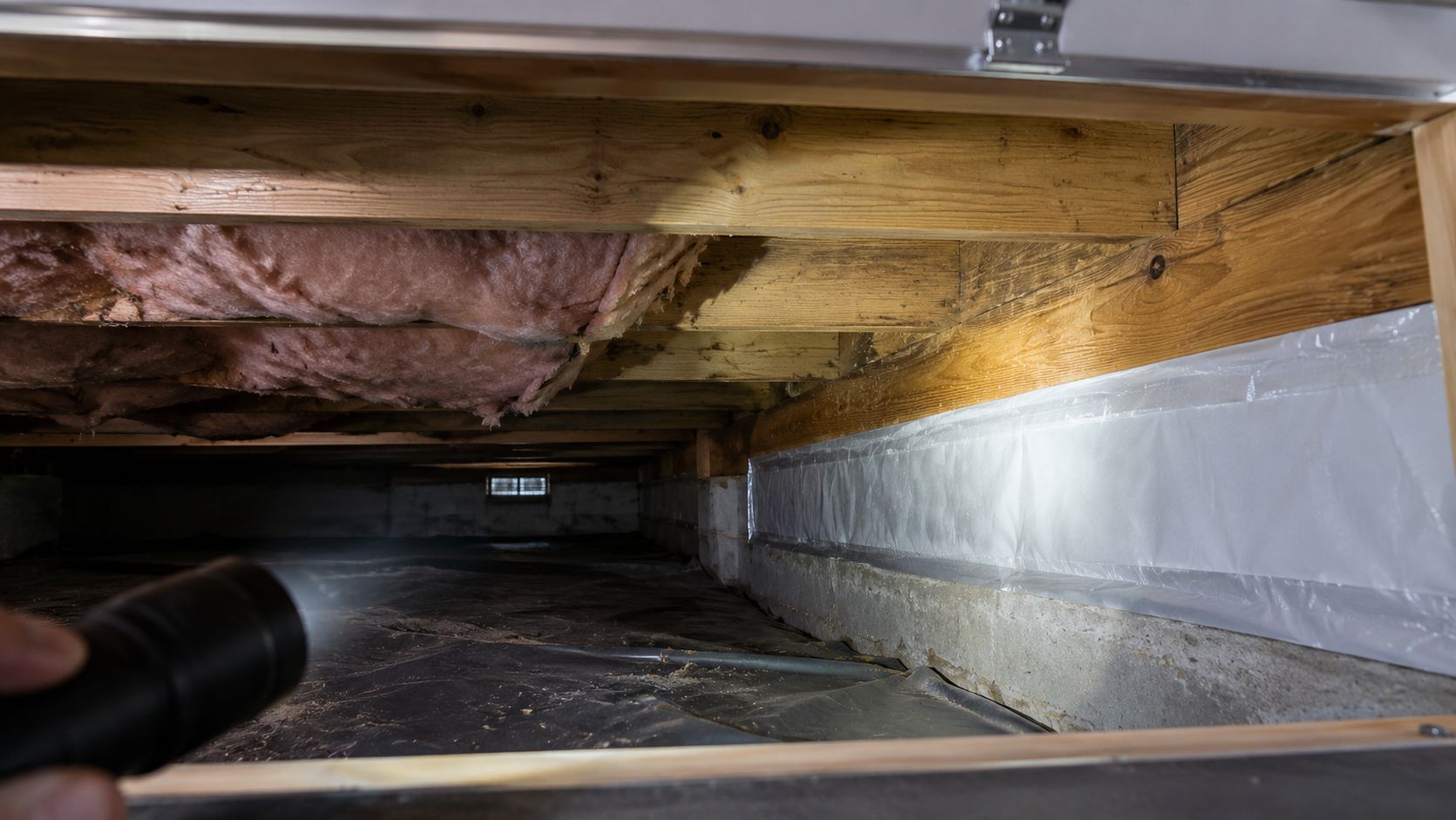
- Visible signs: Standing water, efflorescence on block, sagging insulation, musty odor, wood moisture content readings on framing.
- Vapor barrier coverage and condition.
More likely vs less likely. More likely in homes with vented crawlspaces (the majority of older North Alabama homes), exposed dirt, or any history of plumbing leaks or grading issues. Less likely if the crawlspace is already encapsulated and dehumidified — but worth checking anyway, because encapsulation systems can fail quietly.
Homeowner vs pro: A quick look with a flashlight tells you a lot. Quantifying it and designing a fix (encapsulation, drainage, dehumidifier) is pro work.
5. Dirty Coil, Low Refrigerant, or Restricted Airflow
What it is. Mechanical issues that reduce the AC's actual cooling and dehumidification capacity.
Why it causes muggy air. A dirty evaporator coil insulates the cold surface from the air passing over it, so less moisture condenses. Low refrigerant raises coil temperature, so the coil isn't cold enough to pull water out. A clogged filter or undersized return restricts airflow, which also changes coil temperature and reduces overall performance.
What should be measured or checked:
- Temperature split across the coil — typically 18–22°F between return and supply on a moderate day.
- Static pressure — most residential systems should land under about 0.5" w.c. total external static.
- Refrigerant superheat/subcooling, measured by a tech, not estimated.
- Coil condition via inspection.
More likely vs less likely. More likely if the system has not been serviced in 2+ years, if filters were neglected, or if the temperature split is well outside normal. Less likely if recent maintenance was thorough and documented.
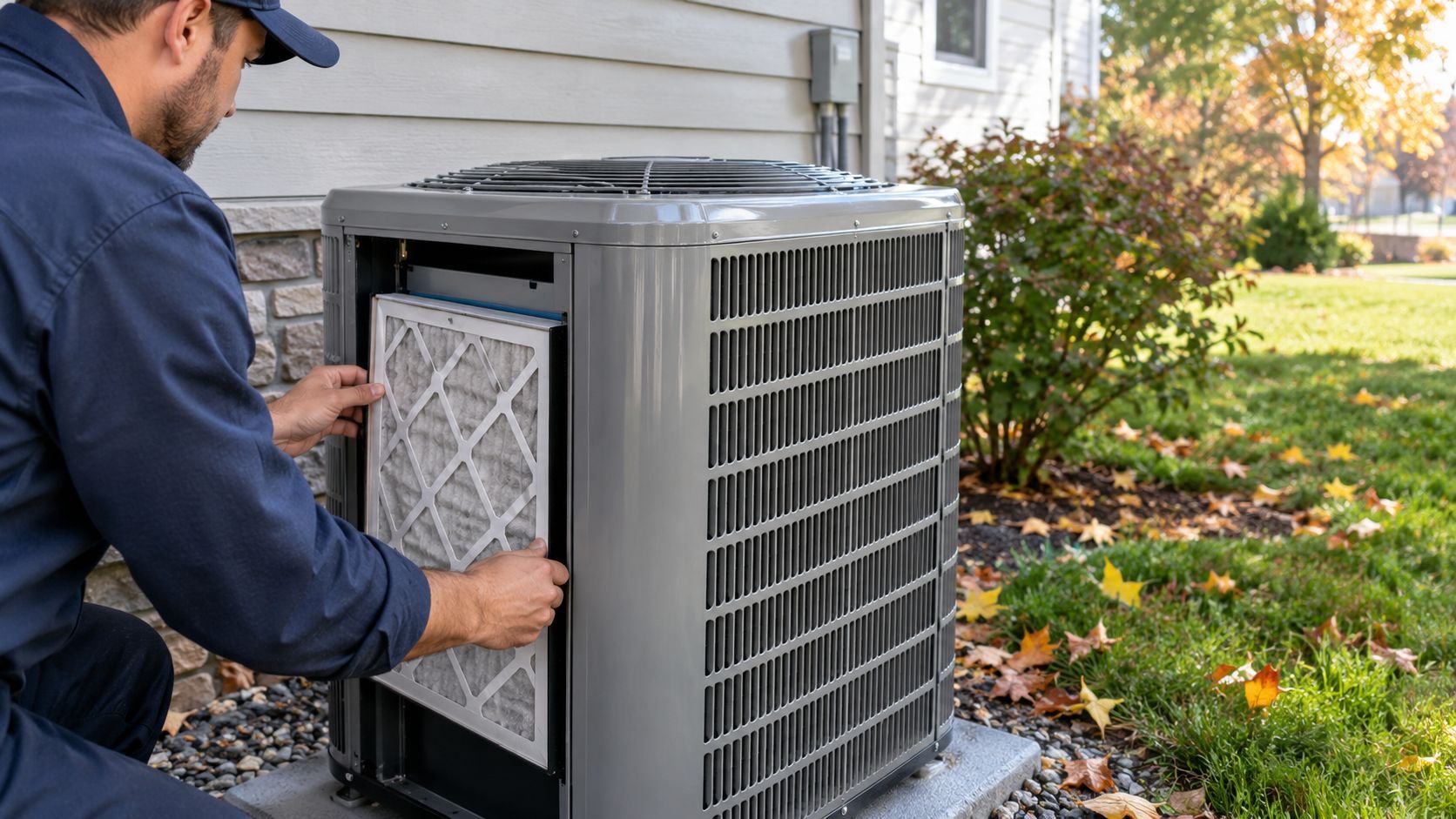
Homeowner vs pro: Filter changes are homeowner-doable. Coil cleaning, refrigerant work, and airflow corrections are pro work.
6. Too Much Outside Moisture Getting In
What it is. Air leakage from the outside, bath fans dumping into attics, unvented dryer ducts, plumbing leaks, or daily moisture sources (cooking, showering, plants, large fish tanks).
Why it causes muggy air. Every gallon of water that enters the home — from a leaky shower drain to a bath fan venting into an attic to humid air sneaking through gaps around recessed lights — adds to the latent load the AC has to handle.
What should be measured or checked:
- Blower door test for whole-home air leakage.
- Visual check of every exhaust fan termination — bath fans and dryers should exit to the outside, not the attic.
- Spot checks under sinks, around tubs, and at any plumbing penetration for hidden leaks.
More likely vs less likely. More likely in older homes, in homes with recent attic work that disturbed ductwork, or where renovations skipped exhaust termination. Less likely in tightly built newer homes with verified ventilation.
Homeowner vs pro: You can check fan terminations from outside the home. Blower door and pressure diagnostics are pro work.
7. The Latent Load Is Simply Bigger Than the AC Can Handle
What it is. Some homes — particularly tighter, better-insulated homes — have a latent load (moisture removal demand) that's too high relative to their sensible load (temperature demand) for any AC to fully cover. The thermostat is satisfied before the moisture problem is.
Why it causes muggy air. Modern building practices reduce heat gain faster than they reduce moisture gain. The AC hits temperature setpoint and shuts off while RH is still uncomfortably high.
What should be measured or checked:
- Latent vs sensible heat ratio in a proper load calculation.
- Whole-home RH trends across the day.
- Whether the home would benefit from a dedicated whole-home dehumidifier integrated with the HVAC system, rather than only adjusting the AC.
More likely vs less likely. More likely in well-insulated, tight homes, in shaded homes with low solar gain, or in homes with high occupancy and moisture-generating activities. Less likely in a leaky 1990s home where the sensible load is still dominant.
Homeowner vs pro: This is firmly a design conversation, not a DIY check.
Why North Alabama Homes Are Especially Prone to This
A few patterns make this complaint especially common in our service area:
- Outdoor dew points stay high for months. Even when the temperature drops at night, the moisture in the air often doesn't. That keeps a steady load on your AC.
- Vented crawlspaces are still the norm in many older Huntsville, Arab, and Guntersville-area homes. They were designed for a different era and a different understanding of building science. In our climate, they often act as a humidity source rather than a relief.
- Ducts are frequently routed through attics or crawlspaces. This puts the part of your system that should be the most protected in the part of the building with the worst conditions.
- Heat pumps are common. They cool well, but they generally have shorter run times in cooling mode than a properly sized variable-speed system would, which can compound humidity problems if they're also oversized.
- A lot of homes were sized by rule of thumb. When a previous contractor sized the equipment by square footage rather than running a Manual J load calculation, oversizing is the usual outcome.
None of this means North Alabama homes are doomed to feel muggy. It just means the design decisions matter more here than they would in a drier climate.
How a Good Contractor Should Diagnose a "Humid With the AC On" Complaint
Anyone can guess. Good diagnosis is measured. If a contractor walks in, glances at the unit, and immediately offers a quote for a new system or a dehumidifier without testing anything, that's a flag.
A thorough diagnostic for this complaint should include, at minimum:
- Indoor RH and temperature readings at the thermostat and in 2–4 representative rooms.
- Run-time observation — actually watching how long the system runs and how often.
- Temperature split across the coil (return vs supply).
- Static pressure at the air handler, both supply and return side.
- Visual inspection of ducts in attics and crawlspaces, including obvious leaks, crushed flex, missing insulation, and disconnected joints.
- Crawlspace inspection: RH reading, vapor barrier condition, signs of standing water, musty odor, wood moisture if relevant.
- Filter and coil condition.
- Thermostat fan setting and any installed dehumidification controls.
For complex cases — a home where humidity has been a problem for years, or where multiple of the causes above appear to overlap — a Home Comfort Consult is the more thorough path. It is a building + HVAC diagnostic that treats the house as a system: blower door for leakage, zonal pressure mapping, room-by-room airflow, duct leakage testing, crawlspace and attic assessment, and a written plan that ranks fixes by impact. If indoor air quality is the bigger concern — odors, dust, allergy-trigger questions, mold worries — a Home Air Health Study layers in a week of continuous indoor air monitoring on top of the building assessment, so we can see what your air is actually doing across days and conditions.
The goal in both cases is the same: stop guessing, start measuring, and only spend money on the work that the data shows will actually move the needle.
When to Act — and What Happens If You Wait
A muggy house isn't an emergency. But it isn't a stable condition either.
Sustained high indoor humidity has a few realistic consequences worth knowing about:
- Comfort. Sticky air feels warmer than it is. Many homeowners with humidity problems set their thermostats 2–4 degrees lower than they would need to in a dry house, which means longer run times and more wear on the equipment.
- Moisture and mold risk. When RH stays above 60% indoors for long stretches, you create conditions where mold growth becomes possible on cooler surfaces — behind furniture against exterior walls, in closets, around supply registers, and in the crawlspace. "Possible" is not the same as "certain," but the risk rises with time.
- Equipment stress. A system that's constantly short-cycling or struggling against an oversized latent load wears out faster than one that's correctly matched to the home.
- Air quality concerns. Damp environments can support dust mites, can contribute to musty odors, and can make people who are sensitive to indoor air feel worse. We do not promise that fixing humidity will resolve health symptoms, but lowering the moisture in your home removes one variable that may be contributing.
There can also be a modest secondary efficiency benefit when humidity is brought under control — a drier home feels cooler at the same temperature, so you can often raise the thermostat a degree or two without losing comfort. We mention this last on purpose. It's a real benefit, but it's not the reason to fix the problem.
Ready to Get a Clear Answer?
If your North Alabama home stays muggy with the AC running and you'd like to actually understand why — not just have someone swap parts — the next step is a thorough diagnostic.
For a single, well-defined issue, an HVAC service visit is often enough. For a longer-running comfort problem with multiple suspected causes, the Home Comfort Consult is built for exactly this kind of investigation. If air quality and moisture are the larger concern, the Home Air Health Study adds a week of indoor air monitoring so the picture is based on data, not a single visit.
The Study also carries our Breathe-Easy Clarity Guarantee: if at the end of the review you don't feel clear on what's happening in your home and what your next steps are, you don't pay. Our job is to leave you informed, not confused.
[Schedule a Home Comfort Consult →] [Learn about the Home Air Health Study →]
About the Author
Tanner Dickerson is the owner of Dickerson Services, a North Alabama HVAC, home performance, and crawl space encapsulation company serving Huntsville, Arab, Guntersville, Albertville, and the surrounding area. He works with homeowners on complex comfort, humidity, and
indoor air quality
problems by treating the whole house as a system — HVAC, ducts, crawlspace, air sealing, insulation, and ventilation together.
Share this article