
How Often Should I Change My HVAC Filter During Pollen Season in Arab, AL?
July 14, 2026
Every spring, the same thing happens across Arab and the rest of Sand Mountain: a yellow-green film settles on truck hoods, porch rails, and patio furniture, and the question lands in our inbox not long after — "How often should I be changing my filter with all this pollen?"
It's a good question, and the real answer is more useful than the "every 90 days" rule printed on the filter box. That number was never written for a North Alabama home running its system hard through a heavy oak and pine pollen stretch. The honest answer depends on the filter you have, how much your system runs, and how much pollen is actually getting pulled into your return air.
Below is how we think about filter-change timing for homeowners in Arab, Guntersville, and the surrounding area — what changes the schedule, how to read the filter itself, and when a filter that loads up too fast is telling you about a bigger problem in the system.
If your underlying question is which filter to buy — what MERV rating, 1-inch versus 4-inch, whether HEPA is an option — start with our companion article,
What Is the Best HVAC Filter for Allergies and Pollen in a North Alabama Home?. This post is about timing: how often to change whatever filter you already have.
Quick Answer
- Pollen season here is long. In North Alabama, tree pollen (oak, pine, hickory, sweetgum) runs heavy from roughly late February into May, grass pollen carries through summer, and ragweed takes over from late August into the first hard frost. Your filter works hardest across that whole stretch, not just one month.
- Standard 1-inch filter: Check it every 2 weeks during pollen season and plan to change it every 30 to 60 days — sometimes sooner during a heavy oak-and-pine week. The thin media loads up fast.
- 4-inch or 5-inch media filter: These last 6 to 12 months in normal conditions, but pollen season pulls them toward the shorter end. Inspect at the start of spring and again mid-summer, and change when it's loaded rather than strictly by the calendar.
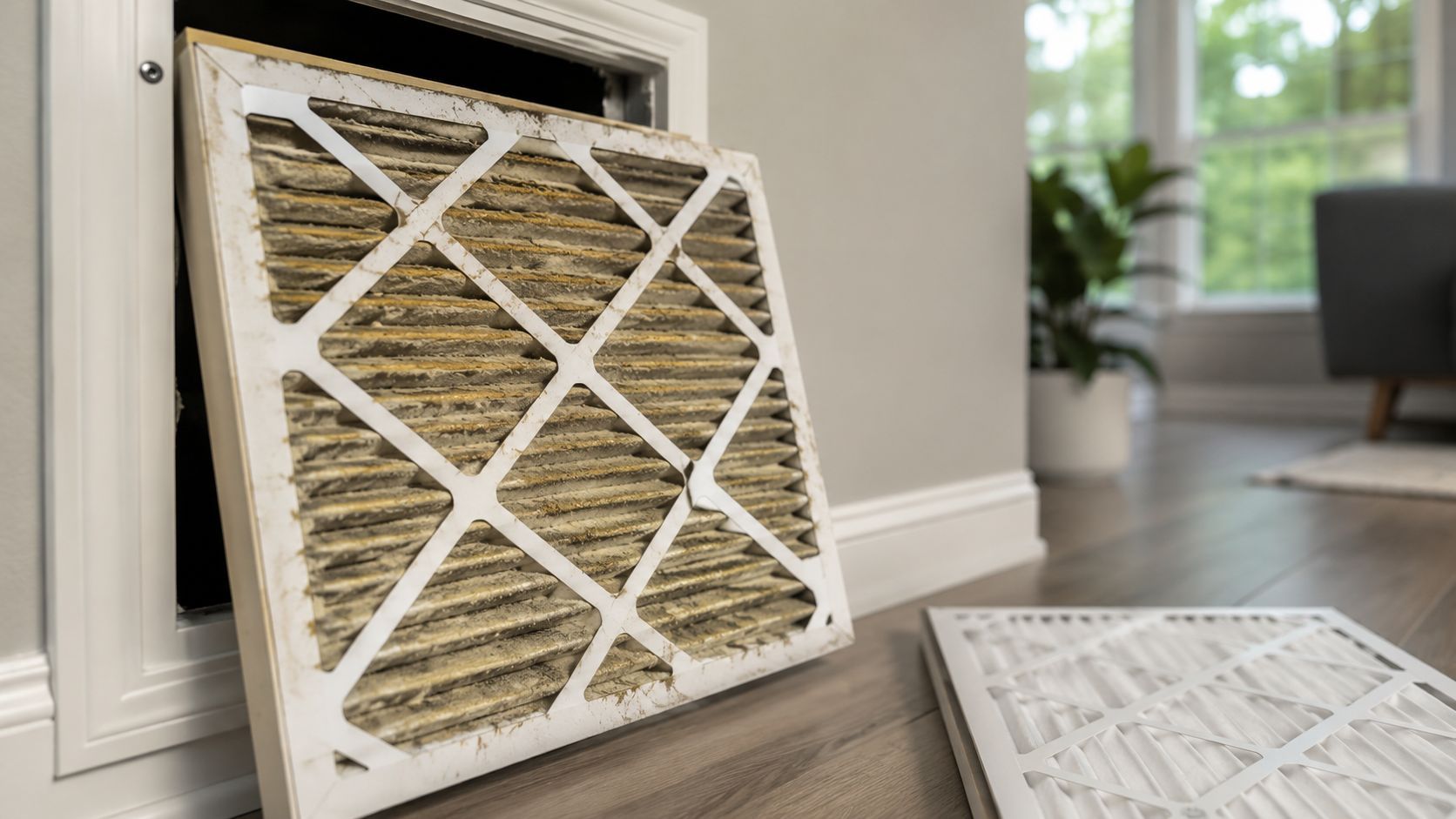
- The rule that beats any calendar: Inspect on a schedule, change by condition. A filter that has gone from white to gray-brown across most of its surface is done — it isn't filtering "better" when it's dirty, it's just choking your airflow.
- What speeds up the schedule: heavy runtime (your AC running most of the day in an Arab summer), a higher MERV rating, pets, open windows, and dirt roads or fieldwork nearby all load a filter faster.
- A loaded filter causes real problems, not just dirty air: longer run times, weak airflow from the vents, rooms that won't keep up, and in cooling season a frozen evaporator coil. If you see those signs, check the filter first.
- When to call a pro: If you're changing a filter every few weeks and still fighting dust or weak airflow, the filter may not be the real issue — the filter housing, return-duct leaks, or system airflow could be. A proper check includes a static pressure reading.
What This Article Is About — and What It Is Not
This post is for homeowners who already have a filter in their system and want to know how often to swap it once the pollen starts flying.
It is not a guide to choosing a filter. If you're trying to decide between MERV 8, MERV 11, and MERV 13, or wondering whether a 4-inch media cabinet or even inline HEPA is right for your home, that's a different (and important) decision covered in What Is the Best HVAC Filter for Allergies and Pollen in a North Alabama Home?.
It is also not a medical article. We won't tell you whether changing your filter more often will relieve specific allergy or asthma symptoms — that's a question for a physician. What we can do is explain how to keep the filter doing its job, because a clean filter that isn't choking your airflow is the version that captures the most pollen.
And it is not about a system that won't turn on or won't cool at all. If your air isn't cold, start with
Why Is My AC Not Blowing Cold Air? instead.
The Honest Answer: It Depends on Six Things
There's no single correct interval, because two homes a mile apart in Arab can need wildly different schedules. Here are the variables that actually move the number, ranked roughly by how much they matter.
1. Filter Thickness (the Biggest Factor)
This is the single largest driver of how often you'll be changing a filter.
A standard 1-inch filter has a small amount of pleated media, so it fills up quickly. During pollen season, a 1-inch filter in a typical North Alabama home needs attention every 30 to 60 days, and during a heavy stretch it can load up in as little as three to four weeks.
A 4-inch or 5-inch media filter has roughly four to five times the surface area of a 1-inch filter. All that extra pleated media holds far more pollen and dust before airflow is affected, which is why these filters typically run 6 to 12 months. Even in pollen season, a 4-inch filter usually only needs to be pulled toward the shorter end of that range — not changed monthly.
If you find yourself changing a 1-inch filter constantly and want off that treadmill, a dedicated media cabinet is the fix. That's a Clean Air Essentials conversation, and it's covered in the filter-selection article linked above.
2. MERV Rating and Filter Density
The higher the MERV rating, the finer the particles a filter captures — and, all else equal, the faster it loads, because it's pulling more material out of the air.
A denser
MERV 11 or MERV 13 filter will generally need changing a little more often than a basic
MERV 8 of the same thickness, simply because it's catching more. That's not a reason to drop to a lower MERV; capturing more pollen is the entire point during allergy season. It just means a higher-performing filter earns a slightly tighter schedule. (For why MERV rating and housing have to be matched — and why a high-MERV 1-inch filter can cause airflow trouble — see the filter-selection guide.)
3. How Much Pollen Is Actually in the Air
This is the seasonal driver, and it's why "every 90 days" falls apart here.
On a calm winter day, very little is entering your home. During a peak oak-and-pine week in April — the kind that coats every car in Arab yellow overnight — the pollen load in your return air can be many times higher. The filter doesn't know what month it is; it only knows how much material is hitting it. A filter that would last three months in January can load up in a few weeks during peak bloom.
This is exactly why we recommend inspecting on a fixed schedule during pollen season rather than trusting a single change date.
4. How Many Hours a Day Your System Runs
A filter only catches pollen when the blower is moving air through it. The more your system runs, the more air — and pollen — passes through the media.
In an Arab summer, a properly working AC may run the better part of the day, especially during a humid stretch. More runtime means a faster-loading filter. A home with the system cycling on and off all day in July will go through filters faster than the same home in a mild week of open windows and the system mostly off. Variable-speed and high-efficiency systems that run longer at low speed (which is good for comfort and humidity) also move more total air through the filter over a day, which is worth keeping in mind on the schedule.
5. Pets, People, Dust, and Nearby Activity
Everything else your filter pulls out of the air shares space with the pollen.
Homes with
shedding pets, more people, frequent cooking, or recent remodeling will load filters faster year-round, and pollen season stacks on top of that. In and around Arab specifically,
dirt and gravel roads, tractor and fieldwork, and chicken-house country put more coarse dust in the outdoor air than a typical subdivision would. If you live off a dirt road or back up to a field, assume the shorter end of every interval here.
6. Open Windows and Outdoor Air Infiltration
The more outdoor air gets into the house, the more pollen your filter has to deal with.
Open windows on a nice spring day feel great, but they let pollen straight into the living space, where it eventually reaches the return and the filter. The same is true of a leaky house — gaps around the band joist, an unsealed
crawlspace, and leaky return ducts running through an attic all pull unfiltered outdoor air into the system. A leaky home in pollen season is asking its filter to do more work, faster. (This is also why filtration alone never fully solves a pollen complaint — more on that below.)
A Simple Rule: Inspect on a Schedule, Change by Condition
With six variables in play, no fixed calendar date is right for every home. So we give homeowners a method instead of a single number:
inspect on a schedule, change by condition.
How to "Read" a Filter in 10 Seconds
Pull the filter out and hold it up to a light — a window or a phone flashlight behind it works fine.
- Still mostly white, light still passes through easily: it's fine, put it back.
- Even gray, light is dimmed but visible: you're getting close; check again in a couple of weeks.
- Gray-brown, matted, light barely passes through: it's done. Change it now.
A dirty filter does not filter better. Once the media is loaded, it stops capturing efficiently and starts strangling your airflow, which causes the system problems we describe further down. The goal is a filter that's doing real work but hasn't choked off the air.
A Realistic Pollen-Season Schedule
Here's a practical default for a North Alabama home, assuming normal use:
- 1-inch filter: Inspect every 2 weeks from late February through fall. Expect to change it every 30 to 60 days, sooner during a heavy bloom week.
- 4-inch / 5-inch media filter: Inspect at the start of spring, again mid-summer, and once early fall. Change when it's loaded — often once during the pollen stretch, occasionally twice for high-runtime or high-pollen homes.
- Households with pets, dirt-road dust, or a sensitive family member: move every interval above to the shorter end, and consider keeping a spare filter on hand so a change is never delayed.
If keeping up with this isn't realistic in a busy season, scheduled filter changes are one of the things included in a
Maintenance Membership — we track the interval and handle it so a loaded filter never sits in the system for two extra months.
Why Pollen Season Hits Arab and North Alabama Homes Hard
A few things about our area make filter timing matter more than the generic advice assumes:
- A long, layered pollen season. Tree pollen (oak, pine, hickory, sweetgum) is heavy from late winter into May, grass pollen carries through summer, and ragweed runs from late August to the first frost. There isn't really an "off" stretch from spring through fall — the source just changes.
- Heavy, visible tree pollen. Oak and pine pollen in particular are coarse and abundant on Sand Mountain. When you can see it on your car, your return air is pulling it in too.
- Long cooling runtime. Hot, humid Arab summers keep systems running for hours a day, which means more air — and more pollen and dust — moving through the filter than in a milder climate.
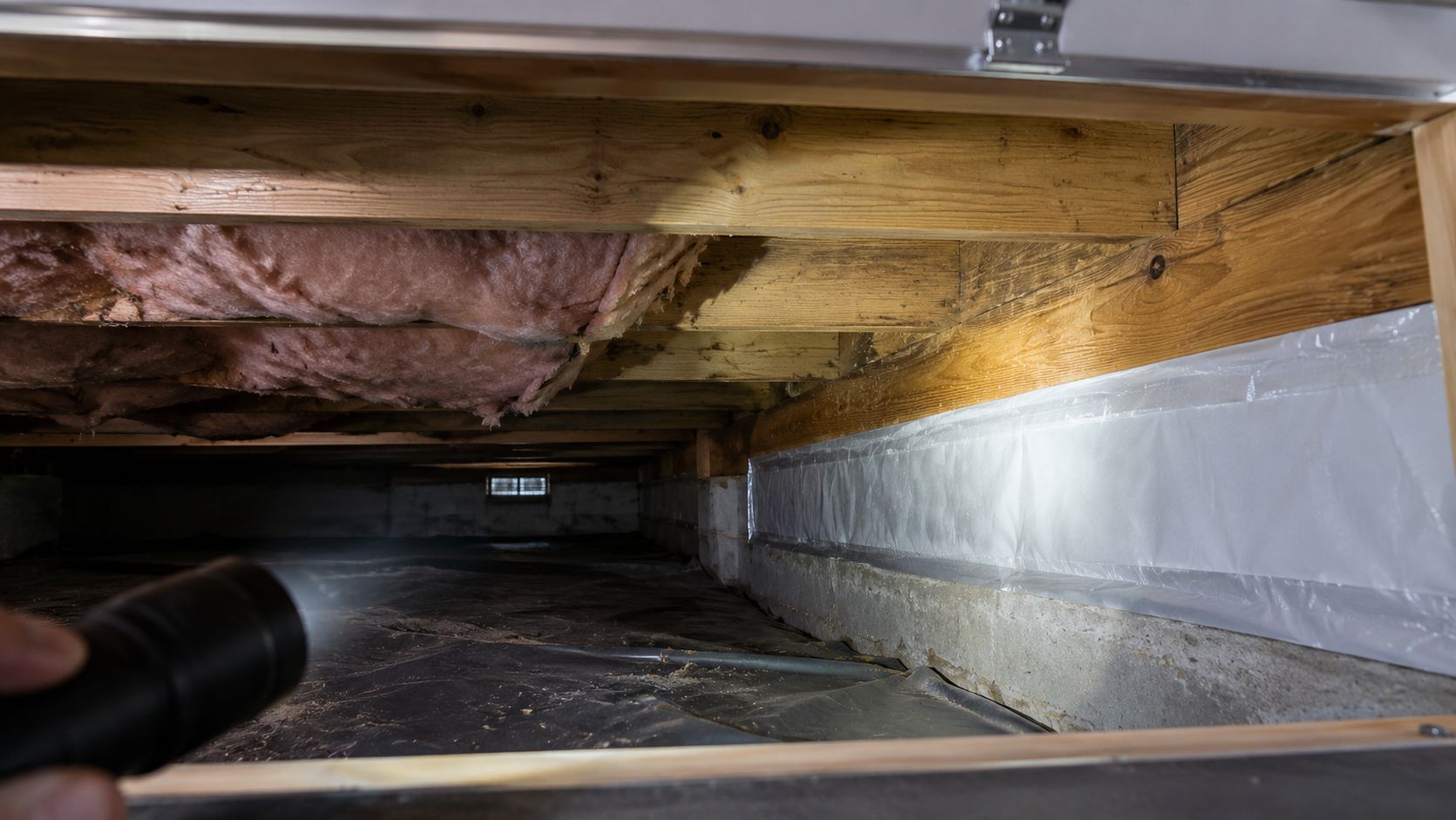
- Leaky, vented crawlspaces are common. Many homes around Arab and Guntersville have crawlspaces open to outside air. Pollen, dust, and humidity ride into the living space through return leaks and floor penetrations, giving your filter extra work it was never sized for. (See What Should Indoor Humidity Be in a North Alabama Home? for the moisture side of this.)
- Rural dust. Dirt roads, gravel drives, fieldwork, and poultry operations put more coarse particulate in the outdoor air across much of Marshall County than a typical city lot sees.
The throughline is the same one that shows up across most of our work:
the filter is one part of a system, and the system is the house. A great filter changed on time still can't out-run a steady source of pollen pouring in through a leaky crawlspace or open windows. Timing the filter well helps; pairing it with source control is what actually moves the needle.
How a Good Contractor Looks at a Filter That Loads Too Fast
Most of the time, changing your filter on a sensible pollen-season schedule is a simple homeowner task — no professional needed. But there's a point where a filter question becomes a system question, and it's worth knowing where that line is.
If you're changing a filter every two or three weeks and still seeing dust on the furniture or feeling weak airflow from the vents, the filter interval isn't really the problem. A thorough look should include:
- A static pressure reading at the air handler. Most residential systems are designed for about 0.5" of water column of total external static pressure; many run well above that even before the filter is considered. A too-restrictive filter in the wrong housing pushes it higher and starves the system. This is the single most useful measurement, and most companies never take it.
- A look at the filter housing itself — size, fit, and whether air is slipping around the filter (bypass) instead of through it. A loose 1-inch filter can lose a meaningful share of airflow to bypass, which means pollen-laden air sails right past the media no matter how often you change it.
- An inspection of the return ducts in the attic or crawlspace for leaks that pull unfiltered outdoor air — and pollen — straight into the system, bypassing the filter entirely.
- A conversation about the household — pets, sensitivities, runtime, the home's location relative to fields and dirt roads — to decide whether the right answer is a schedule change, a better filter housing, or source control like crawlspace and duct sealing.
For a home where pollen and air-quality complaints come back every year, our Home Air Health Study is the more complete path — a week of continuous indoor air monitoring (particulate, humidity, VOCs, CO₂, temperature) plus a building and HVAC assessment, so you can see what your air is actually doing across days and conditions instead of guessing. For a broader comfort or airflow investigation, the Home Comfort Consult is the right starting point.
The principle in both is the one we come back to constantly: stop guessing, start measuring, and only spend money on the work the data shows will actually help.
What Happens If You Leave a Loaded Filter In
Skipping a change during pollen season doesn't just mean dirtier air. A clogged filter creates a chain of real, measurable problems:
- Weak airflow and uneven rooms. As the filter loads, less air reaches the far rooms first. The back bedroom stops keeping up, and the system runs longer to try to catch up.
- Frozen evaporator coil. This is the big one in summer. When a loaded filter starves airflow across the indoor coil, the coil can get too cold and ice over, which shuts down cooling entirely until it thaws. A surprising share of "my AC quit in July" calls trace back to a filter no one had changed since spring. (We walk through this in detail in Why Is My AC Frozen Up in the Summer?.)
- Longer run times and more strain. A blower fighting a clogged filter works harder and runs longer to move the same air, which stresses the motor over time.
- Dirtier equipment downstream. What the filter stops catching ends up on the coil, the blower wheel, and the inside of your ducts — the buildup that eventually creates musty odors and the reason "duct cleaning" services exist.
- More pollen recirculating. Once the media is loaded and bypassing, more of the pollen you were trying to capture stays in the air you breathe.
There's also a secondary efficiency cost: a system fighting a starved, clogged filter uses more runtime to do the same work. We mention that last on purpose — it's a real benefit of staying on schedule, but comfort, equipment health, and air quality are the bigger reasons.
None of this is cause for alarm. It's simply why a five-minute filter check every couple of weeks during pollen season is worth the small effort — it heads off the larger problems before they start.
When a Filter Question Is Really a Bigger Question
If you're staying on top of your filter and the air still feels heavy, dust keeps coming back, or certain rooms never seem comfortable during pollen season, the filter isn't the whole story. At that point the useful next step isn't another filter change — it's a measurement of what your system and your house are actually doing.
A focused service question — weak airflow, a frozen coil, a system that won't keep up — is usually a standard HVAC service visit. For a recurring air-quality complaint where filtration is one piece of a larger picture, the Home Air Health Study is built for exactly this kind of investigation. The Study also carries our Breathe-Easy Clarity Guarantee: if at the end of the review you don't feel clear on what's happening in your home and what your next steps are, you don't pay. Our job is to leave you informed, not confused.
Schedule a Home Comfort Consult →
Learn about the Home Air Health Study →
Frequently Asked Questions
How often should I change a 1-inch HVAC filter during pollen season?
For a standard 1-inch filter in a North Alabama home, plan on every 30 to 60 days during pollen season, and check it every two weeks. During a heavy oak-and-pine stretch — or if you have pets, live off a dirt road, or run your system hard — it can load up in as little as three to four weeks. The most reliable test is the filter itself: if it's gone gray-brown and light barely passes through it, change it, regardless of the date.
Do I really need to change a 4-inch media filter more often in spring?
Not necessarily more often, but you should inspect it more often. A 4-inch or 5-inch media filter normally lasts 6 to 12 months because it has four to five times the media of a 1-inch filter. Pollen season pulls it toward the shorter end of that range, especially in a high-runtime home, so check it at the start of spring and again mid-summer and change it when it's loaded rather than waiting out the full calendar interval.
Will changing my filter more often help my allergies?
A clean filter captures pollen and dust more effectively than a clogged one, so keeping up with changes helps your system remove more of the particles that can trigger symptoms. That said, we're careful not to promise medical results — reducing indoor pollen is one helpful variable, but allergy and asthma symptoms have many causes and are best handled with a physician. The home side is about lowering the particle load you can control; for some people that brings real relief, for others it's one piece of a bigger picture.
Can a dirty filter really freeze my AC or break it?
Yes. A clogged filter starves airflow across the indoor coil, and in cooling season that can drop the coil below freezing until it ices over and stops cooling entirely. It also makes the blower work harder and run longer, which adds strain over time. Many mid-summer "my AC quit" calls in our area trace back to a filter that hadn't been changed since spring. Staying on a pollen-season schedule is one of the cheapest ways to avoid an emergency call. You can read more in Why Is My AC Frozen Up in the Summer?.
I'm changing my filter constantly and still have dust — what's wrong?
When a sensible schedule isn't keeping up, the filter usually isn't the real problem. The most common culprits are air bypassing a loose-fitting filter, return-duct leaks pulling unfiltered attic or crawlspace air into the system, or an undersized filter housing that can't run a good filter without choking airflow. The way to know is to measure — a static pressure reading and a look at the filter housing and return ducts will show whether you need a better setup or source control rather than yet another filter. That's the kind of thing a Home Comfort Consult is designed to pin down.
About the Author
Tanner Dickerson is the owner of Dickerson Services, a North Alabama HVAC, home performance, and
crawl space encapsulation
company serving Huntsville, Arab, Guntersville, Albertville, and the surrounding area. He works with homeowners on complex comfort, humidity, and indoor air quality problems by treating the whole house as a system — HVAC, ducts, crawlspace, air sealing, insulation, and ventilation together.
Summary
During pollen season in Arab and North Alabama, check a 1-inch HVAC filter every two weeks and change it every 30–60 days (sooner during heavy oak-and-pine weeks), while a 4-inch or 5-inch media filter lasts 6–12 months but should be inspected at the start of spring and mid-summer — the reliable rule is inspect on a schedule, change by condition, because a loaded filter chokes airflow, can freeze the AC coil, and stops capturing the pollen you're trying to remove.
Share this article