
Why Is My AC Frozen Up in the Summer? A Huntsville, AL Homeowner's Guide
July 1, 2026
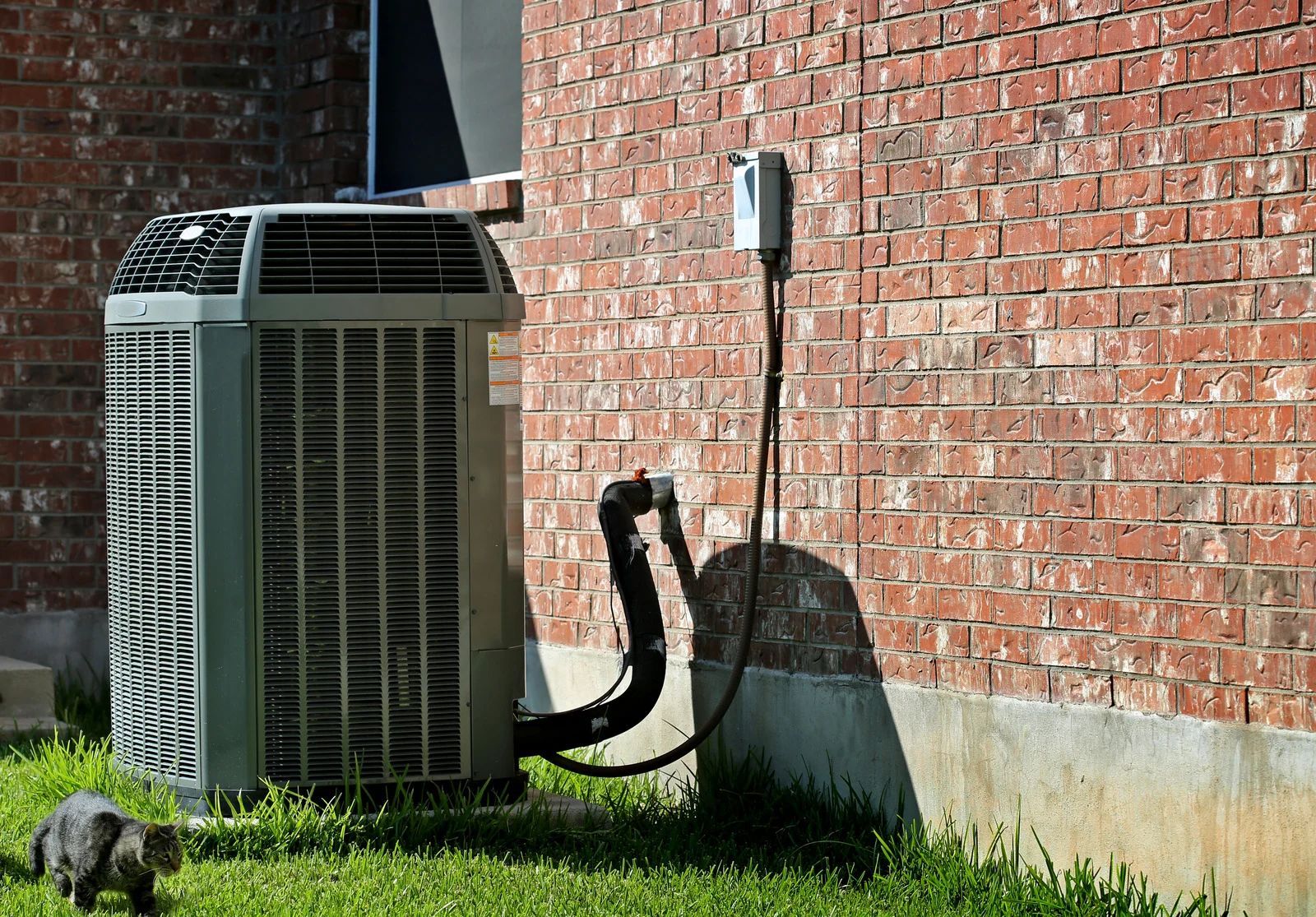
It's mid-July in Huntsville. The thermostat is set to 72, the system has been running most of the day, and the house is slowly getting warmer instead of cooler. You walk over to the indoor unit in the closet — or step out to the condenser — and you see something that looks completely wrong for a 95°F afternoon: ice. A thick frost on the copper line, or a sheet of it built up on the indoor coil.
A frozen air conditioner in the middle of summer feels like a paradox, but it's a specific signal. It almost always means one of two things: the system isn't getting enough airflow across the indoor coil, or it doesn't have enough refrigerant to do its job correctly. The good news is that the first checks are simple, safe, and free. The harder news is that running a frozen system for very long can turn a cheap repair into an expensive one.
Quick Answer
- What the symptom usually means: Your indoor coil is getting too cold. Either there isn't enough warm room air flowing across it, or the refrigerant charge is low. Both let surface temperatures drop below 32°F, and the humidity in your home freezes onto the coil and copper lines.
- Most likely causes (in plain language):
- A dirty air filter choking airflow.
- Closed, blocked, or crushed supply vents and return grilles.
- A dirty evaporator coil that air can't move through.
- Low refrigerant from a slow leak.
- A weak or failing blower motor.
- Running the AC on a cool night (outdoor temps below about 60°F).
- Safe homeowner checks:
- Turn the system OFF at the thermostat. Set the fan to ON so the blower can help melt the ice. Do not run cooling on a frozen coil.
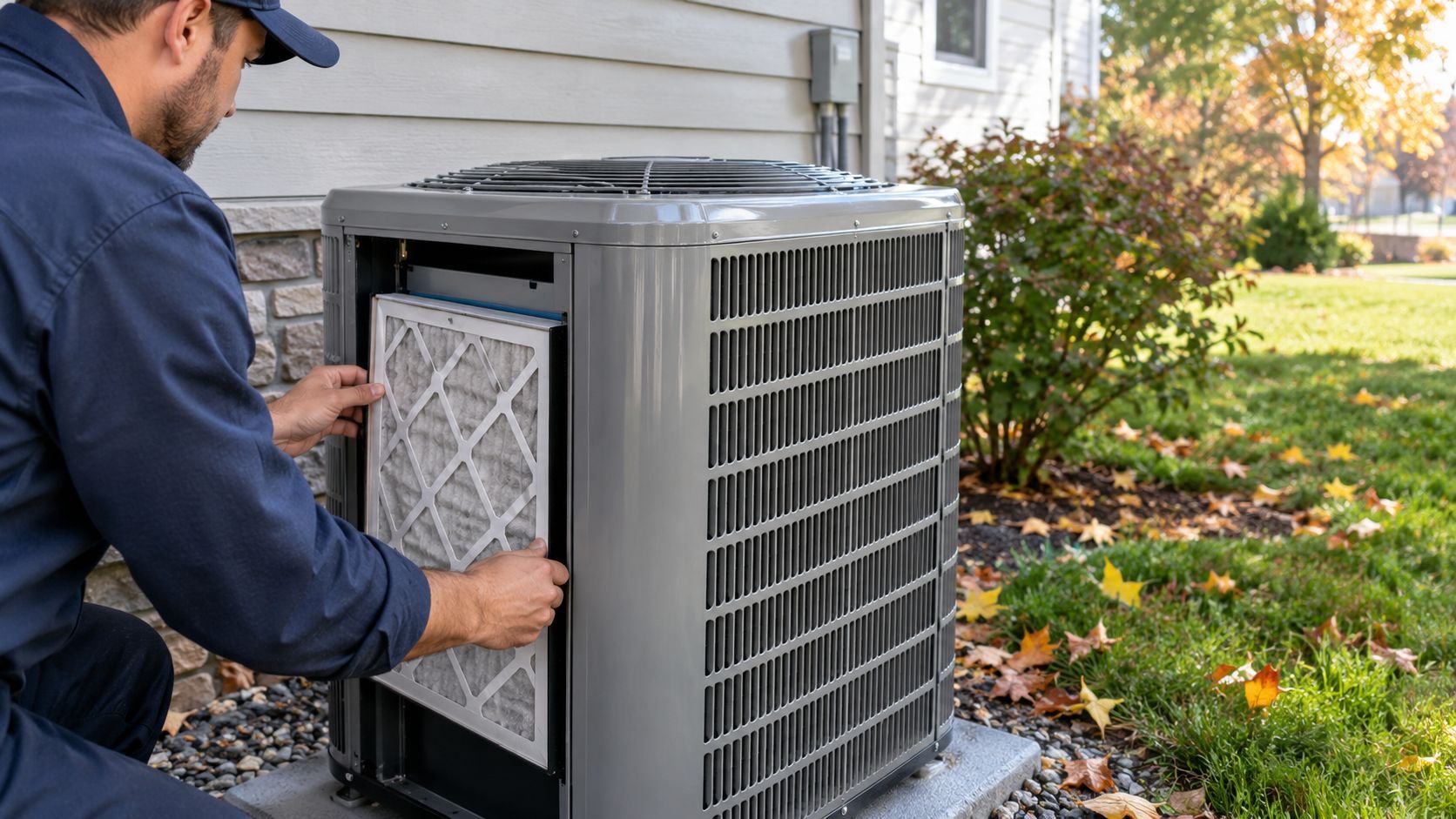
- Check the filter — replace it if you can't see light through it.
- Walk every room and make sure supply vents and return grilles are open and not blocked by furniture or rugs.
- Look for ice on the indoor coil and on the larger copper line at the outdoor unit. Let it fully thaw before turning cooling back on (often 1–4 hours, sometimes longer).
- When to call a pro: If the system freezes again after a full thaw with a clean filter and open vents, or if you see ice every time it runs. Repeated freeze-ups almost always point to refrigerant, blower, or coil problems that need a measured diagnosis — not a guess.
What This Article Is About — and What It Is Not
This post is for homeowners whose AC has visible ice or frost on the indoor coil, the air handler, or the large copper line running to the outdoor unit — and is either blowing weak, warm air or barely blowing at all.
This is not an article about:
- A system that's running and blowing room-temperature air but has no ice on it. If your AC is on but not cold and you don't see frost anywhere, start with Why Is My AC Not Blowing Cold Air? instead.
- A system that won't start at all — no hum, no fan, nothing.
- A house that feels cold enough but still feels sticky and damp. That's a humidity problem with its own causes — see Why Your North Alabama Home Still Feels Humid With the AC Running.
If you can actually see ice on your equipment, you're in the right place.
How an AC Coil Actually Freezes (The Quick Physics)
You don't need to be a technician to understand this, but the picture makes every cause below easier to follow.
Your air conditioner has two coils. The indoor coil (the evaporator) is where cold refrigerant absorbs heat from the air your blower pushes across it. Under normal summer operation, that coil's surface sits somewhere around 40°F — cold enough to pull heat and moisture out of your room air, but well above freezing.
A coil freezes when its surface temperature drops below 32°F. That happens for one of two reasons:
- Not enough warm air is moving across the coil to keep its surface above freezing. The refrigerant keeps pulling heat, but there's so little air supplying that heat that the coil overshoots and starts icing up. Anything that chokes airflow — a clogged filter, a dirty coil, closed vents, a weak blower, undersized ducts — can do this.
- The refrigerant pressure is too low, which causes the refrigerant to boil at a lower temperature than designed. A low-pressure refrigerant is a colder refrigerant, and a colder refrigerant freezes the coil even with normal airflow. This almost always means a leak.
Once the coil starts to ice up, it becomes its own problem: the ice blocks airflow, which makes the coil even colder, which makes more ice. That's why a small airflow issue can turn into a fully iced-over coil in just an hour or two on a humid Huntsville afternoon.
The Most Likely Causes of a Frozen AC, Ranked
These are the causes we find most often on frozen-AC calls across Huntsville, Madison, Arab, Guntersville, and Albertville — roughly in order of how frequently they're the real culprit. It's common to find two stacked together (a dirty filter that finally tipped a marginally low refrigerant charge into freezing).
1. A Dirty or Clogged Air Filter
What it is. The disposable or washable filter that all of your return air passes through before it reaches the blower and the indoor coil.
Why it causes a freeze-up. A loaded filter starves the system of return air. The coil keeps trying to pull heat out of air that isn't there in the right volume, so its surface drops below 32°F and ice begins to form. This is the single most common cause of a frozen residential AC, and the cheapest to fix.
What should be measured or checked:
- A visual look at the filter. If you can't see light through it, it is overdue.
- The change date. A 1-inch filter in a Huntsville-area home during cooling season often needs changing every 30–60 days, not once a year.
- Static pressure at the air handler, if a tech is involved — a clogged filter shows up as high static.
More likely vs less likely. More likely if it has been more than a couple of months since the filter was changed, if you have pets, or if the air slowly got weaker before the ice appeared. Less likely if you just installed a fresh filter and the freeze-up started anyway.
Homeowner vs pro:
Fully homeowner-doable. If you want help picking the right filter without choking airflow, our guide on choosing an HVAC filter for allergies and pollen walks through the trade-offs.
2. Closed, Blocked, or Crushed Vents and Return Grilles
What it is. Supply registers shut on purpose to "save energy" in unused rooms, return grilles covered by furniture or rugs, or flex duct that has been crushed under attic storage or against a joist.
Why it causes a freeze-up. The system was sized to push a specific volume of air through your ductwork. When you close off supply vents or cover a return, you reduce the total airflow the blower can deliver. Less air across the coil pushes its surface temperature below freezing — same outcome as a dirty filter.
This one surprises a lot of homeowners. Closing vents in spare bedrooms does not save meaningful energy on a modern system — it actually raises duct static pressure, can freeze the coil, and can cause condensation inside the duct.
What should be measured or checked:
- A walk-through of every room to confirm supply vents are open and not blocked.
- Returns clear of rugs, beds, and furniture.
- A quick look at any visible ductwork in the attic or crawlspace for crushed flex.
More likely vs less likely. More likely in homes where vents were closed in unused rooms, where a new piece of furniture was placed over a return, or after attic storage was added. Less likely if every vent has been open all season and nothing in the house has changed.
Homeowner vs pro:
Opening vents and clearing returns is homeowner-doable. Diagnosing duct restriction with static pressure is pro work.
3. A Dirty Evaporator Coil
What it is. The indoor coil has fine aluminum fins, and over time those fins collect a film of dust, pet dander, and skin cells that get past the filter. Eventually that film acts like a second, hidden filter the air has to fight through.
Why it causes a freeze-up. Even with a clean filter and open vents, a coated coil restricts airflow at the coil itself. The same low-airflow physics applies — the surface drops below 32°F and freezes. A dirty coil is also a real indoor air quality concern, because that wet, organic film is exactly the kind of place biological growth can take hold.
What should be measured or checked:
- A visual inspection of the coil (often requires removing an access panel — pro work in many systems).
- Static pressure across the coil.
- Whether the filter has been adequate — a coil only gets dirty when the filter has been bypassed, undersized, or missing.
More likely vs less likely. More likely on older systems that haven't had maintenance in years, in homes that ran without a filter for any stretch of time, or after major renovations dumped drywall dust into the return. Less likely on a newer system with documented maintenance.
Homeowner vs pro: Pro work. Coil cleaning done wrong can bend fins or damage the coating; chemical cleaners on the wrong coil can do more harm than good.
4. Low Refrigerant From a Leak
What it is. The sealed refrigerant charge has dropped below where it needs to be — almost always because of a leak.
Why it causes a freeze-up. Refrigerant boils at a temperature that depends on its pressure. When the charge is low, the pressure inside the indoor coil drops, and the refrigerant boils at a colder temperature than designed. The coil surface drops below freezing even when airflow is normal, and ice builds.
Here's the part that matters most: an AC doesn't "use up" refrigerant. It runs in a closed loop. If you're low, you have a leak somewhere. "Topping it off" every summer without finding the leak vents refrigerant into the air and lets the underlying problem keep growing.
What should be measured or checked:
- Superheat and subcooling readings by a technician — the only honest way to know if the charge is correct.
- A leak search (electronic detector, dye, or bubble test).
- Temperature split across the coil, which runs low when the system is undercharged.
More likely vs less likely. More likely if the system is more than a few years old, if the coil keeps freezing every season, or if a previous tech "added refrigerant" without finding a leak. Less likely on a newer system with no charge history.
Homeowner vs pro: Firmly pro work. Refrigerant handling requires EPA certification, proper gauges, and leak detection tools.
5. A Weak or Failing Blower Motor
What it is. The motor that drives the indoor fan, pushing return air across the coil and out through your ducts.
Why it causes a freeze-up. If the blower is running slower than designed — worn bearings, a failing capacitor, a stuck variable-speed module — it can't move the airflow the coil needs. Same physics as a dirty filter: too little air, coil drops below freezing, ice forms.
What should be measured or checked:
- Measured blower CFM with the system running.
- Static pressure at the air handler.
- Motor amp draw.
- Capacitor health (on PSC motors).
More likely vs less likely. More likely on older systems, after a recent loud-blower or vibration complaint, or after the system briefly tripped and then froze. Less likely on a newer variable-speed system that has been running quietly.
Homeowner vs pro:
Pro work — blower diagnosis requires meters and a proper static-pressure reading.
6. Running the AC on a Cool Night (Below ~60°F Outside)
What it is. Running the AC for hours when outdoor temperatures drop into the low 60s or 50s, which sometimes happens during Huntsville's transitional spring and fall stretches — or during a cool front in early summer.
Why it causes a freeze-up. Residential AC systems are designed to operate above a minimum outdoor temperature, usually around 60°F. Below that, the refrigerant pressures in the outdoor unit drop, the coil surface temperature drops with them, and the coil starts to freeze even with perfect airflow.
What should be measured or checked:
- The outdoor temperature when the freeze-up happened.
- Whether the thermostat was set very low for sleep.
More likely vs less likely. More likely in shoulder seasons and on cool overnight stretches, especially in homes that set the thermostat into the 60s overnight. Less likely during the actual heat of summer.
Homeowner vs pro: Pure homeowner check. On cool nights, open a window instead of running the AC into single-digit refrigerant pressures.
7. A Restrictive or Undersized Duct System
What it is. Ductwork that is too small, too long, has too many sharp turns, or has too few return grilles for the size of the system. Often combined with closed-off rooms or kinked flex duct.
Why it causes a freeze-up. No matter how clean the filter and how healthy the blower, a duct system that can't move the design airflow will starve the coil. This is a structural problem — it freezes the system over and over, regardless of what parts get replaced.
What should be measured or checked:
- Total external static pressure at the air handler.
- Duct sizing relative to the system's nominal CFM.
- Number and size of return grilles.
More likely vs less likely. More likely in homes where an HVAC system was upsized to a larger ton without changing the ductwork, where additions were tacked onto an existing duct trunk, or where the system has chronically iced up for years. Less likely in homes that have been comfortable for many years and only recently developed a freeze-up.
Homeowner vs pro:
Pro work. This is the kind of issue our Home Comfort Consult is built for — measured ductwork, static pressure, and a written plan instead of guesswork.
What to Do Right Now If Your AC Is Frozen (Safe Homeowner Steps)
If you can see ice on your equipment, the priority is to stop running cooling on a frozen coil and let it thaw fully before doing anything else.
- Set the thermostat from COOL to OFF. This stops the compressor from running with restricted airflow.
- Set the fan from AUTO to ON. The blower will keep moving room-temperature air across the coil and melt the ice faster — often the difference between a 4-hour thaw and a 12-hour one.
- Put towels under the indoor unit. A fully iced coil can shed more water than the drain pan was designed to handle in a short time, and you don't want that water on a finished floor or a closet floor.
- Replace the filter while you wait, if it's dirty.
- Open every supply vent and clear every return grille in the house.
- Wait until the ice is completely gone. A partial thaw can leave hidden ice deep in the coil that re-freezes within minutes when you turn cooling back on.
- Set the system back to COOL and fan to AUTO, and watch closely. If ice comes back within a few hours of normal operation, shut the system off and get a real diagnosis — running it longer will only stress the compressor.
If you're worried about heat in the house while the coil thaws, use ceiling fans, close blinds on the sunny side, and run a window unit in one room if you have one. Do not try to chip ice off the coil with a tool — those aluminum fins bend if you look at them wrong, and a damaged coil is an expensive problem of its own.
Why Huntsville and North Alabama Homes See Frozen Coils So Often
A handful of things about our climate and our housing stock make frozen coils especially common in the Huntsville area:
- Long, humid cooling seasons. Our systems run hard for months. That run time surfaces slow refrigerant leaks, weak blower motors, and dirty coils that would limp along unnoticed in a drier climate.
- Aggressive pollen and cottonwood. Huntsville and Madison springs coat everything — including your filter. A filter that loads up fast is a frozen coil waiting to happen if it's not changed on time.
- Ductwork in vented attics and crawlspaces. A lot of homes in Huntsville, Arab, Guntersville, and Albertville route ducts through the hottest, most humid space available. Long, undersized runs through hot attics create high static pressure that's already close to the edge — anything else that restricts airflow tips it over.
- Systems oversized to "be safe." Oversized equipment short-cycles, which gives the coil less stable run time and can interact badly with marginally low refrigerant. Right-sizing matters, and is one of the things we look at carefully on every system design.
- Set-it-low-overnight habits. Huntsville has nights in the 50s well into early summer. A thermostat set into the 60s when it's 58°F outside can ice a coil even on a healthy system.
None of this means North Alabama homes are doomed to freeze every July. It just means the basics — clean filters, open vents, the right refrigerant charge, and healthy blower airflow — matter more here than in a cooler, drier place.
How a Good Contractor Should Diagnose a Frozen AC
Anyone can guess. Good diagnosis is measured. If a technician walks in, sees ice, and immediately wants to "add a pound of refrigerant" without testing anything, that's a flag — you may be paying to top off a leak that never gets found, only to freeze again next month.
A thorough diagnostic for a frozen coil should include, at minimum:
- A full thaw before any readings. You can't trust refrigerant pressures on a coil that still has ice on it.
- Static pressure at the air handler — to reveal a restrictive filter, a dirty coil, blocked vents, or undersized ductwork.
- Temperature split across the indoor coil — return-air vs. supply-air temperature, which on a moderate day should land in roughly the 18–22°F range.
- Refrigerant superheat and subcooling, measured with gauges — the only honest way to know if the charge is right.
- A leak search if the charge is low, so the actual leak gets found and repaired rather than topped off.
- Blower CFM and amp draw, especially on a system that has frozen before.
- A coil inspection for dirt and biological growth.
- A walk-through of the supply and return registers to confirm airflow isn't being strangled in the living space.
For a single, clear cause — a dirty filter, a stuck damper, a failed capacitor — that's an HVAC repair visit, and you should expect a straightforward diagnosis and fix. For a system that keeps freezing, or where the freeze-up is one piece of a longer-running comfort and humidity story, our
Home Comfort Consult is the more thorough path. It treats the house as a system — airflow, refrigerant, ducts, and the building itself — and gives you a written, ranked plan instead of a parts-swap.
When to Act — and What Happens If You Keep Running a Frozen System
A frozen coil on a Saturday afternoon isn't a five-alarm emergency, but it gets more expensive fast if you keep running it:
- Liquid refrigerant returning to the compressor. When a coil is iced over, the refrigerant doesn't get the chance to fully evaporate before heading back to the outdoor unit. Liquid hitting the compressor is one of the most common ways a compressor — the most expensive single part in your system — fails early.
- Water damage. A fully iced coil sheds a surprising amount of water when it thaws. If the drain pan and condensate line can't keep up, that water can overflow onto a finished closet floor, into drywall, or onto a finished ceiling below. In a humid Huntsville-area home, that creates real moisture and mold-risk concerns we'd rather you not deal with.
- A leak getting worse. If low refrigerant is the cause, the leak rarely heals itself. Running the system longer just means more refrigerant lost and a bigger repair when it finally gets diagnosed.
- A blower running outside its design. A weak or restricted blower already working hard against high static pressure tends to fail sooner — often on the hottest day of the year.
There can also be a secondary efficiency benefit to fixing a freeze-up: a system with clean coils, correct airflow, and the right charge does its job with less run time. We mention that last on purpose — it's a real perk, but the reason to fix a frozen AC is to protect your equipment and your home, not chase a number on the power bill.
Many of these freeze-ups are also far less likely to happen at all with regular professional maintenance, which is the whole point of a
maintenance membership — catching a loaded filter, a sluggish blower, or a slow refrigerant leak before it leaves you sweating in front of an iced-over coil in July.
Ready to Get a Real Diagnosis on Your Frozen AC?
If you've thawed the coil, changed the filter, opened every vent, and your Huntsville-area system has frozen up again, the next step is a measured diagnosis — not a parts-swap. An HVAC repair visit is the right fit for a single, well-defined failure, and you'll get a clear explanation of what's wrong and what it costs to fix.
If your system keeps freezing, or the freeze-up is one piece of a longer-running comfort, humidity, or air quality story, the Home Comfort Consult digs into the whole system and gives you a ranked, written plan. For homeowners whose concerns also include air quality, dust, or musty odors, the Home Air Health Study adds a week of indoor air monitoring and carries our Breathe-Easy Clarity Guarantee: if at the end of the review you don't feel clear on what's going on in your home and what to do next, you don't pay.
No scare tactics, no guesswork, no "let's just add some refrigerant and see." Just a real diagnosis and a real plan to get your house cold again.
Schedule an HVAC Repair Visit → Learn about the Home Comfort Consult →
Frequently Asked Questions
How long does it take a frozen AC coil to thaw?
For a partial freeze, expect 1–3 hours with the system off and the fan set to ON. For a fully iced-over coil — the kind where you can see a solid block of frost on the indoor unit or the larger copper line — plan on 4–12 hours, sometimes longer. The most important thing is to wait until the ice is completely gone before turning cooling back on. A partial thaw can leave hidden ice deep in the coil that re-freezes within minutes and gets you right back to where you started.
Can I run my AC if it's frozen?
No. Running cooling on a frozen coil can pull liquid refrigerant back to the compressor, which is one of the most common ways a compressor fails early — and the compressor is the most expensive part in your system. Set the thermostat to OFF, set the fan to ON to help melt the ice, and wait for a full thaw before running cooling again. Use ceiling fans, close blinds, and run a window unit in one room if the heat is unbearable while you wait.
Will a frozen AC fix itself?
Sometimes the symptom goes away after a thaw — especially if the cause was a one-time event like a forgotten filter or a cool night. But if the underlying cause is a slow refrigerant leak, a dirty coil, a weak blower, or a restrictive duct system, the freeze-up will keep coming back. Repeated freeze-ups almost always need a measured diagnosis. If your AC freezes again within a few days of a full thaw with a clean filter and open vents, that's the signal to stop running it and call a pro.
Does a frozen AC mean I need a new system?
Usually not. The most common causes — dirty filter, closed vents, low refrigerant from a leak — are repair items, not replacement items. Even a chronically icing system can often be brought back to normal with a proper diagnosis: leak repair and recharge, a coil cleaning, a duct or blower correction. Replacement only enters the conversation when an older system has multiple stacked issues (a leaking coil, a tired compressor, undersized ducts) and the math on repair versus replacement no longer works in your favor.
Why does my AC freeze up at night but not during the day?
Two reasons usually. First, outdoor temperatures drop overnight, sometimes well below the system's design range. Below about 60°F outside, refrigerant pressures drop enough to freeze the coil even with normal airflow. Second, people often set the thermostat lower for sleep, which keeps the system running continuously through the coldest part of the night and gives the coil more time to ice up. If you're seeing freeze-ups only on cool nights, try setting the thermostat a few degrees higher overnight or switching to fan-only mode. If it freezes on warm nights too, that points to airflow or refrigerant problems that need diagnosis.
About the Author
Tanner Dickerson is the owner of Dickerson Services, a North Alabama HVAC, home performance, and crawl space encapsulation company serving Huntsville, Madison, Arab, Guntersville, Albertville, and the surrounding area. He works with homeowners on complex comfort, humidity, and indoor air quality problems by treating the whole house as a system — HVAC, ducts, crawlspace, air sealing, insulation, and ventilation together.
Summary
A frozen AC coil in summer almost always means the indoor coil is dropping below 32°F because of restricted airflow (dirty filter, closed vents, dirty coil, weak blower, undersized ducts) or low refrigerant from a leak — turn the system off, set the fan to ON to thaw, and get a measured diagnosis before running cooling on it again.
Climate and Plant Selection
Selecting appropriate vegetation is crucial for the success of green roofs in the Mid-Atlantic region. Native and drought-tolerant plants are ideal, ensuring survival during dry spells and high-intensity storms. Sedums, grasses, and other hardy species maintain runoff retention and resist seasonal stress, supporting regulatory compliance throughout the year.
Share this article