
Why Is My AC Not Blowing Cold Air? An Arab, AL Homeowner's Guide
June 24, 2026
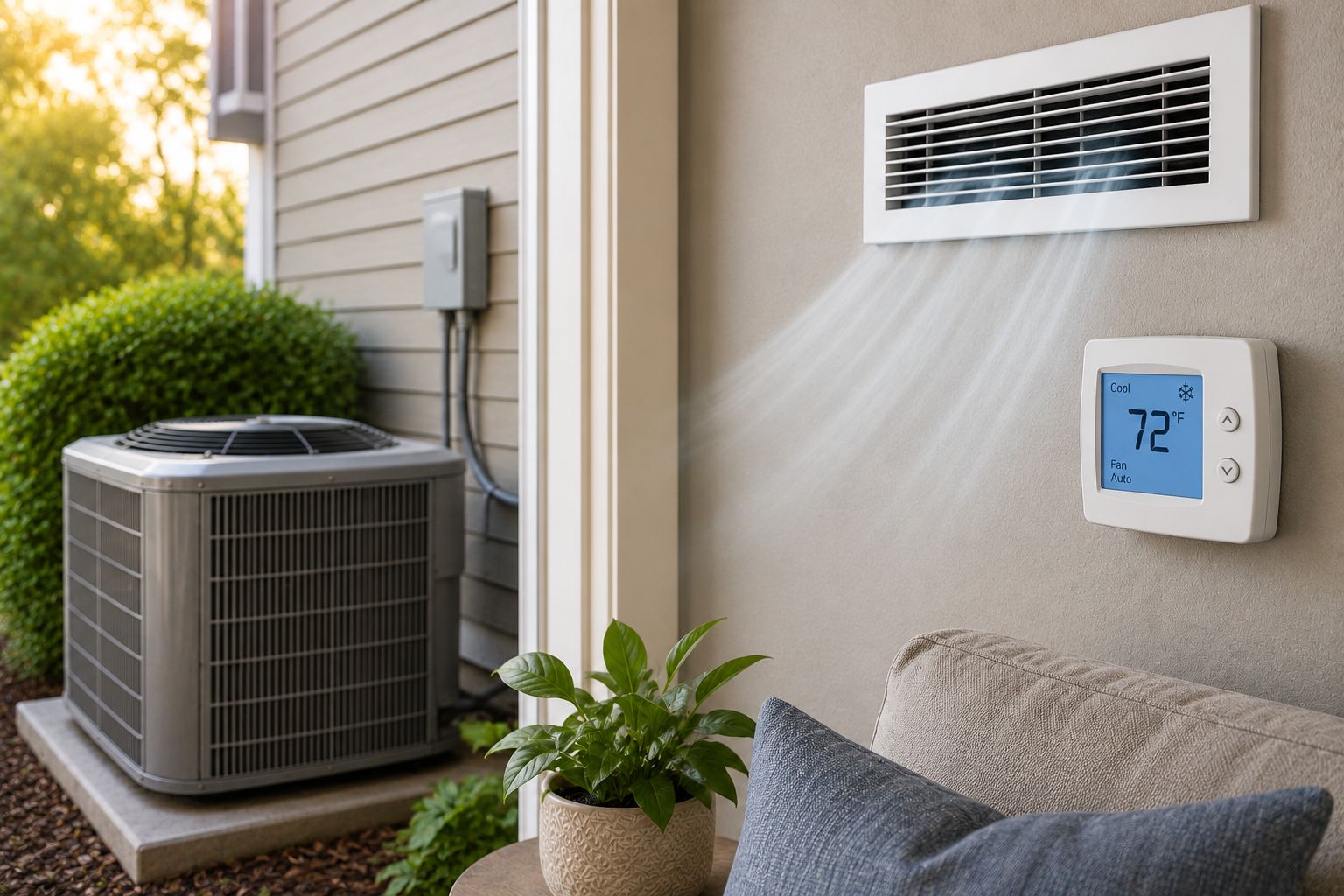
It's a July afternoon in Arab. The thermostat is set to 72, you can hear the system running, and you can feel air coming out of the vents — but it's lukewarm at best. The house is slowly drifting warmer, and you're standing under a register holding your hand up wondering what changed.
The good news: an air conditioner that runs and blows but won't get cold is usually telling you something specific. Sometimes it's a five-minute fix you can handle yourself. Sometimes it's a refrigerant or electrical problem that needs a technician. The trick is knowing how to tell the difference before you spend money — and how to avoid the one or two mistakes that can turn a small repair into a compressor replacement.
Quick Answer
What the symptom usually means: Your blower is moving air, but the system isn't actually removing heat from that air — either because airflow is choked, the coil can't get cold, or the outdoor half of the system isn't doing its job.
Most likely causes (in plain language):
- A dirty air filter choking airflow across the coil.
- A frozen evaporator coil — a block of ice on the indoor unit or the copper lines.
- A dirty or blocked outdoor unit that can't dump heat outside.
- A thermostat set to fan "ON" instead of "AUTO," so it blows room-temperature air between cooling cycles.
- The outdoor unit not running at all (tripped breaker, failed capacitor, bad contactor).
- Low refrigerant from a leak — which almost always needs a pro.
Safe homeowner checks:
- Look at your filter. If it's gray and packed with dust, replace it.
- Set the thermostat fan to AUTO (not ON) and confirm it's in COOL mode, set below room temperature.
- Walk outside and confirm the outdoor unit's fan is spinning and the coil isn't buried in grass clippings, leaves, or cottonwood fluff.
- Check whether the indoor coil or the copper lines have ice on them. If they do, turn the system off and let it thaw before running it again.
When to call a pro: If the filter is clean, the thermostat is set correctly, the outdoor unit is clear, and the air still isn't cold — or if you find ice, the outdoor fan isn't spinning, or it keeps happening after you reset it. A thorough diagnosis should include a temperature split across the coil, static pressure, refrigerant readings (superheat/subcooling), a coil and capacitor check, and a look for refrigerant leaks.
What This Article Is About — and What It Is Not
This post is for homeowners whose AC is running and is blowing air, but the air coming out of the vents is warm, lukewarm, or just not as cold as it used to be.
This is not an article about:
- A system that won't turn on at all — no fan, no hum, nothing.
- A system that's blowing plenty of cold air but the house still feels sticky and damp. That's a humidity problem, not a cooling problem, and it has its own causes. If your air is cold but the house feels muggy, read Why Your North Alabama Home Still Feels Humid With the AC Running instead.
- One specific room being warmer than the rest while the rest of the house is fine. That's usually an airflow or balance issue — see Why Is the Upstairs Hotter Than the Downstairs in My North Alabama Home?.
If the whole house is getting warm because the air from every vent is warm, you're in the right place.
First, How Your AC Actually Makes Cold Air
You don't need to be a technician to troubleshoot this, but understanding the basic loop makes every cause below click into place.
Your air conditioner doesn't "create cold." It moves heat out of your house, the same way a sponge soaks up water in one spot and gets wrung out somewhere else. There are three things that all have to work together:
- The indoor coil (evaporator). Cold refrigerant runs through this coil while your blower pushes house air across it. The refrigerant soaks up heat from the air, and the now-cooled air goes out your vents. This is where the "cold" you feel comes from.
- The outdoor unit (condenser). The refrigerant carries that heat outside, where a second coil and a fan dump it into the outdoor air. On a 95°F Arab afternoon, that unit is working hard to shove heat into already-hot air.
- Airflow. A blower has to move the right amount of house air across the indoor coil, and the outdoor fan has to move air across the outdoor coil.
If any one of those three legs is weak — not enough airflow, a coil that can't get cold, or an outdoor unit that can't reject heat — you get the same result at your vents: air that's moving, but not cold. That's why "warm air" has so many possible causes. The rest of this article walks them in the order we most often find them.
The Most Likely Causes, Ranked
These are the patterns we see most often on "warm air from the vents" calls across Arab, Guntersville, Albertville, and the greater Huntsville area — roughly in order of how frequently they turn out to be the real culprit. Your system may have just one of these, or two stacked together (a dirty filter that caused a frozen coil is the classic pair).
1. A Dirty or Clogged Air Filter
What it is. The disposable (or washable) filter that all of your return air passes through before it reaches the blower and coil.
Why it causes warm air. Your indoor coil needs a healthy volume of air moving across it. When the filter is packed with dust, pet hair, and pollen, it starves the system of airflow. Less air across the coil means less heat picked up per minute — so the air that does come out is cooler than the room but not truly cold. Worse, restricted airflow lets the coil get too cold and freeze over, which takes you straight to cause #2.
What should be measured or checked:
- A visual look at the filter. If you can't see light through it, it's overdue.
- The date. A 1-inch filter in a North Alabama home during pollen and cooling season often needs changing every 30–60 days, not once a year.
- Static pressure at the air handler, if a tech is involved — a clogged filter shows up as high static.
More likely vs less likely. This is more likely if it's been more than a couple of months since the filter was changed, if you have pets, or if the air slowly got weaker over weeks. It's less likely if you just replaced the filter and the air went warm suddenly.
Homeowner vs pro: Fully homeowner-doable. This is the first thing to check, every time. If you want help matching the right filter to your system without choking airflow, our guide on choosing an HVAC filter for allergies and pollen walks through it.
2. A Frozen Evaporator Coil (Ice on the Indoor Unit or Lines)
What it is. A literal block of ice built up on the indoor coil or on the large copper refrigerant line running to the outdoor unit.
Why it causes warm air. It sounds backwards — ice, but no cold air. When the coil freezes into a solid block, air can't pass through it anymore. The blower keeps running, but it's pushing air around a wall of ice instead of across a working coil, so what reaches your vents is barely conditioned. A frozen coil is almost always a symptom of something else: restricted airflow (dirty filter, weak blower, closed vents) or low refrigerant.
What should be measured or checked:
- A visual check at the indoor unit and the copper lines for frost or ice.
- Whether the filter was dirty or vents were closed (airflow side).
- Refrigerant charge, measured by a tech (the other common cause).
More likely vs less likely. More likely if you've recently run the system hard with a dirty filter, or if this has happened before and keeps coming back (a sign of a refrigerant problem). Less likely if airflow is good and the filter is clean — in that case the cause is usually low refrigerant.
Homeowner vs pro: Thawing it is homeowner-safe and important: turn the system off (you can leave the fan set to ON to help melt the ice faster) and give it time — a full thaw can take several hours. Replace the filter while you wait. But if it freezes again after thawing, stop running it and call a pro. Running a system with a frozen coil can pull liquid refrigerant back to the compressor, and that's how a cheap problem becomes an expensive one.
3. A Dirty or Blocked Outdoor Unit
What it is. The outdoor condenser — the unit with the fan — caked with grass clippings, leaves, cottonwood fluff, pollen, or hemmed in by overgrown shrubs.
Why it causes warm air. The outdoor unit's whole job is to dump your home's heat into the outside air. When its coil is clogged or its airflow is blocked, it can't shed that heat. The refrigerant heads back inside still warm, so the indoor coil can't get cold enough, and you feel weak, lukewarm air at the vents. This gets dramatically worse on the hottest afternoons, which is exactly when you need the system most.
What should be measured or checked:
- A visual look at the outdoor coil fins — are they matted with debris?
- Clearance around the unit. Aim for about two feet of clear space on all sides.
- Refrigerant pressures (head pressure) by a tech, which run high when the unit can't reject heat.
More likely vs less likely. More likely in spring and early summer after grass-cutting and cottonwood season, in units sitting under trees, or in landscaping that's grown in tight around the condenser. Less likely if the unit is in the open and was cleaned recently.
Homeowner vs pro:
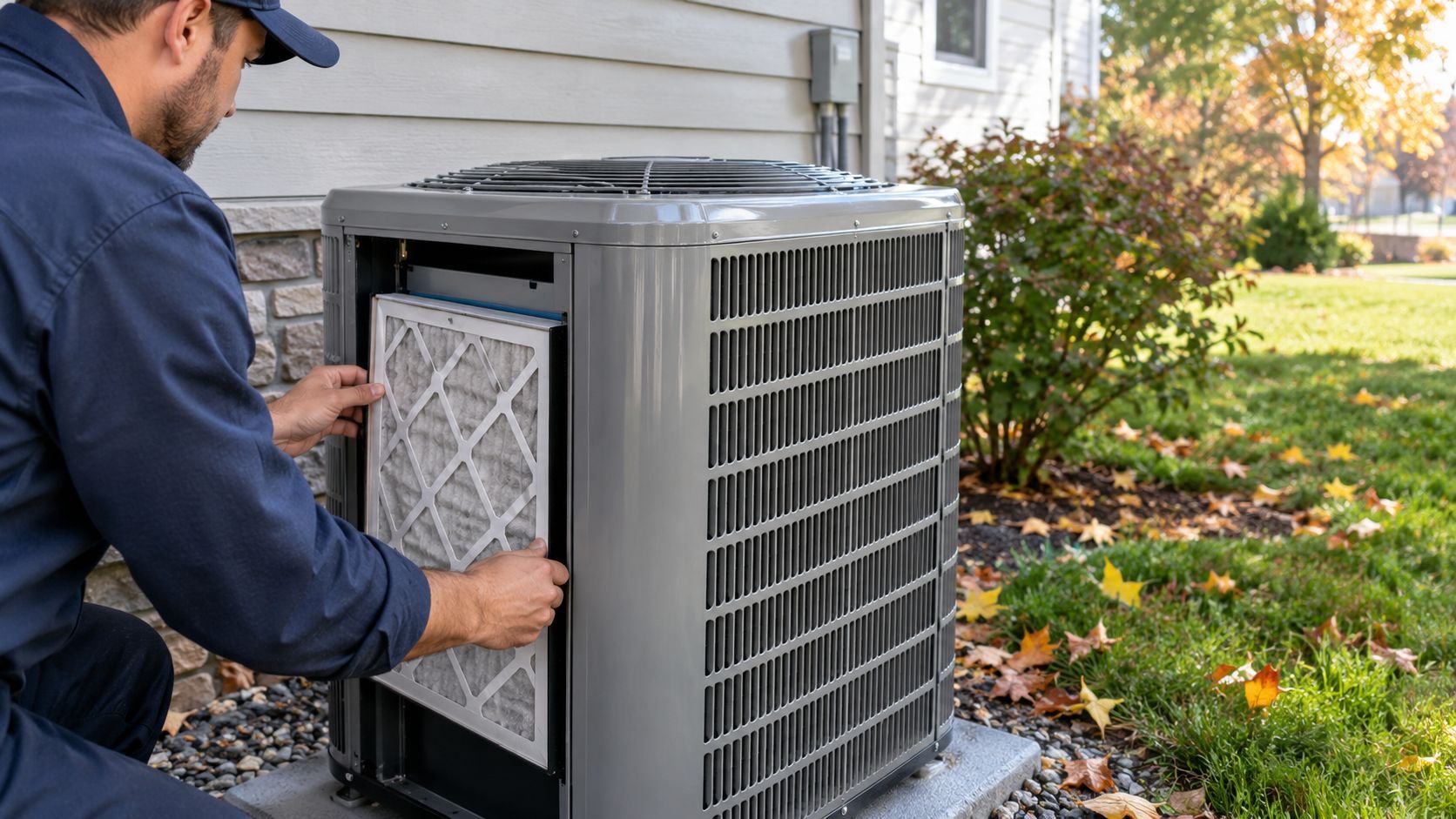
You can clear debris and trim back plants. Gently rinsing the outside of the coil with a garden hose (never a pressure washer, and with the unit powered off at the disconnect) is reasonable homeowner maintenance. A deep coil cleaning and any refrigerant readings are pro work.
4. The Thermostat Is Set Wrong (Fan "ON," Wrong Mode)
What it is. A thermostat setting issue rather than a mechanical failure.
Why it causes warm air. Two common ones. First, if the fan is set to ON instead of AUTO, the blower runs continuously — including during the long stretches when the compressor is not actively cooling. During those stretches it's just circulating room-temperature (or warmer) air, which feels like "warm air from the vents." Second, a thermostat bumped into the wrong mode (fan-only, or heat) or set above the room temperature simply won't call for cooling.
What should be measured or checked:
- Fan setting: should be AUTO during cooling season.
- Mode: should be COOL, set several degrees below the current room temperature.
- Batteries / power on the thermostat, and that the screen is responsive.
More likely vs less likely. More likely if someone recently changed settings, a smart thermostat updated, or kids/guests have been adjusting it. Less likely if the thermostat clearly shows it's calling for cooling and the air is still warm.
Homeowner vs pro: Pure homeowner check. It costs nothing and rules out the simplest explanation in thirty seconds.
5. The Outdoor Unit Isn't Running (Breaker, Capacitor, Contactor)
What it is. The indoor blower is running (so you feel air), but the outdoor unit — the part that actually makes cooling possible — is silent.
Why it causes warm air. If the outdoor unit isn't running, no heat is being moved out of your house. The blower keeps pushing air across an indoor coil that never gets cold, so every vent blows room-temperature air. Common culprits: a tripped breaker or pulled disconnect, a failed start/run capacitor (one of the most common summer failures), or a worn contactor (the electrical switch that turns the unit on).
What should be measured or checked:
- Is the outdoor fan spinning when the thermostat is calling for cool? Listen and look.
- The breaker for the outdoor unit and the outdoor disconnect box.
- Capacitor and contactor testing, by a technician with a meter.
More likely vs less likely. More likely if the outdoor unit is dead silent while the indoor side runs, if you heard a hum or click but no fan, or if a breaker has tripped. Less likely if the outdoor fan and compressor are clearly running.
Homeowner vs pro: Resetting a tripped breaker once is fine. If it trips again, stop — that's a sign of a real electrical fault. Capacitors store an electrical charge even with the power off and can shock you; testing and replacing them is pro work, not a parking-lot DIY.
6. Low Refrigerant From a Leak
What it is. The sealed refrigerant charge that carries heat out of your home has dropped below where it needs to be.
Why it causes warm air. Refrigerant is the substance that actually absorbs and carries away heat. When the charge is low, the indoor coil can't get cold enough to pull much heat out of your air — so the air at the vents is only mildly cool. Low charge also tends to freeze the coil (cause #2), which is why these two often show up together.
Here's the part that matters most: an AC doesn't "use up" refrigerant. It runs in a closed loop. If you're low, you have a leak somewhere. "Topping it off" every summer without finding the leak just vents refrigerant into the air and lets the underlying problem keep growing.
What should be measured or checked:
- Superheat and subcooling readings by a technician — the real way to know if the charge is correct.
- A leak search (electronic detector, dye, or bubble test) to find where it's escaping.
- Temperature split across the coil, which runs low when the system is undercharged.
More likely vs less likely. More likely if the system is more than a few years old, if cooling has slowly weakened over a season or two, if the coil keeps freezing, or if a tech "added refrigerant" in a past visit. Less likely on a newer system with no history of charge issues.
Homeowner vs pro: This is firmly pro work. Refrigerant handling requires EPA certification, proper gauges, and leak-detection tools. The right move here is a leak found and repaired, not just a refill.
7. Leaky or Disconnected Ducts in a Hot Attic or Crawlspace
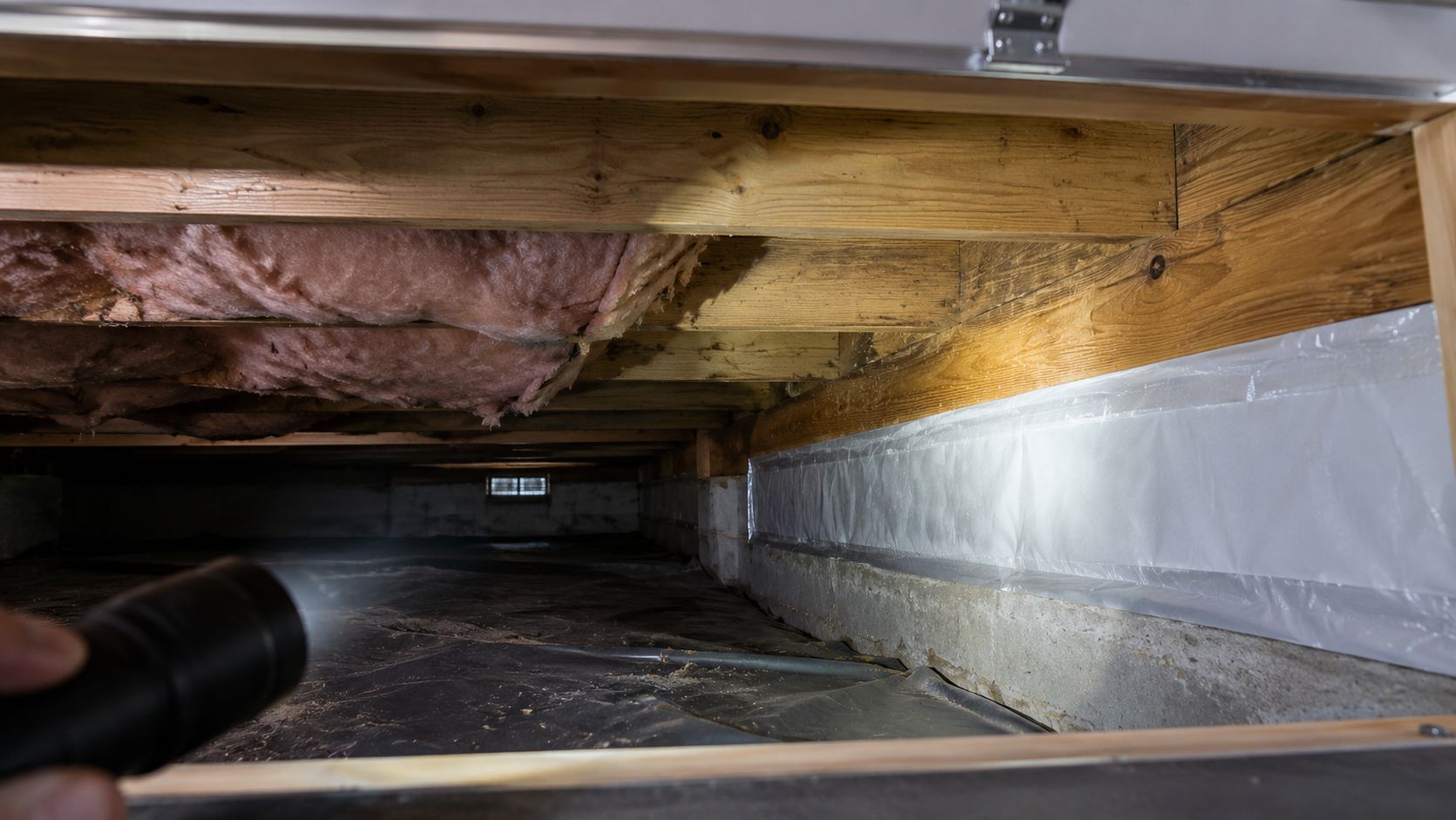
What it is. Gaps, separated joints, or crushed flex duct in the ductwork that carries cooled air from the system to your rooms — often running through a blazing-hot attic or a humid crawlspace.
Why it causes warm air. The system might be making perfectly cold air at the coil, but if a supply duct has come apart in a 130°F attic, much of that cold air is being dumped into the attic instead of your bedroom. At the same time, leaks on the return side pull hot attic or crawlspace air into the system. The result at the register: weak, lukewarm airflow even though the equipment is technically "working."
What should be measured or checked:
- Duct leakage testing (a duct blaster) for a real number, not a guess.
- Supply-air temperature at the registers versus the temperature leaving the air handler.
- A visual inspection of duct joints and flex runs in the attic and crawlspace for disconnects, crushed sections, and missing insulation.
More likely vs less likely. More likely in older homes, homes with ductwork in vented attics or crawlspaces (common around here), or where attic work was done recently. Less likely in newer homes with sealed, tested ductwork — and this is rarely the only cause of suddenly warm air, so check the simpler items first.
Homeowner vs pro: Spotting an obvious disconnected duct in the attic is fine (watch your step). Measuring leakage and sealing it correctly is pro work.
Why Arab and North Alabama Homes See This So Often
A few things about our climate and our housing stock make the "running but not cold" complaint especially common in Arab and the surrounding North Alabama area:
- Long, hot, humid cooling seasons. Our systems run hard for months. That run time surfaces weak capacitors, slow refrigerant leaks, and dirty coils that might limp along unnoticed in a milder climate.
- Pollen and cottonwood. North Alabama springs coat everything — including your filter and your outdoor coil. A filter that loads up fast and a condenser matted with fluff are two of the most common starting points for warm air.
- Ductwork in hot attics and vented crawlspaces. A lot of Arab-area homes route ducts through the worst possible thermal environment, so any leak or disconnect bleeds cooling fast.
- Heat pumps are common. In summer a heat pump cools exactly like a straight AC, and it's subject to all the same airflow, coil, refrigerant, and electrical issues.
- Older equipment that was never sized or maintained carefully. Systems sized by square footage and skipped on maintenance tend to develop airflow and charge problems sooner.
None of this means Arab homes are doomed to blow warm air. It just means the basics — clean filters, a clear outdoor unit, correct refrigerant charge, and sealed ducts — matter more here than in a cooler, drier place.
How a Good Contractor Should Diagnose "Warm Air From the Vents"
Anyone can guess. Good diagnosis is measured. If a technician walks in, glances at the unit, and immediately says "you're low on refrigerant" and starts adding gas without testing anything, that's a flag — you may be paying to refill a leak that never gets found.
A thorough diagnostic for warm air should include, at minimum:
- Temperature split across the indoor coil — the difference between return-air and supply-air temperature, which on a moderate day should land in roughly the 18–22°F range. A low split points toward airflow or refrigerant trouble.
- Static pressure at the air handler, to reveal a restrictive filter, a dirty coil, or undersized ductwork choking airflow.
- Refrigerant superheat and subcooling, measured with gauges — the only honest way to know if the charge is right, rather than topping off by feel.
- A leak search if the charge is low, so the actual leak gets found and repaired.
- Electrical testing of the capacitor and contactor, and a check of the breaker and disconnect.
- Coil inspection, indoor and outdoor, for dirt and ice.
- Filter condition and airflow check.
- A look at the ductwork in the attic or crawlspace for obvious leaks or disconnects.
For a single, clear failure — a dead capacitor, a frozen coil from a dirty filter, a clogged condenser — that's an HVAC repair visit, and you should expect a straightforward diagnosis and fix. For a system that is cooling but, has multiple issues stacked together, or is part of a bigger comfort and humidity picture, our Home Comfort Consult is the more thorough path. It treats the house as a system — airflow, refrigerant, ducts, and the building itself — and gives you a written, ranked plan instead of a parts-swapping guess.
The goal either way is the same: stop guessing, start measuring, and only spend money on the work the data shows will actually fix the problem.
When to Act — and What Happens If You Wait
Warm air on a hot day is uncomfortable, but it's usually not a five-alarm emergency. Still, a few of these causes get more expensive the longer they run:
- A frozen coil left running can send liquid refrigerant back to the compressor — the most expensive part in the system. The melting ice can also overflow the drain pan and cause water damage near the air handler, which raises moisture and mold-risk concerns in attics and closets. If you see ice, shut it off and let it thaw.
- A system running low on refrigerant makes the compressor work harder and hotter than it was designed to, shortening its life. The leak also tends to get worse over time, so today's small repair can become tomorrow's bigger one.
- A dirty outdoor coil forces high operating pressures that stress the compressor and electrical parts every minute it runs.
- A failing capacitor that's "weak but working" usually fails completely soon — often on the hottest day of the year, when demand is highest.
There can also be a secondary efficiency benefit to fixing these: a system with clean coils, correct airflow, and the right charge does its job with less run time. We mention that last on purpose — it's a real perk, but the reason to fix warm air is comfort and protecting your equipment, not chasing a number on the power bill.
The most cost-effective approach for most homeowners is simple: handle the homeowner-level basics (filter, thermostat, clearing the outdoor unit), and if those don't bring the cold back, get a measured diagnosis before anyone replaces a part or adds refrigerant. Many of these problems are also far less likely to happen at all with regular maintenance, which is the whole point of a
maintenance membership — catching a weak capacitor or a loading filter before it leaves you sweating in July.
Frequently Asked Questions
Why is my AC running but blowing warm air?
It means the blower is moving air, but the system isn't actually pulling heat out of that air. The most common reasons are a dirty filter choking airflow, a frozen indoor coil, a dirty or blocked outdoor unit, a thermostat set to fan "ON," the outdoor unit not running (a tripped breaker or failed capacitor), or low refrigerant from a leak. Start with the filter, the thermostat setting, and a look at the outdoor unit — those are the checks you can safely do yourself.
Should I turn my AC off if the air isn't cold?
If you see ice on the indoor unit or the copper refrigerant lines, yes — turn it off and let it thaw, because running a frozen system can damage the compressor. If the outdoor unit's breaker has tripped more than once, leave it off and call a pro, since repeated tripping signals an electrical fault. Otherwise, it's fine to run while you check the filter and thermostat, but if simple checks don't restore cold air, shut it off rather than letting it run warm for days and risk further damage.
How cold should the air coming out of my vents actually be?
There isn't one magic number, because supply-air temperature depends on how warm and humid your house is. The better measure is the temperature split — the difference between the air going into the return and the air coming out of a supply vent. On a moderate day, that difference should be roughly 18–22°F. If your vents are only a few degrees cooler than room air, something is reducing the system's capacity and it's worth diagnosing.
Can low refrigerant just be "topped off," or does it mean I have a leak?
It means you have a leak. An air conditioner runs on a sealed loop and does not consume refrigerant the way a car burns gas. If the charge is low, it escaped somewhere. Simply adding more without finding and repairing the leak is a temporary patch that vents refrigerant into the environment and lets the problem return — usually worse — the next season. A good technician finds the leak first, then recharges to the correct level.
Can I fix an AC that's not blowing cold air myself, or do I need a pro?
Some of it is genuinely DIY: replacing a dirty filter, setting the thermostat to COOL and AUTO, clearing debris and trimming plants around the outdoor unit, and resetting a tripped breaker once. Those solve a meaningful share of warm-air calls. But refrigerant, capacitors and other electrical parts, coil cleaning, and duct leaks need a trained technician — capacitors can hold a dangerous charge even with the power off, and refrigerant work requires EPA certification and proper tools. If the basics don't bring the cold back, that's the line to call a pro.
Ready to Get Cold Air Back?
If you've checked the filter, set the thermostat to COOL and AUTO, cleared the outdoor unit, and your Arab-area home is still blowing warm air, the next step is a real diagnosis — not a parts-swap. An HVAC repair visit is the right fit for a single, well-defined failure, and you'll get a clear explanation of what's wrong and what it costs to fix.
If your system is cooling and it still feels off and is just one piece of a longer-running comfort or humidity problem, the Home Comfort Consult digs into the whole system and gives you a ranked, written plan. For homeowners whose concerns also include air quality, dust, or musty odors, the Home Air Health Study adds a week of indoor air monitoring and carries our Breathe-Easy Clarity Guarantee: if, at the end of the review, you don't feel clear on what's going on in your home and what to do next, you don't pay.
No scare tactics, no guesswork, no "let's just add some refrigerant and see." Just a real diagnosis and a real plan to get your house cold again.
Schedule an HVAC Repair Visit → Learn about the
Home Comfort Consult →
About the Author
Tanner Dickerson is the owner of Dickerson Services, a North Alabama HVAC, home performance, and crawl space encapsulation company serving Arab, Guntersville, Albertville, Huntsville, and the surrounding area. He works with homeowners on complex comfort, humidity, and indoor air quality problems by treating the whole house as a system — HVAC, ducts, crawlspace, air sealing, insulation, and ventilation together.
Summary
If your air conditioner is running but blowing warm air in an Arab, Alabama home, the most likely causes are a dirty filter, a frozen evaporator coil, a dirty or blocked outdoor unit, a thermostat set to fan "ON," an outdoor unit that isn't running (tripped breaker or failed capacitor), or low refrigerant from a leak — start with the filter, thermostat, and outdoor unit yourself, and call a pro for a measured diagnosis (temperature split, static pressure, refrigerant readings, and a leak search) if the basics don't restore cold air.
Climate and Plant Selection
Selecting appropriate vegetation is crucial for the success of green roofs in the Mid-Atlantic region. Native and drought-tolerant plants are ideal, ensuring survival during dry spells and high-intensity storms. Sedums, grasses, and other hardy species maintain runoff retention and resist seasonal stress, supporting regulatory compliance throughout the year.
Share this article