
What Is the Best HVAC Filter for Allergies and Pollen in a North Alabama Home?
June 12, 2026
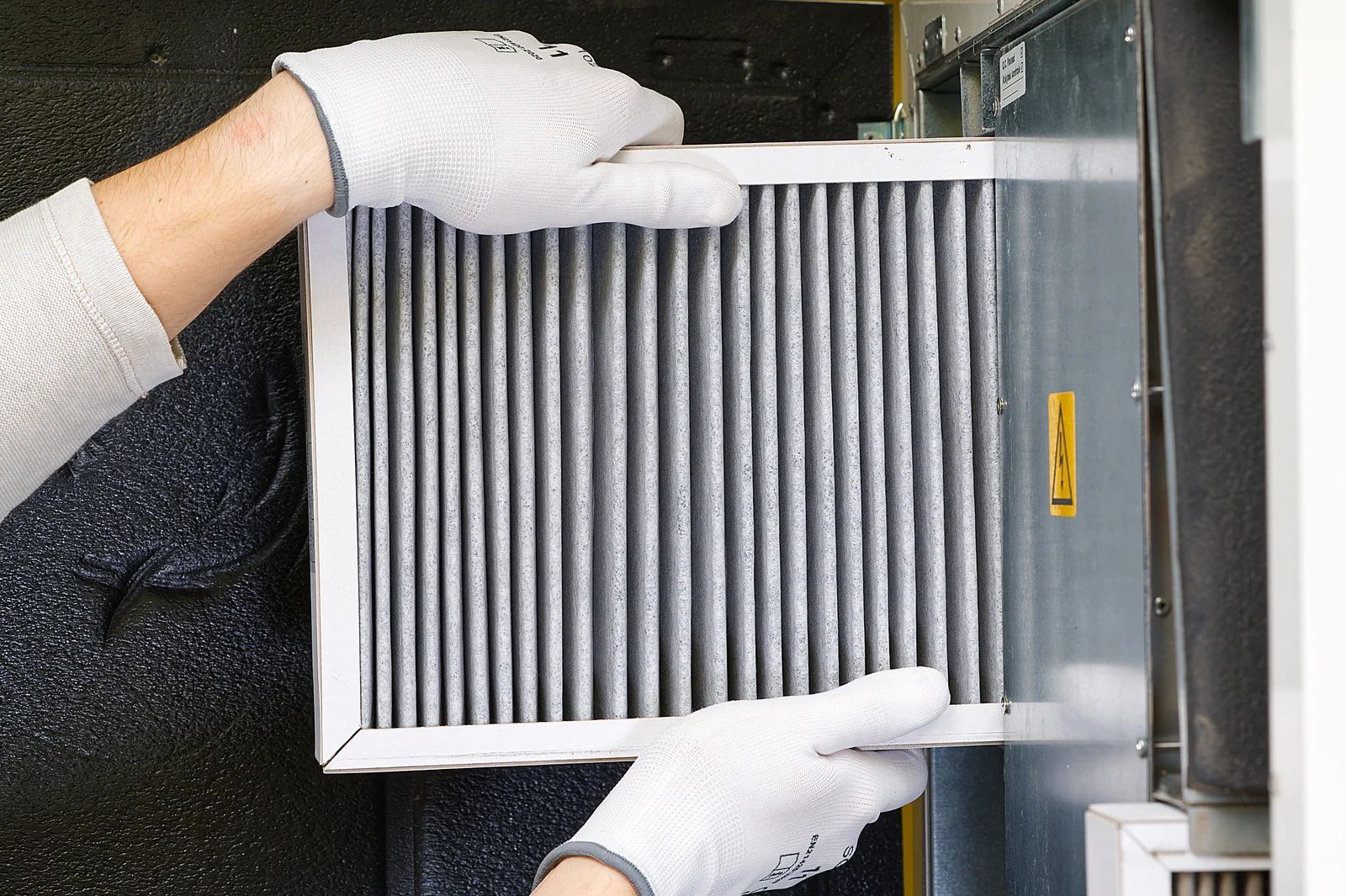
Every spring, the question shows up in our inbox in some form: "What's the best filter to put in my HVAC system for my allergies?"
It's a fair question, and the honest answer is more nuanced than the filter aisle at the hardware store would suggest. The right filter for pollen and allergens isn't always the highest-rated one on the shelf. In a lot of North Alabama homes, dropping a MERV 13 filter into a slot designed for a MERV 8 will actually make the air quality worse — not because the filter is bad, but because of what it does to the rest of the system.
Below is how we think about filtration for homeowners dealing with pollen, dust, and allergy symptoms in Huntsville, Arab, Guntersville, and the surrounding area. We'll cover what the ratings really mean, why filter thickness matters more than most people realize, and the trade-offs that decide whether a filter upgrade will help or hurt.
Quick Answer
What "best" actually means: The best HVAC filter for allergies and pollen is the highest MERV rating your system is designed to handle — ideally MERV 16 or true HEPA when the system is engineered for it, with MERV 13 as a strong middle-ground target and MERV 11 as the practical floor.
Good / Better / Best: MERV 11 in a 4" media cabinet is good. MERV 13 in a 4"–5" media cabinet is better and our default recommendation for most homes. MERV 16 or a properly designed inline HEPA setup is best — and yes, HEPA can be installed inline on a residential HVAC system when the equipment, ductwork, and filter cabinet are designed for it from the start.
Why aim as high as possible: A high-MERV setup delivers four real benefits — (1) cleaner air, (2) reduced dust on furniture and floors, (3) protection for the equipment and ductwork so you should never need to "clean" the inside of the indoor unit or the ducts, and (4) reduced risk of stopped-up condensate drains because less debris reaches the coil and drain pan.
Why thickness matters more than rating alone: A 4" or 5" media filter has roughly 4–5x the surface area of a 1" filter, which means lower static pressure, longer filter life, and a system that can actually run a higher MERV rating without choking.
Common mistake: Putting a 1" MERV 13 filter in a standard return grille. The filter is the right idea, but the housing is wrong. You'll often see frozen coils, longer run times, and rooms that go too warm or too cool.
When filtration alone isn't enough: If the home has a vented crawlspace, leaky ducts running through an attic, or significant outdoor air infiltration, the filter is fighting a losing battle. The real fix in those cases is source control plus filtration.
When to bring in a pro: If you've upgraded the filter and the air still feels stale or symptoms haven't improved, or if your system started short-cycling or freezing after a filter change. A proper diagnostic should include static pressure readings, filter bypass inspection, and ideally a few days of indoor air monitoring.
What This Article Is About — and What It Is Not
This post is for homeowners who are wondering whether a better HVAC filter will actually help with allergy or pollen symptoms, and which filter is the right call.
It is not a medical guide. We will not tell you whether a filter upgrade will resolve specific allergy or asthma symptoms — that is a question for a physician. What we can tell you is which filters reduce which kinds of airborne particles, and where the trade-offs sit.
It is also not a review of specific brands. The numbers below (MERV ratings, thicknesses) apply across most brands sold in the U.S. and matter more than the logo on the box.
If you've already upgraded your filter and the air still feels heavy or muggy regardless of the season, you may also want to read What Should Indoor Humidity Be in a North Alabama Home? — humidity drives a lot of "stuffy air" complaints that don't actually get solved with a better filter.
How HVAC Filters Actually Work — Good, Better, Best
An HVAC filter is a piece of pleated media — usually paper or synthetic fiber — that sits in the return-air path of your system. Every cubic foot of air your blower moves passes through it before going across the coil and back into the house.
MERV stands for Minimum Efficiency Reporting Value. It is a standardized rating (1 through 16) that tells you what percentage of particles a filter captures at three different size ranges:
- E1: 0.3 to 1.0 microns — smoke, virus carriers, fine combustion particles
- E2: 1.0 to 3.0 microns — fine dust, some mold spores, pet dander fragments
- E3: 3.0 to 10.0 microns — most pollen, larger mold spores, coarse dust
For homeowners dealing with pollen and seasonal allergies, the E3 range is where most of the problem lives. Pollen grains from oak, pine, ragweed, and grass — the big seasonal triggers in our area — generally fall between 10 and 100 microns. Pet dander, dust mite debris, and most mold spores sit a bit smaller. You can address a lot of this with a well-installed MERV 13 setup — and when the system is designed for it, MERV 16 or true HEPA brings the indoor particle load down to a level you can measure but barely see.
Think of filtration as a good / better / best ladder. Each step up captures finer particles, protects the equipment more thoroughly, and changes how your house looks and feels over time. The four benefits that scale with each step:
- Cleaner air quality — more of what's in the air actually gets pulled out of it.
- Reduced dust on furniture, floors, registers, and electronics.
- Protection for the equipment and ductwork — a properly filtered system should never need its ductwork or the inside of the indoor unit "cleaned," because particulates are caught at the filter instead of accumulating downstream on the coil, blower wheel, and duct walls.
- Reduced risk of stopped-up condensate drains — less debris reaches the evaporator coil and drain pan, which means fewer slimy biofilm clogs and fewer summer emergency calls because water is backing up under the air handler.
The right step on the ladder for your home depends on what the equipment and ductwork are designed to support — but higher is generally better, and the best version of any system is the one designed from the start for the highest filtration it can handle.
MERV 8: The Floor (Equipment Protection Only)
A MERV 8 filter captures roughly 70% of particles 3 to 10 microns in size. It will catch a meaningful share of pollen and large dust.
This is the rating that ships in most builder-grade homes, and it's primarily designed to protect the equipment — the coil, the blower, the heat exchanger — not the occupants. For active allergy symptoms, MERV 8 is below where we want to be. It's the floor, not a recommendation.
Good: MERV 11 in a 4" Media Cabinet
MERV 11 captures around 85% of particles 3 to 10 microns and starts to meaningfully catch the 1 to 3 micron range — pet dander fragments, finer dust, more mold spores.
In a 4" media filter cabinet, MERV 11 runs comfortably on almost any properly designed residential system and is a real step up from a builder-grade 1" filter. For a home with mild-to-moderate allergy concerns and a system that wasn't designed with high-MERV filtration in mind from the start, this is a solid baseline. (In a 1" slot, even MERV 11 starts running into pressure problems. The cabinet matters as much as the rating.)
Better: MERV 13 in a 4"–5" Media Cabinet
MERV 13 is where the curve bends. It captures 90%+ of particles 1 to 3 microns and around 50% of the 0.3 to 1 micron range — which means it pulls in finer particles like smoke, bacteria carriers, and ultra-fine dust in addition to everything MERV 11 handles.
ASHRAE — the engineering body that sets HVAC standards — recommended MERV 13 as the residential IAQ target in their post-2020 guidance, specifically because of its balance of effectiveness and airflow impact. For most North Alabama homes where the system is properly sized and the ductwork is in good shape, MERV 13 in a 4" or 5" media cabinet is our default recommendation.
Best: MERV 16 or Inline True HEPA
This is where the real ceiling sits — and it's higher than most homeowners are told.
MERV 16 filters capture 95%+ of particles in the 0.3 to 1 micron range. They handle smoke, viruses, fine combustion particles, and the smallest fragments of pollen and dander that lower-MERV filters miss.
HEPA is a separate standard, not a MERV rating. A true HEPA filter captures 99.97% of particles at 0.3 microns — the size class that's hardest to filter and where a lot of the "I can never get the dust out of my house" complaints actually live.
A common myth is that HEPA cannot be installed inline on a residential HVAC system. That isn't true. HEPA can be installed inline on a residential system when the system is properly designed and executed for it — that means sizing the air handler, ductwork, return path, and filter cabinet around the higher pressure drop from the beginning, rather than trying to bolt HEPA onto a system that was sized for a 1" MERV 8.
Whenever a system is being designed, replaced, or substantially upgraded, our recommendation is to aim for the highest MERV rating the design will support — up to and including inline HEPA. The four benefits compound at the top of the ladder:
- Air quality measurably improves. Fine particulate counts drop, and they stay low because every cycle of the blower is doing real work.
- Visible dust on furniture, baseboards, and electronics is dramatically reduced.
- The equipment and ductwork stay clean from the inside. A coil that catches nothing because the filter caught it first will not need to be acid-cleaned every few years. Ductwork that never sees particulates will not need "duct cleaning" services. The filter does the work; the rest of the system stays as clean as it was the day it was commissioned.
- Condensate drain stoppages drop sharply. Most slimy drain clogs are biofilm that forms on dust and pollen that made it past a weak filter and onto the wet coil. Filter that material out, and the drain pan stays clean.
When a system is not designed for high-MERV or HEPA filtration from the start, retrofitting to MERV 16 or HEPA requires more than just buying a different filter — it requires confirming the ductwork and blower can support the pressure drop and, in some cases, redesigning the return path. That is real work, but it's a one-time investment that pays back across the life of the equipment.
Why a Better Filter Alone Often Backfires
The most common mistake we see is a homeowner walking into the hardware store, buying the highest-MERV 1" filter on the shelf, and dropping it into the existing return grille. The intention is right. The result is often a system that runs longer, struggles in extreme weather, and sometimes freezes the indoor coil. Here's why.
Static Pressure: The Trade-Off Nobody Talks About
Every filter creates resistance against airflow. That resistance is measured as static pressure — usually in inches of water column ("w.c.).
Most residential HVAC systems are rated to operate at a total external static pressure of 0.5" w.c. In the real world, after measuring thousands of systems, the building-science community has found that the average installed residential system runs closer to 0.8" to 1.0" w.c. — already over its rated maximum, just from undersized ductwork.
Now add a high-MERV 1" filter. A MERV 13 in a 1" slot can add 0.25 to 0.40" w.c. all by itself when the filter is even partially loaded. The blower can't move the air it's supposed to move. The result is some combination of:
- Longer run times (the system can't pull enough air across the coil to do its job in a normal cycle)
- Frozen evaporator coils in cooling season (low airflow means the coil gets too cold)
- Cracked heat exchangers in heating season, in the worst cases
- Rooms that go too warm or too cool because the duct system is starved
- Higher utility bills as the system runs longer to do the same work
This is the part the filter packaging never tells you.
Filter Bypass: Air That Goes Around, Not Through
A filter only works on the air that actually passes through the media. Air that slips around the edges of the filter — through gaps in the filter rack, around a filter that is undersized for its slot, or through return-side duct leaks — is not filtered at all, regardless of MERV rating.
A loose-fitting 1" filter in a sheet-metal slot can lose 20% or more of the system's airflow to bypass. In other words, one out of every five cubic feet of air in your home never sees the filter. Upgrading the MERV rating doesn't fix this. The fix is a properly sealed filter cabinet with a tight gasket against the filter frame.
Filter Thickness: Why 4" Beats 1"
A 4" or 5" pleated filter has roughly four to five times the surface area of a 1" filter of the same face dimensions. That matters for two reasons:
- Lower pressure drop at the same MERV rating. A 4" MERV 13 filter has so much surface area that it typically adds only 0.10 to 0.15" w.c. when clean — a fraction of what the 1" version adds.
- Longer filter life. With more media, the filter can hold more dust before it loads up and chokes airflow. A 4" filter usually lasts six to twelve months in a typical North Alabama home; a 1" filter at the same MERV needs to be changed every one to three months to avoid airflow problems.
This is why our standard recommendation for homeowners serious about indoor air quality is a dedicated 4" or 5" media filter cabinet, installed at the return of the air handler. It's a one-time piece of equipment that turns filter changes into a yearly event instead of a monthly headache, and it lets you actually run a high-MERV filter without strangling the system.
The Filter Setup We Actually Recommend for Allergy and Pollen Symptoms
Our general rule for any home — whether the conversation is a filter upgrade today or a full system replacement — is to aim for the highest MERV rating the system can be designed to support. The exact step depends on whether we're working with the equipment you have or designing fresh.
If we're working with your existing system:
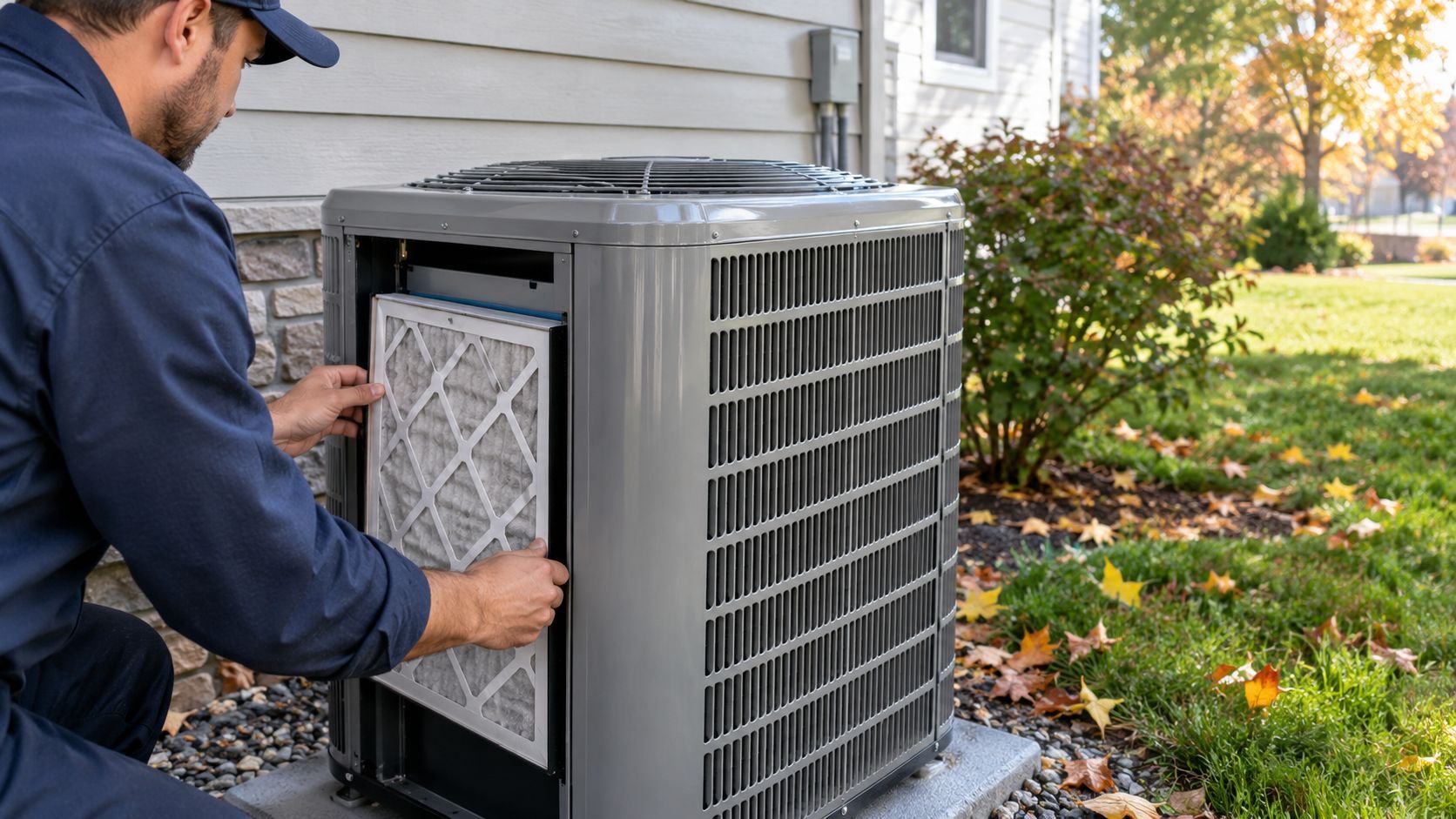
- Install a 4" or 5" media filter cabinet at the return side of the air handler, sized to the system's airflow (CFM).
- Run MERV 13 in that cabinet as the default, and MERV 11 only when measured static pressure won't support higher.
- Confirm the filter slot is sealed, with no visible bypass gaps around the frame.
- Measure static pressure after the upgrade to confirm the system is still operating within its design range.
- Change the filter every 6–12 months, sooner if the home has heavy dust, multiple pets, or active construction nearby.
If we're designing or replacing a system:
We design around the highest filtration the home can use — typically MERV 16, or inline true HEPA when it's a good fit — by sizing the air handler, ductwork, return path, and filter cabinet for the higher pressure drop from the start. Done right, this is the cleanest, lowest-maintenance setup a home can have: the air handler interior, coil, blower wheel, and ductwork should stay clean for the life of the equipment, condensate drain stoppages become rare, and visible dust in the home drops dramatically. This is the version of an HVAC system we wish every house came with.
For high-sensitivity households, we'll often layer in a portable true-HEPA air cleaner in the bedroom of the person most affected, in addition to high-MERV or HEPA whole-home filtration. A good bedroom HEPA unit running at night gives that person ~8 hours of very clean air on top of whatever the central system is already doing.
A note: none of the above is "the magic filter." Filtration is one variable. It's the most powerful air-side variable, but in a home with a vented crawlspace, leaky ducts, or runaway humidity, even an inline HEPA system is fighting against a steady source. Source control, ventilation, and humidity management have to be part of the picture for durable relief.
A quick word on add-ons: UV lights, ionizers, and PCO devices get marketed heavily as allergy and air-quality solutions. The independent evidence on most of these is mixed at best, and some ionizing devices have been shown to produce ozone as a byproduct. We don't routinely recommend them as the primary fix for allergy symptoms. High-MERV filtration, source control, ventilation, and humidity management are where the durable improvements come from.
Why North Alabama Homes Make This Harder
A few patterns specific to our area make filtration alone a harder fight than it would be in a drier or less-pollinated climate:
- A long, intense pollen season. Oak and pine pollen in March and April are heavy and visible. Grass pollens carry through summer. Ragweed dominates late summer into fall. Outdoor air infiltration brings all of this inside, where your filter has to deal with it.
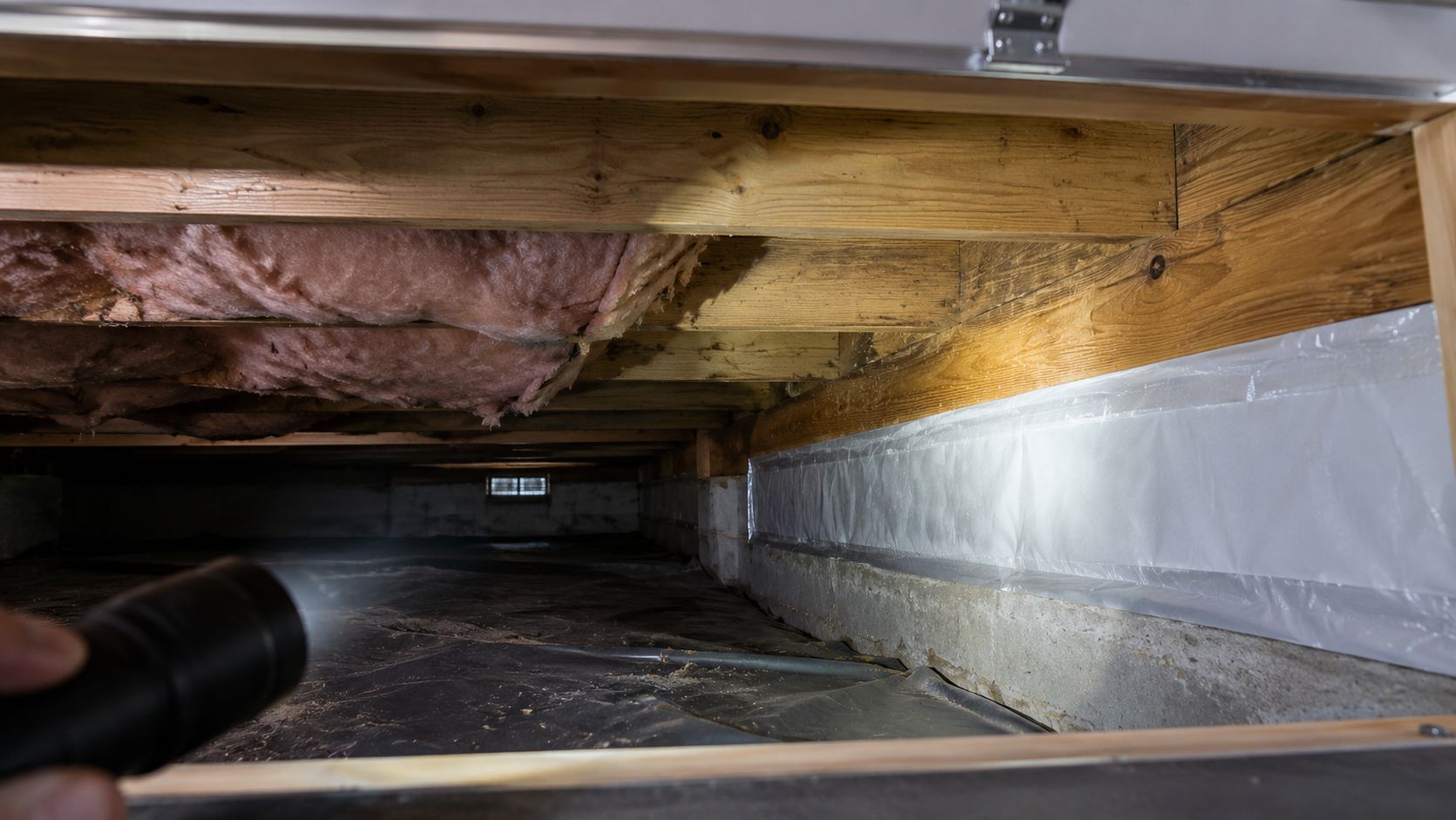
- Vented crawlspaces are still common. Many homes in Huntsville, Arab, and Guntersville have crawlspaces open to outdoor air. Pollen, mold spores, and humidity all enter the living space through return leaks, plumbing penetrations, and natural stack effect. A great filter cannot keep up with a steady source.
- Ducts in attics and crawlspaces. When return ducts run through unconditioned spaces and leak, every leak pulls unfiltered, often pollen- and spore-laden air directly into the system — bypassing the filter entirely.
- Builder-grade 1" filter slots. Most homes in our area were built with a single 1" return grille filter. That housing is the bottleneck. Even homeowners willing to invest in better filtration are working against the box the equipment came in.
- High humidity for months at a time. Filtration does nothing for relative humidity. A home that sits at 60% RH can still feel heavy and aggravate allergy symptoms even with a perfect MERV 13 filter, because dust mites and mold spores thrive in that range. See What Should Indoor Humidity Be in a North Alabama Home? for the moisture side of this.
The pattern is the same one that shows up across most of our work: the filter is one part of a system, and the system is the house. Treating filtration without addressing crawlspace, ducts, and humidity is treating one symptom in a building with several connected ones.
How a Good Contractor Should Diagnose a Filtration & Air Quality Complaint
If you call a contractor about allergy symptoms or air quality concerns and the recommendation is "switch to a higher-MERV filter" with no measurements taken, that's a flag.
A thorough diagnostic for an air-quality / filtration complaint should include, at minimum:
- Static pressure readings at the air handler, before and across the filter, to see what the current setup actually does to airflow.
- A look at the existing filter housing — size, gasketing, bypass, and condition.
- Visual inspection of return ducts in attics, crawlspaces, and chases for leaks that bypass the filter entirely.
- Crawlspace inspection for vapor barrier condition, RH, and any active moisture source that could be contributing to mold spores and odors upstairs.
- Indoor RH readings in multiple rooms. (Filters do not change humidity; humidity changes how the air feels and how mold and dust mites behave.)
- Discussion of the household — pets, occupants with respiratory sensitivities, smokers, recent renovations — that informs whether filtration alone is realistic or whether dedicated HEPA, ventilation, or source control should be in scope.
For homes where allergy or air-quality symptoms have been a long-running complaint — or where multiple of the patterns above appear to overlap — our Home Air Health Study is the more complete path. It's a week of continuous indoor air monitoring (particulate, VOCs, humidity, CO₂, temperature) combined with a building and HVAC assessment. The goal is to see what your air is actually doing across days and conditions, rather than rely on a single-visit snapshot.
For a broader comfort and HVAC investigation — short-cycling, hot/cold rooms, equipment age questions — the Home Comfort Consult is the right starting point, and it can include the filtration side as part of the scope.
The principle in both is the same one we used in our previous post
Why Your North Alabama Home Still Feels Humid With the AC Running: stop guessing, start measuring, and only spend money on the work that the data shows will actually move the needle.
When to Act — and What Happens If You Wait
Allergy and air-quality complaints rarely create an emergency. They also rarely resolve themselves. A few realistic things tend to happen when the filtration setup stays misaligned for a long stretch:
- Comfort and air quality slowly drift. Particle and pollen levels build up on soft surfaces. Returns and duct boots collect dust. The home starts to feel "stuffy" even after cleaning.
- Symptoms persist seasonally. Some sensitive household members may continue to feel worse indoors than they should, especially during high pollen weeks. We are careful not to promise that a filter upgrade will resolve allergy symptoms — that's a medical question — but reducing the indoor particle load removes one variable that can be managed.
- The inside of your system gets dirty. What the filter doesn't catch ends up on the evaporator coil, the blower wheel, and the inside walls of the ductwork. Over years, that buildup hurts efficiency, harbors odors, and is the entire reason "duct cleaning" services exist. A high-MERV filter installed correctly prevents that buildup in the first place — you should never have to "clean" the inside of the indoor unit or the ducts.
- Drain stoppages become an annual event. A dirty coil sheds biofilm and debris into the condensate drain pan. That's what creates the slimy clogs that back water up under the air handler in the middle of July. Better filtration upstream means a cleaner coil downstream, and far fewer of those emergencies.
- Equipment stress. A system running at high static pressure for years — often because of an undersized return and a too-restrictive filter installed in the wrong housing — wears the blower motor, runs longer cycles, and shortens equipment life. (Note: high static pressure is a housing and design problem, not a high-MERV problem. A correctly designed MERV 16 or HEPA system runs at lower static pressure than a starved 1" MERV 13.)
- Moisture and mold risk grows in parallel. Filtration does not address humidity, and high humidity is where mold spore counts and dust mite populations climb. The two problems compound when both are neglected.
There can also be a secondary efficiency benefit when filtration and airflow are properly matched: a system that isn't fighting a starved return uses less runtime to do the same work. We mention this last on purpose. It's a real benefit, but it's not the main reason to fix the problem.
Ready to Stop Guessing About Your Air?
If you've already swapped filters and the air still doesn't feel right, the next step isn't another filter — it's measurement. A proper filtration and air quality assessment looks at static pressure, the filter housing itself, return-duct integrity, crawlspace conditions, humidity, and (for ongoing symptoms) actual particle data over time.
For a focused HVAC service question — frozen coils, short cycling, airflow complaints — a standard service visit is usually the right starting point. For a long-running air quality complaint where filtration is part of a larger picture, the Home Air Health Study is built for exactly this kind of investigation. The Study also carries our Breathe-Easy Clarity Guarantee: if at the end of the review you don't feel clear on what's happening in your home and what your next steps are, you don't pay. Our job is to leave you informed, not confused.
Schedule a
Home Comfort Consult → Learn about the
Home Air Health Study →
Climate and Plant Selection
Selecting appropriate vegetation is crucial for the success of green roofs in the Mid-Atlantic region. Native and drought-tolerant plants are ideal, ensuring survival during dry spells and high-intensity storms. Sedums, grasses, and other hardy species maintain runoff retention and resist seasonal stress, supporting regulatory compliance throughout the year.
Frequently Asked Questions
Is MERV 13 too high for a residential HVAC system?
MERV 13 is not inherently too high — but it can be too high for the housing it's installed in. A MERV 13 in a thin 1" return-grille filter slot often creates more static pressure than the system can handle, which leads to airflow problems and frozen coils. The same MERV 13 in a properly sized 4" or 5" media filter cabinet typically runs well within the system's design range. The right answer depends on the housing, the ductwork, and the measured static pressure, not the MERV number alone.
How often should I change my HVAC filter if I have allergies?
For a standard 1" filter in a North Alabama home with pets or active allergies, every 1 to 3 months is realistic — sometimes more often during heavy pollen weeks. For a 4" or 5" media filter, every 6 to 12 months is typical. The honest indicator is the filter itself: if it's visibly loaded with dust or has gone from white to gray-brown across most of the surface, it's time. A loaded filter doesn't filter better; it just chokes airflow.
Will a HEPA filter work in my home HVAC?
Yes — when the system is properly designed and executed for it. A common myth is that HEPA can't be installed inline on a residential HVAC system. In reality, HEPA can be installed inline; it just requires the air handler, ductwork, return path, and filter cabinet to be sized for the higher pressure drop from the start, rather than bolted onto a system designed for a 1" MERV 8. Whenever we design or replace a system, the goal is the highest MERV rating it can support — up to and including inline HEPA where it's the right fit. For homeowners who can't redesign the system right now, a MERV 13 in a 4" or 5" media cabinet plus a portable true-HEPA unit in the bedroom is an excellent middle-ground setup.
Will upgrading my HVAC filter cure my allergies?
We are careful here. A better filter can reduce some of the airborne particles that trigger allergy symptoms — pollen, dust mite debris, pet dander, mold spores. For some people, that produces meaningful relief; for others, it's one variable among several. We do not promise that any filter or filtration setup will resolve allergy, asthma, or other medical symptoms. If symptoms are a primary concern, the medical side should be handled by a physician, and the home side is best assessed as part of a broader indoor air quality study.
Do UV lights and air purifiers help with pollen and allergies?
UV lights inside the HVAC system are primarily designed to keep the coil and drain pan clean; they do nothing for airborne pollen, which is a particle problem, not a microbial one. Growth on the coil and the drain pan also tends to be a symptom of a bigger, rooted issue that a UV light will not address. Ionizers and PCO devices come with risk; some ionizing devices can produce ozone and PCOs can produce formaldehyde as a byproduct. For pollen and allergens specifically, real improvements come from filtration (the right MERV in the right housing), source control (sealing the crawlspace, fixing duct leaks, controlling humidity), and where needed a dedicated true-HEPA portable unit in key rooms. Add-on gadgets don’t fix the root cause.
About the Author
Tanner Dickerson is the owner of Dickerson Services, a North Alabama HVAC, home performance, and crawl space encapsulation company serving Huntsville, Arab, Guntersville, Albertville, and the surrounding area. He works with homeowners on complex comfort, humidity, and indoor air quality problems by treating the whole house as a system — HVAC, ducts, crawlspace, air sealing, insulation, and ventilation together.
Share this article