
Heat Pump vs. Air Conditioner in North Alabama: Why Buying a One-Way AC Is Usually a Mistake
June 27, 2026
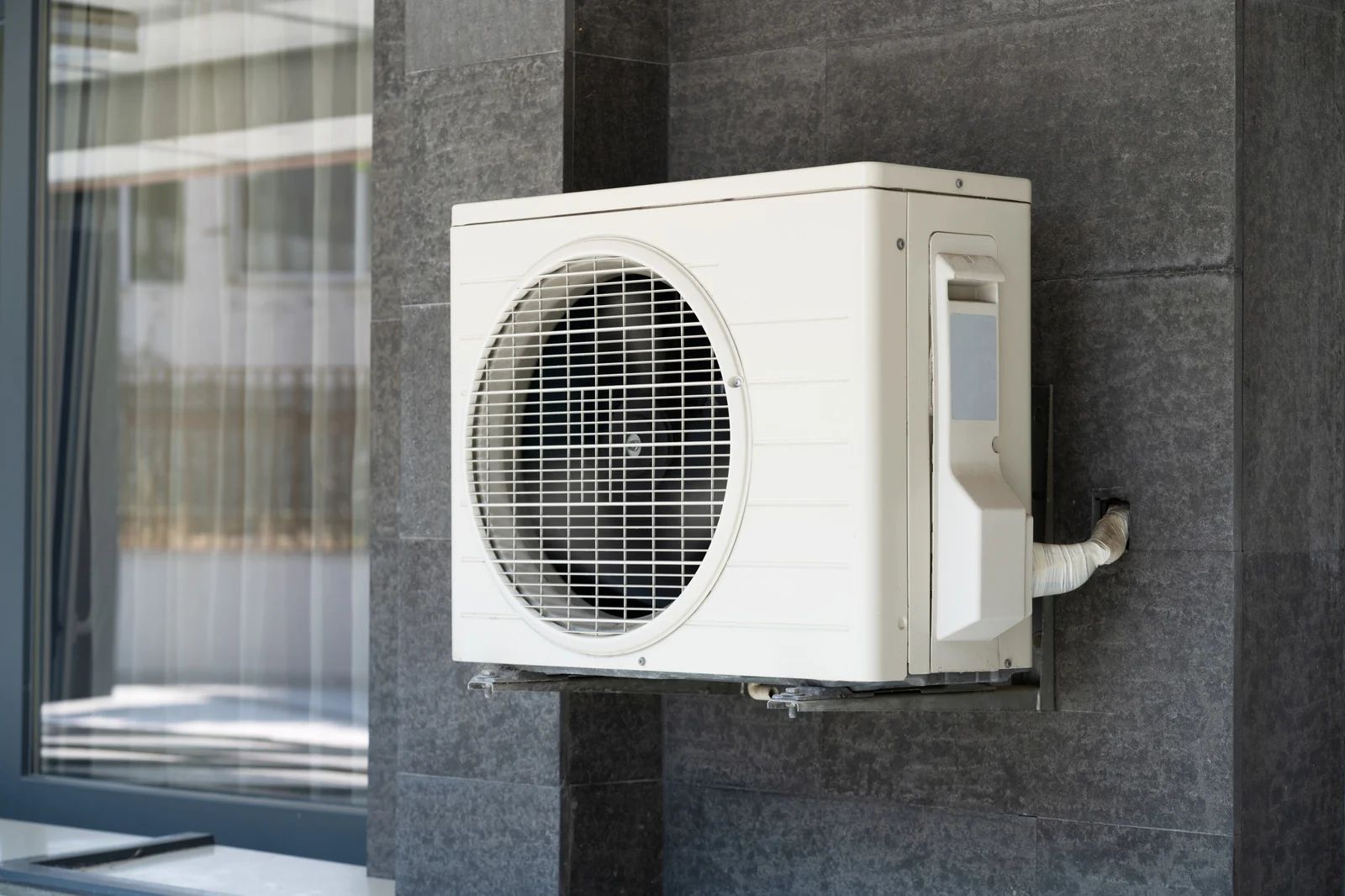
When the air conditioner in a Huntsville or Arab home finally gives out, most homeowners get quotes for exactly what was there before: a new AC outside, paired with the gas furnace inside. It feels like the safe, normal choice.
Here is the part most of those quotes never mention: a heat pump is just an air conditioner that swings both ways. Same compressor, same coils, same refrigerant circuit — plus a reversing valve that lets it run in either direction. Cooling in July, heating in January, one machine.
That small mechanical difference changes the math on the whole purchase. And in our climate specifically — mild winters, long humid summers, heating loads too small for almost any furnace to match — the heat pump is usually the better machine for the house, not just the trendier one.
This article walks through why, honestly, including the cases where a furnace still earns its place.
Quick Answer
- A heat pump and an air conditioner are nearly the same machine. The main physical difference is a reversing valve (plus a defrost sensor and a second metering device) that lets the heat pump run in both directions — cooling and heating.
- Buying a straight AC means buying almost the entire heat pump and using it for only half the year. You pay for 100% of the equipment and get roughly 50% of its usability. A heat pump runs every month of the year.
- In North Alabama, most home heating loads are small — and you cannot buy a gas furnace small enough to match them. The result is that nearly all furnaces here are grossly oversized: short blasts of hot air, temperature swings, and rooms that never settle. A heat pump — especially a variable-speed one — matches our small heating loads far better, which is why heat pump homes tend to feel noticeably more even in winter.
- The price difference between an AC and the equivalent heat pump is small relative to the total cost of the system — and small relative to what you get back in year-round usability and winter comfort.
- When to bring in a pro: Before replacing any cooling equipment, a contractor should run a real load calculation (Manual J) for both cooling and heating, and walk you through heat pump vs. AC + furnace as an actual decision — not just quote a like-for-like swap.
Who This Decision Is For — and What This Article Is Not
This post is for homeowners whose AC is aging or has already failed, and who are deciding what to replace it with. That moment — the AC replacement — is the single best leverage point for this decision, because you are buying most of a heat pump either way.
It is not:
- A diagnosis of why your current AC is underperforming. If your system runs but the house stays warm or sticky, start with Why Is My AC Not Blowing Cold Air? or Why Your North Alabama Home Still Feels Humid With the AC Running.
- An argument that gas furnaces should be ripped out of working systems. If your furnace is mid-life and healthy, a dual-fuel setup (heat pump + existing furnace as backup) is often the smart middle path, and we discuss it below.
- A claim that heat pumps are right for every home. There are real exceptions — very large or very leaky homes with unusually high heating loads, homes with specific fuel-cost situations — and a load calculation, not a slogan, is what sorts them out.
A Heat Pump Is Just an Air Conditioner That Swings Both Ways
Strip the marketing away and the two machines are nearly identical. An air conditioner absorbs heat from your indoor air and rejects it outside. A heat pump does exactly that in summer — and in winter, the reversing valve flips the refrigerant flow so the machine absorbs heat from the outdoor air and delivers it inside.
The parts list difference is modest: a reversing valve, a defrost sensor, and a second metering device. Everything expensive — the compressor, the coils, the cabinet, the refrigerant circuit, the blower it pairs with — is shared.
Nate Adams, the building-science educator known as "Nate the House Whisperer" and author of The Home Comfort Book, calls straight ACs "one-way ACs" and heat pumps "two-way ACs" — and frames the AC replacement, not the furnace replacement, as the moment that matters. His reasoning is the same as ours: for a marginal extra cost, you get a machine that runs every month of the year instead of part of it, you get backup heat if the furnace ever dies, and in a dual-fuel home you can use whichever heating fuel is cheaper that year.
Once you see the two machines that way, the question stops being "should I get fancy new technology?" and becomes "why would I buy 95% of a heat pump and lock the heating half of it away?"
The One-Way Problem: Paying for 100% of a Machine and Using 50% of It
An air conditioner in North Alabama works hard from roughly May through September, idles through the shoulder seasons, and sits completely dormant all winter. You bought the whole machine; it works half the year.
The heat pump version of the same equipment runs every month: cooling all summer, heating all winter, and handling the in-between days in spring and fall. Same investment, roughly double the duty.
That alone would be a decent argument. But in our specific climate, the heating side of a heat pump is not just a bonus feature — it is usually a meaningful comfort upgrade over the furnace it works alongside or replaces. That is the part of this decision almost nobody explains, so it gets its own section.
The Furnace Problem: Why North Alabama Heating Loads Make Almost Every Furnace Oversized
Our Winters Produce Small Heating Loads
The winter design temperature for the Huntsville area — the temperature the heating system should be sized to handle — is only in the low 20s°F. And a design-temperature night is rare. The large majority of winter hours here sit in the 30s, 40s, and 50s, where a typical home needs only a small trickle of heat to stay comfortable.
Run a real Manual J heating load on an average North Alabama home and the design-day number frequently lands somewhere in the 25,000–40,000 BTU/hr range — and on an ordinary 45°F evening, the actual load might be a third of that or less.
You Cannot Buy a Furnace Small Enough
Here is the problem: residential gas furnace product lines mostly start around 40,000–60,000 BTU/hr of input, and many installed furnaces in our area are 80,000 BTU/hr or larger — often sized by square-footage rules of thumb or simply matched to whatever was there before.
Hold those two numbers next to each other. A home that needs 30,000 BTU/hr on the coldest night of the year — and maybe 10,000–15,000 BTU/hr on a normal winter evening — is being heated by a machine that delivers 60,000–80,000 BTU/hr every time it turns on. Even the smallest furnace you can buy is oversized for most homes here on most nights. There is effectively no furnace on the market small enough to properly match the typical North Alabama heating load.
What Oversizing Feels Like From the Couch
A grossly oversized furnace cannot run gently, so it short-cycles: a blast of very hot air for a few minutes, then off, then the house drifts cool, then another blast. The practical symptoms are familiar to most local homeowners, even if nobody ever explained the cause:
- Noticeable temperature swings — too warm right after a cycle, cool again twenty minutes later.
- Rooms far from the thermostat that never get their share of a short cycle. (If that sounds like your house, the same mechanism shows up in summer too — see Why Is the Upstairs Hotter Than the Downstairs in My North Alabama Home?.)
- Dry, scorched-feeling blasts of supply air followed by long silences.
- A system that is loud when it runs and never seems to run long enough to even the house out.
None of this means the furnace is broken. It means the furnace is the wrong size for the load — and in our climate, it almost has to be.
Why a Heat Pump Matches the Load Better
Heat pumps come in much smaller capacities, and variable-speed heat pumps can modulate down to a fraction of their rated output. Instead of blasting and stopping, a properly sized heat pump runs long, low, gentle cycles — trickling heat into the house at close to the rate the house is actually losing it.
That long, steady runtime warms the building materials and the furniture, not just the air, so the whole house settles into an even temperature instead of swinging around the thermostat. Adams describes clients with these systems reporting most of the home holding within 2–3 degrees of the setpoint — and his hybrid-system clients consistently say they prefer the heat pump's heat to the furnace's heat. That matches what we hear from our own customers in Huntsville and Arab: the most common reaction to the first winter on a well-set-up heat pump is that the house finally feels still.
This is the core of the comfort argument. It is not that gas heat is bad — it is that you cannot buy a furnace small enough to do what a modulating heat pump does naturally in this climate.
What About Cost?
The honest version: on the same equipment platform, the price difference between an AC and the equivalent heat pump is small — typically a modest fraction of the total installed cost. You are paying for a reversing valve, a defrost control, and a metering device on a machine you were already buying.
What that small difference buys you:
- Year-round use of the equipment instead of seasonal use.
- A meaningfully more even home in winter, for the load-matching reasons above.
- Built-in backup heat. In a dual-fuel setup, the heat pump carries the mild and moderate weather and the furnace covers the coldest snaps — and each system is a backup for the other.
- Fuel flexibility. With both electric and gas heat available, you can lean on whichever is cheaper as prices move.
Operating-cost and efficiency differences are real but secondary, and they depend on your electric and gas rates, your home's air-tightness, and how the system is configured — which is why we treat them as a supporting argument rather than the headline. There may also be rebates or incentives available at any given time; check current programs rather than assuming.
The plain summary: the upcharge is small, the benefits are structural, and the worst case — a dual-fuel home that barely uses its heat pump in winter — still leaves you with backup heat and a machine you use all summer anyway.
The Humidity Bonus Most Sales Quotes Skip
There is one more advantage that matters a great deal in our climate and almost never appears on a quote.
On the communicating variable-speed platforms most North Alabama homeowners will be offered (Bryant, Carrier, Trane), true dehumidification mode works by overcooling the air to wring out moisture and then warming it back up with electric reheat before it reaches the registers. That reheat comes from the electric heat kit — which heat pump systems have, and which a gas furnace cannot substitute for.
The practical result: on those platforms, the heat pump configuration can run a true dehumidification cycle and the AC + gas furnace configuration cannot. In a climate with our dew points, that is not a footnote. We cover this in detail in Is Variable-Speed HVAC Better for Humidity Control?, and the target numbers in What Should Indoor Humidity Be in a North Alabama Home?.
So the heat pump does not just win the winter comparison — on the right platform, it wins part of the summer comparison too.
What the Shipment Data Shows: Nate Adams on the AC-to-Heat-Pump Shift
If this all sounds like one contractor's opinion, it is worth knowing that the national equipment data points the same direction.
Adams published an analysis of 15 years of AHRI equipment shipment data — 2010 through 2025 — in ACHR News in April 2026. A few findings worth knowing as a homeowner:
- Heat pumps grew from about 34% of the combined AC + heat pump market in 2010 to 47% in 2025. In the last months of 2025, heat pumps outsold straight ACs month-over-month for the first time.
- On the current trend, heat pumps are on pace to outsell air conditioners outright in 2027.
- Heat pump sales passed furnace sales back in 2022 and have stayed ahead.
- Adams is careful about the causes — some of the recent surge reflects incentives and a refrigerant-transition pre-buy rather than pure organic demand — but his conclusion is that the direction is clear even if the pace is uncertain, and that the equipment itself has gotten meaningfully better over the past decade.
His leverage point is the same one this article is built on: not the furnace replacement, but the AC replacement. When the one-way machine dies, buy the two-way machine.
None of this means you should buy a heat pump because other people are. It means that if a salesperson treats a heat pump as exotic or risky in a Southern climate, they are several years behind the market.
How a Good Contractor Should Walk You Through This Decision
A like-for-like quote — "here's your new AC, same as the old one" — is not a decision process. If you are replacing cooling equipment in North Alabama, the conversation should include:
- A real Manual J load calculation, for heating as well as cooling. The heating number is what reveals the furnace-oversizing problem, and it is the number a heat pump gets sized against. A contractor who sizes by square footage or by the old equipment's label has skipped the most important step.
- An explicit heat pump vs. AC + furnace comparison, with the cost difference shown plainly, so you can see how small the gap is on the same platform.
- A dual-fuel discussion if you have a working gas furnace. Keeping the furnace as cold-weather backup behind a heat pump is often the best of both worlds. The contractor should explain the balance point — the outdoor temperature where the system hands off from heat pump to furnace — and how it will be set.
- The communicating vs. non-communicating question if variable-speed equipment is on the table, including whether the thermostat supports a humidity setpoint and whether dehumidification mode will actually be configured. (Details in our variable-speed article.)
- Commissioning measurements at install: airflow, static pressure, refrigerant charge verification, and confirmed heating performance — not just "it blows cold/hot."
For a straightforward replacement with a known scope, a normal HVAC replacement consultation covers this. If the equipment decision is tangled up with comfort imbalances, duct problems, humidity, or crawlspace issues — which in our experience it often is — the
Home Comfort Consult treats the home as a system first, so the equipment recommendation comes from data about your house rather than a brochure.
When to Act — and What Happens If You Wait
This decision has a built-in clock: it becomes available, briefly, when your AC needs replacing — and then it locks for 12–15 years.
If you replace a failed AC with another straight AC, the realistic consequences are:
- You own the one-way machine for another equipment lifetime. The next natural opportunity to switch is more than a decade away, and retrofitting a heat pump mid-life rarely makes financial sense.
- The winter comfort problems stay. The oversized-furnace blast-and-coast pattern continues exactly as before, because nothing about the heating side changed.
- You give up the dehumidification-mode option on communicating platforms, for the reheat reasons above.
- You pass up the backup-heat and fuel-flexibility benefits that cost very little to acquire at replacement time.
Nothing catastrophic happens — the house will still cool. But the moment to get the two-way machine for a small upcharge is the replacement moment, and it does not come around often. If your AC is limping toward the end — frequent repairs, refrigerant leaks, 12+ years old — it is worth having this conversation before the failure, while you can decide calmly instead of in a July emergency.
Ready to Decide?
If your AC is aging and you want the heat pump question answered for your actual house — your loads, your ducts, your furnace's age, your utility rates — we will run the numbers and show you both options side by side, including the honest case for keeping gas in the picture where it makes sense.
For a defined replacement, schedule an HVAC replacement consultation. For a home where comfort, humidity, or duct issues are part of the story, the Home Comfort Consult is the more thorough path — and it comes with our Breathe-Easy Clarity Guarantee: if at the end of the review you don't feel clear on what's happening in your home and what your next steps are, you don't pay.
Frequently Asked Questions
Do heat pumps actually work in North Alabama winters?
Yes, comfortably. The Huntsville-area winter design temperature is only in the low 20s°F, and most winter hours are far milder than that. Modern heat pumps — including standard models, not just cold-climate units — handle these conditions easily, and systems are installed with electric backup heat (or a gas furnace in a dual-fuel setup) for the rare deep-cold snap. The "heat pumps don't work in winter" reputation comes from decades-old equipment and much colder climates.
How much more does a heat pump cost than an air conditioner?
On the same equipment platform, the difference is small — you are adding a reversing valve, defrost controls, and a second metering device to a machine you were already buying, typically a modest fraction of the total installed price. Exact numbers depend on the platform and the install, which is why a side-by-side quote for both configurations is a reasonable thing to ask any contractor for.
Should I get rid of my gas furnace when I switch to a heat pump?
Not necessarily. If your furnace is healthy, a dual-fuel system — heat pump as the primary heat, furnace as cold-weather backup — is often the best configuration: the heat pump covers the mild majority of winter hours with long, even cycles, and the furnace handles the coldest nights. When the furnace eventually ages out, you can decide then whether to replace it or move to electric backup heat.
Why does my furnace make the house feel uneven in winter?
Most likely because it is oversized — and in North Alabama, almost every gas furnace is, because residential furnaces simply are not made small enough to match our mild-climate heating loads. An oversized furnace short-cycles: brief blasts of very hot air, then long off periods while the house drifts cool. Rooms near the thermostat overshoot; rooms far from it never catch up. A properly sized heat pump, especially a variable-speed one, runs long gentle cycles that keep the whole house far more even.
Do heat pumps wear out faster since they run all year?
A heat pump does accumulate more runtime hours than an AC that sits idle all winter. In practice, lifespan depends more on installation quality, sizing, and maintenance than on runtime alone — short-cycling is harder on equipment than long, steady operation, and well-matched variable-speed systems cycle far less violently than oversized single-stage equipment. With proper maintenance, a quality heat pump in our climate delivers a normal equipment lifespan while doing roughly twice the work.
About the Author
Tanner Dickerson is the owner of Dickerson Services, a North Alabama HVAC, home performance, and crawl space encapsulation company serving Huntsville, Arab, Guntersville, Albertville, and the surrounding area. He works with homeowners on complex comfort, humidity, and indoor air quality problems by treating the whole house as a system — HVAC, ducts, crawlspace, air sealing, insulation, and ventilation together.
Summary
A heat pump is nearly the same machine as an air conditioner — the main difference is a reversing valve that lets it heat as well as cool — so buying a straight AC means paying for almost the entire machine and using it only half the year; in North Alabama specifically, mild winters produce heating loads too small for virtually any gas furnace to match (making nearly all furnaces grossly oversized and prone to blast-and-coast temperature swings), while a properly sized heat pump matches those small loads with long, even cycles, costs only modestly more than the equivalent AC, gains a true dehumidification mode on communicating platforms via its electric heat kit, and aligns with national shipment data analyzed by Nate Adams showing heat pumps on pace to outsell air conditioners by 2027.
Climate and Plant Selection
Selecting appropriate vegetation is crucial for the success of green roofs in the Mid-Atlantic region. Native and drought-tolerant plants are ideal, ensuring survival during dry spells and high-intensity storms. Sedums, grasses, and other hardy species maintain runoff retention and resist seasonal stress, supporting regulatory compliance throughout the year.
Share this article