
Is Variable-Speed HVAC Better for Humidity Control? An Honest Answer for North Alabama Homes
June 2, 2026
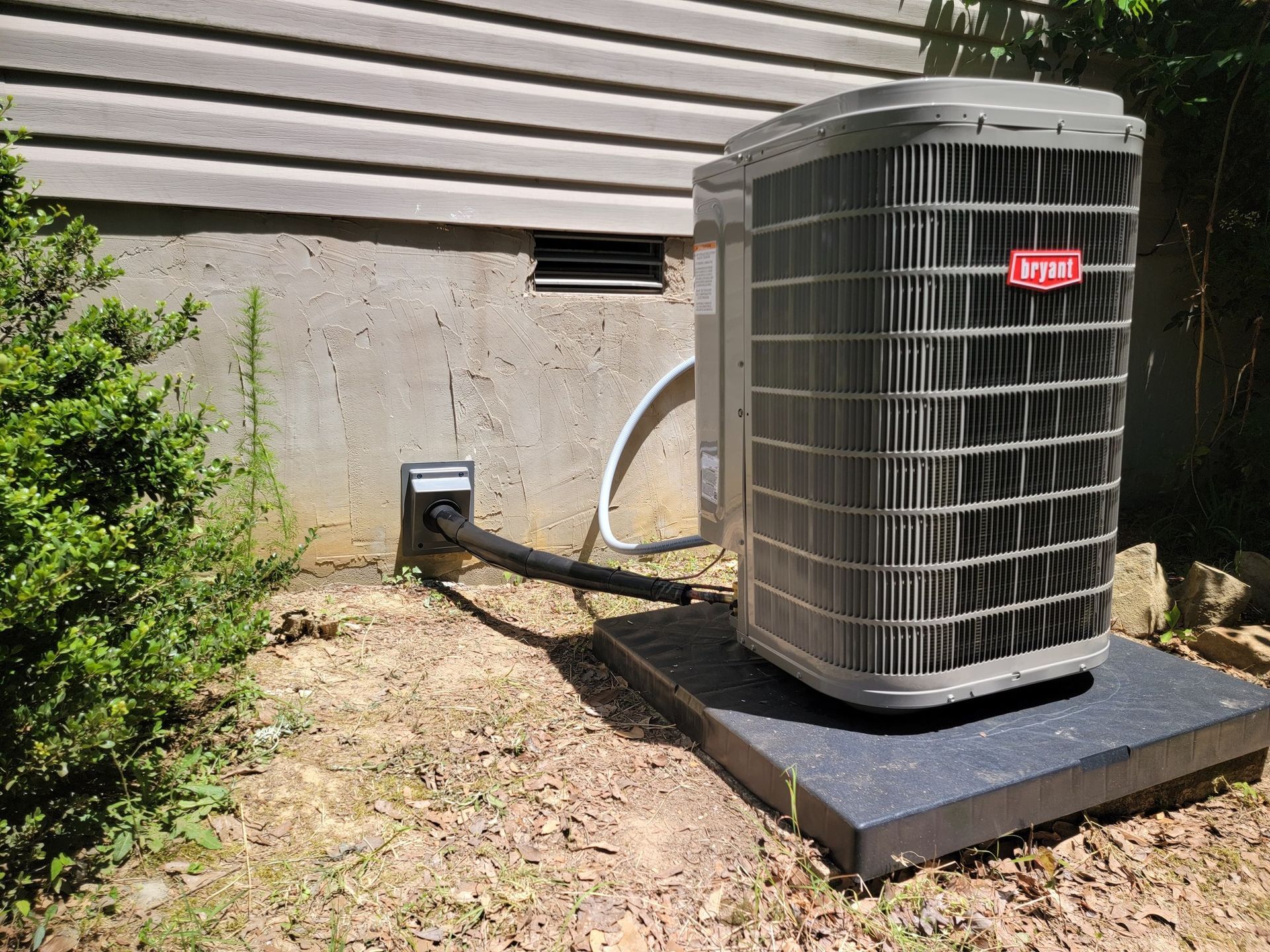
When a homeowner in Huntsville, Arab, or Guntersville starts shopping for a new HVAC system, "variable-speed" tends to come up fast. The sales pitch is consistent: longer, gentler run times, quieter operation, and — most importantly for our climate — better humidity control.
Some of that is true. Some of it depends on details most homeowners are never told about. And in a few specific cases, the upgrade you paid extra for will not deliver the humidity result you expected.
The honest answer is that variable-speed HVAC can be significantly better for humidity control, but only when the right type of variable-speed system is installed and set up correctly. The wrong type, or the right type configured poorly, can leave you with a premium-priced system and a house that still feels muggy.
Quick Answer
- Short answer: Variable-speed HVAC is often better for humidity control than single-stage equipment, but not always. The biggest factor is not "variable-speed vs single-stage" — it's whether the variable-speed system is communicating or non-communicating.
- Communicating variable-speed systems read indoor humidity, know the temperature setpoint, and can intentionally adjust airflow, coil temperature, and run patterns to remove more moisture. These are the systems that deliver the humidity benefit homeowners expect.
- Non-communicating variable-speed systems — including most mini splits — have no humidity input. They focus on maximizing runtime, which sometimes helps and sometimes hurts dehumidification. Mini splits also tend to run at higher indoor coil temperatures, which works against moisture removal.
- On the same communicating platform (such as Bryant, Carrier, or Trane), a variable-speed heat pump usually outperforms a variable-speed AC paired with a gas furnace for humidity control, because the heat pump can use electric reheat for true dehumidification cycles — and a gas furnace cannot.
- When to bring in a pro: Before you sign for any variable-speed system, the contractor should be able to tell you whether it is communicating, whether the controls support a humidity setpoint, and how the system will be commissioned to actually hit that setpoint in your house. If they cannot, that is a signal to slow down.
What This Article Is About — and What It Is Not
This post is for homeowners who are considering a new HVAC system — often because the current one is aging, undersized, oversized, or simply not keeping the house comfortable — and who specifically want to understand whether variable-speed equipment is worth it for humidity.
It is not:
- A diagnosis of why your current system is not controlling humidity. If that is your question, the companion article Why Your North Alabama Home Still Feels Humid With the AC Running walks through the most likely causes.
- A guide to general indoor humidity targets. For that, see What Should Indoor Humidity Be in a North Alabama Home?.
- A brand comparison or a sales recommendation for a specific model. The communicating-vs-non-communicating distinction and the heat-pump-vs-AC-plus-furnace distinction are platform-level questions; the right model within that depends on your home, your load, and your priorities.
How AC Equipment Actually Removes Humidity
To make sense of the variable-speed question, it helps to be clear on how any AC removes humidity in the first place. Three things matter:
- Coil temperature. Indoor air passes over a cold evaporator coil. The colder the coil surface relative to the dew point of the air, the more water vapor condenses on it and drains away. A coil running at 40°F removes more moisture per minute than the same coil running at 55°F.
- Airflow. Slower airflow gives the air more time in contact with the coil, which both drops the supply temperature lower and pulls more water out. Higher airflow cools faster but dehumidifies less.
- Runtime. Removing moisture takes time. A system that satisfies the thermostat in 6 minutes shuts off before it has done much dehumidification, while a system that runs 25 minutes pulls a lot more water out of the air.
A well-designed cooling cycle balances these three. The reason variable-speed equipment was developed at all is that, in theory, it lets the system run lower and longer — favoring all three of those moisture-removal factors at once. In practice, whether the system actually does that depends on what is controlling it.
Single-Stage, Two-Stage, and Variable-Speed: A Quick Background
Most HVAC equipment falls into one of three categories:
- Single-stage. The compressor runs at one capacity — full output. It is either on or off.
- Two-stage. The compressor has a low stage (often around 65–70% capacity) and a high stage. The system chooses one based on demand.
- Variable-speed (inverter). The compressor can run anywhere from roughly 25% to 100% capacity, continuously adjusting based on what the system thinks the home needs.
The variable-speed pitch — and the reason these systems cost more — is the ability to match output to load very precisely. On a mild day, the compressor runs at 30% for hours, cycling rarely, with low coil temperatures and steady moisture removal. That is the picture in the brochure.
Whether your house sees that picture depends almost entirely on the next section.
The Real Dividing Line — Communicating vs Non-Communicating Variable-Speed
Inside the category of "variable-speed inverter systems," there are two distinct types of equipment that look similar on a brochure but behave very differently in a humid climate. The difference is whether the system is communicating with the thermostat and the rest of the equipment, or not.
This is the single most important detail in this article, and the one most often skipped in a sales conversation.
Non-Communicating Variable-Speed Systems
A non-communicating variable-speed system has an inverter compressor that can modulate, but it does not have a direct line of communication between the thermostat, the indoor unit, and the outdoor unit. The thermostat tells the system to make cold air. The system decides — on its own — how hard to run.
The critical limitation is that the system does not read indoor humidity and has no built-in way to adjust its operation based on moisture. Its goal is simply to maximize runtime against the temperature setpoint. Often that helps with humidity, because longer runs typically dehumidify better. Sometimes it does not, because the system has no way to know that the air is still wet after the temperature is satisfied — so it shuts off, or backs down to a very low speed, exactly when the home still needs moisture removed.
In short: non-communicating variable-speed gives you a more efficient cooling cycle, but it gives you only an accidental, indirect humidity benefit. There is no humidity setpoint. There is no dehumidification mode. The result depends on the equipment, the home, and a fair amount of luck.
Mini splits are the most common example of a non-communicating variable-speed system, which is why they get their own section below.
Communicating Variable-Speed Systems
A communicating variable-speed system is one where the thermostat, indoor unit, and outdoor unit all talk to each other over a dedicated data line. The system reads the temperature, reads the indoor humidity, knows the temperature setpoint, and — if you set one — knows the humidity setpoint.
That sounds like a small distinction. It is not. It means the system can do things like:
- Lower the airflow when the humidity setpoint has not been met, to drop the coil temperature and remove more moisture.
- Continue running in a dedicated dehumidification mode even after the temperature is satisfied, with reheat used to keep from overcooling the room.
- Bias the compressor toward a colder coil and slower fan when the air is humid, and toward a warmer coil and faster fan when the air is dry.
- Coordinate the outdoor unit, indoor coil, and blower as a single piece of equipment, rather than a stack of components reacting independently.
When a communicating variable-speed system is properly designed, sized, and commissioned, it is the closest thing residential HVAC has to true active humidity control without a separate whole-home dehumidifier. The "when properly set up" part matters — this is not equipment you can drop in with the default settings and trust to make decisions correctly. The configuration is part of the install.
Why Mini Splits Often Disappoint on Humidity
Mini splits — ductless heads on the wall, or short-run ducted cassettes — are everywhere in our climate now. They are quiet, efficient, and well-suited to additions, sunrooms, garage apartments, and zoning problems that traditional ducted systems struggle with. We install them ourselves when the application calls for it.
But there is a specific gap between what mini splits do well and what homeowners often assume they do well: humidity control.
A few overlapping reasons account for it:
- Most mini splits are non-communicating in the sense described above. The wall-mounted head and the remote control do not read indoor relative humidity, and they have no humidity setpoint. You set a temperature. The system tries to hit that temperature efficiently.
- They tend to run at higher indoor coil temperatures than ducted central systems. That is by design — it improves efficiency and helps prevent coil freezing in low-load conditions — but it also means they remove less moisture per minute of runtime. A warmer coil drips less water.
- They modulate aggressively at low loads. On a mild, humid afternoon, a mini split is happy to run the compressor at a very low speed, keeping the room cool with almost no dehumidification. The brochure calls this efficient operation. In a North Alabama summer, the practical effect is that the room is cool but the air is still heavy.
- There is no broader system to coordinate with. A communicating ducted system can shift fan and compressor behavior across the whole house based on humidity readings in the living areas. A single-zone mini split is a single piece of equipment doing its own thing.
This is not a criticism of mini splits as a category. They have real strengths. But if humidity control is a priority — especially in our climate — a non-communicating mini split is not the tool to lean on for it. Where mini splits make sense, we routinely pair them with a separate dehumidification strategy rather than expecting the head on the wall to do that work.
For Communicating Systems, a Heat Pump Usually Outperforms an AC + Gas Furnace
Once you've narrowed the choice to a communicating variable-speed platform — Bryant, Carrier, and Trane are the brands most homeowners in our area will see on this — there is one more decision that has a real impact on humidity performance: heat pump versus AC paired with a gas furnace.
For most North Alabama homes, the heat pump version will deliver better humidity control, assuming both options use the same communicating platform and similar control hardware.
The technical reason is electric reheat.
Some communicating systems offer a true dehumidification mode in which the system intentionally overcools the air — running the coil colder and the blower slower than what the temperature setpoint alone would call for — to wring more moisture out. To keep that overcooling from making the room feel too cold, the system then warms the supply air back up before it reaches the registers. That warming step is electric reheat, and it requires a heat kit mounted in the air handler.
Heat pump systems have heat kits built in (or readily added) because they need supplemental electric heat for cold weather anyway. AC-plus-gas-furnace systems do not. A gas furnace cannot be modulated finely enough or safely cycled briefly enough to act as reheat for short dehumidification cycles. So on most platforms, the AC + gas furnace combination does not offer the same electric-reheat dehumidification mode that the heat pump version does.
The result, all else being equal:
- Communicating variable-speed heat pump: can run a true dehumidification mode with electric reheat. Capable of tighter humidity control in shoulder seasons and mild summer days where cooling demand is low but moisture is high.
- Communicating variable-speed AC + gas furnace: still better than single-stage at humidity, but cannot run the same reheat cycle. Tends to give up some moisture-removal performance on those low-load, high-humidity days.
If gas heat is a strong preference for other reasons — fuel cost, comfort feel, existing infrastructure — that is a legitimate reason to keep a gas furnace in the picture. But if humidity is the priority and the choice is otherwise close, the heat pump configuration is the stronger pick on these platforms.
Why This Decision Matters More in North Alabama
The variable-speed decision matters everywhere, but it carries more weight in our climate than it would in a drier one. A few patterns push it up the priority list:
- Long cooling season with high dew points. Outdoor moisture loads stay high from late spring through early fall. Equipment that struggles with humidity has months of consecutive opportunities to leave the home feeling muggy.
- Long shoulder seasons. Spring and fall in Huntsville and the surrounding area can produce days where the temperature is moderate but the dew point is still in the upper 60s. Those are the conditions that punish non-communicating equipment the hardest, because the AC barely needs to run for temperature — but the air is still humid. A communicating system with a dehumidification mode handles those days; a non-communicating one usually does not.
- Many homes have humidity sources outside the HVAC. Vented crawlspaces, ducts in unconditioned attics, bath fans terminated in soffits, and air leakage from humid outside air all add latent load to the home. Better humidity-removal equipment is more important in a home that is leaking moisture in from multiple directions. That is most homes in our market.
- Square-footage sizing is still common. Older sizing rules of thumb tend to oversize equipment, which shortens cycles and undermines humidity control. Variable-speed equipment is somewhat more forgiving of oversizing than single-stage, but it does not erase the problem. The decision still rests on a real load calculation, not a rule of thumb.
The honest version of all this: variable-speed equipment is a tool, and in our climate it is often the right tool. But the difference between the right variable-speed system and the wrong one for your home is significant enough that it deserves a real conversation, not a brochure handoff.
How a Good Contractor Should Help You Decide
If you are evaluating a new system and humidity is one of your priorities, the conversation with a contractor should look something like this — measured, specific, and honest about tradeoffs.
A thorough decision process should include:
- A real load calculation (Manual J), not a square-footage estimate or "matching what's there now." The latent (moisture) load is part of that calculation and is the number that drives humidity sizing.
- A direct answer to the communicating-vs-non-communicating question. If the contractor cannot tell you on the spot whether the proposed system is communicating, that is your answer. Communicating systems are usually a specific model line and a specific thermostat; both should be named.
- A walk-through of how humidity is actually controlled on the proposed system: is there a humidity setpoint on the thermostat, does the system have a true dehumidification mode, does that mode use reheat, and is the equipment configured correctly to use it.
- A heat-pump-vs-AC-plus-furnace discussion when relevant, including the reheat point above. A contractor who only offers one configuration without explaining why is missing a real choice.
- Commissioning measurements when the install is done: static pressure, airflow, temperature split across the coil (typically 18–22°F on a moderate day for a properly running system), and verified RH behavior over the first weeks of operation. A properly sized and configured system should land indoor RH in the 45–55% range in summer under normal conditions.
- Honest framing of efficiency. Variable-speed equipment is usually more efficient than single-stage, but the efficiency benefit is secondary to the comfort and humidity benefit in most homes. A contractor who leads the pitch with bill savings is selling the wrong promise.
For homes where humidity has been a long-running problem, or where the choice of system is bound up with duct issues, crawlspace moisture, or comfort imbalances across rooms, our Home Comfort Consult is built for exactly this kind of decision. It is a building-plus-HVAC diagnostic that treats the home as a system: load calculation, duct evaluation, blower door for air leakage, crawlspace assessment, and a written plan that ranks fixes by impact. The output is a path that does not start with "buy the most expensive system."
If indoor air quality and moisture are the larger concerns — odors, mold worries, allergy triggers, or family members feeling worse indoors than out — the
Home Air Health Study layers a week of continuous monitoring on top of the building assessment, so the equipment decision is informed by what the air is actually doing across days and conditions.
When to Act — and What Happens If You Don't
This is rarely an emergency decision. It is usually a "we know the current system is on borrowed time and we want to make a smart replacement when the time comes" decision. That said, there are a few realistic consequences worth knowing about.
If you replace equipment without thinking the humidity question through, the likely outcomes are:
- You pay a premium for variable-speed and feel no real humidity improvement. This is the most common disappointment we see. The system is variable-speed, but it is non-communicating, or it is communicating but installed with default settings that never activate the dehumidification mode.
- You buy mini splits for a humidity-prone room and find the room cool but still sticky. Mini splits in the right application are excellent. In the wrong one — as a primary humidity control strategy in a high-load room — they often do not deliver.
- You match what was already there because it was cheaper and faster. A like-for-like replacement of a single-stage system that was never controlling humidity well will, predictably, not control humidity well.
- You over-spec the equipment in the wrong direction. Going from a non-communicating mini split to a larger non-communicating mini split adds capacity without adding control. The humidity behavior often stays the same or gets worse.
There is also a modest secondary efficiency upside to a properly configured communicating variable-speed system — longer runs at lower capacity are usually more efficient than short, hard cycles. That is real, but it is not the reason to make this decision. The reason is comfort and humidity control. Efficiency is a fringe benefit.
Ready to Pick the Right System for Your Home?
The variable-speed question is one of the more expensive HVAC decisions a homeowner will make. Done right, it is also one of the most satisfying — a quiet, evenly-comfortable, properly dehumidified home for a decade or more. Done casually, it is a premium-priced disappointment.
For a single, well-defined replacement decision with a known scope, a normal HVAC replacement consultation is the place to start. For a home where humidity, room-to-room imbalances, duct issues, or crawlspace concerns are tied up in the equipment decision, the Home Comfort Consult is the more thorough path. If indoor air quality is the larger concern, the Home Air Health Study gives you a week of data before any equipment is recommended.
Both the Consult and the Study come with our Breathe-Easy Clarity Guarantee: if at the end of the review you don't feel clear on what's happening in your home and what your next steps are, you don't pay. Our job is to leave you informed, not pressured.
Schedule a Home Comfort Consult →
Learn about the Home Air Health Study →
Frequently Asked Questions
Is variable-speed HVAC always better for humidity than single-stage?
Not always. A properly configured communicating variable-speed system is meaningfully better than a single-stage system at humidity control because it can read indoor moisture, run a true dehumidification mode, and modulate airflow and coil temperature for moisture removal. A non-communicating variable-speed system — including most mini splits — gives you longer runtimes but no direct humidity logic, and in some conditions can perform similarly to or worse than a well-sized single-stage system for moisture removal.
Are mini splits good for humidity control?
Mini splits are excellent for zoning, efficiency, and quiet operation, and they are the right tool for many applications — additions, sunrooms, garage spaces, and rooms a central system cannot reach well. They are usually not the right tool when humidity control is a primary goal. Most mini splits are non-communicating, do not read indoor relative humidity, and tend to run at higher indoor coil temperatures, all of which work against moisture removal. In humidity-prone applications we typically pair mini splits with a separate dehumidification strategy rather than relying on the head alone.
What does it mean for a variable-speed HVAC system to be "communicating"?
A communicating system has a dedicated data connection between the thermostat, indoor unit, and outdoor unit, so they share real-time information — temperature, humidity, capacity, airflow, and setpoint — and coordinate as one piece of equipment. The practical benefits in our climate are a humidity setpoint, a true dehumidification mode (often using electric reheat), and the ability to bias airflow and coil behavior toward more moisture removal when needed. A non-communicating variable-speed system has an inverter compressor but no humidity input and no coordinated dehumidification logic.
Should I pick a heat pump or an AC + gas furnace for better humidity control?
On the same communicating platform (Bryant, Carrier, and Trane are the brands most North Alabama homeowners will see), a variable-speed heat pump typically gives better humidity control than the same line's variable-speed AC paired with a gas furnace. The reason is electric reheat: true dehumidification cycles overcool the air to wring out moisture, then warm it back up using electric heat strips that come with the heat pump's heat kit. A gas furnace cannot serve as that reheat source, so the AC + furnace combination loses access to the same dehumidification mode. If gas heat is a priority for other reasons, that tradeoff is worth discussing openly.
Will a variable-speed system fix my muggy house on its own?
Sometimes, but not always. Many "muggy with the AC running" complaints in North Alabama are not actually equipment problems — they are oversizing, duct leakage in hot attics or vented crawlspaces, bath fans terminated in attics, or a wet crawlspace pushing moisture into the living space. A new variable-speed system can help, but if the moisture sources outside the HVAC are not addressed, the new equipment may still struggle. Before replacing equipment, it is worth diagnosing where the moisture is actually coming from. Our companion article Why Your North Alabama Home Still Feels Humid With the AC Running covers those causes in detail.
Climate and Plant Selection
Selecting appropriate vegetation is crucial for the success of green roofs in the Mid-Atlantic region. Native and drought-tolerant plants are ideal, ensuring survival during dry spells and high-intensity storms. Sedums, grasses, and other hardy species maintain runoff retention and resist seasonal stress, supporting regulatory compliance throughout the year.
About the Author
Tanner Dickerson is the owner of Dickerson Services, a North Alabama HVAC, home performance, and crawl space encapsulation company serving Huntsville, Arab, Guntersville, Albertville, and the surrounding area. He works with homeowners on complex comfort, humidity, and indoor air quality problems by treating the whole house as a system — HVAC, ducts, crawlspace, air sealing, insulation, and ventilation together.
Share this article