
Why Do Arab Floors Feel Cold in October? Air Seal the Crawl First
October 8, 2026
Bring the RH log, the cycle times, and the forecast dew points from the same days. The rest should be measured.
A calm next step if you want data, not a pitch
If you want the smell located with numbers instead of a one-afternoon guess, the offer that matches this question is the Home Air Health Study.
Monitors stay in the home for about seven days. You get a scorecard and the top three moves that fit this house — which may or may not include the crawl. The Study explains what the air is doing. It is not a medical exam, and it does not promise that a product will make a smell disappear.
If you would rather talk it through first, call (256) 203-6612, Monday–Friday, 7:30 a.m.–5:00 p.m. You can also book a visit. Dickerson Services is at 2151 Hopewell Rd in Guntersville and works with homeowners across North Alabama.
Bring where the smell is strongest, when it shows up, and any humidity readings you took. The rest should be measured.
Short answer
Cold floors in October usually start under the house, not at the thermostat. Cooler fall air moves through a vented crawl space and right past fiberglass batts, which slow heat but do not stop air. The fix that lasts is an order of operations: air seal the crawl first, then insulate in a sealed, dry assembly.
That is why turning the heat up two degrees often does not help much. The air in the room gets warmer. The floor you are standing on does not.
Why floors feel colder once October arrives
Across North Alabama, October nights usually cool off well before afternoons do. Long-term climate normals often put early October lows in the 50s and late October lows closer to the upper 40s, with plenty of mild afternoons in between. That is climate guidance, not a forecast for your street.
Many crawl space homes around Arab were built with the traditional assembly: foundation vents, a dirt floor or a loose sheet of plastic, and fiberglass batts between the floor joists. In summer, that assembly tends to collect moisture. In fall, the same openings let cooler outdoor air wash under the floor every night. The subfloor sits on top of that air. Your feet notice before the thermostat does.
A few things usually stack up at once:
- Cool air comes in through vents and gaps. Foundation vents, an unsealed rim joist, and holes around pipes and wires all let outdoor air move under the house.
- Fiberglass is not an air barrier. Air passes right through it. It slows heat transfer when it is dry and tight to the subfloor, but it does not stop moving air from reaching the wood.
- Damp batts sag. After a long, humid summer, batts often hold moisture, get heavy, and pull away from the subfloor. Once there is a gap, the insulation is barely doing its job.
- The house pulls air up from below. As the weather cools, warm air rises and leaks out the top of the house, and replacement air gets drawn in low. In a crawl space home, a lot of that comes from the crawl.
Cold floors are one of the signs we list on our
crawl space encapsulation and moisture control page, right alongside uneven comfort and an HVAC system that works harder than it should.
Why air sealing comes before insulation
This is the part most people get backwards, and it is the main point of this article.
When a floor feels cold, the natural instinct is to add insulation. But insulation only works well when air is not moving through it and it is not wet. In a vented crawl, neither is true. Adding more fiberglass between the joists gives damp crawl air more material to move through and more material to soak. A year later, the new batts are often sagging just like the old ones.
So the order matters:
- Handle water first. If water gets in after storms, grading, gutters, and drainage come before anything else. Sealing over a wet problem does not solve it.
- Seal the ground. A continuous, sealed vapor barrier over the dirt and up the walls and piers stops the ground from feeding moisture into the space.
- Seal the air paths. Vents, the rim joist, and penetrations get sealed so outdoor air is no longer sweeping under the floor.
- Dry it down and keep it dry. A sealed crawl needs a way to stay dry, usually a properly sized crawl space dehumidifier or a small supply of conditioned air.
- Then insulate. Once the assembly is sealed and dry, insulation moves to the foundation walls and rim joist, where it can do its job without air washing through it.
That is the same sequence we walk through in detail in vented vs. encapsulated crawl spaces in Alabama. If you want the building-science background, start there. This article is the short, seasonal version: when floors turn cold in fall, sealing comes first.
One safety note: if there is a gas water heater or furnace in the crawl space, sealing changes the air available for combustion. That needs a combustion safety check before anything gets sealed.
How this is different from wet-crawl and musty-smell problems
We have written about crawl spaces before, and those posts answer different questions:
- After the rain: why crawl spaces stay wet into late summer covers moisture after storms and how to log humidity.
- Musty smell from the crawl space covers odor in the living space and where it usually comes from.
- Sweating supply vents in late summer covers condensation at the registers.
This post is about fall comfort: floors that feel cold even when the room temperature looks fine, and why the order of the fix matters. The causes overlap, because the same open, damp crawl is behind all of them. The symptom you feel in October is just a different one.
What you can safely check from the hatch
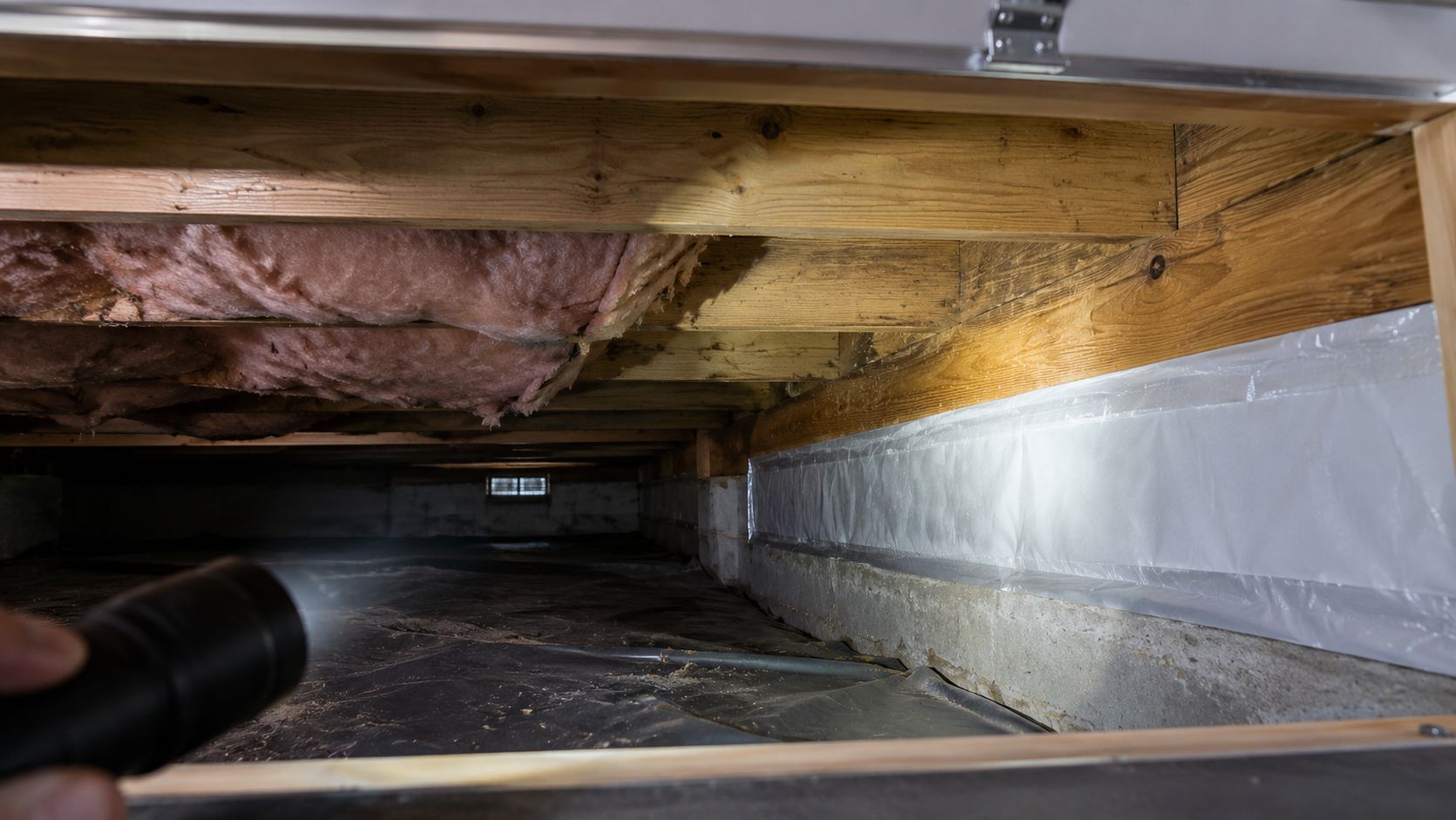
You do not need to crawl the whole space. From a safe hatch with a good flashlight, look for:
- Insulation condition. Is it tight to the subfloor, or sagging, hanging, or lying on the ground?
- Ground cover. Is there a vapor barrier, does it cover everything, and are the seams sealed, or is it torn with bare dirt showing?
- Open vents and gaps. Can you see daylight at vents or along the rim joist? Dirt-streaked insulation or framing often marks where air is moving.
- Moisture clues. Standing water, damp soil, or white mineral crust on block walls.
- Ducts. Disconnected, crushed, or sagging ducts under the floor can leave one room colder than the rest.
Inside, notice whether the cold is everywhere or mostly in one or two rooms. If it is one room, why one room is hotter or colder than the rest of the house walks through the usual suspects. If the air feels damp as well as cool, what indoor humidity should be in a North Alabama home gives you a target range.
Removing wet insulation, sealing the rim, and installing a barrier are pro work. Looking is homeowner work.
A calm next step: get the crawl measured and quoted
If your floors feel cold this fall and the hatch shows sagging batts, open vents, or bare dirt, the matching next step is a crawl space evaluation and quote. Book a visit and tell us it is a cold-floor and crawl question. We look at the ground cover, air paths, rim joist, insulation, ducts, and moisture, then give you a scoped quote that follows the right order: seal first, dry it, then insulate. You can see the full range of crawl work we do on our crawl space encapsulation and moisture control page, including air sealing, ventilation balancing, and crawl space insulation. Every crawl is different, so there is no one-size price in this article.
If the problem seems to be the heating system itself (heat that does not come on, one room that never warms, odd noises), book an HVAC visit instead. For non-members, that is an $85 service call. Members on the Home Air Assurance Plan pay $0 for the trip and only pay for approved repair work, with the member discount.
If your bigger worry is what the air in the house is doing, the Home Air Health Study places monitors for about seven days. You get an Air Health Scorecard and the top three next moves for your home. We do not diagnose medical conditions.
Call
256-203-6612, Monday–Friday, 7:30 a.m.–5:00 p.m. CT. Dickerson Services
is at 2151 Hopewell Rd in Guntersville and works with crawl space homes across North Alabama.
Frequently Asked Questions
Why are my floors cold in October even with the heat on?
Because the heat warms the room air, while the subfloor sits on top of cooler crawl space air. In a vented crawl, outdoor air moves under the floor every night, and fiberglass batts do not stop it. As fall nights cool, the floor stays cold even when the thermostat reads normal. Turning the heat up usually costs more without fixing the floor.
Why should the crawl be air sealed before it is insulated?
Because insulation only works well when air is not moving through it and it stays dry. Fiberglass is not an air barrier, and in a damp, vented crawl it soaks up moisture and sags. Sealing the ground and air paths first, then drying the space, lets insulation on the walls and rim do its job instead of failing again.
Can I just add more fiberglass under the floor?
Usually that does not fix cold floors for long. New batts in the same open, damp crawl tend to end up sagging like the old ones, and air still moves through them. If budget is tight, ask for a quote that puts sealing first and lets you plan insulation as the next step.
Is this the same problem as a wet or musty crawl space?
It is often the same open crawl causing a different symptom. Summer usually shows up as moisture, sweating, or a musty smell. Fall often shows up as cold floors. The fix overlaps, but this article is about comfort and the order of operations, not odor or storm water.
How do I get a crawl space evaluation and quote?
Book a visit online or call (256) 203-6612 and tell us it is a cold-floor crawl question. We evaluate the ground cover, air paths, insulation, ducts, and moisture, then give you a scoped quote. Crawl work depends on size, access, and condition, so we do not quote a price before we see the space.
Share this article