
After the Rain: Why Arab Crawl Spaces Stay Wet Into Late Summer
September 15, 2026
Bring the RH log, the cycle times, and the forecast dew points from the same days. The rest should be measured.
A calm next step if you want data, not a pitch
Quick Answer
After a late-summer rain, ground and crawl can stay wet while outdoor air stays warm and sticky. Vented crawls often load moisture instead of drying. Sealed/encapsulated with managed humidity is the local assembly frame once drainage and paths are clear. Log indoor RH, check the hatch and drainage after storms, keep RH under 60 percent. Book a free crawlspace moisture visit for airflow and drying checks — not a driveway guess.
What this article is — and what it is not
This post is for homeowners who notice the house feeling heavier, stickier, or damper in the days after a late-summer or early-fall rain — floors that feel cooler and closer to the ground, towels that take longer, air that does not bounce back even when the air conditioner is cooling. It is weather-triggered education about moisture load under the house. It is not a remote diagnosis of this house.
It is not a remake of musty smell from the crawlspace in Arab. That article is an odor locate: hatch, supply registers, one bathroom, closed rooms, and when a smell shows up. This one is about post-rain moisture load — wet ground, sticky warm days, and a crawl that stays wet whether or not you notice a smell.
It is not a full retread of vented versus encapsulated crawl space. That comparison already exists. Here the thesis is narrower: after rain, outdoor air and wet soil work against a vented crawl in this climate.
It is not why a North Alabama home still feels humid with the AC running or why the house still feels sticky at 72°F restated as a storm story. Those explain equipment and how the air feels. It is not what causes high humidity in an Alabama home rewritten as rainfall. The three buckets — equipment, moisture sources, air leakage — still sit behind a high log.
It is not a new-AC pitch. Extra cooling capacity that hits the thermostat faster can leave more moisture behind.
Why late summer on Sand Mountain loads the crawl
Alabama’s Office of the State Climatologist describes the state as humid subtropical: long, hot, humid summers, with summer rainfall often dominated by thunderstorms. That is the regional pattern — not a rainfall total for your yard this week, and not a forecast for this storm.
Arab sits on Sand Mountain. Many older homes here were built the ordinary North Alabama way: crawlspace, foundation vents, fiberglass under the floor, ducts in that same space. That assembly assumed outdoor air would help dry the crawl. In a mixed-humid climate, outdoor air stays moisture-heavy for months. After a rain, the ground under and around the house is wet. Clay and finer-textured soils common in this region hold moisture; they do not flash-dry the way a thin sandy surface can. Warm sticky days after the storm keep outdoor relative humidity high while the dirt under the floor is still evaporating.
So the sequence is simple physics, not a scare story:
- Rain wets the soil and any low spots near the foundation.
- Outdoor air stays warm and wet.
- Vents keep exchanging that outdoor air with the crawl.
- Cooler crawl surfaces and damp dirt load moisture instead of drying.
- Paths into the living space — plumbing holes, the rim joist, leaky returns — can move some of that wet air upstairs.
This article will not invent inches of rain for your lot. Watch your own weather, your own gutters, and your own hatch after the next storm.
Likely vs. possible
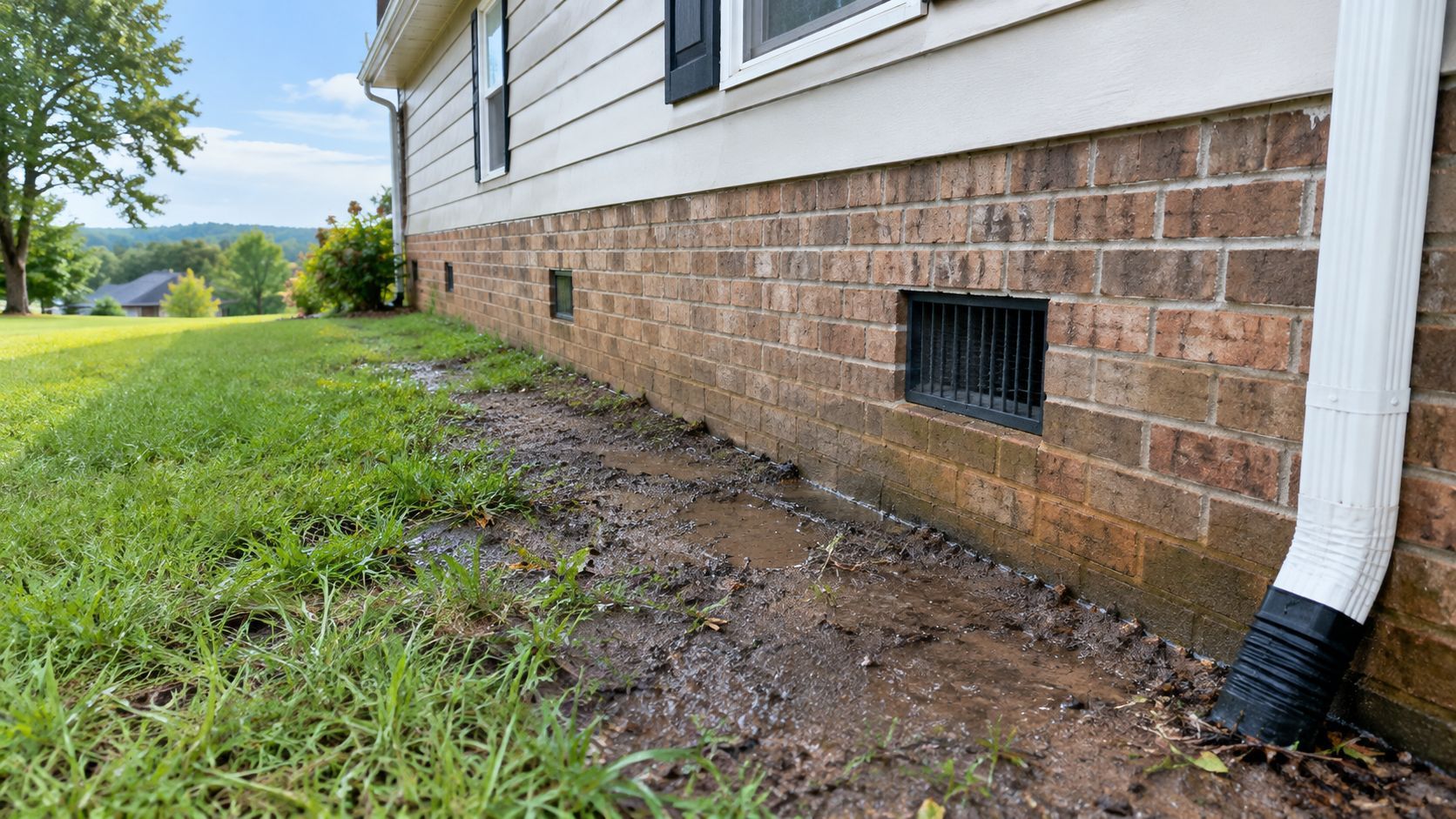
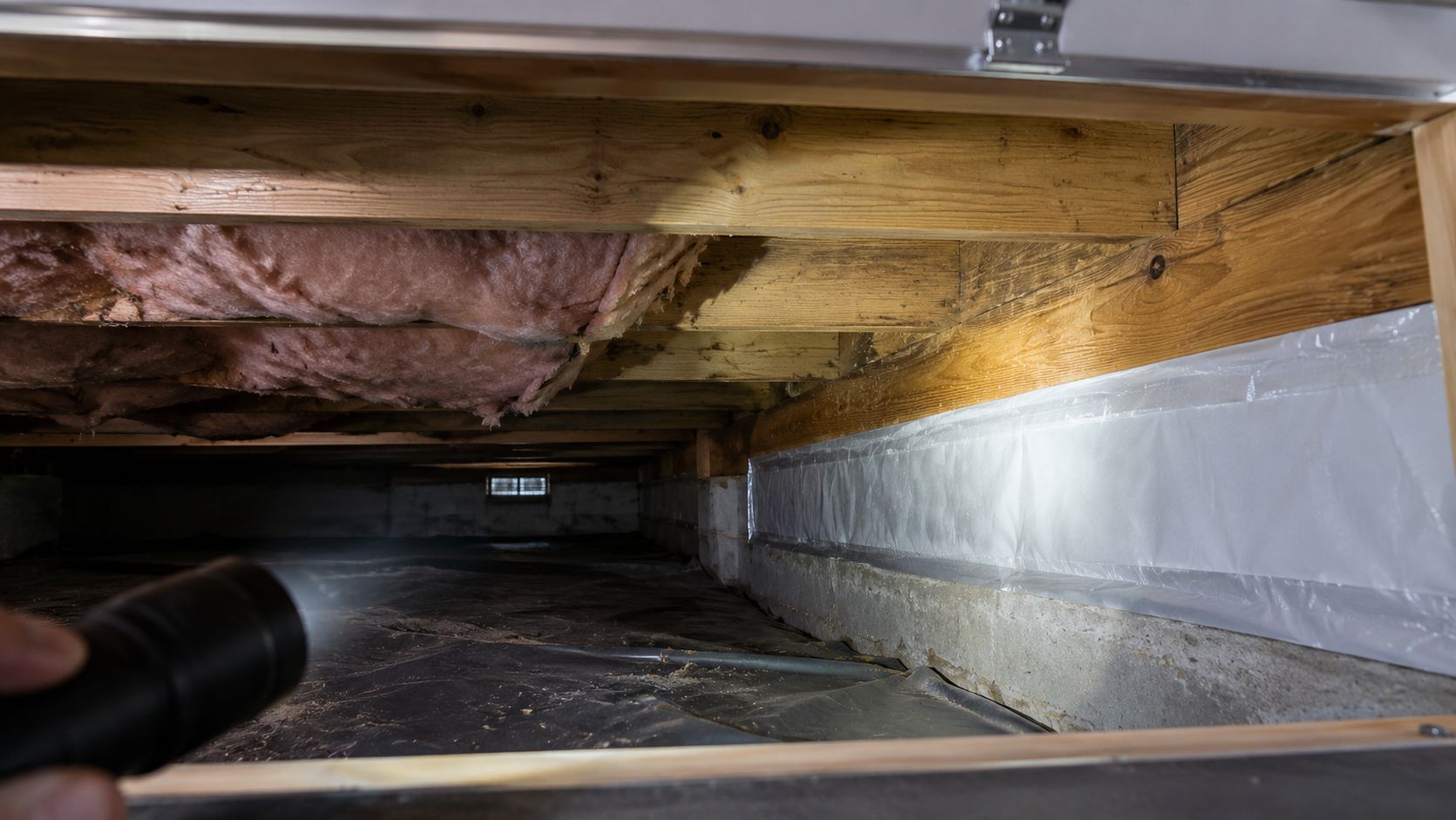
Likely: wet ground under a vented crawl after rain. Bare dirt or a torn plastic sheet is a steady evaporating surface. After a storm, that surface is wetter. Foundation vents do not shut off because the calendar says September. Outdoor air that enters is still moisture-heavy on sticky warm days. Homeowner method: from a hatch you can already use safely, look — lights on, no unsafe crawling — at standing water, dark damp soil, sagging or stained floor insulation, and whether vents are open to outdoor air. You are locating a moisture path, not diagnosing the house.
Likely: outdoor air through vents adding load instead of drying. Vents only dry a crawl when outdoor air is drier than the space under the house. Late summer and early fall on Sand Mountain often fail that test. Adding “more vents” after a wet spell is the wrong instinct in this climate. The assembly question belongs in vented versus encapsulated; this article will not retread every detail. Closing vents alone, without covering the ground and managing humidity, can make a damp crawl worse.
Likely: living-space humidity drifting while the thermostat looks fine. Sensible cooling (temperature) happens fast. Moisture removal takes a wet coil and time. If the crawl is feeding wet air and the system short-cycles, indoor RH can sit high while the display shows a comfortable setpoint. Keep indoor relative humidity under 60 percent. On Dickerson’s live humidity posts, a comfortable summer living-space range is often 45–55 percent. A crawl should stay under 60 percent RH as well when you can measure it.
Those three are the thesis: wet ground after rain, vented exchange with sticky outdoor air, and indoor RH that drifts even when cooling is on.
Possible: drainage aimed at the foundation. Gutters dumping at the wall, downspouts that end next to the crawl, or soil that slopes toward the house can put stormwater under the floor. Standing water is a drainage problem first. Plastic and equipment will not outrun a hole. Fix water entry before you talk about liners.
Possible: leaky returns in the crawl. A return that is loose or unsealed can pull crawl air into the system. Homeowner clue: a change in how the air feels when the system starts after a wet spell — not a leakage percentage. Measuring and sealing returns is pro work.
Possible: a portable dehumidifier upstairs only. A unit in a hallway does not dry dirt under the house or stop vent exchange. It can lower one room while the load keeps arriving from below.
Not: a musty-smell diagnosis from this article. If odor is the main symptom, use the musty-smell crawl locate. Smell and post-rain moisture can shafre a house. They are still different questions.
Not: medical claims, mold as a remote fact, or “cure” language. We do not diagnose medical conditions. Moisture is a building-science question. Visible growth, if present, is a separate finding after wet materials and RH are measured.
Not: duct cleaning as the moisture fix. Dust is not the water.
Not: UV, photocatalytic oxidation, or bipolar ionization as whole-home humidity control. Those are not moisture tools.
Not: a bigger air conditioner first.
Extra capacity that satisfies the thermostat faster can leave more moisture behind. Air seal, then insulate, then right-size when replacement is already justified.
What to check after the rain (homeowner-visible)
Indoor RH, logged for several days. Put an inexpensive hygrometer in the main living area, out of sun and off a supply vent. Write temperature and RH morning, afternoon, and after a cooling cycle — including a sticky day after rain, not only a hot dry afternoon. One snapshot is not the house. Keep living-space RH under 60 percent.
Hatch look after a storm. From a safe opening: open vents or sealed? Ground covered fully, torn, or bare? Standing water? Insulation sagging or stained? You are observing, not inventing a wood-moisture number.
Drainage outside. Gutters clear? Downspouts carrying water away from the foundation? Soil sloping toward or away from the wall? After rain is the right time to watch where water goes.
Thermostat fan on AUTO. ON can blow house air across a wet coil between cycles and put moisture back into the rooms. Switch to AUTO and log RH again.
Whether cooling feels like it is drying the air. Homeowner-visible: does the air feel less sticky after a longer cooling run, or does the house stay heavy even when the thermostat is satisfied? That is a comfort clue, not a gauge reading. A moisture visit looks at airflow and whether the system is actually drying the air.
The order that holds up: stop water entry, understand the crawl path, then decide on assembly and equipment. Encapsulation is often the better assembly in this climate — see
crawl space encapsulation and moisture control — but it is the wrong first spend if drainage is open and humidity has not been logged. A
whole-home dehumidifier is a later decision after sources and paths are measured.
If you wait
A wetter crawl after late-summer rain is rarely an emergency. It is also rarely a condition that “clears itself” just because September is on the calendar. Outdoor air can stay sticky into early fall. Soil under the house does not dry on a driveway schedule. Insulation that stays damp can sag. Indoor RH that sits above 60 percent for long stretches is the range where cooler surfaces can stay wet. “Can” is not “will.” People often drop the thermostat; a colder house can make surfaces colder without lowering the load under the floor. The durable move is to reduce how much wet outdoor air and wet soil feed the crawl, then let the equipment run long enough to wring out what remains.
A calm next step
If the house stays heavy after rain — you have logged indoor RH, set the fan to AUTO, checked gutters and the hatch — the matching next step is a free crawlspace / moisture quote. Book a visit. That visit is for measurement: airflow, whether the system is drying the air, and crawl moisture checks you can see as a homeowner — not a parts quote from the driveway, and not a remote diagnosis from this page.
If you want a week of data instead of one afternoon, the Home Air Health Study places monitors for about seven days. You get a scorecard and the top three next moves. We do not diagnose medical conditions. There is no invented price on this page.
If you are already replacing the system, the Initial Comfort Plan is a free 60–90 minute side door so sizing and humidity get into the options conversation. You leave with a Comfort Options Report. It is not the lead offer for a post-rain crawl moisture question.
Call ,256-203-6612
Monday–Friday, 7:30 a.m.–5:00 p.m. CT. Dickerson Services
is at 2151 Hopewell Rd in Guntersville. Bring the RH log and a note of which days after rain felt worst.
Frequently Asked Questions
Why does my crawl stay wet after the rain stops?
Because the soil under the house stays damp longer than the driveway, and outdoor air on sticky warm days is still moisture-heavy. A vented crawl keeps exchanging that air with the space under the floor, so the crawl can load moisture instead of drying. Clay and finer soils hold water; vents do not shut off when the storm ends. Log indoor RH and look at the hatch and drainage after the next rain.
Is this the same as a musty crawl smell?
No. A musty smell is an odor-locate question — hatch, registers, one bathroom, closed rooms. This article is about post-rain moisture load even when you do not notice a smell. The two can share a house. Start with the symptom you actually have; use the musty-smell crawl post if odor is the main clue.
Should I close my crawl vents after a late-summer storm?
Not by themselves. Closing vents without covering the ground, fixing drainage, and giving the space a way to stay dry removes one path and leaves the moisture source. That order can make a damp crawl worse. Whether to seal and encapsulate is a measurement decision. Read the vented-versus-encapsulated comparison after you have logged humidity and checked water entry.
What should indoor humidity be after rainy late-summer weather?
The same target as any North Alabama living space. Keep indoor relative humidity under 60 percent. On Dickerson’s live humidity posts, a comfortable summer living-space range is often 45–55 percent. Rain does not get a wetter indoor allowance. A crawl should stay under 60 percent RH when you can measure it.
What should I do first if the house feels damper after rain?
Log indoor RH for several days. Set the thermostat fan to AUTO. Watch gutters, downspouts, and soil slope after the next storm. From a safe hatch, look at vents, ground cover, and standing water. Then book a free crawlspace moisture visit if you want airflow and drying checked on site. Do not start with duct cleaning, UV, fogging, or a bigger air conditioner.
The storm has passed. The driveway is drying. Late-summer sun is back. Outdoor air still feels warm and close.
Under many houses on Sand Mountain, the soil under the floor stays wet longer than the yard looks. Foundation vents keep exchanging outdoor air. That air is not dry. After the rain is when a vented crawl can push moisture into the house — even when nobody smells anything yet.
Share this article