
Why Does Ragweed Season Make My Huntsville House Feel Worse Indoors?
September 14, 2026
What it is. A thermostat mounted where it doesn't sense the true average temperature of the home — in direct afternoon sun, on an exterior wall, near a sunny window, or above a heat-producing appliance.
Why it causes this symptom. A thermostat only knows the temperature at its own spot on the wall. If the afternoon sun lands on it, or it sits on a wall that heat-soaks late in the day, it reads warmer than the rest of the house and keeps calling for cooling it may never feel "satisfied" delivering — so the system runs and runs without ever clicking off. It can also work the other way, where a poorly placed thermostat shuts the system off early and lets distant rooms drift. Either way, the thermostat's afternoon reading is part of the story even when the equipment is healthy.
What should be measured or checked:
- A second thermometer placed in the main living area, compared against what the thermostat reports.
- Whether sun ever falls directly on the thermostat during the afternoon.
- Thermostat location relative to supply registers, exterior walls, and appliances.
More likely vs. less likely. More likely if the thermostat is on a sunny wall, near a window, or in a spot that clearly feels different from the rest of the house. Less likely if it sits on a shaded interior wall and matches a handheld thermometer.
Homeowner vs. pro:
Comparing the thermostat to a separate thermometer is an easy homeowner check. Relocating a thermostat is a small pro job, and worth doing only after the bigger capacity and load questions are ruled out.
Bring the RH log, the cycle times, and the forecast dew points from the same days. The rest should be measured.
A calm next step if you want data, not a pitch
If you want the smell located with numbers instead of a one-afternoon guess, the offer that matches this question is the Home Air Health Study.
Monitors stay in the home for about seven days. You get a scorecard and the top three moves that fit this house — which may or may not include the crawl. The Study explains what the air is doing. It is not a medical exam, and it does not promise that a product will make a smell disappear.
If you would rather talk it through first, call (256) 203-6612, Monday–Friday, 7:30 a.m.–5:00 p.m. You can also book a visit. Dickerson Services is at 2151 Hopewell Rd in Guntersville and works with homeowners across North Alabama.
Bring where the smell is strongest, when it shows up, and any humidity readings you took. The rest should be measured.
The windows have been shut for weeks. The air conditioner is still running. School is back. The house is closed up. And the indoor air still feels dusty, heavy, or just off.
That is not an outdoor pollen forecast. It is a closed-house question: filtration, fresh air, and humidity — while ragweed is in season.
In Huntsville that question shows up in metro houses, not just on a rural lot. Construction dust, school-year occupancy, and a system that is still cooling all sit on top of fall pollen. Closing the windows keeps a lot of outdoor air out. It does not clean the air that is already inside, and it does not stop leaks.
Quick Answer
Ragweed is outdoor pollen. AAAAI describes pollination as stretching from early August through October in many parts of the country. Closing the windows is the usual indoor move. The house can still feel worse because particles that get in stay in, the filter can load while the AC is still running, indoor humidity can sit high in a closed-up house, and outdoor air often enters through leaks rather than through a filter. Filtration, fresh air, and humidity are the indoor controls. We do not diagnose medical conditions.
What this article is — and what it is not
This post is for homeowners who notice the house feeling worse indoors in September and October, even with the windows shut. It is the indoor-air article for ragweed season: filtration, fresh air, and humidity in a closed-up metro house. It is not a remote diagnosis of this house.
It is not a remake of how often to change the HVAC filter during pollen season. That Arab post is a filter-timing article for a rural Sand Mountain load — dirt roads, fieldwork, and a long pollen calendar. This one is not that calendar with a city swap. It is not which HVAC filter to buy for allergies and pollen. That one is the filter-selection article. Link it if you are shopping a filter. Do not treat this post as a second MERV guide.
It is not why the house feels stickier on a mild September day. That one is short cycles and humidity when the outdoor temperature looks easy. It is not whether to open the windows or keep the AC on. That one is a dew-point decision. It is not why a North Alabama home still feels humid with the AC running or why the house still feels sticky at 72°F. Those are humidity-feeling articles. Moisture still belongs in this picture. It is not the whole picture.
It is not what causes high humidity in an Alabama home restated as a pollen story. It is not a musty-smell locate from the crawlspace. It is not a new-AC pitch.
It is not a medical article. We do not diagnose medical conditions. Indoor air is not a diagnosis of anyone in the house.
Likely vs. possible
Likely: the house is closed up, so particles that get in stay in. Closing the windows is the usual ragweed move. AAAAI's public ragweed page also treats keeping windows closed as a way to limit outdoor pollen drifting indoors. That is outdoor-air control. It is not indoor cleaning. Whatever already came in — on clothes, on backpacks, through a door that opens all afternoon, through a leak — now recirculates. A closed house concentrates what it already holds.
Likely: a metro construction load sitting on top of ragweed. A subdivision near Redstone, an infill lot, or a street with grading and trucks is not the same outdoor load as a dirt-road house on Sand Mountain. The Arab filter-timing post owns the rural dust story. Here the extra indoor load is often construction dust plus fall pollen in a house that stays shut. Both load the filter. Both stay in the rooms if the filter is bypassed or overdue.
Likely: school-season occupancy with the air conditioner still running. Doors open and close more. More people are in the house after school. Showers and cooking stack up in a closed envelope. NWS climate normals for the area still put a typical September high in the mid-80s, so cooling season is not over. The system is moving indoor air all day. If the filter is loaded, or if outdoor air is leaking in around it, the house is circulating whatever it has.
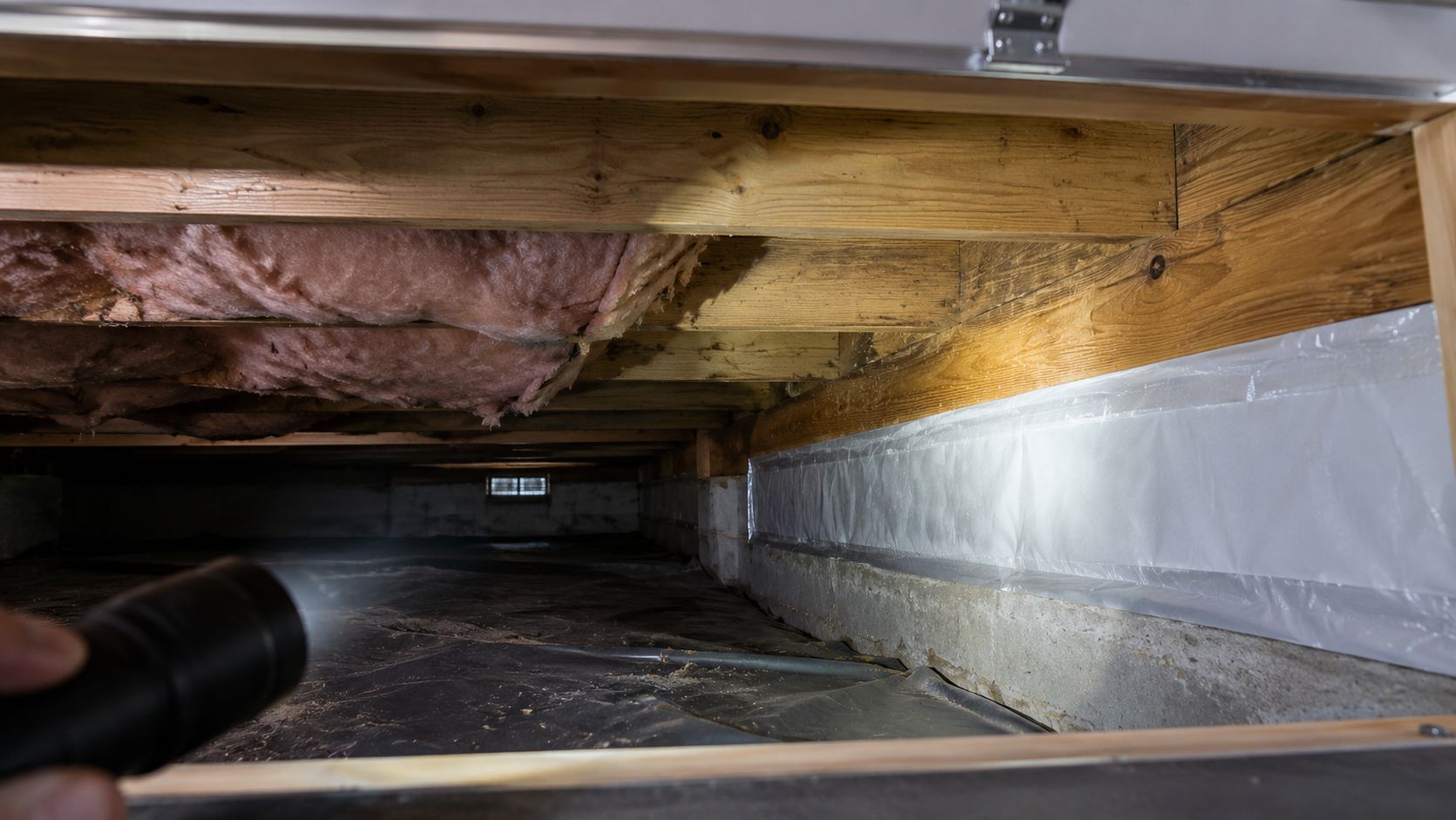
Likely: outdoor air entering through leaks, not through the filter. A vented crawl, a loose return, or gaps around a filter frame let unfiltered air into the living space. Encapsulated crawls beat vented ones in this climate; that comparison is already written in vented versus encapsulated crawl space and this article will not retread it. Homeowner method: look at the filter in its slot. If you can see an obvious gap around the frame, some air is skipping the media. That is a path, not a job reading.
Likely: indoor humidity still sitting high in a closed-up house. Filtration does not dry the air. A house that holds above 60 percent relative humidity can feel heavy even when the pollen complaint is what brought you here. On Dickerson's live humidity posts, a comfortable summer living-space range is often 45–55 percent. Keep indoor RH under 60 percent. If the mild-day version of this is the sticky, short-cycle story, that article is already live. This one will not rewrite it.
Those are the thesis: closed envelope, metro particle load, system still running, unfiltered paths, and humidity the filter cannot fix.
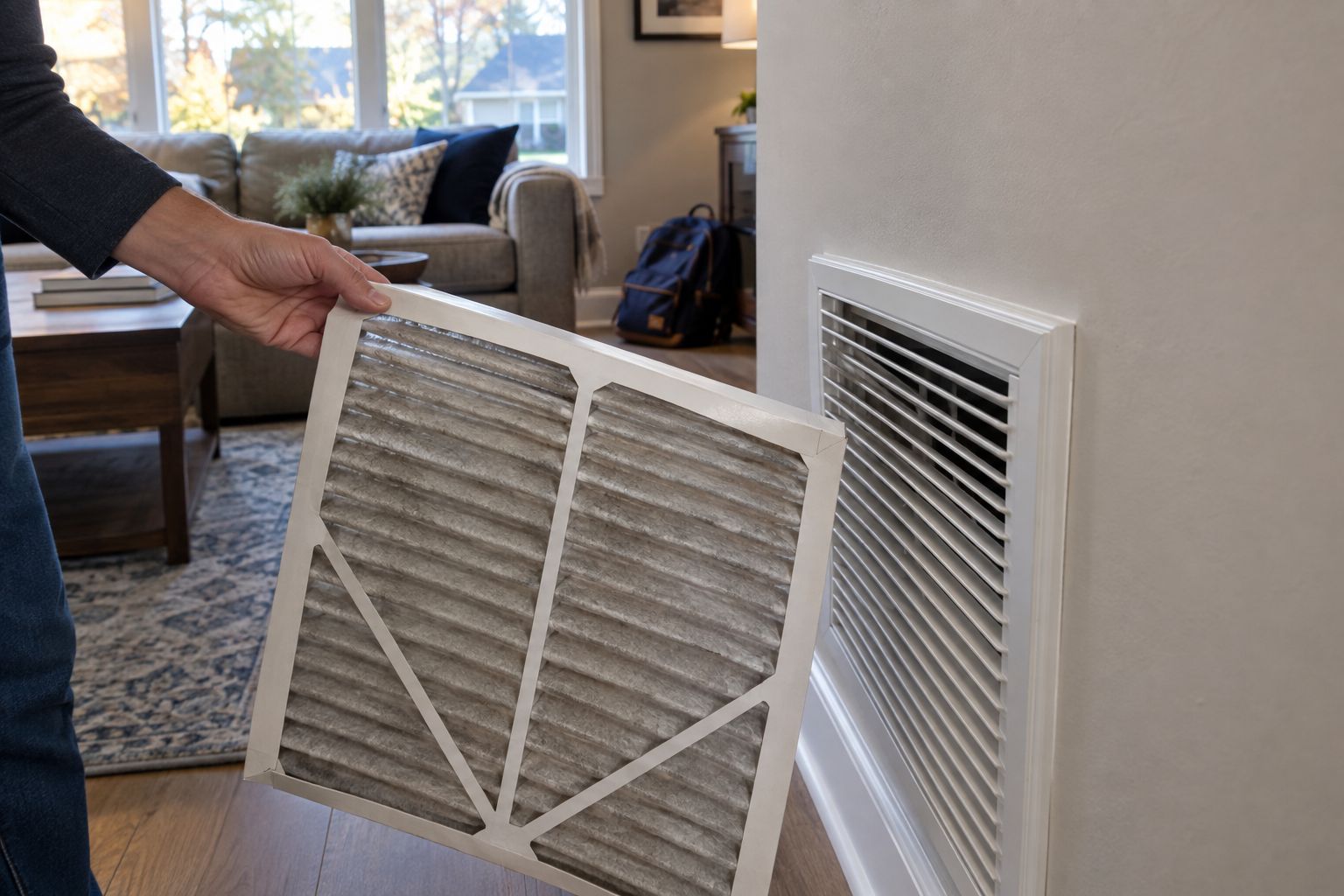
Possible: a filter that looks dirty because it is doing work — or because air is going around it. Pull it. Hold it up to a window or a phone light. Gray-brown and light barely passing through means it is done. Mostly white with light still coming through can go back. A gap around the frame is a different problem than a loaded media. Do not turn this into a calendar. The Arab post already owns the 1-inch versus 4-inch schedule.
Possible: one nice afternoon of open windows. A 70-degree evening is not automatically dry enough. Use dew point, not outdoor RH on a phone. That decision lives in the Guntersville window article. One open-window evening in ragweed season is enough to reload a closed house.
Possible: one closed bedroom. A shut room can hold its own particles and moisture. If only that room feels worse, open the door for a few days and compare.
Possible: showers, cooking, wet clothes. Indoor moisture sources still count. They are not ragweed. Exhaust should leave the building, not the attic.
Not: a medical claim. A dusty-feeling house is not a diagnosis. We do not diagnose medical conditions.
Not: duct cleaning as the pollen fix. Dust on furniture is often still arriving from a leak, a loaded or bypassed filter, or outdoor air that never saw the media. Cleaning the ducts does not close those paths.
Not: UV, photocatalytic oxidation, or bipolar ionization as whole-home indoor air quality. Those are not filtration. They are not humidity control. They are not fresh air.
Not: a bigger air conditioner because ragweed season arrived.
Extra capacity that hits setpoint faster can leave more moisture behind. Air seal, then insulate, then right-size. Prefer variable-capacity equipment when replacement is already justified. If you add outdoor air, it should be intentional, filtered, and tied to dehumidification.
The climate, and why a metro house is not a rural pollen post
The National Weather Service describes Huntsville-area summers as warm and humid, with rather frequent thunderstorms. That is the regional baseline. The same NWS climate narrative then calls fall "usually dry and pleasant," with thunderstorm activity dropping off, and puts the average first freeze in late October. Outdoor air can feel easier. The house is still closed. The air conditioner is often still on. Ragweed season is still running.
AAAAI's public ragweed page is the timing source used here: pollination used to be treated as mid-August through September; in many parts of the country it now begins in early August and extends through October. This article will not invent a local pollen count. Look at a real pollen report for your own day if you want one. The indoor question does not wait on that number.
The metro pattern is the local hook. School-year traffic, infill construction, and closed-up suburban houses are not the same story as a rural Marshall County lot next to a field. Both can have ragweed. They do not have the same indoor load, and they do not have the same reason the house feels worse with the windows shut.
What to measure (methods, not invented findings)
Filter condition, homeowner-visible. Pull the filter. Look at color and whether light passes through the media. Look at whether it sits tight in the slot or leaves an obvious gap. Write down the date you looked. That is a condition check, not a pressure reading, and not a MERV shopping trip.
Indoor RH, logged. Put an inexpensive hygrometer in the main living area, out of the sun and not against a supply vent. A second in the room that feels worst helps. Write down temperature and RH in the morning, in the afternoon, and after a cooling cycle, for several days. Keep indoor RH under 60 percent. On Dickerson's live humidity posts, a comfortable summer living-space range is often 45–55 percent. Several days beat one snapshot.
Windows and doors as a log, not a vibe. Note whether the house actually stayed closed, or whether a nice evening opened it. If you want an outdoor number at all, use dew point on a weather app, then look back at indoor RH. Do not chase outdoor humidity percent inside the house.
Fan setting. Set the thermostat fan to AUTO. A blower left on ON between cooling cycles can put moisture back into the rooms. That is a homeowner check, not a sizing verdict.
If you book a visit. A moisture/humidity visit measures airflow and whether the system is actually drying the air. Filtration condition is a homeowner-visible check on the same visit — the filter, the slot, whether air has an obvious path around the media. That is enough to see whether the closed-up house is holding particles and moisture. It is not a parts quote from the driveway, and this article does not invent job readings.
If you want a week instead of an afternoon. The Home Air Health Study places monitors for about seven days. You get a scorecard and the top three next moves. We do not diagnose medical conditions.
The order that holds up: close the uncontrolled paths, then filter the air you are actually moving, then dry it. Air seal, then insulate, then right-size. A
whole-home dehumidifier is a later decision, after the paths and the number are measured.
If you wait
A house that feels worse in ragweed season is not an emergency. It is also not a stable "wait for the first freeze" indoor condition. Outdoor pollen will ease when the season eases. Indoor particles and indoor humidity do not automatically leave with it if the house is still closed, the filter is still loaded, and leaks are still feeding the return. Indoor RH that sits above 60 percent for long stretches is the range where cooler surfaces can stay wet. "Can" is not "will." People often drop the thermostat; a colder house can make surfaces colder without lowering the particle load or the moisture. The durable move is to treat filtration, fresh air, and humidity as three indoor controls — not to wait for a pollen app to turn green.
A calm next step
If the house still feels off after you have closed the windows, checked the filter, set the fan to AUTO, and logged indoor RH for several days, the matching next step is a week of data, not another guess. The Home Air Health Study places monitors for about seven days. You get a scorecard and the top three next moves. We do not diagnose medical conditions.
If moisture is the louder complaint — sticky rooms, a hygrometer that will not stay under 60 percent — a free moisture/humidity inspection is the secondary door. Book a visit. That visit measures airflow and whether the system is actually drying the air.
If you are already replacing the system, the Initial Comfort Plan is a free 60–90 minute side door so sizing, filtration, and humidity get into the options conversation. You leave with a Comfort Options Report. It is not the lead offer for a ragweed indoor-air question.
Call
256-203-6612, Monday–Friday, 7:30 a.m.–5:00 p.m. CT. Dickerson Services
is at 2151 Hopewell Rd in Guntersville. Bring the RH log and a note of whether the house actually stayed closed.
Frequently Asked Questions
Why does ragweed season make the house feel worse indoors?
Because the house is usually closed up while outdoor pollen is high, and the indoor air is whatever the filter, the leaks, and the humidity are doing. Particles that get in stay in. The air conditioner is often still running, so the same air keeps circulating. Closing the windows limits outdoor pollen. It does not, by itself, clean or dry the rooms.
Should I open the windows in September and October?
Not as a default in ragweed season, and not because the thermometer looks mild. Closing windows is the usual pollen move. If you are deciding on a nice evening, use dew point, not outdoor RH on a phone — that decision is the Guntersville dew-point guide. One open-window stretch can reload a closed house.
Is changing the HVAC filter enough for fall pollen?
It is one indoor control, not the whole job. A loaded or loose filter is worth fixing. The Arab pollen-season timing post and the filter-selection article already cover schedule and MERV. This article will not retread them. Unfiltered leaks, indoor humidity, and occupancy still sit behind a "we changed the filter" house that feels the same.
Does humidity still matter if pollen is the complaint?
Yes. Filtration does not dry the air. Keep indoor relative humidity under 60 percent. On Dickerson's live humidity posts, a comfortable summer living-space range is often 45–55 percent. A closed-up house in September can hold moisture while the system short-cycles. That humidity story is already written. Do not treat a pollen week as a reason to ignore the hygrometer.
What does the Home Air Health Study actually give me?
About seven days of monitors, then a scorecard and the top three next moves. It is a measurement week for indoor air — particles, humidity, and how the house behaves across school-day occupancy and cooling cycles — not a medical test. We do not diagnose medical conditions.
Climate and Plant Selection
Selecting appropriate vegetation is crucial for the success of green roofs in the Mid-Atlantic region. Native and drought-tolerant plants are ideal, ensuring survival during dry spells and high-intensity storms. Sedums, grasses, and other hardy species maintain runoff retention and resist seasonal stress, supporting regulatory compliance throughout the year.
Share this article