
Should You Open the Windows or Keep the AC On? A Dew-Point Guide for
August 22, 2026
What it is. A thermostat mounted where it doesn't sense the true average temperature of the home — in direct afternoon sun, on an exterior wall, near a sunny window, or above a heat-producing appliance.
Why it causes this symptom. A thermostat only knows the temperature at its own spot on the wall. If the afternoon sun lands on it, or it sits on a wall that heat-soaks late in the day, it reads warmer than the rest of the house and keeps calling for cooling it may never feel "satisfied" delivering — so the system runs and runs without ever clicking off. It can also work the other way, where a poorly placed thermostat shuts the system off early and lets distant rooms drift. Either way, the thermostat's afternoon reading is part of the story even when the equipment is healthy.
What should be measured or checked:
- A second thermometer placed in the main living area, compared against what the thermostat reports.
- Whether sun ever falls directly on the thermostat during the afternoon.
- Thermostat location relative to supply registers, exterior walls, and appliances.
More likely vs. less likely. More likely if the thermostat is on a sunny wall, near a window, or in a spot that clearly feels different from the rest of the house. Less likely if it sits on a shaded interior wall and matches a handheld thermometer.
Homeowner vs. pro:
Comparing the thermostat to a separate thermometer is an easy homeowner check. Relocating a thermostat is a small pro job, and worth doing only after the bigger capacity and load questions are ruled out.
A calm next step if you want data, not a pitch
If you want the smell located with numbers instead of a one-afternoon guess, the offer that matches this question is the Home Air Health Study.
Monitors stay in the home for about seven days. You get a scorecard and the top three moves that fit this house — which may or may not include the crawl. The Study explains what the air is doing. It is not a medical exam, and it does not promise that a product will make a smell disappear.
If you would rather talk it through first, call (256) 203-6612, Monday–Friday, 7:30 a.m.–5:00 p.m. You can also book a visit. Dickerson Services is at 2151 Hopewell Rd in Guntersville and works with homeowners across North Alabama.
Bring where the smell is strongest, when it shows up, and any humidity readings you took. The rest should be measured.
Guntersville
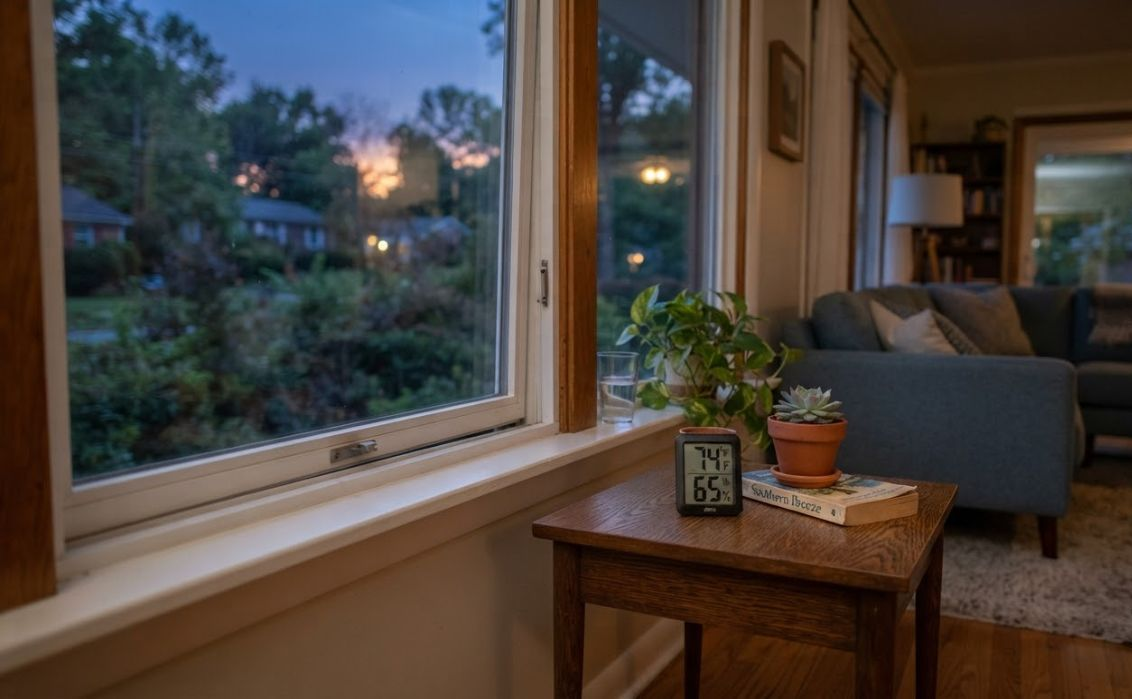
September has a particular evening. The temperature eases toward 70. The house is still. Someone says: let’s open the windows and shut the air conditioner off.
It is a reasonable instinct. Cool outdoor air feels like free comfort. The problem is that temperature and moisture are two different jobs. A night that is mild on the thermometer can still be wetter than the air you already have inside.
The number that answers the window question is dew point — not the outdoor humidity percent on your phone.
Quick Answer
Open the windows only when outdoor dew point is in the mid-50s °F or lower — often the comfort line — and that outdoor air is drier than the air already in the house. A 70° evening can still be too wet. Outdoor relative humidity is a poor guide: it rises as air cools even when the water in the air does not change. Keep indoor relative humidity under 60 percent. If you shut the AC off on a wet night, moisture removal stops and the house often feels heavier by morning.
Dew point vs. outdoor RH: why a 70° night can still be wet
Relative humidity is a fullness number: how close is this air to being saturated at its current temperature? Cool air saturates easily. Warm air can hold more water. That is why a cool morning can show 90 percent RH and a hot afternoon can show 50 percent with more actual moisture in the air.
Dew point is closer to a water-in-the-air number. The National Weather Service treats dew point as the better judge of how dry or humid the air will feel. NWS Louisville puts it simply: dew points in the 50s °F are usually comfortable; the 60s start to feel humid; the 70s feel very humid.
The window rule is not “is it 70 outside?” or “is outdoor RH low?” It is: what is the outdoor dew point, and is that air drier than my house?
These are teaching examples, not local station readings.
Example A — high RH, modest moisture. Imagine a 55° morning at 90 percent RH. That sounds soaked. The dew point is near the low 50s. The air is cool, so a small amount of water fills it. Mid-50s is often the comfort line. Windows might be reasonable if the house is already in range.
Example B — mild temperature, wet air. Imagine a 70° evening with a 68° dew point. Pleasant temperature, almost-saturated air. Opening the windows is opening a hose. Outdoor RH will also look high — often near 90 percent — but the useful sentence is the dew point.
Example C — same 70°, drier air. Imagine a 70° evening with a dew point in the low 50s. Same temperature as B, much less water. Those nights happen. They are not the default on a lake evening in early September.
If you only look at outdoor RH, A and B can look alike. They are not.
A cheap indoor hygrometer tells you the house side of the comparison. The
EPA’s moisture guidance is to keep indoor humidity below 60 percent when you can — ideally 30 to 50 percent. On Dickerson’s live humidity posts, the summer living-space range we already teach is about 45–55 percent. If the house is at 50 percent RH and 74° inside, and the outdoor dew point is 68°, outdoor air is the wetter air. Leave the windows shut.
Ranked: likely vs. possible reasons the “open the windows” night goes wrong
These are patterns, not a remote diagnosis of your house.
Likely on a mild North Alabama evening
High dew point on a lake night. Temperature drops. Moisture often does not. A 70° night can still carry air that is wetter than a conditioned house. That is the usual reason the windows-and-off plan feels sticky by morning.
The air conditioner is off, so moisture removal stops. An AC only wrings water out while it runs. Shut the system off and open the house on a wet night, and you stop latent removal and invite outdoor moisture in. The mechanical version of “cool but still damp” is a different article — why a North Alabama home still feels humid with the AC running. This piece is only the window decision.
Overnight outdoor air is wetter than the house. A closed, reasonably dry house can sit in the 45–55 percent range while outdoor dew point stays in the 60s. Mixing those air masses raises indoor humidity. You feel it as heavy air, then as a longer recovery the next morning.
Possible — rule these in or out
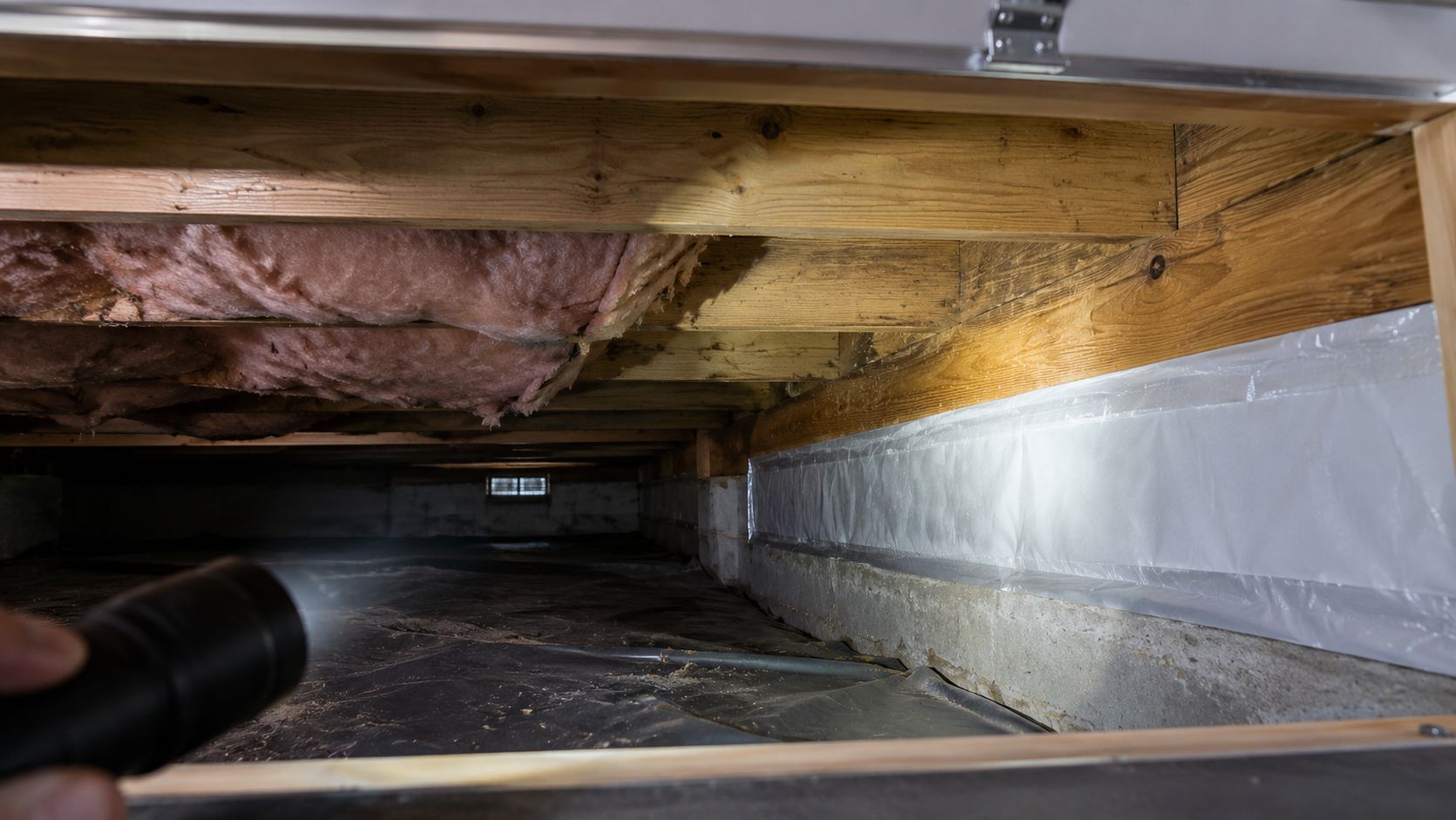
A vented crawl feeding the floor system. If the house was already a little damp, opening windows is not the whole story. A vented crawl in this climate often adds moisture from below. That assembly question lives in vented vs. encapsulated crawl spaces in Alabama. Measure living-space RH before you blame the weather alone.
The thermostat fan left on “ON.” Continuous fan can re-evaporate water off a wet coil between cooling cycles. If you opened the windows and left the fan on, you may be stirring wet air rather than drying it. Try “AUTO.”
One sticky room. A closed guest room or a bath with a weak fan can feel worse than the hallway. That is a local issue, not a reason to open the whole house. If the thermostat reads fine and one room still feels damp, see why a house can feel sticky at 72°F.
Humidity inside an Alabama house is rarely “just last night’s weather.” It is usually equipment, sources, and leakage — the same three buckets as
what causes high humidity in your Alabama home.
Why this decision is sharper around Lake Guntersville
North Alabama’s cooling season stays moist long after the worst heat breaks. September is the month people start trusting the evenings. Near the lake, nights can sit near 70°F and still feel wet because dew point stays high. Shore air often does not dry overnight the way a hill lot a few miles inland can.
That is a qualitative local pattern, not a station table. Read tonight’s dew point on a real forecast and compare it to the house. The lake raises the odds that a pleasant temperature is still a wet air mass. It does not change the measurement.
Shoulder-season days have the same trap: the AC barely runs, so it barely dehumidifies. A dedicated dehumidifier — after sources are handled — sometimes earns its keep then. When that tool is the right last step is in
whether a whole-home dehumidifier is worth it in North Alabama. Do not buy one to cover a week of open windows on 68° dew points.
What a careful diagnostic looks like
Anyone can say “keep the windows shut.” A useful visit measures whether the house is already wet, whether last night’s outdoor air was wetter, and whether the system removes any moisture on mild days.
A homeowner can do the first layer:
- Put a $15–$25 hygrometer in the main living area and watch it for several days, including a mild evening when you want to open up.
- Read outdoor dew point on a National Weather Service or reputable forecast — not outdoor RH alone.
- Time a cooling cycle on a mild afternoon. Short bursts that satisfy the thermostat and quit wring out little water.
A contractor doing this honestly should add indoor RH in a few rooms, outdoor dew point for the same period, how long the system runs on a mild day, the fan setting, and a look at the crawl if there is one. When the system is running, a temperature split across the coil and static pressure at the air handler show whether airflow and the coil are in a normal range. Those are methods, not a diagnosis of this house from here.
If indoor RH keeps sitting above 60 percent with the system working, you are past a one-night window question.
If you wait: what usually drifts
This is not an emergency. It is also not free.
If you keep opening the house on wet evenings, indoor RH tends to climb. The air feels heavier at the same thermostat number. Closets take longer to dry. A faint musty note can show up in the morning and fade after the system has run. The next cool-down takes longer because the equipment is drying yesterday’s outdoor air.
That is not a failing house. Moisture is accumulating faster than it is being removed. The cheapest correction is often tonight’s: windows shut when dew point is high, fan on AUTO, system on its normal cycles.
Ready for a clear moisture reading?
If you want the window-versus-AC question answered with numbers from this house, start with a free moisture and humidity inspection. We measure indoor RH, talk through outdoor dew point, and look at whether the system is removing moisture on mild days. Book that visit here: Book a visit.
If indoor air, odors, or humidity have been a longer worry — not just one September evening — the Home Air Health Study is the matching offer: about seven days of monitors in the house, then a scorecard and the top three moves. We do not diagnose medical conditions.
If you are already in a replacement conversation, that is a different door: the free Initial Comfort Plan (about 60–90 minutes, written Comfort Options Report). It is not the lead offer for a dew-point decision.
Dickerson Services
2151 Hopewell Rd, Guntersville, Alabama
Monday–Friday, 7:30 a.m.–5:00 p.m.
Frequently Asked Questions
When is humidity low enough to open the windows in September?
When outdoor dew point is in the mid-50s °F or lower and that air is drier than the house. September temperature is a weak signal. Check a real forecast for dew point, read a hygrometer indoors, and compare the two. If outdoor dew point is in the 60s or 70s, leave the windows shut and let the system handle moisture.
Why can a 70° night still feel wet near Lake Guntersville?
Temperature and moisture are different jobs. Nights around the lake can sit near 70°F while dew point stays high, so the air remains wet even though the evening feels mild. That is a qualitative local pattern, not a special station reading. Use tonight’s dew point. If it is well above the mid-50s, opening the windows imports moisture.
Will I save money by shutting the AC off and opening the windows?
Sometimes, on a genuinely dry evening. Often, no. If you import wet air, indoor humidity climbs and the system has to dry the house back down the next day. You may also drop the thermostat later to chase a sticky feeling that was moisture, not heat. The cheaper night is the one that does not load the house with water.
What indoor humidity should I keep if I leave the AC on?
Keep indoor relative humidity under 60 percent. That is the EPA’s working ceiling. In summer living space, Dickerson’s published target is about 45–55 percent. A hygrometer in the main room for several days is more useful than a single evening guess.
What should I do if I cannot tell whether windows or AC is the drier choice?
Measure both sides: indoor RH for a few days, and outdoor dew point from a real forecast on the evenings you are tempted to open up. If you want that done in the house, start with a free moisture and humidity inspection, or a Home Air Health Study if the humidity question has been hanging around. Call (256) 203-6612, Monday–Friday, 7:30 a.m.–5:00 p.m.
Climate and Plant Selection
Selecting appropriate vegetation is crucial for the success of green roofs in the Mid-Atlantic region. Native and drought-tolerant plants are ideal, ensuring survival during dry spells and high-intensity storms. Sedums, grasses, and other hardy species maintain runoff retention and resist seasonal stress, supporting regulatory compliance throughout the year.
Share this article