
Why Does My House Smell Musty? How to Tell If It’s Coming From the Crawlspace in Arab
August 20, 2026
What it is. A thermostat mounted where it doesn't sense the true average temperature of the home — in direct afternoon sun, on an exterior wall, near a sunny window, or above a heat-producing appliance.
Why it causes this symptom. A thermostat only knows the temperature at its own spot on the wall. If the afternoon sun lands on it, or it sits on a wall that heat-soaks late in the day, it reads warmer than the rest of the house and keeps calling for cooling it may never feel "satisfied" delivering — so the system runs and runs without ever clicking off. It can also work the other way, where a poorly placed thermostat shuts the system off early and lets distant rooms drift. Either way, the thermostat's afternoon reading is part of the story even when the equipment is healthy.
What should be measured or checked:
- A second thermometer placed in the main living area, compared against what the thermostat reports.
- Whether sun ever falls directly on the thermostat during the afternoon.
- Thermostat location relative to supply registers, exterior walls, and appliances.
More likely vs. less likely. More likely if the thermostat is on a sunny wall, near a window, or in a spot that clearly feels different from the rest of the house. Less likely if it sits on a shaded interior wall and matches a handheld thermometer.
Homeowner vs. pro:
Comparing the thermostat to a separate thermometer is an easy homeowner check. Relocating a thermostat is a small pro job, and worth doing only after the bigger capacity and load questions are ruled out.
You notice it when you walk in after being gone. Or when the air conditioner kicks on and a puff comes out of the floor registers. Or downstairs, near the floors, after humid weather.
It is not garbage and it is not gas. It is musty — closer to damp cardboard or a closet that has been shut up. In a crawlspace home, that odor is a clue about moisture and air paths. It is not a diagnosis of this house, and it is not a reason to start buying treatments.
The useful question is simpler: where is the smell strongest, and when does it show up?
Quick Answer
A musty smell in a North Alabama crawlspace home usually means moisture and air are sharing a path — often a vented crawl, damp soil, wet insulation, or leaky return ducts under the floor. Check the crawl hatch, the supply registers when the system starts, one bathroom only, a closed room, and the smell after rain. Keep indoor humidity below 60 percent; a crawl should stay under 60 percent RH as well. Measure for several days before you spend money on a product.
How to locate the smell before anyone sells you a fix
Guessing from the living room is how people buy the wrong first thing — duct cleaning, fogging, a bigger air conditioner, or a portable dehumidifier that never quite catches up.
Walk the house with one question: is the smell stronger here, and does it change when something happens?
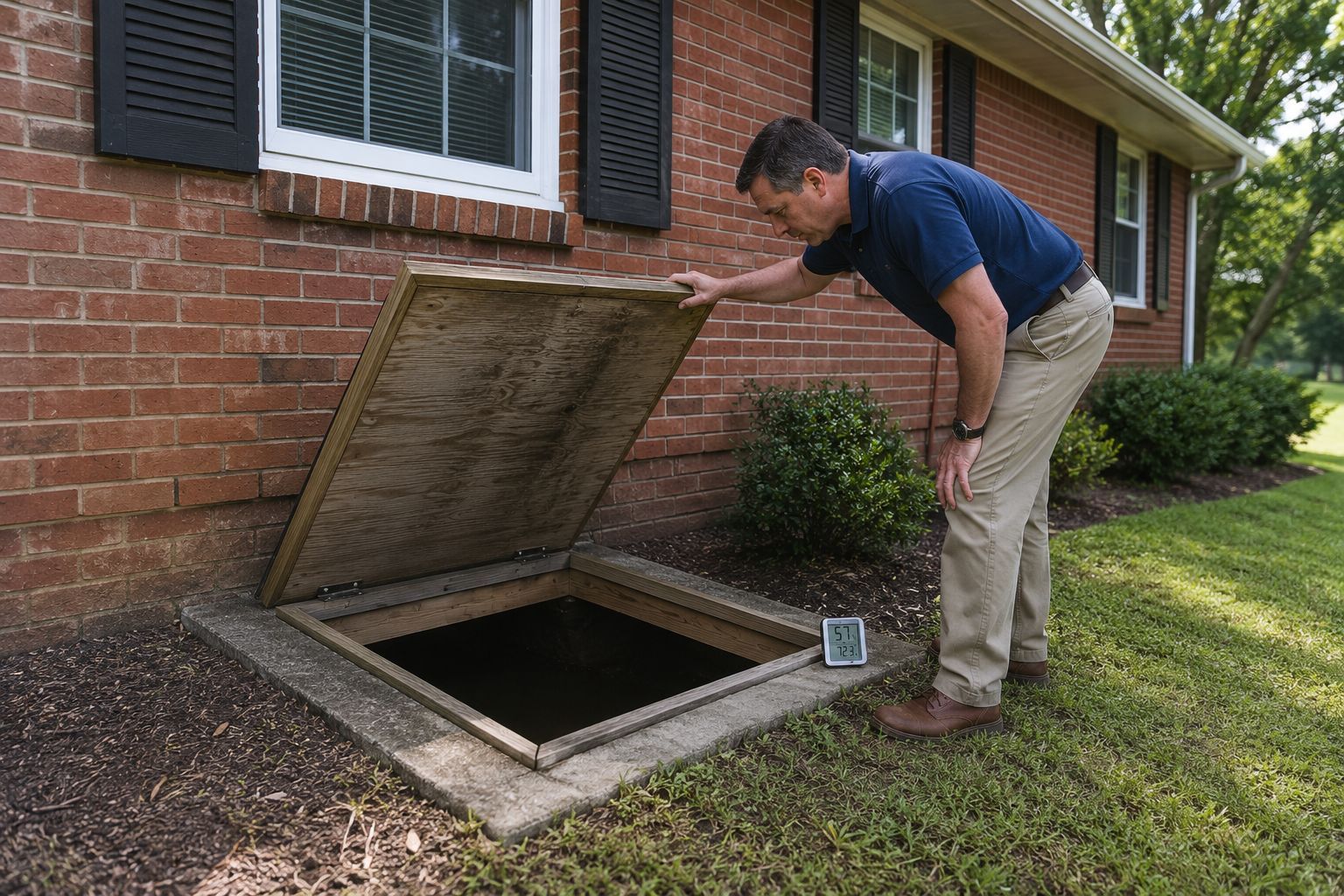
- At the crawl hatch. Open it and stand there for a minute. If the odor is clearly stronger at the opening than in the hallway, the crawl is in the conversation. You are locating a path, not diagnosing the house.
- At the supply registers when the system kicks on. Wait for the air conditioner to start. A musty puff in the first seconds of airflow points to the ducts or the air they are pulling — especially when those ducts run through the crawl. If the smell is the same with the system off, the path may be the floor, plumbing chases, or the rim joist instead.
- In one bathroom only. If the odor lives in a single bath, start there: a weak exhaust fan, a wet floor or vanity, a shower that never quite dries. A whole-house smell that you only notice in the bath is a different pattern.
- After rain. If the smell jumps after a storm and fades on dry days, look at gutters, downspouts, soil sloping toward the foundation, and whether water is getting under the house. Standing water in a crawl is a drainage problem first. Plastic and equipment will not outrun a hole.
- In a closed room. A shut guest room, a packed closet, or a laundry room can grow its own damp-closet smell. If opening the door releases it and the rest of the house is clean, you may have a local source, not the crawl.
A $15–$25 hygrometer helps more than another opinion. Leave one in the main living area for a few days. If you can place a second in the crawl — away from a vent blast and off the dirt — do that too. One mild-morning snapshot is not the story. Several days are.
The EPA’s moisture guidance is to keep indoor humidity below 60 percent when you can. On Dickerson’s live humidity posts, the summer living-space range we already teach is about 45–55 percent, and a crawl should stay under 60 percent RH. If living-space humidity sits above 60 percent while the thermostat looks “fine,” that is the same family of problems as a
house that still feels sticky at 72 degrees.
Ranked causes: likely vs. possible
Most musty-smell calls in this climate are a stack, not one broken part. These are patterns, not a remote diagnosis of your house.
Likely in a North Alabama crawlspace home
A vented crawl pulling humid outdoor air. Foundation vents were meant to dry a crawl with outside air. That only works when outdoor air is drier than the space under the house. In a North Alabama summer, outdoor air stays wet for months, so cooler crawl surfaces load up with moisture instead of drying. Adding “more vents” often makes smell and moisture worse. The assembly question is in vented vs. encapsulated crawl spaces in Alabama. This article stays on locating the smell.
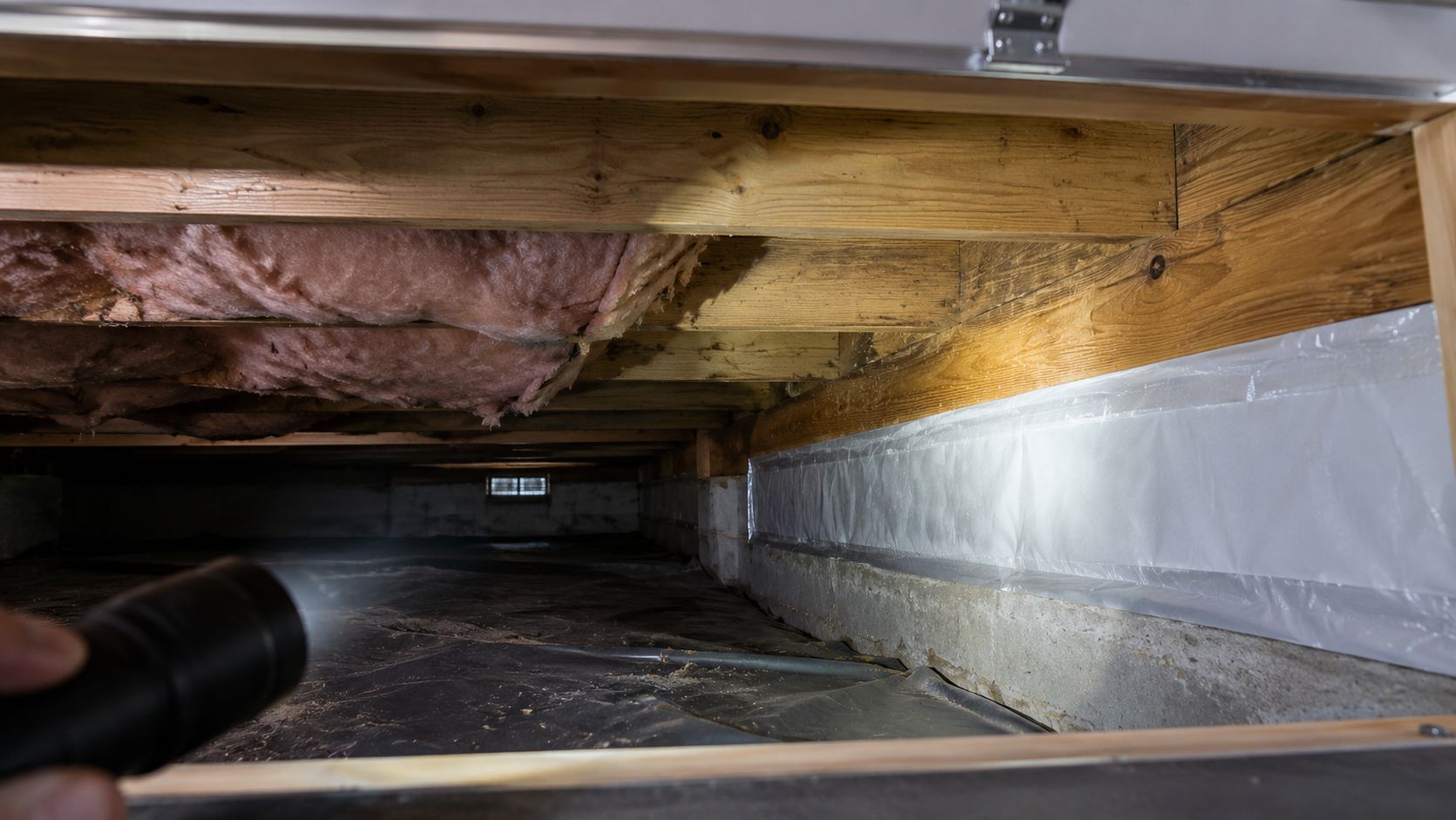
Damp soil and no real ground cover. Bare dirt is a steady moisture source. A torn sheet of plastic with bare earth around the edges is not a sealed ground cover. If the hatch smells like wet soil, look at coverage, seams, and whether the barrier runs up the walls and piers.
Wet insulation or damp wood in the crawl. Fiberglass batts between the joists sag, stain, and fall when they stay damp. Fallen insulation is a symptom. The living-room smell and those batts are often the same problem.
Leaky return ducts in the crawl. Return leaks can pull crawl air into the system and send it out the registers. That is why a smell that appears when the system starts is such a useful clue. Supply leaks in a wet crawl can also wet the duct wrap and the boots.
An air conditioner that short-cycles. A system that hits the thermostat in a few minutes and shuts off never runs long enough to wring moisture out of the air. The house can sit at 72 and still stay damp — the core of why a North Alabama home still feels humid with the AC running. If the fan is “ON” between cycles, it can blow house air back across a wet coil. Try “AUTO” first.
Possible — rule these in or out before you treat the crawl
A bathroom or kitchen source. One wet room, a fan that dumps into an attic, or showers without exhaust. If it is only that room, fix that room first.
A wet closet or unused bedroom. Closed doors and no airflow. Possible, not the first guess for a whole-house odor.
A condensate or drain issue. Water near the air handler or a backed-up line can add a damp-equipment smell. It can sit next to a crawl problem rather than replace it.
A house that has been closed up. Vacant homes drift toward outdoor humidity. Still worth measuring. Still not a reason to skip the hatch and the registers.
Something stored in the crawl. Cardboard and fabric hold odor. If the hatch smells like storage and the living space does not, clean-out and moisture both still matter.
Humidity in an Alabama house is rarely “just the weather.” It is usually equipment, moisture sources, and air leakage — the same three buckets as what causes high humidity in your Alabama home.
Why this shows up so often in North Alabama
Older homes in Arab and across North Alabama were commonly built with vented crawls, fiberglass under the floor, and ducts in that same space. That assembly was standard for its time. It was not designed for long, hot-humid summers.
This is a mixed-humid climate. Outdoor air stays moisture-heavy for months. A vented crawl is open to that air, the dirt below keeps evaporating, and the living space is connected through plumbing holes, the rim joist, and any duct leaks.
The takeaway is narrow: more outdoor air under the house is not a drying strategy here. The assembly comparison belongs in the article already linked. For this symptom, find whether the crawl is on the air path — then measure.
What a careful contractor should measure (not guess)
A walk-through and a quote is not a diagnosis. A useful visit treats the house as one system: air, heat, and moisture.
- Living-space RH and temperature in more than one room, ideally logged. Stay under 60 percent RH; summer comfort on our published posts is often 45–55 percent.
- Crawl RH and temperature over time when you can. Target: under 60 percent RH.
- Whether the ground is covered — fully, sealed at seams, run up the walls and piers, or missing and torn.
- Whether return ducts sit in the crawl, and whether joints, boots, and insulation show dampness, rust, or separation. Sweating ducts are a condition to record, not an upsell.
- Wood moisture in the floor framing, as a method. A pin meter is not a story about this house until someone takes the reading.
- How the system runs: cycle length, fan setting, and — when they belong — static pressure and a temperature split across the coil.
- Drainage outside: slope, gutters, downspouts, and any sign stormwater is headed under the house.
- Combustion appliances in the crawl, if they are there. Sealing a space changes the air they use. That is a safety check, not a sales step.
If a contractor recommends encapsulation, a new air conditioner, or duct cleaning without humidity numbers, they are selling a product.
What to do — and what not to do
Do not start with duct cleaning. If the smell tracks to the crawl or to return leaks, cleaning ducts does not dry the dirt, seal the returns, or change how long the system runs.
Do not start with fogging, ozone, or a scent treatment. Covering an odor leaves the moisture in place.
Do not start with a bigger air conditioner. Extra capacity often shortens run time. That is one way a house stays cool and still smells and feels damp.
Do start with the cheap checks. Fan to AUTO. Hygrometers in the living space and, if you can, the crawl. Hatch, registers, one bath, after rain, closed room. Gutters and downspouts if the smell follows storms.
Do put water first if water is entering. Grading, gutters, and plumbing leaks come before any liner or dehumidifier. Sealing over an active water problem is the version of crawl work that can make things worse.
Do treat the air and moisture path first. See whether crawl air is entering the return before you add batts or buy a larger system. Air seal, then insulate, then right-size HVAC.
Encapsulation is a later decision. It is often the better assembly in this climate. It is still the wrong first spend if drainage is open, humidity has not been logged, or the smell is only in one bathroom. Measure, then decide.
If you wait
A musty crawl is rarely an emergency. It is also rarely a stable condition.
Insulation that stays damp sags and falls. Wood that stays damp is harder on floors and framing over time. An air conditioner asked to dry the ground under the house runs longer and still may not catch up. The smell that started at the hatch can move into the living space through the floor and the ducts.
Waiting usually costs slowly: more odor, more runtime, more material sitting damp. Guessing costs faster: the wrong product, paid for twice.
A calm next step if you want data, not a pitch
If you want the smell located with numbers instead of a one-afternoon guess, the offer that matches this question is the Home Air Health Study.
Monitors stay in the home for about seven days. You get a scorecard and the top three moves that fit this house — which may or may not include the crawl. The Study explains what the air is doing. It is not a medical exam, and it does not promise that a product will make a smell disappear.
If you would rather talk it through first, call (256) 203-6612, Monday–Friday, 7:30 a.m.–5:00 p.m. You can also book a visit. Dickerson Services is at 2151 Hopewell Rd in Guntersville and works with homeowners across North Alabama.
Bring where the smell is strongest, when it shows up, and any humidity readings you took. The rest should be measured.
Frequently Asked Questions
How can I tell if a musty smell is coming from the crawlspace?
Open the crawl hatch and compare that odor to the hallway. Then stand at a supply register when the system starts. A stronger smell at the hatch, or a puff when the air conditioner kicks on, puts the crawl and the ducts on the list. A smell that lives in one bathroom or one closed closet is more likely local. Confirm with humidity readings in the living space and the crawl over several days, not with a single sniff.
Does a musty smell mean my house has mold?
No. A musty smell is a moisture and odor clue. It does not let anyone say, from a distance or from one visit, that this house “has mold.” Visible growth, if it is present, is a separate finding and a separate scope. The useful first move is still the same: find the wet air path and measure humidity. Smell is not a lab result.
Will duct cleaning get rid of the musty smell?
Usually that is the wrong first spend. If crawl air is entering leaky returns, or if the crawl itself is damp, cleaning the ducts does not close the path or dry the source. Find whether the smell tracks to the hatch, the registers, or one room. Fix air and moisture first. Duct cleaning is not the odor strategy.
Should I close my crawlspace vents to stop the smell?
Not by themselves. Closing vents without covering the ground, handling drainage, and giving the space a way to stay dry removes one path and leaves the moisture source. That order can make a damp crawl worse. Whether a vented crawl should stay vented or be sealed is a measurement decision. Use the hatch-and-humidity checks in this article, then read the vented-versus-encapsulated comparison if you are weighing that assembly.
What should I do first if my Arab house smells musty?
Locate the smell (hatch, registers, one bath, after rain, closed room). Put a hygrometer in the living space — and in the crawl if you can — and watch it for several days. Keep indoor humidity below 60 percent as the working ceiling. If you want that logging done with a written scorecard and three next moves, the Home Air Health Study is the matching offer. Call (256) 203-6612, Monday–Friday, 7:30 a.m.–5:00 p.m., or book a visit.
Climate and Plant Selection
Selecting appropriate vegetation is crucial for the success of green roofs in the Mid-Atlantic region. Native and drought-tolerant plants are ideal, ensuring survival during dry spells and high-intensity storms. Sedums, grasses, and other hardy species maintain runoff retention and resist seasonal stress, supporting regulatory compliance throughout the year.
Share this article