
Why Your Guntersville House Feels Stickier on a Mild September Day Than in July
September 10, 2026

What it is. A thermostat mounted where it doesn't sense the true average temperature of the home — in direct afternoon sun, on an exterior wall, near a sunny window, or above a heat-producing appliance.
Why it causes this symptom. A thermostat only knows the temperature at its own spot on the wall. If the afternoon sun lands on it, or it sits on a wall that heat-soaks late in the day, it reads warmer than the rest of the house and keeps calling for cooling it may never feel "satisfied" delivering — so the system runs and runs without ever clicking off. It can also work the other way, where a poorly placed thermostat shuts the system off early and lets distant rooms drift. Either way, the thermostat's afternoon reading is part of the story even when the equipment is healthy.
What should be measured or checked:
- A second thermometer placed in the main living area, compared against what the thermostat reports.
- Whether sun ever falls directly on the thermostat during the afternoon.
- Thermostat location relative to supply registers, exterior walls, and appliances.
More likely vs. less likely. More likely if the thermostat is on a sunny wall, near a window, or in a spot that clearly feels different from the rest of the house. Less likely if it sits on a shaded interior wall and matches a handheld thermometer.
Homeowner vs. pro:
Comparing the thermostat to a separate thermometer is an easy homeowner check. Relocating a thermostat is a small pro job, and worth doing only after the bigger capacity and load questions are ruled out.
Bring the RH log, the cycle times, and the forecast dew points from the same days. The rest should be measured.
A calm next step if you want data, not a pitch
If you want the smell located with numbers instead of a one-afternoon guess, the offer that matches this question is the Home Air Health Study.
Monitors stay in the home for about seven days. You get a scorecard and the top three moves that fit this house — which may or may not include the crawl. The Study explains what the air is doing. It is not a medical exam, and it does not promise that a product will make a smell disappear.
If you would rather talk it through first, call (256) 203-6612, Monday–Friday, 7:30 a.m.–5:00 p.m. You can also book a visit. Dickerson Services is at 2151 Hopewell Rd in Guntersville and works with homeowners across North Alabama.
Bring where the smell is strongest, when it shows up, and any humidity readings you took. The rest should be measured.
The afternoon looks easy. Seventy-eight degrees. The air conditioner comes on, runs a few minutes, and stops. Last night the cove still felt wet even though the thermometer looked like a break from summer. July was hotter. July also kept the system running, and the house had a chance to dry. Today the house is not hot — and it feels stickier.
That pattern is ordinary in Guntersville once the worst heat eases. The thermostat looks fine. The equipment is not “broken.” Moisture is still winning, because cooling only wrings water out of the air while the compressor is actually running — and a mild day next to a reservoir is a short-runtime, still-wet-air day.
This is not the same search as “sticky at 72,” “humid with the AC running,” or the inland mild-day article. Those have their own pages. Stay here if September is sticky because the system will not stay on, and the nights over the water still feel close.
Quick Answer
A mild September day can feel stickier than a 95-degree July afternoon because the air conditioner shuts off as soon as the temperature is easy. Short cycles leave the moisture load behind. Reservoir nights and cove air can stay wet when the thermometer looks mild. Indoor RH then drifts above 60 percent. Log humidity for several mild days and at least one mild night, time a cycle, set the fan to AUTO, and read the forecast dew point before you buy anything.
What this article is — and what it is not
This post is for a seasonal, specific complaint: outdoor temperature is mild, the air conditioner hardly runs, and the house feels damper than it did in peak heat — especially after a wet night over the water.
It is not a remote diagnosis of this house.
It is not a remake of why the house still feels sticky at 72°F. That one is a cool-setpoint feeling while the system is holding temperature. It is not why a North Alabama home still feels humid with the AC running. That one is the system on and cooling, but not drying. It is not what causes high humidity in an Alabama home restated as a September story.
It is not why the house feels stickier on a mild September day in Huntsville. That inland piece is the same season with a different place: two-story attic-duct houses that do not need a lake for short cycles. This one is the lake-town version — reservoir nights, cove air, and a mild day whose dew point never really dropped.
It is not whether to open the windows or keep the AC on. That is a night-air decision. This is a runtime-and-moisture article.
It is not a repair ticket. A frozen coil, no cool air, or water at the handler is a mechanical symptom. This pattern usually is not.
If July was sticky while the system ran all afternoon, start with the two summer posts. If you are inland, use the Huntsville mild-day article. If September is sticky because the system clocks out and the cove still feels wet, stay here.
Why a mild cove day loses the moisture battle
Temperature is the easy half of the job. Moisture is the slow half. The coil only condenses water while the compressor is actually running. Water has to form, drain, and stay gone. That takes time.
On a 95-degree July afternoon the house has a large heat load. The system runs. Runtime is how most homes here get dry enough to feel comfortable — not because July air is dry, but because the compressor stays on.
On a mild September day the heat load shrinks. The thermostat is satisfied in a short cycle. Showers, cooking, and breathing did not shrink on the same schedule. Outdoor air can still be moisture-heavy. Near open water that last part is the local hook: a mild afternoon does not mean the air over the cove dried out.
A teaching picture, not a reading from your lot: one week is brutal heat, long runtimes, and a house that feels less sticky by evening. The next week the same system takes a few short cycles on a 78-degree afternoon, then sits off while overnight air over the water stays wet. Morning indoor RH starts higher than it did in July. The thermostat looks “better.” The air does not.
Dew point is the outdoor number that tracks how much water is actually in the air. You do not need a weather station on the dock. The forecast dew point is enough. If that number stays high and the air conditioner is barely running, indoor RH has a clear path above 60 percent. This article will not invent a lakeside-versus-inland dew-point gap. If you can compare a cove forecast with an inland one on the same night, those are your numbers.
Dickerson’s published summer living-space range on the live humidity posts is about 45–55 percent RH. The working ceiling is to keep indoor RH under 60 percent. Living next to the water does not get a wetter indoor allowance. A house that felt all right in July at 50 percent can feel close at 62 percent with the same setpoint. The thermostat did not fail. The moisture did.
Likely vs. possible
These are patterns, not a remote diagnosis. Most sticky September houses have more than one stacked together.
Likely: short cooling cycles on a mild day. The system meets the temperature target and shuts off before the coil has been wet long enough to dehumidify. Homeowner check: time a cycle on a mild afternoon. Teaching range from our live humidity posts: healthy cooling cycles on a moderate day are often 15–25 minutes, not 5–8. If it is on and off like a light switch, moisture is losing.
Likely: high outdoor dew point while the temperature is mild — including overnight over the water. Heat and moisture are not the same weather. A September afternoon can be easy on the thermometer and still wet in the air. Next to the reservoir, a mild night can look like relief and still fail to dry the way a dry inland field sometimes does. Cove air sits over water. Homeowner check: look at the forecast dew point for the same days — and nights — you log indoor RH. If outdoor moisture stays high, cycles stay short, and indoor RH climbs, you have the shoulder-season mismatch. That is not a surprise breakdown.
Likely: the thermostat fan left on ON. When the compressor stops, water is still sitting on the coil. A blower left on ON pushes house air across that wet coil and puts the moisture back into the rooms. Homeowner check: set the fan to AUTO. If someone switched it to ON “for circulation” in July, September is when that setting quietly raises RH — and a wet night outside gives it more to work with.
Likely: an oversized single-stage system. One-speed equipment is fully on or fully off. If it was sized by square footage instead of a load calculation, it crushes the mild-day temperature in a few minutes and leaves the moisture behind. Near the water the incoming air is often still wet, so the same short cycle shows up sooner. Confirming oversizing is pro work. Timing the cycles is not. If you are already comparing equipment, see whether variable-speed HVAC is better for humidity control. This article will not retell that decision.
Possible — rule these in or out; they are not the first guess for “mild day, AC off.”
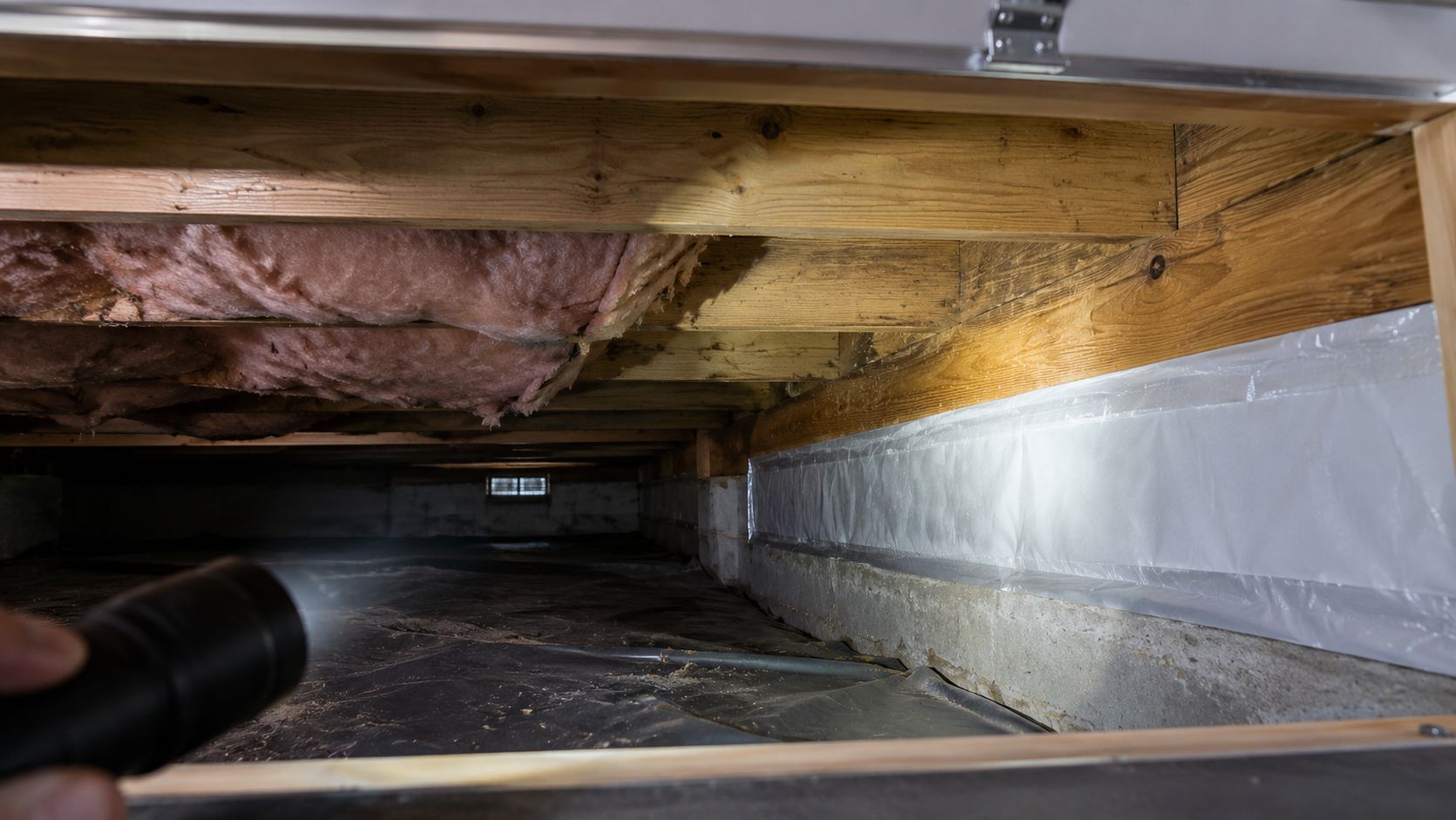
A vented crawl feeding the living space. Encapsulated crawls beat vented ones in this climate. A crawl that has been there all summer is not what changed in September. It can still add load, and wetter outdoor air makes that path more expensive. Measure it; do not assume it. The assembly comparison is already written — vented versus encapsulated crawl space — and this article will not retread it.
Leaky ducts in an attic or crawl. Return leaks pull wet air into the system. Possible year-round — not unique to a mild day.
One wet room. A bath fan that does not run, a shower that never dries, a closed guest room. If only one room is sticky, start there.
The three buckets behind almost every humid house — equipment, moisture sources, and air leakage — are the same ones in
what causes high humidity in your Alabama home. September next to the water changes which bucket leads: equipment runtime, against outdoor air that did not dry overnight.
Why reservoir nights make a mild September day feel worse
North Alabama is a mixed-humid climate. Outdoor air stays moisture-heavy well after the worst heat eases. Mild-and-wet days are part of the year, not a rare week.
The local extra is the water. TVA’s reservoir here extends 76 miles up the Tennessee River and has almost 890 miles of shoreline and 67,900 acres of water surface. That is a large evaporating surface sitting next to coves, points, and lots where people actually live.
Physics, without a made-up dew-point delta: water that is open to the sky keeps feeding moisture into the air above it. Shoreline and cove air stay in contact with that surface. On a mild September night the thermometer can look comfortable while the air is still wet. Inland, the ground sometimes lets overnight air dry a little as it cools. Next to a large reservoir, that same night can stay moist because the water is still giving moisture to the air. Morning then starts with a house that already sat through wet outdoor air, and a mild day that will not run the air conditioner long enough to catch up.
That is the opposite of the inland mild-day story. The Huntsville article is about two-story attic-duct houses that short-cycle without needing a lake. This article is about a mild day whose outdoor moisture never really left the cove.
The lake sets how wet the outdoor air can stay. It does not set indoor RH by itself. Short cycles, a fan left on ON, and paths into the house still decide what you feel.
That is not a verdict on your address. It is why the useful questions are runtime, overnight dew point, and indoor RH — not “is the calendar still summer.”
What to measure on mild days (methods, not invented readings)
A one-afternoon glance at the thermostat is not the story. The story is a pattern across several mild days and at least one mild night.
Indoor RH, logged. Put a $15–$25 hygrometer in the main living area — and a second in the room that feels worst if you can. Leave them for several mild days. Write down temperature and RH in the morning, in the afternoon, and after a cooling cycle. Include a morning after a mild, still night. Keep indoor RH under 60 percent. On our published humidity posts, summer living-space comfort is often 45–55 percent. If the log sits above 60 percent on days the system barely runs, the stickiness is measurable.
Cycle length. Time a cycle on a 78-degree afternoon. Short, frequent runs are the signature of this article. Long runs that still leave RH high mean moisture is coming in faster than the equipment can remove it.
Outdoor dew point from the forecast. Use the same days as the indoor log, including the night. You want the relationship: mild outdoor temperature, high forecast dew point, short cycles, indoor RH climbing. This article will not invent a station reading.
Fan setting. Confirm AUTO, then watch the next mild days.
If you book a visit. The useful measurement is airflow and whether the system is actually drying the air. That is enough to see whether short cycles and a still-wet outdoor night are the pattern, or whether moisture is arriving faster than runtime can handle. It is not a parts quote from the driveway.
If a contractor quotes a dehumidifier or a new system from the driveway, they are selling a product. A whole-home dehumidifier can be the right last step after sources and sizing are honest. It is the wrong first spend on an unlogged house.
The order that holds up: air seal, then insulate, then right-size HVAC. Prefer variable-capacity or multi-stage equipment when replacement is already justified. If you add outdoor air, it should be intentional, filtered, and tied to dehumidification. Indoor air quality here is fresh air, filtration, and humidity together. Humidity is the September variable.
If you wait
A sticky September is not an emergency. It is also not a stable “just wait for October” condition. The reservoir does not shut off because the calendar moved.
Indoor RH that sits above 60 percent for long stretches is the range where cooler surfaces — closets, exterior-wall corners, supply boots — can stay damp. “Can” is not “will.” People often chase the feeling by dropping the thermostat. That can force a little more runtime and still leave a colder, damp house. The durable move is to lower the moisture, not to pretend the mild day is July.
A system that short-cycles all shoulder season is starting and stopping against a load it is not built to finish. Comfort first. Wear second. Energy is a side note.
A calm next step — diagnose before you sell yourself a system
If indoor RH stays high on mild days after you have logged it, timed the cycles, and set the fan to AUTO, the offer that matches this question is the Home Comfort Consult.
It is $1,000. The in-home visit is 3–4 hours. You get a written Comfort Plan that treats air, heat, and moisture as one house. If you move forward with a qualifying project over $8,000 within 30 days of the report, the consult fee is credited toward that project. The visit is there to measure airflow and whether the system is actually drying the air — not to guess from the driveway.
If you are already shopping equipment, start with the Initial Comfort Plan instead. It is free, 60–90 minutes, and you leave with a Comfort Options Report — likely load range, your goals, and an equipment options chart.
If you want a week of data instead of one afternoon, the Home Air Health Study places monitors for about seven days. You get a scorecard and the top three next moves. We do not diagnose medical conditions.
The $85 service call is for a mechanical symptom: frozen coil, no cool air, water at the handler. Do not book that visit to “fix September.”
Call (256) 203-6612, Monday–Friday, 7:30 a.m.–5:00 p.m. CT. You can also book a visit. Dickerson Servicesis at 2151 Hopewell Rd in Guntersville and works with homeowners across North Alabama.
Bring the RH log, the cycle times, and the forecast dew points from the same days — including which nights felt worst. The rest should be measured.
Frequently Asked Questions
Why does my house feel stickier in September than it did in July?
Because the air conditioner only dehumidifies while it runs. July heat keeps the system on long enough to pull moisture out as a side effect of cooling. A mild September day shrinks that runtime. Near the reservoir, nights and cove air can stay wet even when the thermometer looks easy, so indoor moisture does not get a dry overnight reset. RH drifts above 60 percent even though the house is not hot. The thermostat can look “better” than July and the air can feel worse.
If I turn the thermostat down, will September stop feeling sticky?
Usually not in a useful way. A lower setpoint can force a longer cycle and remove a little more moisture. It also leaves you with a colder house that may still be damp, and with more wear on a system that is the wrong tool for a moisture-only day. Log indoor RH first. Fix runtime, fan setting, moisture sources, and — if replacement is already on the table — equipment that can dehumidify on a mild day. Do not chase stickiness with a colder number.
Is this the same problem as “sticky at 72,” “humid with the AC running,” or the Huntsville mild-day article?
Same family, different search. “Sticky at 72” is the house that holds a cool setpoint in summer and still feels damp. “Humid with the AC running” is the house whose system is on and cooling but not drying. The Huntsville mild-day article is the inland, attic-duct version of short cycles — no lake required. This article is the shoulder-season version next to the water: outdoor temperature is mild, the system barely runs, and humidity climbs because there is so little runtime against cove air that never really dried. Link those posts for the other versions. Do not treat September as a broken July, and do not treat a cove lot as an inland lot.
When is a Home Comfort Consult the right next step instead of the Initial Comfort Plan or an $85 service call?
Use the Consult when indoor RH stays high on mild days and you want the house measured as a system — airflow, whether the equipment is drying the air, moisture paths, and a written plan. Use the free Initial Comfort Plan if you are already shopping a replacement and want a Comfort Options Report. Use the $85 service call when something is mechanically wrong: frozen coil, no cool air, water at the handler. A sticky September with a running, cooling system is not a repair ticket.
What should indoor humidity be on a mild September day near the water?
Keep indoor relative humidity under 60 percent. On Dickerson’s live humidity posts, a comfortable summer living-space range is often 45–55 percent. Those targets do not loosen because the outdoor temperature dropped, and the lake does not get a wetter indoor allowance. If a hygrometer in the main living area sits above 60 percent on several mild days — especially mornings after a still, wet night — the stickiness is a measurement, not a mood. Crawl spaces, if you have one, should also stay under 60 percent RH. That is a separate check, not a substitute for the living-space log.
Climate and Plant Selection
Selecting appropriate vegetation is crucial for the success of green roofs in the Mid-Atlantic region. Native and drought-tolerant plants are ideal, ensuring survival during dry spells and high-intensity storms. Sedums, grasses, and other hardy species maintain runoff retention and resist seasonal stress, supporting regulatory compliance throughout the year.
Share this article