Why Does Ragweed Season Make My Arab House Feel Worse Indoors?
October 5, 2026

Bring the RH log, the cycle times, and the forecast dew points from the same days. The rest should be measured.
A calm next step if you want data, not a pitch
If you want the smell located with numbers instead of a one-afternoon guess, the offer that matches this question is the Home Air Health Study.
Monitors stay in the home for about seven days. You get a scorecard and the top three moves that fit this house — which may or may not include the crawl. The Study explains what the air is doing. It is not a medical exam, and it does not promise that a product will make a smell disappear.
If you would rather talk it through first, call (256) 203-6612, Monday–Friday, 7:30 a.m.–5:00 p.m. You can also book a visit. Dickerson Services is at 2151 Hopewell Rd in Guntersville and works with homeowners across North Alabama.
Bring where the smell is strongest, when it shows up, and any humidity readings you took. The rest should be measured.
Short answer
closing the windows keeps ragweed pollen out, but it doesn't clean or dry the air that's already inside. In a closed-up Arab house, the filter, the fresh air the house gets, and indoor humidity decide how the air feels through September and October.
Ragweed is outdoor pollen, and it is in season from early August through October in many parts of the country, according to the American Academy of Allergy, Asthma & Immunology. On Sand Mountain, that overlaps with fall yard work, hay and field edges, and gravel or dirt roads. The windows are shut and the air conditioner is often still running, yet the house can still feel dusty, heavy, or just off.
This is a closed-house question, not a pollen-forecast question. Everything below is about what you can check inside your own house.
Why a closed house can still feel worse
Particles that get in stay in. Pollen and dust come in on clothes, boots, pets, and every door opening. With the windows shut, the system keeps recirculating that air.
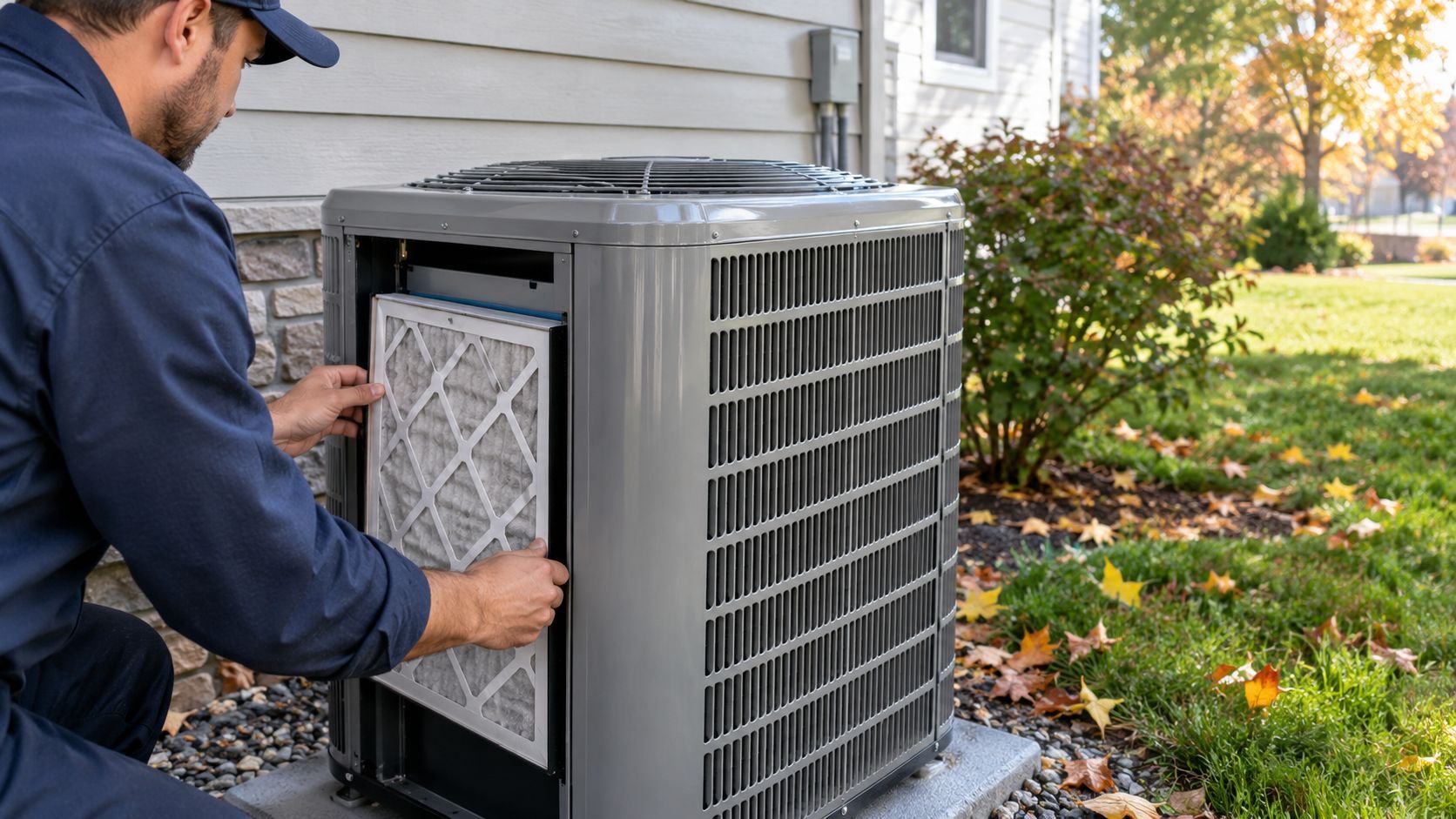
The filter keeps loading while the AC runs. September highs in Arab are often warm enough that the system keeps cooling. A loaded filter, or one with a gap around its frame, lets particles go around the media and back into the rooms.
Some outdoor air comes in through leaks, not through the filter. Loose return connections, gaps around the filter slot, and a vented crawlspace can all pull air past the filter. If you can see a gap around the filter frame, air is bypassing it. Our article on vented versus encapsulated crawl spaces explains how the crawlspace fits into this.
Indoor humidity can stay high in a closed-up house. A filter does not dry the air. Showers, cooking, and wet clothes add moisture, and a system that cools quickly and shuts off may not remove much of it. Keep indoor relative humidity under 60 percent; a comfortable living-space range is commonly 45 to 55 percent. If the sticky feeling is your main complaint, start with
why the house feels stickier on a mild September day and
why a North Alabama home still feels humid with the AC running.
What to check first
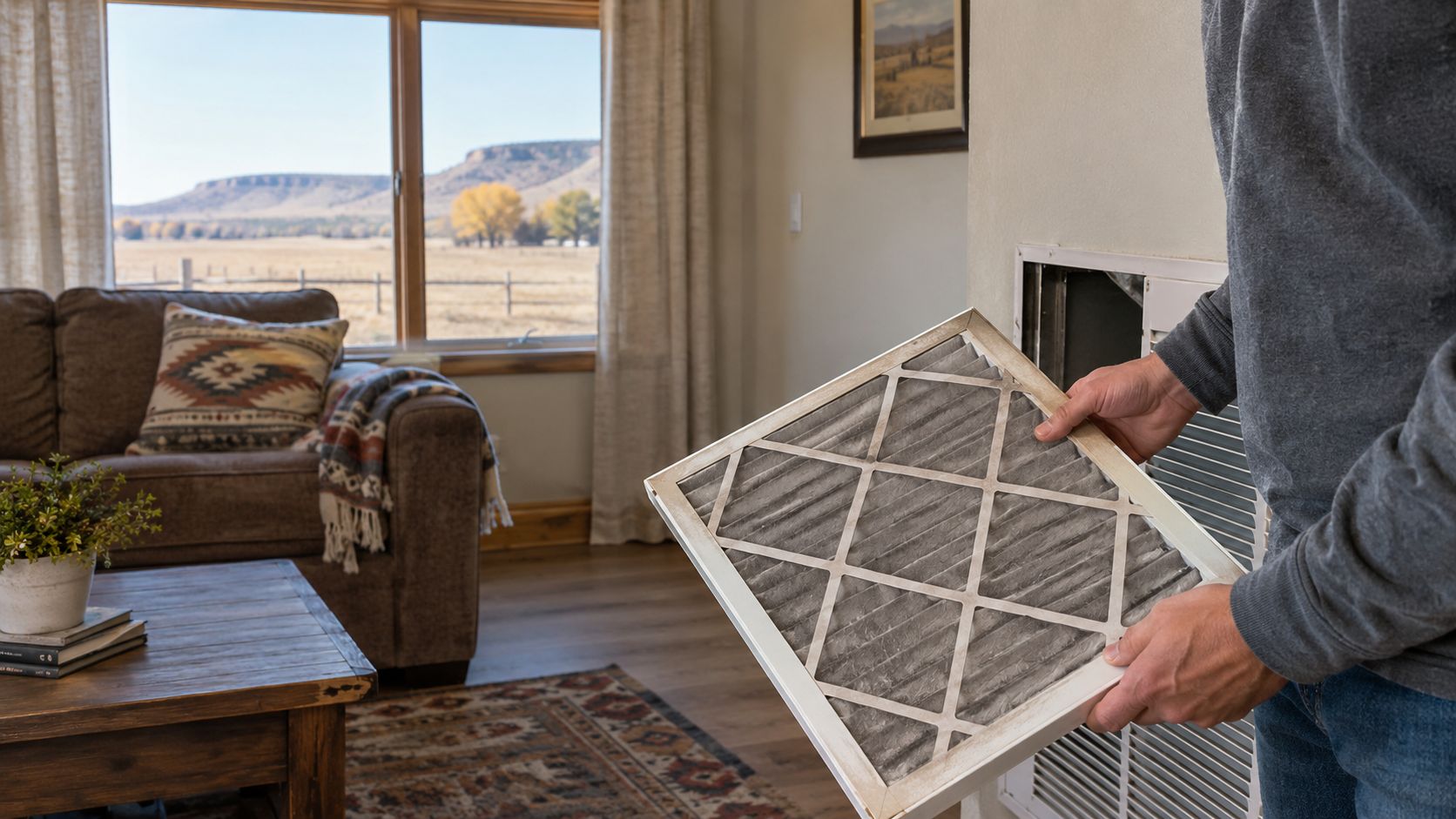
Look at the filter. Pull it and hold it up to the light. If it is gray-brown with little light coming through, replace it. Check that it sits tight in the slot with no gap. For how often to change it during pollen season, see how often to change the HVAC filter during pollen season; for choosing one, see the best HVAC filter for allergies and pollen.
Log the humidity for a few days. Put a hygrometer in the main living area, out of direct sun and not on a supply vent. Write down a morning, an afternoon, and an evening reading, including one after a cooling cycle.
Set the thermostat fan to AUTO. A blower left on ON between cooling cycles can push moisture from the coil back into the rooms.
Check the one room that feels worst. A closed bedroom can hold its own dust and moisture. Open that door for a few days and compare.
Be careful with open windows. A mild evening is not automatically dry or low in pollen. If you are deciding, use dew point rather than the outdoor humidity on a phone app; our
dew-point guide for opening windows walks through it.
What usually does not fix it
Duct cleaning. Dust in the house usually keeps arriving from leaks, a loaded or bypassed filter, or outdoor air that never touched the filter. Cleaning the ducts does not close those paths.
Adding a gadget. UV lights and ionizers are not filtration, humidity control, or fresh air, so they are not a substitute for the three controls above.
A bigger air conditioner. Equipment that reaches the thermostat setting faster can leave more moisture behind. The order that holds up is to find and close the leaks, then insulate, then size the equipment. If you add outdoor air, it should be intentional, filtered, and matched with dehumidification. A
whole-home dehumidifier is a later decision, after the leak paths and the humidity numbers are known.
If the crawlspace is part of the picture
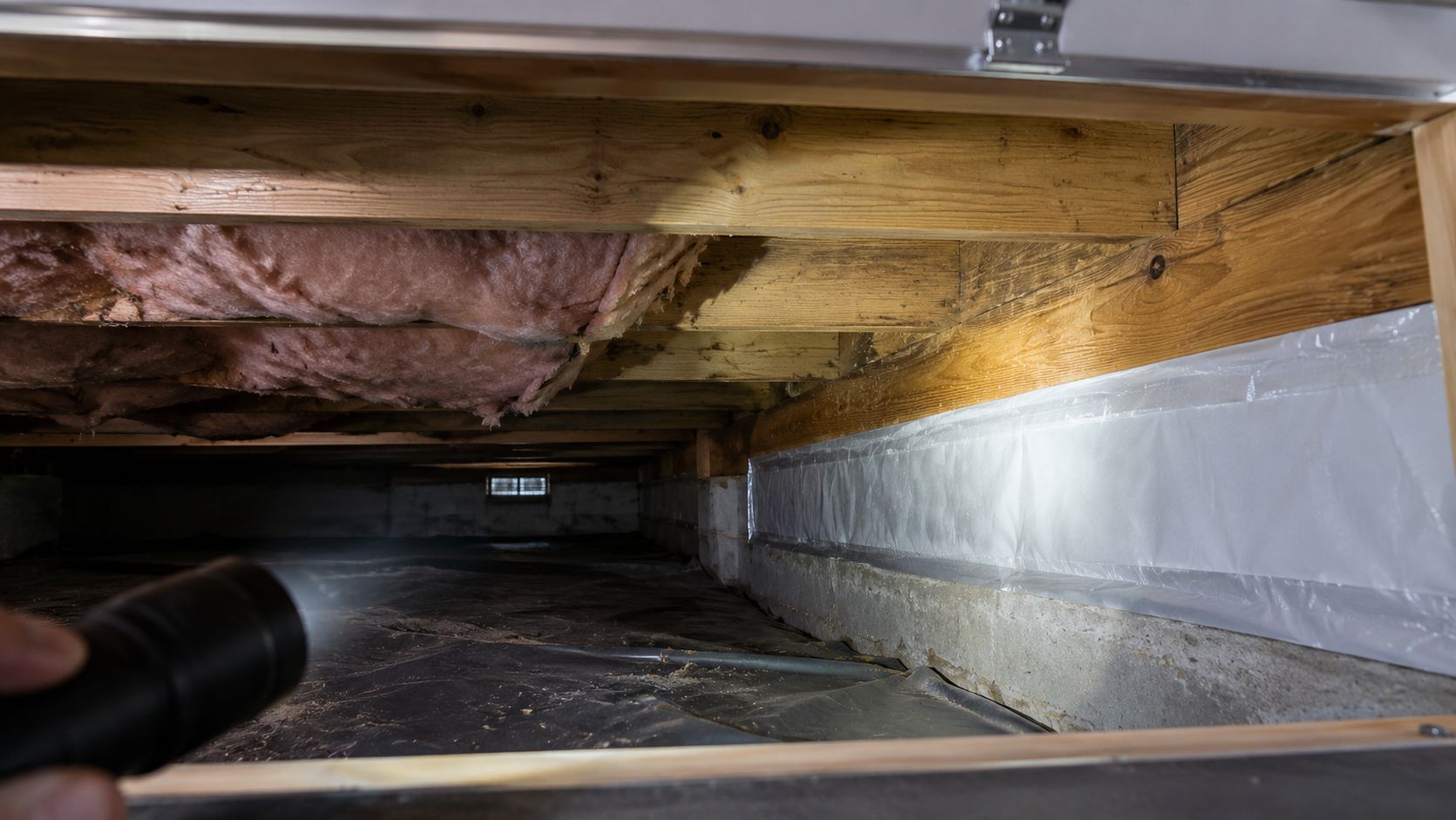
Many Sand Mountain houses sit over a vented crawlspace. Moist crawlspace air and leaky returns can affect the whole house, so a house that stays humid after the filter and fan are sorted out is worth looking at from underneath. See
crawl space encapsulation and moisture control, or
the musty-smell crawlspace guide for Arab if the smell is the main clue.
If you wait
A house that feels worse in ragweed season is not an emergency, and there is no need to wait for the first freeze to look into it. Outdoor pollen eases with the season, but indoor dust and humidity do not on their own if the house stays closed and the filter stays loaded. Humidity above 60 percent for long stretches keeps cool surfaces damp. Turning the thermostat down cools surfaces without fixing particles or moisture.
A calm next step
If the house still feels off after a filter check, the fan on AUTO, and several days of humidity readings, the next step is a full week of data. The Home Air Health Study places monitors in the house for about seven days, then gives you a scorecard and the top three next moves.
If moisture is the louder problem, with sticky rooms or humidity stuck above 60 percent, you can book a free moisture and humidity inspection through book a visit.
If you are already planning to replace your system, the Initial Comfort Plan is a free 60 to 90 minute session that lays out your comfort options.
You can also call
256-203-6612, Monday through Friday, 7:30 a.m. to 5:00 p.m. CT. Dickerson Services, 2151 Hopewell Rd, Guntersville. Bring your humidity log.
Frequently Asked Questions
Why does ragweed season make the house feel worse indoors?
Because the house is usually closed while outdoor pollen is high, and indoor air quality then depends on your filter, your leaks, and your humidity. Particles that get in stay in, and the system keeps circulating them. Closing windows limits outdoor pollen; it does not clean or dry the rooms by itself.
Should I open the windows in September and October?
Not as a default during ragweed season. Closing windows is the usual move to limit pollen. If you are tempted on a mild evening, check the dew point rather than the outdoor humidity, because one open-window stretch can bring moisture and pollen back into a closed house.
Is changing the HVAC filter enough for fall pollen?
It is one of the three controls, not the whole job. A loaded or loose filter is worth fixing first. If the house still feels the same afterward, look at leaks around the filter and returns, and at indoor humidity.
Does humidity still matter if pollen is the complaint?
Yes. A filter does not dry the air. Keep indoor relative humidity under 60 percent, and log it for a few days with a hygrometer. A closed-up house in September can hold moisture while the system cools and shuts off quickly.
What does the Home Air Health Study give me?
About seven days of monitors in your house, then a scorecard and the top three next moves. It measures your indoor air over a week instead of guessing from one afternoon.
Share this article