
Why Does My Arab House Feel Sticky on Mild Fall Days When the AC Barely Runs?
October 21, 2026
Bring the RH log, the cycle times, and the forecast dew points from the same days. The rest should be measured.
A calm next step if you want data, not a pitch
If you want the smell located with numbers instead of a one-afternoon guess, the offer that matches this question is the Home Air Health Study.
Monitors stay in the home for about seven days. You get a scorecard and the top three moves that fit this house — which may or may not include the crawl. The Study explains what the air is doing. It is not a medical exam, and it does not promise that a product will make a smell disappear.
If you would rather talk it through first, call (256) 203-6612, Monday–Friday, 7:30 a.m.–5:00 p.m. You can also book a visit. Dickerson Services is at 2151 Hopewell Rd in Guntersville and works with homeowners across North Alabama.
Bring where the smell is strongest, when it shows up, and any humidity readings you took. The rest should be measured.
If your house feels damp on a 75-degree October afternoon, the most likely reason is that nothing is drying it. The air conditioner is satisfied after a few minutes, so it barely runs, and a vented crawl space under an older home keeps adding moisture whether the system runs or not.
That combination is common on Sand Mountain, where a lot of homes were built over vented crawls with ductwork underneath. The good news is that it can be measured, and the fix usually starts below the floor rather than with a bigger air conditioner.
The September version of this problem, where short cycles and wet outdoor air are the lead story, is covered in
why a Guntersville house feels stickier on a mild September day and
the Huntsville mild-day sticky house guide. This article focuses on what changes in an older crawl space home as fall goes on.
Why mild fall days are a moisture trap
Cooling and drying happen on the same coil, but not at the same speed. Temperature drops quickly. Moisture only comes out after the coil has been cold and wet long enough for water to drip into the drain. Short cycles cool the air and stop before much water leaves.
In summer, heat keeps the system running long enough to dry the house as a side effect. By October the heat load is small, so the system may only run in brief bursts in the afternoon and hardly at all at night. Outdoor air in North Alabama often stays fairly humid into fall, even as temperatures ease. The house keeps taking on moisture from people, cooking, showers, and the ground, and the drying side of the ledger nearly disappears.
The part that never takes a day off: the crawl space
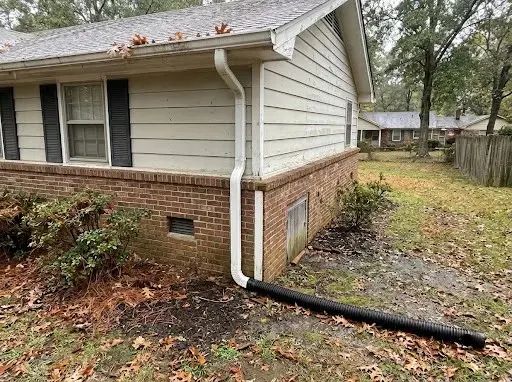
In a vented crawl, outdoor air and bare or partly covered soil set the conditions under your floor. Soil gives off moisture continuously. The floor framing, insulation, and any ductwork down there sit in that air. Air moves from the crawl into the house through plumbing holes, gaps at the rim, and especially leaky return ducts, which pull crawl air straight into the system and send it out the registers.
In July, long runtimes can mask that load. On a mild fall day the crawl keeps contributing while the air conditioner has stopped helping. That is why an older crawl space home can feel stickier in October than a slab home down the road with similar equipment.
Signs the crawl is part of your picture:
- The house feels dampest near the floor or in rooms over the crawl, not just in the kitchen or bath.
- A faint musty smell shows up when the system starts. How to tell if a musty smell is coming from the crawlspace in Arab walks through locating it.
- Floor insulation under the house sags or has fallen.
- Ducts or boots in the crawl look rusty or have sweated in the past.
Why vented crawls struggle in this climate, and when venting still makes sense, is in
vented versus encapsulated crawl spaces in Alabama.
Oversizing makes short cycles shorter
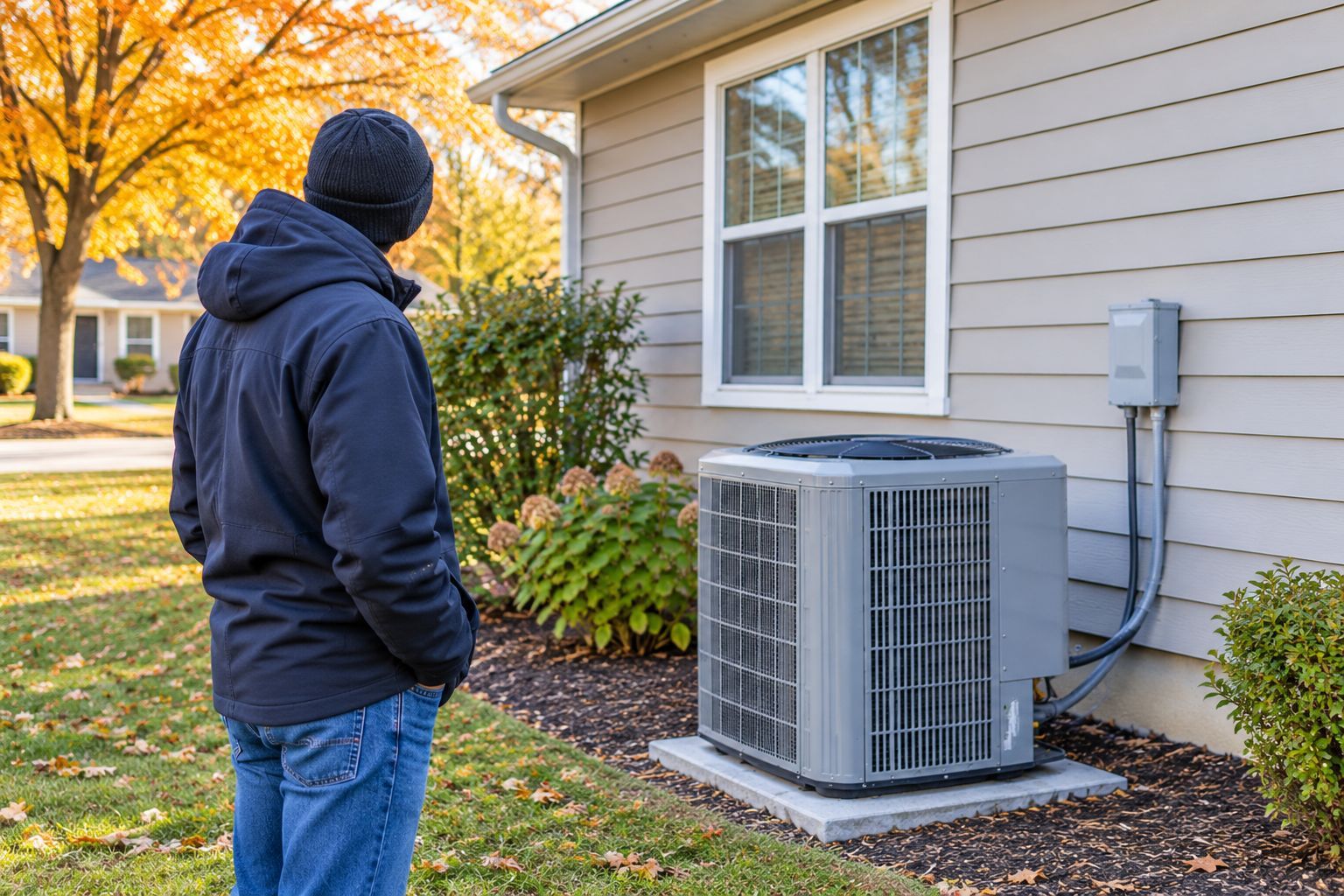
Many older homes are on their second or third air conditioner. Replacement equipment is often matched to the old unit's size or to square footage rather than a load calculation, and older homes sometimes get bigger equipment to cover a summer comfort complaint. A system that is larger than the house needs satisfies the thermostat even faster on a mild day, so each cycle does even less drying.
You can check one piece of this yourself: on a mild afternoon, time how long a cooling cycle runs. Our humidity articles use 15 to 25 minutes on a moderate day as a teaching range for a healthy cycle. If yours runs only a few minutes and shuts off, short cycling is part of the story. Confirming whether the equipment is oversized takes a load calculation and pro testing.
What to check before you call anyone
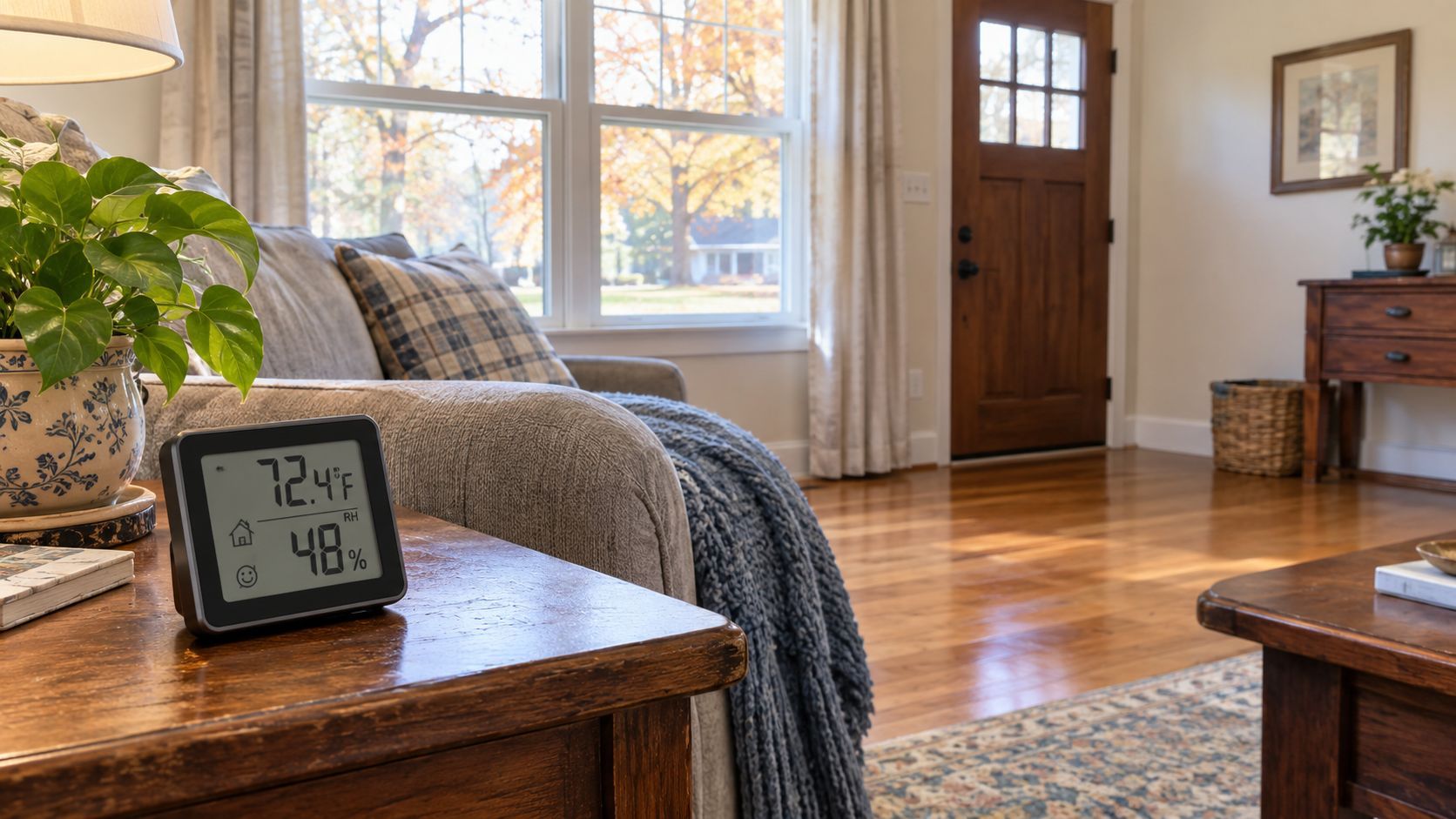
- Log indoor humidity for several mild days. Use an inexpensive hygrometer in the main living area, out of the sun and off the supply vents. Note readings in the morning, afternoon, and evening. Keep indoor relative humidity under 60 percent. Many homes feel comfortable around 45 to 55 percent. More on reading the number is in what indoor humidity should be in a North Alabama home.
- Add a second reading near the floor or in the crawl. If you can open the hatch and reach in safely, set a second hygrometer just inside, off the dirt. Do not crawl into a tight or unsafe space. If the crawl reading runs well above the living area and the living area tracks it, the crawl is likely feeding the house.
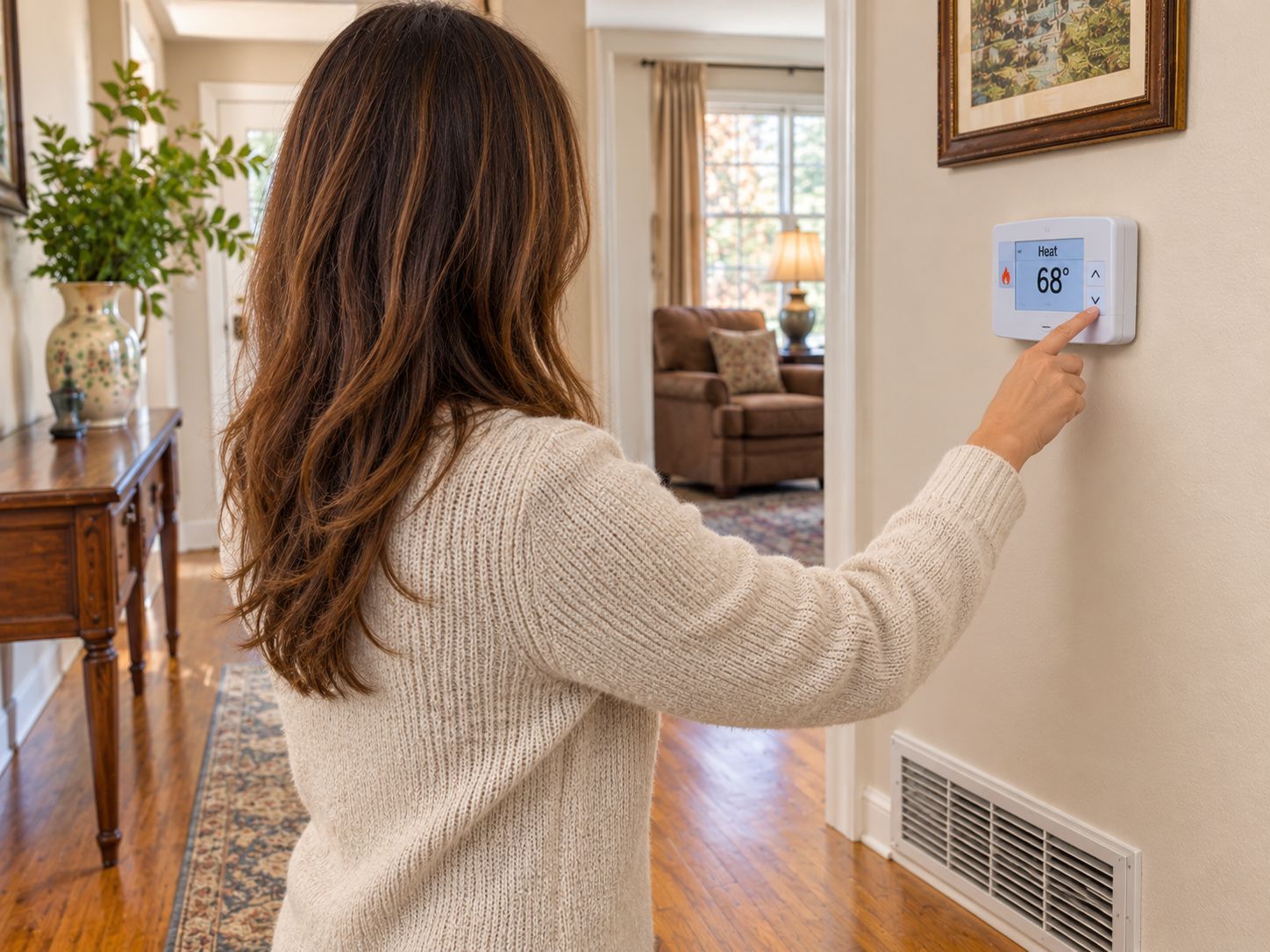
- Set the thermostat fan to AUTO. A fan left on ON blows air across the wet coil after the compressor stops and puts moisture back into the rooms.
- Time a cooling cycle. Write down how long it runs on a mild afternoon.
- Be careful with open windows. A cool fall evening can still be wet air.
Open windows or keep the AC on: a dew-point guide shows how to decide.
What usually does not fix it
Turning the thermostat down. It can force a little more runtime, but it leaves a colder house that may still be damp. The moisture is the problem, not the temperature.
A bigger air conditioner. More capacity satisfies the thermostat faster and can leave even more moisture behind.
Closing the crawl vents by themselves. Without covering the ground, handling drainage, and giving the space a way to stay dry, closing vents alone can make a damp crawl worse.
The order that holds up is to deal with moisture paths and the crawl first, then air seal and insulate, then size equipment to the house that results. The three buckets behind most humid homes, equipment, moisture sources, and air leakage, are laid out in
what causes high humidity in your Alabama home. If your system runs long and steady and the house is still humid,
why a North Alabama home still feels humid with the AC running and
why the house still feels sticky at 72 degrees cover that side.
If you wait
A sticky fall house is not an emergency, and heating season will change how it feels. But a crawl that stays damp keeps working on floor insulation, framing, and ductwork all year, and the same problem usually returns next spring and the following fall. Indoor humidity that sits above 60 percent for long stretches is the range where cooler surfaces can stay damp. Measuring now, while the pattern is easy to see, gives you a clearer answer than guessing next summer.
A calm next step
If your log shows indoor humidity staying high on mild days, and especially if the crawl seems to be part of it, the matching next step is a Home Comfort Consult. It is our most in-depth diagnostic: a 3-4 hour in-home testing visit that looks at the house, the HVAC system, ductwork, airflow, insulation, humidity, and indoor air together. We analyze the data, then return with a written Comfort Plan and a follow-up review of your options. It is built for recurring comfort, humidity, and airflow problems like this one.
If you are already thinking about a new system, start with the free Initial Comfort Plan. In a 60-90 minute in-home visit we assess temperature consistency, airflow balance, humidity levels, and indoor air quality, and you receive a written Comfort Options Report with your likely load range, a summary of your issues and goals, and an equipment options chart. That keeps a replacement from repeating the oversizing problem.
If the crawl itself turns out to be the lead issue, our crawl space encapsulation and moisture control page explains how we approach the space under the house.
You can
book a visit online or call
256-203-6612, Monday-Friday, 7:30 a.m.-5:00 p.m. CT. Dickerson Services
is at 2151 Hopewell Rd in Guntersville and works with homeowners in Arab and across North Alabama. Bring your humidity log and your cycle times.
Frequently Asked Questions
Why does my house feel stickier in October than it did in summer?
Because the air conditioner only dries the air while it runs, and on mild fall days it barely runs. In summer, long cycles pull moisture out as a side effect of cooling. In fall the cooling need shrinks, the drying nearly stops, and moisture from daily life and the crawl space keeps building.
Can my crawl space really make the whole house humid?
It can be a big part of it. Air moves from a vented crawl into the house through floor openings and leaky return ducts, and in many older homes that air is damper than the living space. Logging humidity in the living area and near or in the crawl at the same time is the simplest way to see whether the two move together.
Is my air conditioner too big for my house?
It might be, and short cycles on mild days are one clue. Many replacements are sized by square footage or by matching the old unit instead of a load calculation. Timing a cycle is a good homeowner check. Confirming oversizing takes a load calculation and testing, which is part of what a Home Comfort Consult or Initial Comfort Plan looks at.
What humidity level should I aim for in the fall?
Keep indoor relative humidity under 60 percent. Many homes feel comfortable around 45 to 55 percent. Read it over several days in the main living area, not right after a shower or while cooking, so you are looking at the house and not a single moment.
Should I book a Home Comfort Consult or an Initial Comfort Plan?
If you have a recurring humidity or comfort problem and want to know the real cause, the Home Comfort Consult is the deeper diagnostic, with 3-4 hours of in-home testing and a written Comfort Plan. If you are already planning to replace your system, the free Initial Comfort Plan gives you a Comfort Options Report so the new equipment is sized and chosen with humidity in mind.
Share this article