
Windows Shut, Still Dusty? How a Closed Guntersville House Reloads in
October 17, 2026
Bring the RH log, the cycle times, and the forecast dew points from the same days. The rest should be measured.
A calm next step if you want data, not a pitch
If you want the smell located with numbers instead of a one-afternoon guess, the offer that matches this question is the Home Air Health Study.
Monitors stay in the home for about seven days. You get a scorecard and the top three moves that fit this house — which may or may not include the crawl. The Study explains what the air is doing. It is not a medical exam, and it does not promise that a product will make a smell disappear.
If you would rather talk it through first, call (256) 203-6612, Monday–Friday, 7:30 a.m.–5:00 p.m. You can also book a visit. Dickerson Services is at 2151 Hopewell Rd in Guntersville and works with homeowners across North Alabama.
Bring where the smell is strongest, when it shows up, and any humidity readings you took. The rest should be measured.
Ragweed Season
If you closed the windows weeks ago and the house still feels dusty or stale, the windows were never the only way in. Most closed houses reload through the doors you use every day, the return side of the duct system, and gaps around the filter. Those are paths you can find and tighten.
The goal is not a sealed box. It is a house where the air that comes in arrives on purpose and passes through a filter, instead of sneaking in through a deck door, a garage, or a leaky return under the floor.
We have already written about why a closed house can feel worse in ragweed season, in
why ragweed season makes a Huntsville house feel worse indoors and
the Arab ragweed indoor-air guide. This article picks up where those leave off: once the windows are shut, how do you keep the house from filling back up?
Why lake-area living makes "closed" harder in September and October
Fall is when a lot of Guntersville households are outside the most. Evenings on the deck, trips to the dock, kids and dogs in and out, a garage door that stays open while the boat gets rinsed. Every one of those habits is normal. Each one also opens a path while ragweed is still in the air.
The lake adds a second load. Air near the water often stays moist even when evenings feel mild, which is the point of
why homes near Lake Guntersville have worse humidity problems. A closed house that is also holding extra moisture tends to feel heavier and dustier than the same house at a comfortable humidity, even when the particle load is about the same.
Path 1: the doors you actually use
Windows get the attention, but doors get the traffic. A sliding door to the deck or a side door to the garage can open more in one fall afternoon than a window does all month.
- Pick a main door for outdoor traffic. One entry with a mat inside and out is easier to manage than three doors that all lead to the yard.
- Leave shoes, life jackets, and outdoor gear at that door. Pollen rides in on fabric and soles, then gets walked into carpet and stirred back up.
- Close the garage door before opening the house door. An attached garage holds dust, exhaust, and whatever blew in while it was open. With the big door shut first, less of that air follows you inside.
- Do not prop doors while the system runs. A propped deck door during a cooling cycle lets the return pull outdoor air straight toward the filter, and some of it never reaches the filter at all.
- Look at the weatherstripping on the busiest door. If you can see daylight around a closed exterior door, air moves there too.
Path 2: the return side of the duct system
This is the path homeowners rarely think about. The return side of your HVAC system pulls air back to the equipment. If the return ductwork, the return box, or the platform under the air handler has gaps, the system pulls air through those gaps, from wherever they sit.
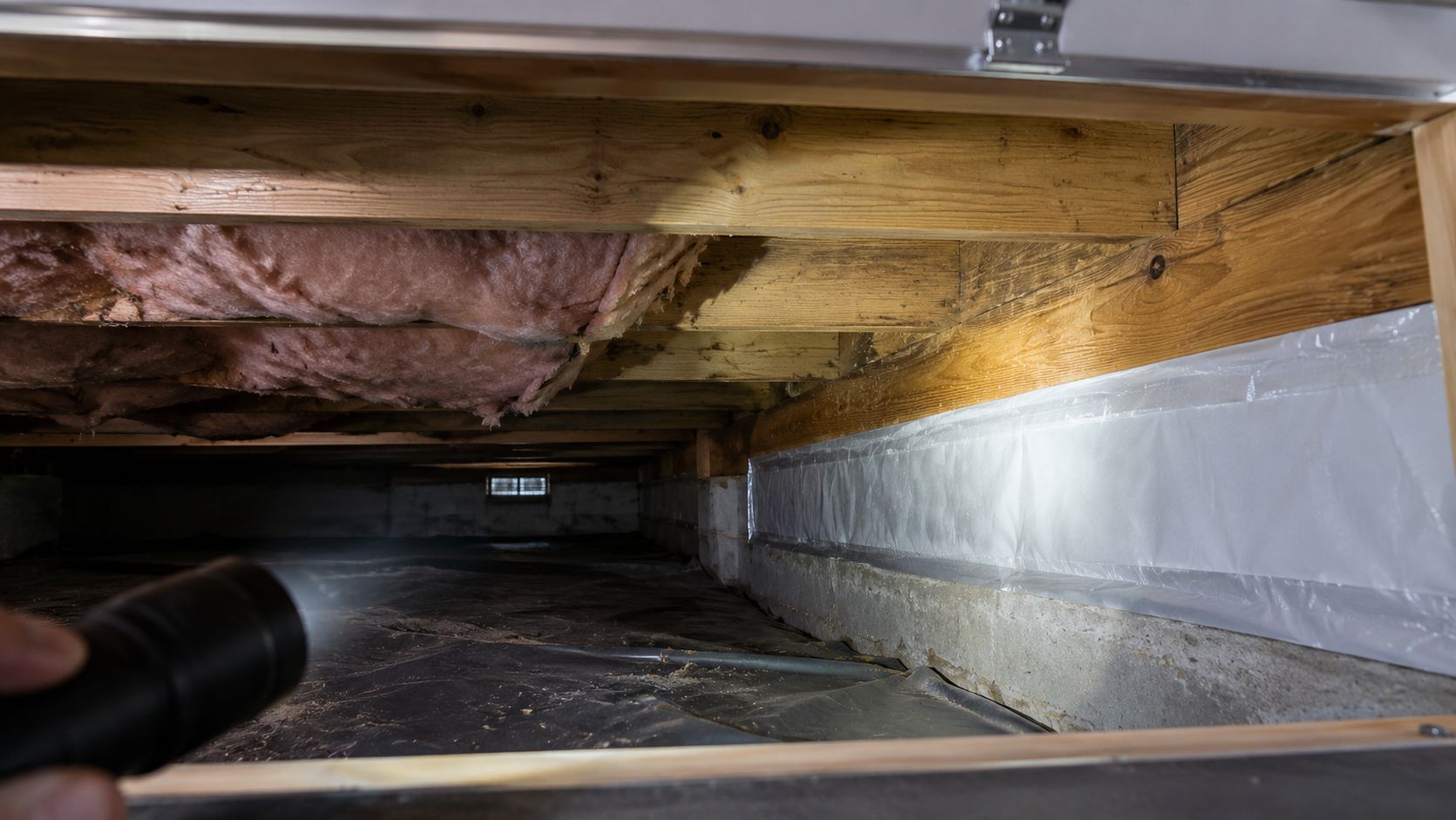
In many local homes that means the attic, a vented crawl space, a garage, or a closet wall cavity. That air can skip the filter entirely, depending on where the leak is, then get sent out through every supply register in the house. You can close every window and still be pulling crawl or attic air into the living space all day.
A few homeowner checks, with the system running and nothing taken apart:
- Listen at the return grille and the filter door. A whistle or rush of air around the edges, not through the grille face, usually means a gap.
- Hold a tissue near seams and edges. If it gets pulled hard toward a crack beside the grille or around the filter access, air is entering there.
- Look for dark streaks. Dirty lines on insulation, carpet edges near a return, or around a grille frame are often where air has been filtering through a gap for a long time.
- Note where the air handler lives. In a garage, attic, or crawl, return leaks pull from that space. In a hall closet, they can pull from wall cavities.
Sealing return leaks properly is pro work, because the system's airflow has to be checked afterward. Finding the clues is not. If your house sits over a vented crawl, the crawl is part of this picture, and the assembly question is covered in
vented versus encapsulated crawl spaces.
Path 3: filter fit and bypass
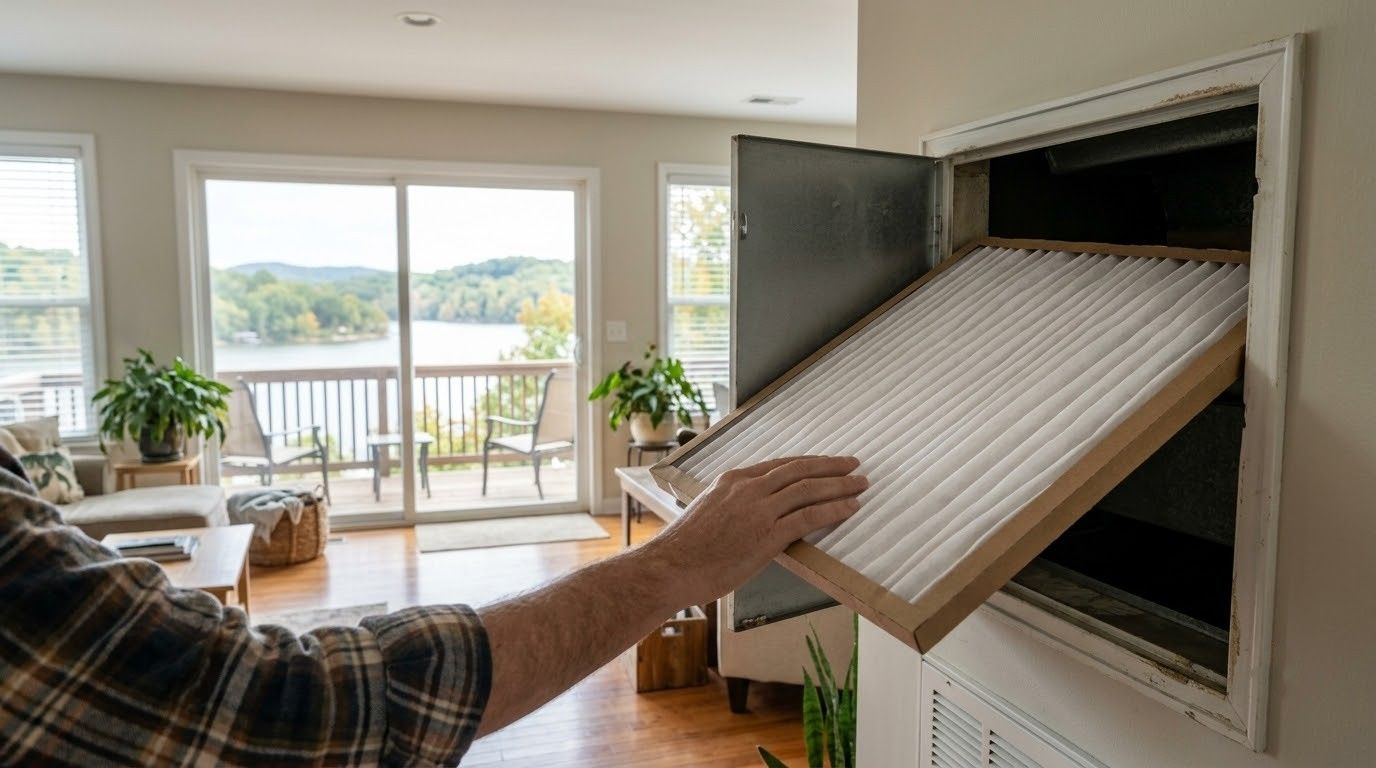
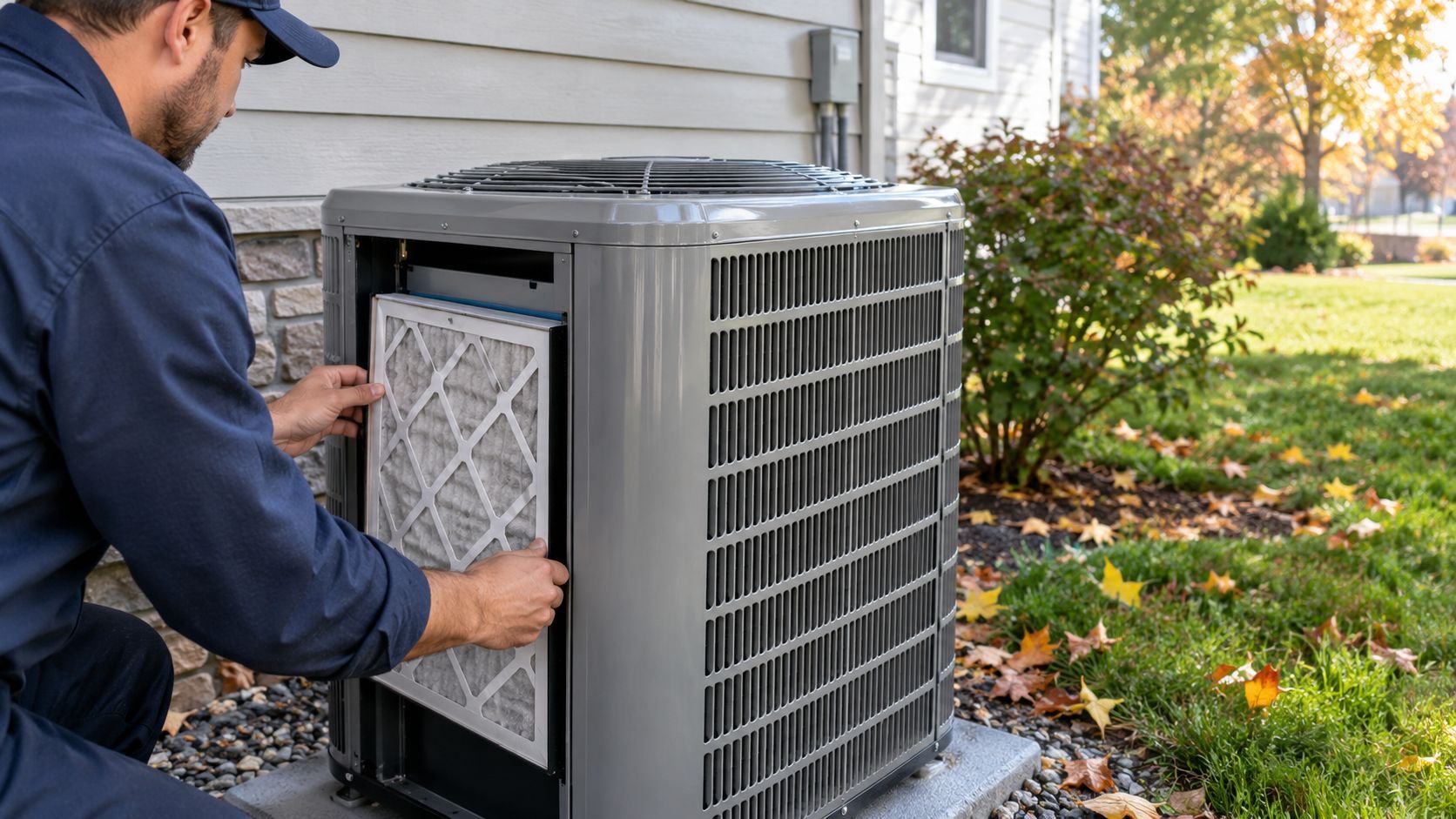
A filter only cleans the air that goes through it. Air that slips around a loose filter is not cleaned, no matter how good the filter is.
- Check the fit, not just the label. A filter that slides in with a gap on one side, rattles, or bows in the middle is letting air go around it.
- Check the access slot. Many filter slots at the air handler have a cover. If it is missing or loose, the slot itself becomes an open return.
- Match the size printed on the filter to the slot. If the old filter was the wrong size, the new one may be too.
- Look at the arrow. Airflow arrows should point toward the equipment.
How often to change the filter and which rating to choose are already covered in
how often to change the HVAC filter during pollen season and
the best HVAC filter for allergies and pollen. The point here is simpler: a tight fit comes before a better rating.
The fan setting tradeoff
Running the thermostat fan on ON moves more air through the filter, which sounds like a win in pollen season. During cooling season there is a catch. When the compressor stops, the indoor coil is still wet, and a blower that keeps running can push some of that moisture back into the rooms.
For most Guntersville homes in a humid fall stretch, AUTO is the safer default. If you want more filtration hours, that is worth talking through with someone who can look at your equipment, rather than flipping the fan to ON and letting humidity creep up.
Keep the closed house dry, too
A filter does not remove moisture. A closed house that holds high humidity tends to feel heavier, and dust seems to cling more. Keep indoor relative humidity under 60 percent. Many homes feel comfortable around 45 to 55 percent. The target and how to read a meter are in what indoor humidity should be in a North Alabama home.
Mild fall days make this harder, because the air conditioner may barely run. If your house feels sticky as well as dusty, why a Guntersville house feels stickier on a mild September day covers that side.
And on the nice evening when opening up is tempting, check the dew point, not the temperature. A cool lake evening can still be wet air, and it can be carrying pollen.
Open windows or keep the AC on: a dew-point guide walks through that call.
A one-week reload check
You do not need special tools to see whether your changes help. For about a week:
- Put an inexpensive hygrometer in the main living area, out of direct sun and away from supply vents. Write down the reading morning and evening.
- Note which doors were used heavily and whether the garage door was open for long stretches.
- Wipe one flat surface clean, such as a dark tabletop, and notice how fast dust returns.
- Check the filter at the start and end of the week. A filter that loads unevenly, or stays clean while the house stays dusty, is a clue that air is going around it.
If dust returns quickly even after the doors, filter fit, and fan setting are handled, the paths you cannot see, like return leaks, are the likely next suspects.
When measurement makes sense
If you have tightened the obvious paths and the house still feels off, a week of real data usually beats another round of guessing. Our Home Air Health Study places monitors in the home for about seven days to track particles, chemical compounds, carbon dioxide, temperature, and humidity. You get an Air Health Scorecard and the top three next moves for your house. We do not diagnose medical conditions.
If humidity is the louder problem, you can book a visit and we can start there. If you are already planning to replace your system, the free Initial Comfort Plan brings filtration and humidity into that conversation from the start.
Call
256-203-6612, Monday-Friday, 7:30 a.m.-5:00 p.m. CT. Dickerson Services
is at 2151 Hopewell Rd in Guntersville. Bring your humidity notes and a list of which doors get the most traffic.
Frequently Asked Questions
I closed all the windows. Why does my house still get dusty in ragweed season?
Because windows are not the only way air gets in. Busy doors, an attached garage, and return-side duct leaks can all bring outdoor or unconditioned air into a closed house, and some of it never passes through the filter. Tightening those paths usually matters more than closing one more window.
How can I tell if my return ducts are leaking?
Start with clues you can see and hear while the system runs: air rushing around the edges of a return grille or filter door, a tissue pulled toward a crack, or dark dust streaks on insulation or carpet near a return. Those signs point to a gap. Confirming and sealing the leak, then checking airflow afterward, is a job for a technician.
Should I run my thermostat fan on ON to filter more air during pollen season?
In a humid fall stretch, usually not as a default. During cooling, a fan left on ON can push moisture from the wet coil back into the house. AUTO is the safer starting point. If you want more filtration hours, talk it through with someone who can look at your system and humidity together.
Does living near Lake Guntersville make ragweed season worse indoors?
The lake does not add pollen, but it often adds moisture, and lake-area routines tend to mean more door traffic in the fall. A closed house that is also holding extra humidity tends to feel heavier and dustier. Keeping indoor humidity under 60 percent and limiting open doors helps on both fronts.
What does the Home Air Health Study tell me that I cannot see myself?
It shows what the air is doing over about seven days, including particles, chemical compounds, carbon dioxide, temperature, and humidity, instead of one afternoon's impression. You get an Air Health Scorecard and the top three next moves for your home. It is a measurement of the house, not a medical test.
Share this article