That Smell When the Heat First Comes On in Arab: Dust, Musty, or Time to Shut It Off?
November 3, 2026

Bring the RH log, the cycle times, and the forecast dew points from the same days. The rest should be measured.
A calm next step if you want data, not a pitch
If you want the smell located with numbers instead of a one-afternoon guess, the offer that matches this question is the Home Air Health Study.
Monitors stay in the home for about seven days. You get a scorecard and the top three moves that fit this house — which may or may not include the crawl. The Study explains what the air is doing. It is not a medical exam, and it does not promise that a product will make a smell disappear.
If you would rather talk it through first, call (256) 203-6612, Monday–Friday, 7:30 a.m.–5:00 p.m. You can also book a visit. Dickerson Services is at 2151 Hopewell Rd in Guntersville and works with homeowners across North Alabama.
Bring where the smell is strongest, when it shows up, and any humidity readings you took. The rest should be measured.
A short dusty or "burnt" smell the first time the heat runs is usually nothing to worry about. Over the summer, a thin layer of dust collects on the heating parts, and the first warm-up cooks it off. What tells you more is timing: a smell that clears up after a short run is usually normal, a musty one that returns every time is usually moisture, and a smell that grows is your cue to turn the system off.
That sorting works whether your home in Arab heats with a heat pump, a heat pump with backup strips, or a gas furnace.
Sort it by when it happens
In the first few minutes, then gone
This is the classic first-heat smell: dry, dusty, a little like a toaster. It usually shows up on the season's first call for heat and fades as the parts get warm. Opening a window for a bit and letting the system run is generally all it needs. If it is still noticeable after a few more heating cycles, that is worth a look.
Only when the backup heat kicks on
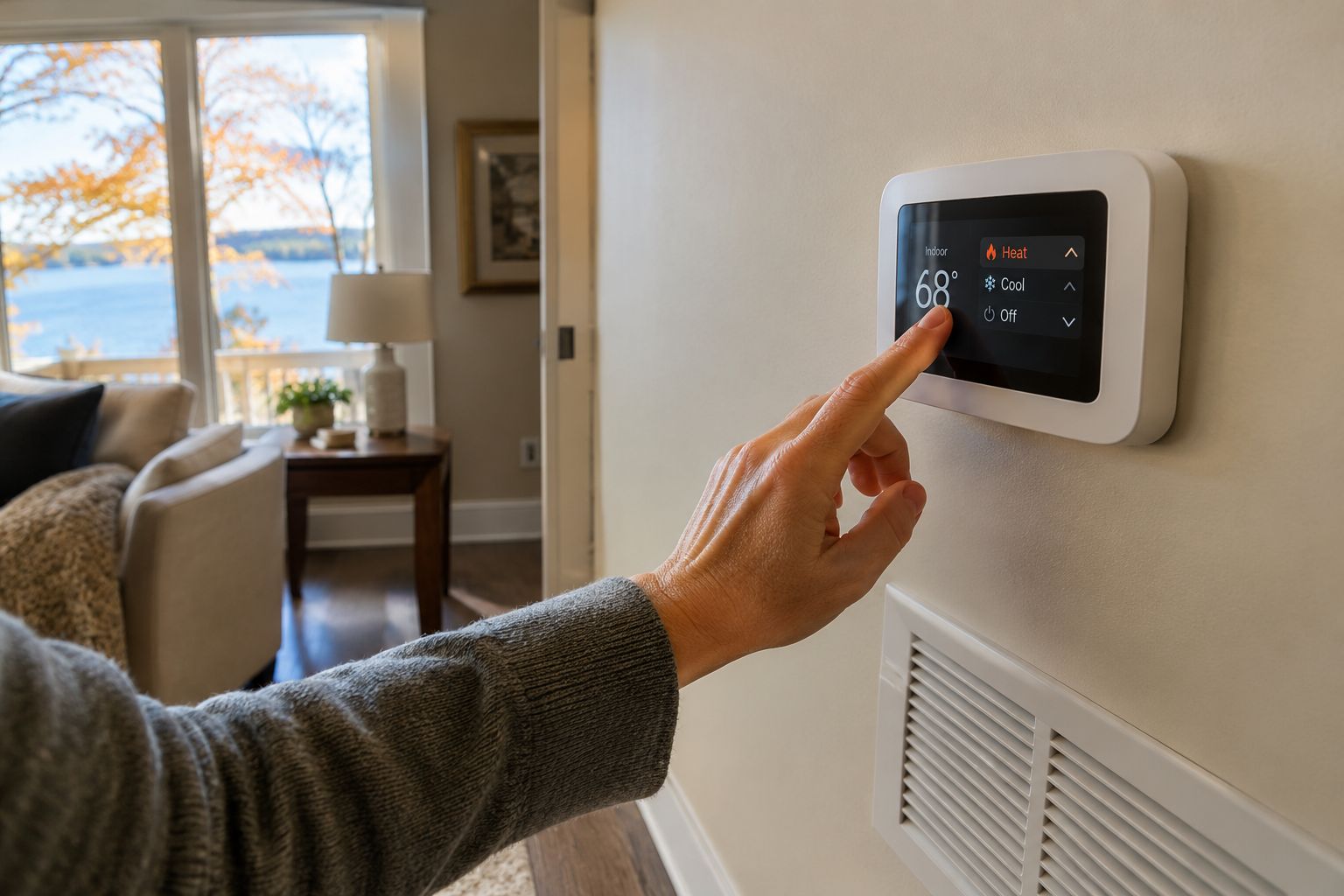
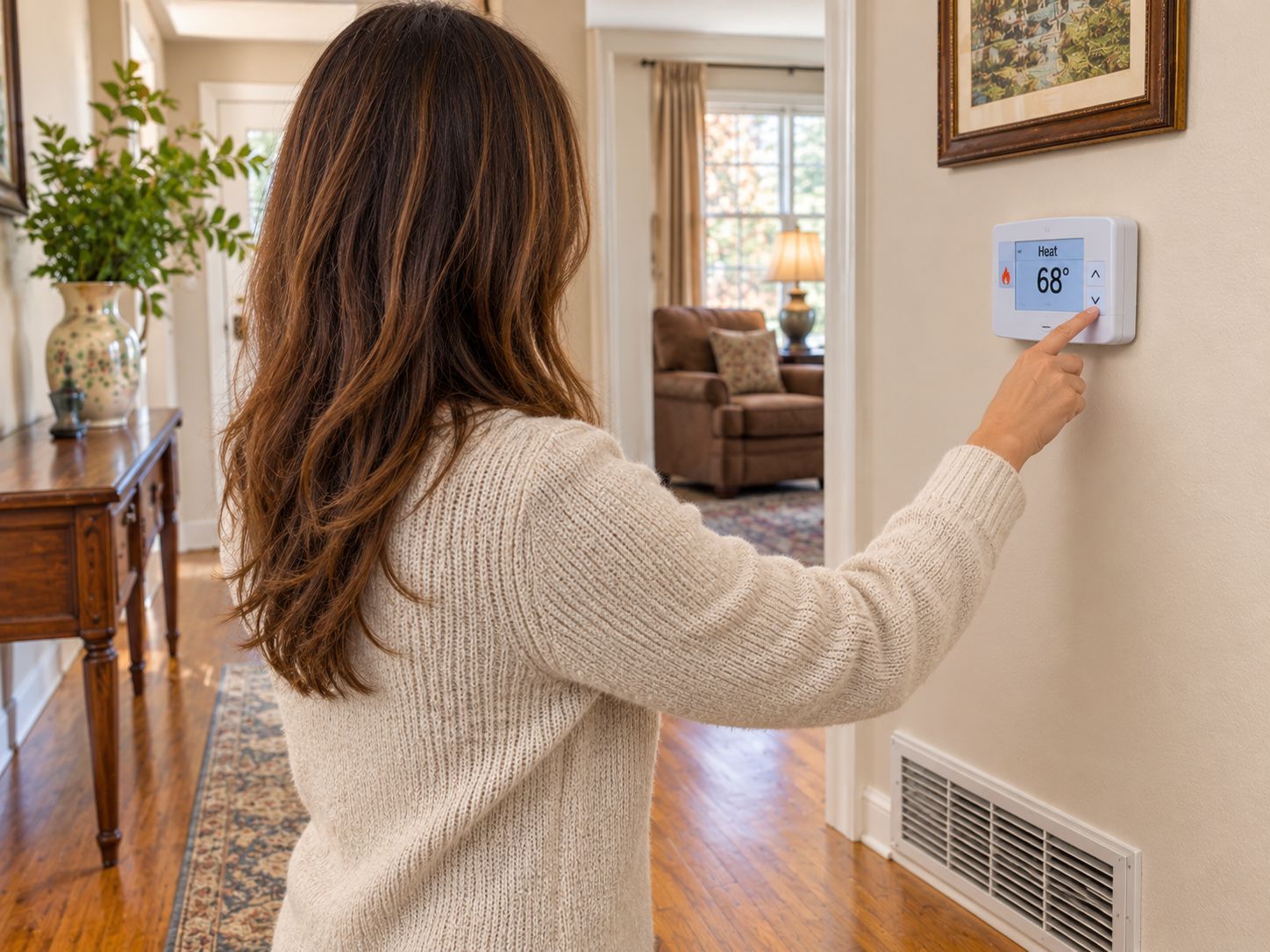
Many heat pumps have electric heat strips inside the indoor unit for very cold mornings, defrost, or when you set the temperature up a lot at once. Those strips may not have run since last winter, so the first time they come on you may get the same dusty smell, even when the heat pump itself has been running for days. Your thermostat may show "Aux Heat," "Auxiliary," or "Emergency Heat" when that happens. A brief dust smell from the strips is usually normal. A sharp hot-plastic or electrical smell is not.
Every time the system starts
A musty, damp, earthy, or "dirty sock" smell that hits at the start of each cycle, then fades, is the one people tend to ignore. It is more likely a moisture clue than a dust one. Places it often starts:
- The coil and condensate pan in the indoor unit. The coil spent all summer wet from cooling. If the pan or drain does not empty well, or growth has built up on the coil, warm air moving across it can carry a musty smell. Some heat pump owners notice this most in the first weeks of heating season.
- Ductwork in a vented crawl or attic. Leaky duct joints and return ducts can pull damp crawl or attic air into the system.
- A damp crawl space itself. If the crawl is wet, its air finds its way into the house through floor gaps, plumbing holes, and duct leaks.
This is the smell to follow up on, calmly, without a guess from the driveway.
Only from one register or one room
Many older homes in Arab and on Brindlee Mountain have metal floor registers fed by ducts in a vented crawl. Floor registers catch things over the summer: pet hair, crumbs, a sock, a small toy. When warm air hits them, that one register can smell for a while. Lift the register and clean out what you can reach. If one register smells musty instead, the duct under that room may be leaking or picking up crawl air.
How to tell if a musty smell is coming from the crawlspace walks through narrowing it down.
Getting stronger the longer it runs
Dust smells fade. A smell that builds, or that changes from dusty to sharp, is not a wait-and-see smell. Shut it down at the thermostat.
Turn it off and call for help
- Hot plastic, rubber, or electrical burning. Shut it down at the thermostat and call. Do not keep resetting it.
- A smell that lingers well past a reasonable first run, or keeps getting stronger.
- Visible smoke from a register or the equipment. Turn it off, and if there is fire or the smoke continues, get out and call 911.
- Rotten eggs or gas. If you have gas heat or any gas appliance, skip the light switches and the thermostat. Leave the house and call your gas utility or 911 from outside.
- A carbon monoxide alarm. If a carbon monoxide alarm sounds, get everyone out and call 911 from outside.
An all-electric heat pump does not burn fuel, but many homes still have gas water heaters, ranges, or fireplaces, so the gas and CO steps still apply.
Heat pump sights and sounds that are not a smell problem
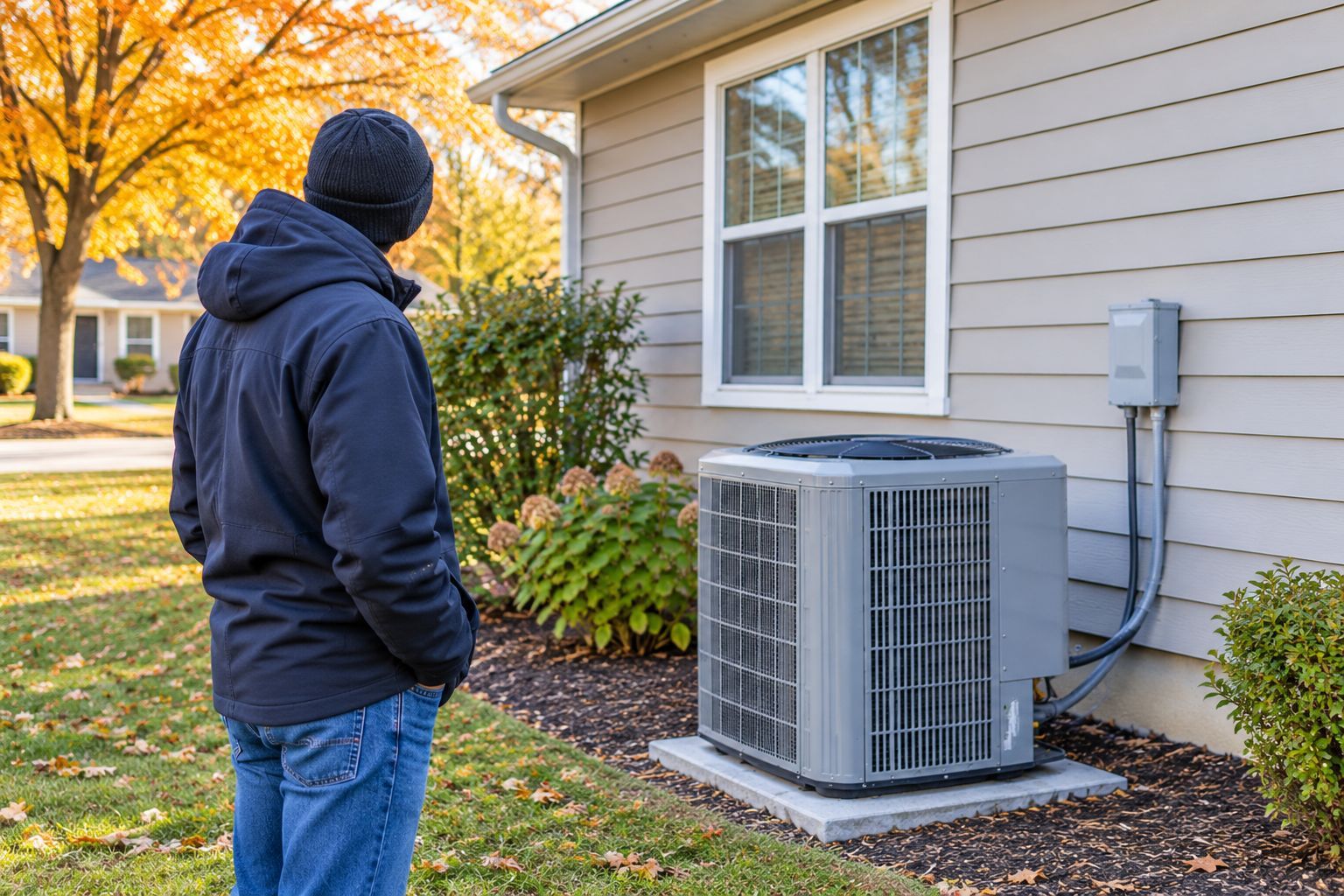
On cold, damp mornings a heat pump may go into defrost: the outdoor fan stops, you may hear a whoosh, and you may see steam rising from the outdoor unit. That steam is water vapor, not smoke, and it is usually normal. The air inside may feel cooler for a few minutes while the backup heat covers. If you want a quick walkthrough of what to check before you rely on the heat, see
test your heat before the first cold night.
Simple things you can do before the first cold morning
- Put in a clean filter. A loaded filter adds to the first-run smell and makes the system work harder.
- Run the heat on a mild afternoon while you are home, rather than waiting for the first cold night. Any smell then has a chance to show up while you can watch it.
- Clear the floor registers and move rugs, furniture, and boxes off them.
- Keep storage away from the indoor unit and any heat strips, and do not store anything flammable near gas equipment.
- Check your smoke and CO alarms while you are at it.
- Watch indoor humidity. If musty smells come with a house that feels damp, keep indoor relative humidity under 60 percent. Many homes feel best around 45 to 55 percent. See what indoor humidity should be in a North Alabama home and why your Arab house feels sticky on mild fall days.
Masking a musty smell with fragrance does not change where it comes from. Neither does running the fan nonstop. Finding the moisture source is what changes it.
If the smell traces back to the crawl
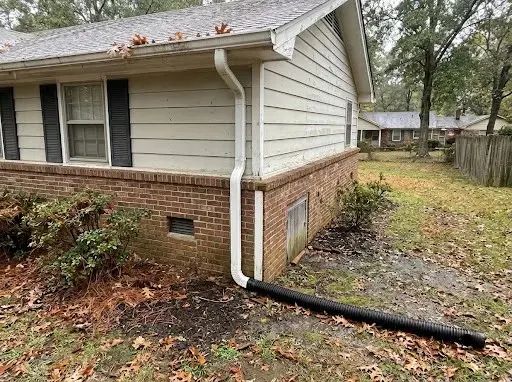
A lot of musty first-heat complaints in older vented-crawl homes end up under the floor: damp soil, sagging insulation, and duct leaks pulling that air into the system. The same air leaks often show up as
cold floors in October. The long-term fix is usually about moisture control in the crawl, explained in
vented versus encapsulated crawl spaces and on our
crawl space encapsulation and moisture control page.
A calm next step
If the smell is sharp, keeps coming back, or you just want someone to look, book a service call. It is $85 for non-members, and Home Air Assurance Plan members pay no trip fee. More on what we check is on our heating repair page.
Musty smell, and a hunch it starts under the floor? Ask for a free crawl space quote. If you want to know what the air in the house is doing over time, the Home Air Health Study monitors particles, chemical compounds, CO2, temperature, and humidity for about seven days, then gives you an Air Health Scorecard and the top three next moves. We do not diagnose medical conditions.
Book a visit online or call
256-203-6612, Monday-Friday, 7:30 a.m.-5:00 p.m. CT. Dickerson Services
is at 2151 Hopewell Rd in Guntersville.
Frequently Asked Questions
My heat pump gave off a burnt smell on its first heating run. Is that normal?
Usually, yes. Dust settled on the backup heat strips or other warm parts over the summer and is cooking off. It should clear up after a short run. If it smells like hot plastic or electrical burning, or gets stronger, switch it off and call us.
Why does my house smell musty when the heat starts?
A musty smell at the start of each cycle usually points to moisture, often at the indoor coil or drain pan, in ducts that run through a damp crawl or attic, or from crawl air leaking into the ducts. It is worth having checked rather than covered up.
How long should the first-heat smell last?
A normal dust smell usually clears up within the first run or two. A smell that hangs on for days, returns every time the system starts, or gets stronger the longer it runs is a sign to look further.
Is a burning smell from the furnace dangerous?
A brief dusty smell on the first run is usually not. A smell of hot plastic, rubber, or wiring, visible smoke, or a smell that keeps building is different: switch it off and call us. With gas heat, a rotten-egg smell means leave the house and call your gas utility or 911 from outside.
One floor register smells when the heat runs. What should I do?
Lift the register and clean out anything that fell in over the summer, since that is often the cause. If that register smells musty instead of dusty, the duct under that room may be leaking or pulling in crawl air, and that is worth an inspection.
Share this article