
First Time Turning On the Heat in Guntersville? Which Smells Are Normal and Which Mean Shut It Off
October 27, 2026
Bring the RH log, the cycle times, and the forecast dew points from the same days. The rest should be measured.
A calm next step if you want data, not a pitch
If you want the smell located with numbers instead of a one-afternoon guess, the offer that matches this question is the Home Air Health Study.
Monitors stay in the home for about seven days. You get a scorecard and the top three moves that fit this house — which may or may not include the crawl. The Study explains what the air is doing. It is not a medical exam, and it does not promise that a product will make a smell disappear.
If you would rather talk it through first, call (256) 203-6612, Monday–Friday, 7:30 a.m.–5:00 p.m. You can also book a visit. Dickerson Services is at 2151 Hopewell Rd in Guntersville and works with homeowners across North Alabama.
Bring where the smell is strongest, when it shows up, and any humidity readings you took. The rest should be measured.
If you turned on the heat for the first time this fall and smelled something like warm dust, that is usually normal and it usually fades quickly. If the smell is musty, damp, electrical, or anything like gas, it is telling you something different, and a few of those smells mean you should turn the system off.
Your nose is a decent first tool here, as long as you pay attention to what the smell is like, where it is strongest, and whether it fades. Nothing below replaces an in-person look at your equipment. It is meant to help you decide whether to wait it out, book a visit, or shut it off now.
The usually normal one: burning dust that fades
Heating equipment sits idle for months. Dust settles on the parts that get hot, whether that is a furnace heat exchanger, the burners, or the electric heating elements in an air handler. The first time those parts heat up, the dust burns off. It smells a little like a toaster or a space heater on its first use of the year.
What usually makes it the normal kind:
- It shows up in the first few minutes of the first heat cycle.
- It is faint to moderate, and similar at most registers.
- It fades. Often within a short run, sometimes lingering lightly through the first few cycles or the first day.
- Nothing else is off. No smoke, no unusual noise, no tripped breaker.
A clean filter helps, since a dirty one can add its own dusty smell once warm air moves through it. If the smell is gone after the first day of normal use, you can usually let it go.
Heat pumps: the backup heat strips have a first run too
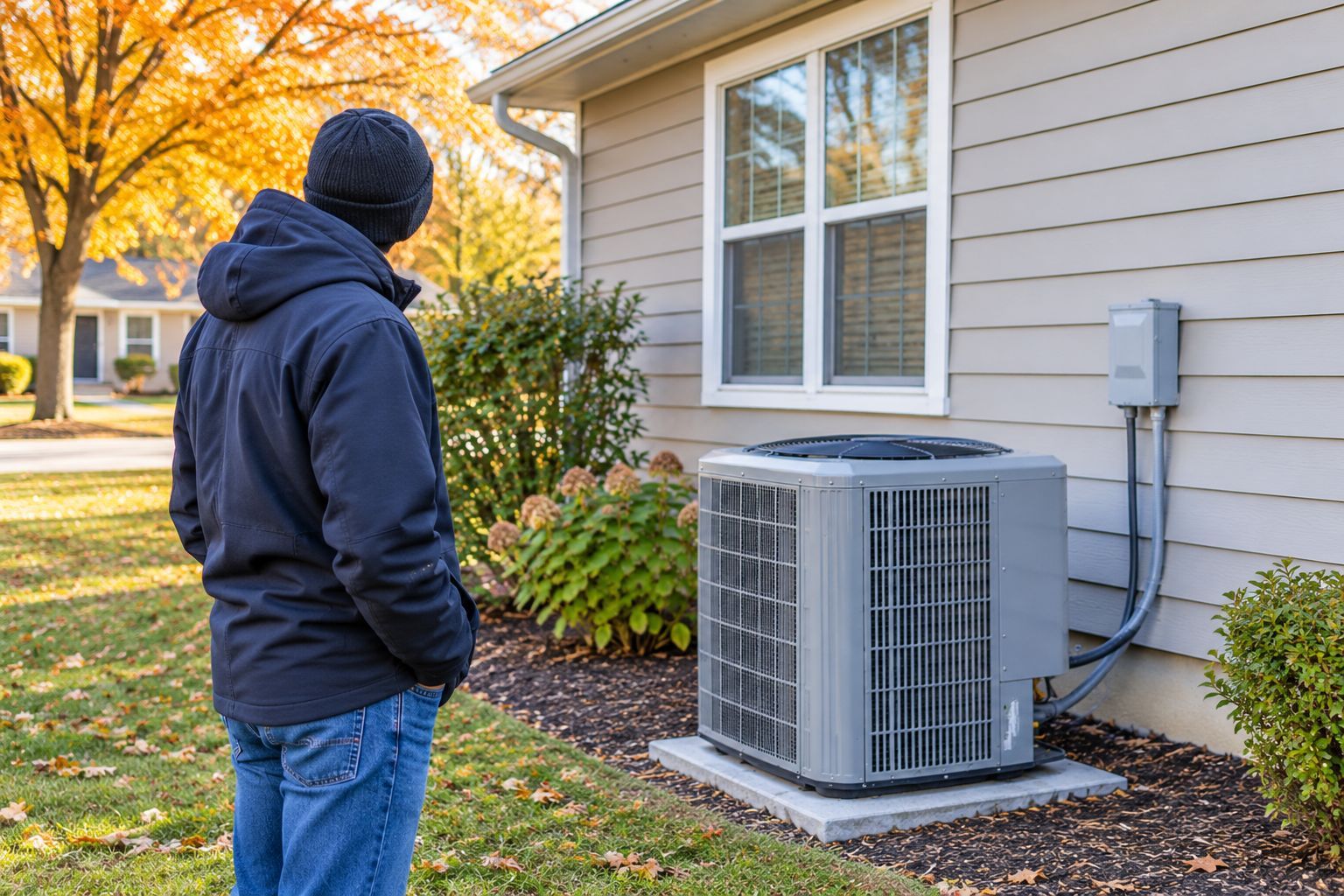
Many homes around the lake run heat pumps. On mild fall days a heat pump usually heats with the outdoor unit alone. On colder mornings, or when you raise the thermostat several degrees at once, many systems also bring on electric backup heat, sometimes shown on the thermostat as "aux heat" or something similar.
Those heat strips may not run at all for months, so the first time they kick on, you may get the same warm-dust smell, even if the heat pump has already been running in heat mode for a few days. Same rule: faint, early, and fading is usually normal. A smell that sharpens, smells electrical, or comes with a breaker trip is not.
The moisture clue: a musty or damp smell
A musty smell is not dust burning off. It is closer to a damp basement, wet cardboard, or a closet that stayed shut too long. When it shows up as the heat starts, it usually points to moisture somewhere along the air path:
- The indoor coil and drain pan. After months of cooling, these were wet for a long time. Warm air moving across them can carry that damp smell into the house.
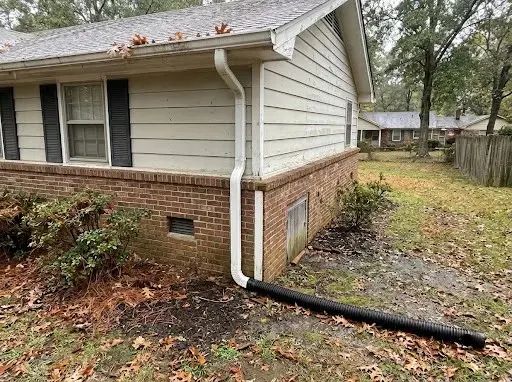
- Ductwork in a crawl space or attic. Ducts that sit in damp space, or that sweated during summer, can hold a musty odor that the first warm air picks up.
- Crawl air pulled into the return. Return-side leaks under the floor can draw crawl space air straight into the system, then send it out every register.
This is where the Guntersville setting matters. Air near the lake often stays moist well into fall, and many older homes here have ductwork running through vented crawl spaces. That combination gives moisture plenty of chances to collect in the system over a long cooling season. More on that load is in why homes near Lake Guntersville have worse humidity problems.
Unlike burning dust, a musty smell often does not fade on its own after a run or two, and it may come back every time the system starts. That makes it worth tracking down rather than waiting out.
A few things you can check without opening any equipment:
- Where is it strongest? At every register, or mostly in rooms over the crawl? Near the return? At the crawl hatch?
- When does it show up? Only in the first moments of airflow, or the whole time the system runs?
- Is it there with the system off? If yes, the source may be the house itself rather than the heating system.
- What does indoor humidity read? An inexpensive hygrometer in the main living area, checked for a few days, tells you whether the house is holding extra moisture. Keep indoor relative humidity under 60 percent. Guidance is in what indoor humidity should be in a North Alabama home.
Our step-by-step guide to locating a musty odor, written for crawl space homes, is how to tell if a musty smell is coming from the crawlspace. If the crawl turns out to be the source, vented versus encapsulated crawl spaces explains the options, and our crawl space encapsulation and moisture control page shows how we approach it.
One thing that is usually not the first answer: duct cleaning. If moisture is the reason the smell exists, cleaning the ducts does not dry the coil, fix a leaky return, or change the air in the crawl. The useful first step is finding where the moisture is.
Shut it off and call: the smells that are not normal
Turn the system off at the thermostat and get help if you notice:
- An electrical or hot-plastic burning smell. This is sharper and more acrid than dust, and can point to wiring, a motor, or another electrical part getting too hot.
- Any smoke from registers or equipment.
- A burning smell that does not fade after a short run, or gets stronger instead of weaker.
- A rotten-egg or gas smell in a home with gas heat or gas appliances. Do not try to find the source. Leave the house, and call your gas utility or 911 from outside.
- A carbon monoxide alarm. Get everyone out of the house and call 911 from outside. Do not go back in until you are told it is safe.
These are the situations where waiting to see if it fades is the wrong approach. Most first-heat smells are not in this group, but these are the ones worth acting on right away.
A calm way to run the heat for the first time
- Put in a fresh filter that fits the slot snugly.
- Make sure registers and returns are not covered by rugs, furniture, or stored items.
- Pick a time when you will be home and awake for the first half hour or so, not right before bed or before leaving.
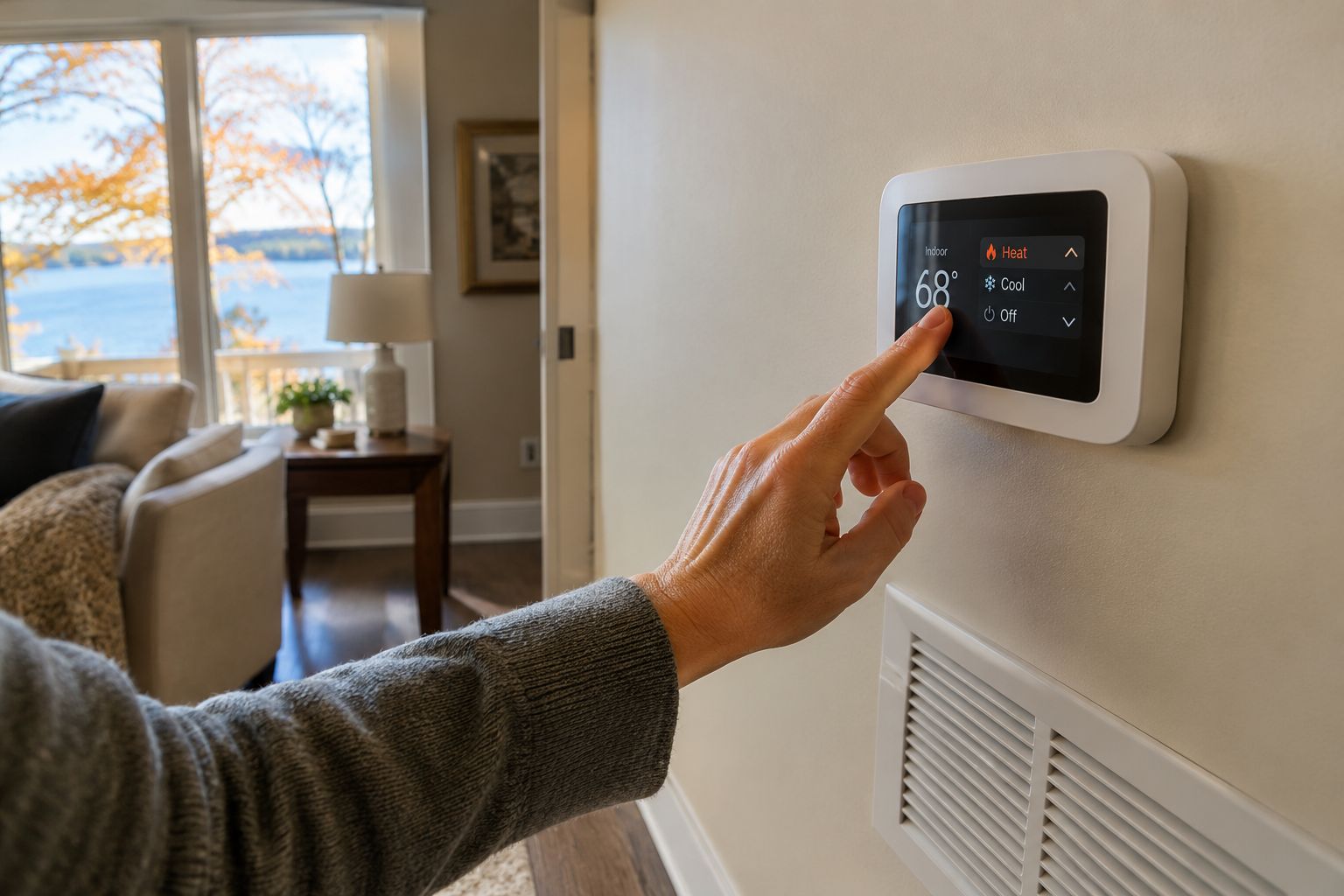
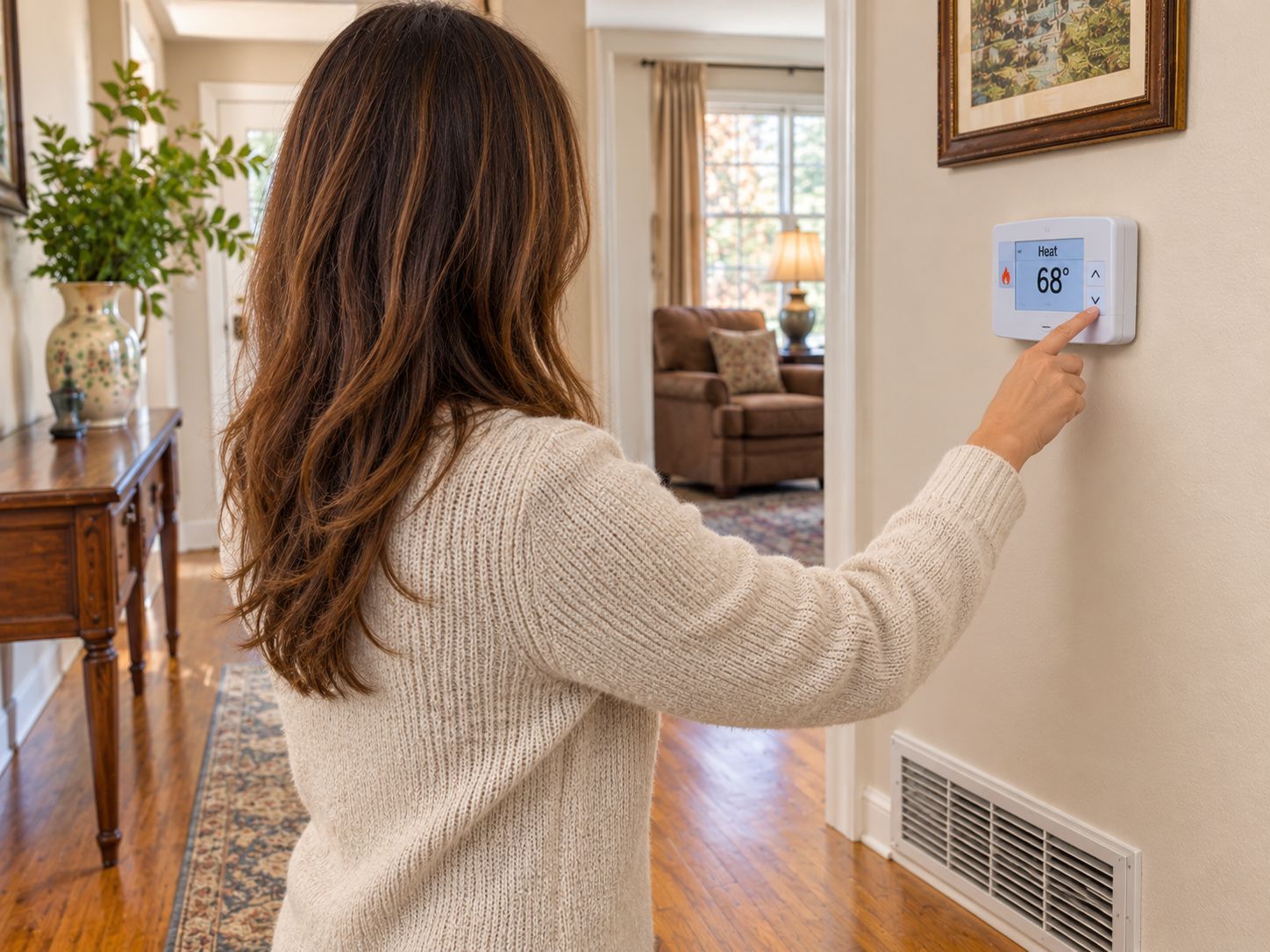
- Set Heat a few degrees above room temperature and stay nearby.
- Notice what the smell is like, where it is strongest, and how long it lasts. A quick note on your phone helps if you end up calling.
- Test your smoke and carbon monoxide alarms around the same time, since fall is a natural reminder.
What to have ready if you call
A few details make a visit faster and more useful: what the smell was like (dust, musty, electrical, gas), when it started, whether it faded, which rooms it was strongest in, what type of system you have (heat pump, gas furnace, or electric), and any humidity readings you took.
A calm next step
If the smell did not fade, smelled electrical, or something else about the first heat run felt off, book a visit for a service call. For non-members, that is an $85 trip and service call. Members on the Home Air Assurance Plan pay $0 for the trip and get 10% off repairs. More on repair visits is on our heating repair page.
If the smell is musty and you suspect the crawl space, ask for a crawl space inspection when you book, so the space under the house and the ductwork in it get looked at directly. If you would rather see what the air is doing over time, our Home Air Health Study places monitors in the home for about seven days to track particles, chemical compounds, carbon dioxide, temperature, and humidity. You get an Air Health Scorecard and the top three next moves. We do not diagnose medical conditions.
Call
256-203-6612, Monday-Friday, 7:30 a.m.-5:00 p.m. CT. Dickerson Services
is at 2151 Hopewell Rd in Guntersville. For a gas smell or a carbon monoxide alarm, leave the house and call your gas utility or 911 first.
Frequently Asked Questions
Is it normal for the heat to smell like burning the first time I turn it on?
Usually, yes, if it smells like warm dust and fades. Dust collects on heating parts over the summer and burns off on the first run. It often fades within a short run or the first few cycles. If it smells electrical or like hot plastic, comes with smoke, or does not fade, turn the system off and call.
How long should the first-heat dust smell last?
Often only a short run, sometimes lingering lightly through the first few cycles or the first day of use. A smell that hangs on well past that, or gets stronger, is worth a call. A fresh filter before the first run helps keep the smell short.
Why does my heat smell musty instead of dusty?
A musty smell usually points to moisture rather than dust. Common sources are the indoor coil and drain pan after a long cooling season, ductwork in a damp crawl space or attic, or crawl air being pulled in through return leaks. It tends to come back each time the system starts, so it is worth tracking down with a crawl inspection or a Home Air Health Study.
Why does my heat pump smell like burning dust days after I switched to heat?
It may be the first time the electric backup heat strips have run. Many heat pumps only bring those on during colder mornings or when the thermostat is raised several degrees. Their first run of the season can give off the same dust smell. If it fades, that is usually normal. If it smells electrical or trips a breaker, shut it off and call.
What should I do if I smell gas or rotten eggs when the heat comes on?
Leave the house without trying to find the source, and call your gas utility or 911 from outside. If a carbon monoxide alarm sounds, get everyone out and call 911 from outside. Once you are safe and the utility or responders have cleared the house, call us to look at the heating system.
Share this article