
When Should Guntersville Homes Switch From AC to Heat?
October 24, 2026
Bring the RH log, the cycle times, and the forecast dew points from the same days. The rest should be measured.
A calm next step if you want data, not a pitch
If you want the smell located with numbers instead of a one-afternoon guess, the offer that matches this question is the Home Air Health Study.
Monitors stay in the home for about seven days. You get a scorecard and the top three moves that fit this house — which may or may not include the crawl. The Study explains what the air is doing. It is not a medical exam, and it does not promise that a product will make a smell disappear.
If you would rather talk it through first, call (256) 203-6612, Monday–Friday, 7:30 a.m.–5:00 p.m. You can also book a visit. Dickerson Services is at 2151 Hopewell Rd in Guntersville and works with homeowners across North Alabama.
Bring where the smell is strongest, when it shows up, and any humidity readings you took. The rest should be measured.
Short answer
Do not flip to Heat on the first cool morning if afternoons are still warm and humid. Across North Alabama, cool mornings usually show up weeks before daytime highs drop your AC need. Watch overnight lows, dew point, and how the house feels across a full day. Switch to Heat when mornings and evenings stay cool and afternoon cooling is no longer needed. Then confirm heat actually runs before the first hard cold.
The first cool morning feels decisive. Coffee on the porch. Light jacket. The thermostat still says Cool from August.
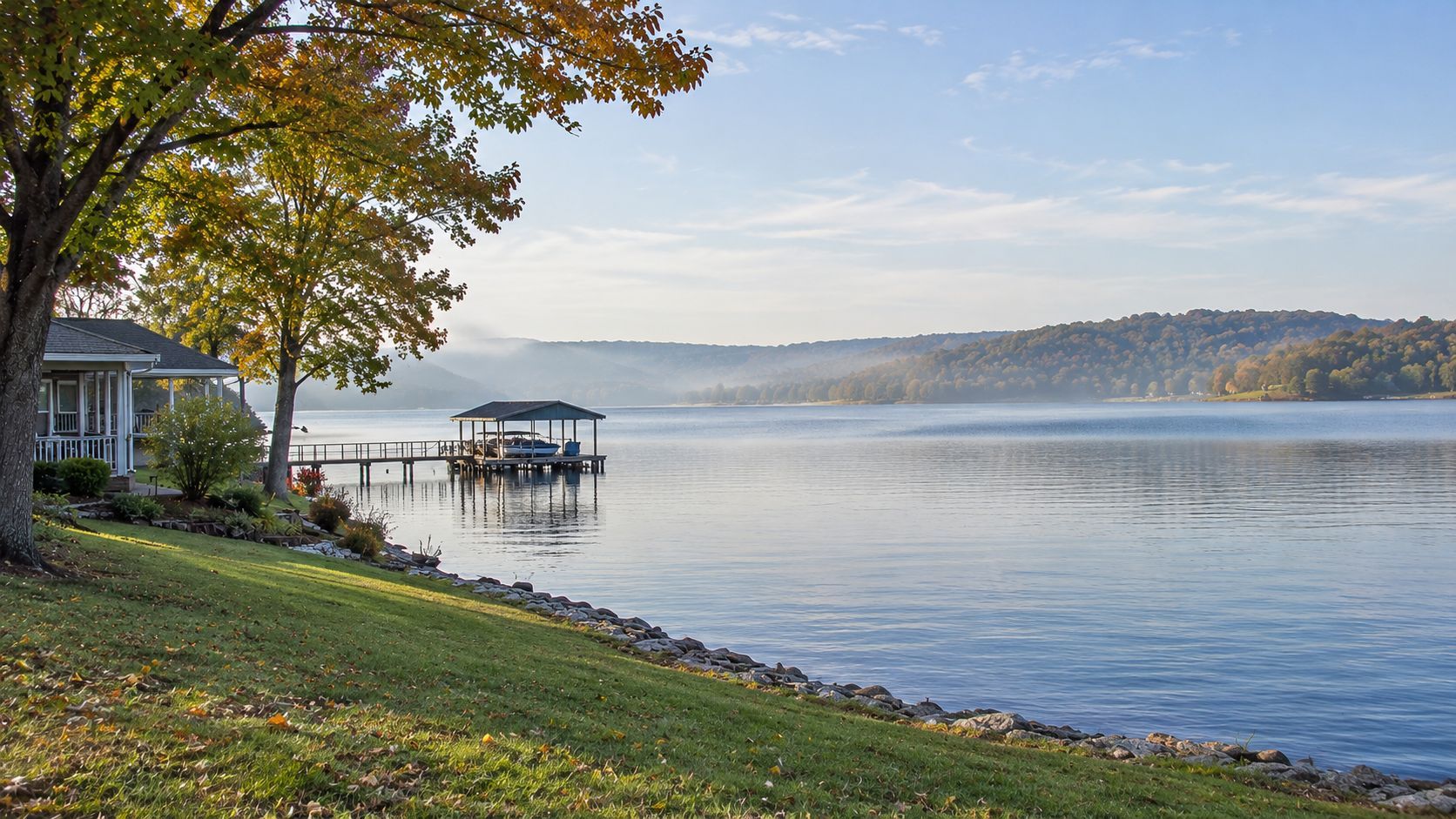
By mid-afternoon the air can feel mild again, and a little sticky. That is ordinary shoulder-season weather in this part of Alabama. Overnight lows ease first. Daytime highs stay in a range where many homes still want cooling if the house feels close or heavy. Near Lake Guntersville, a damp or foggy morning can feel especially cool even when shoreline nights are not colder than inland lots (warm reservoir water often keeps near-shore nights milder). Flipping to Heat on that first cool morning is not the same decision as preparing for the first hard cold.
Related reading on moisture near the water (different questions from mode timing):
why homes near Lake Guntersville have worse humidity problems,
September sticky house near the water, and the
open windows or AC dew-point guide.
Why shoulder season is a timing problem
North Alabama sits in a humid subtropical pattern: long warm seasons, and moisture that does not leave just because the calendar says fall. Local climate averages for the Guntersville area (long-term normals, not a forecast for your street this week) show September nights that are often still relatively mild, then October nights that trend cooler while many afternoons remain comfortable. Early October often lands near the upper 50s at night and the upper 70s by day. Late October often trends toward upper-40s lows and upper-60s highs. That is climate guidance. No single outdoor temperature tells every house when to switch.
So the shoulder-season trap is simple:
- Overnight lows ease for a stretch of mornings.
- Morning feels like "time for heat."
- Afternoon stays mild and often still humid.
- Heat mode for a short morning, then a house that feels wrong by dinner, or cooling that never got a fair day to finish moisture work.
- The first real cold snap arrives, and nobody has confirmed heat actually runs.
Watch your overnight lows, your afternoon feel, and the forecast dew point on the same days. Use the full day, not one chilly breakfast.
What usually happens in the shoulder season
Likely: cool mornings before true heating weather. Late September into October often brings mornings that feel like fall while afternoons still sit in a range where many homes are comfortable without heat, and some still benefit from cooling if indoor air feels heavy. Local climate guidance, not a remote rule for your thermostat.
Likely: mornings easing weeks before afternoons drop the AC need. Normals put cool overnight air ahead of the day when highs finally sit low enough that cooling is idle. Early October highs near the upper 70s still leave room for afternoon Cool. Late October highs nearer the upper 60s make Heat more plausible for more of the day. Near the lake, damp or foggy mornings can feel cooler than the number suggests, without meaning nights are colder than inland.
Likely: flipping Heat too early creating a comfort mismatch. Short morning heat, then a warm humid afternoon, is a common homeowner pattern. The thermostat did what you asked. The day did not agree. Waiting until mornings and evenings stay cool, and afternoon cooling is no longer needed for how the house feels, is the steadier timing.
Possible: humidity still mattering on mild days. If the house feels sticky while outdoor temperatures look easy, that is the September-sticky pattern, not proof you need heat. Keep indoor relative humidity under 60 percent when you are still in cooling season. On Dickerson's live humidity posts, a comfortable summer living-space range is often 45–55 percent. Mode switch and moisture control are related neighbors, not the same fix. See what indoor humidity should be in a North Alabama home.
Possible: heat pump and furnace feeling different at the vents. From a homeowner seat: a heat pump in heat mode often delivers steadier, lower-temperature air and longer runtimes on mild cool days. A furnace often delivers hotter blasts and shorter cycles. Neither description is a brand pitch. Neither tells you the system is "broken" without a visit. For equipment choice context, see heat pump vs air conditioner in North Alabama.
Possible: an old system that has not run in heat for months. Filters clogged, thermostat set wrong, outdoor unit blocked, or a system that simply does not respond when you ask for heat. That is why a calm test before the first hard cold beats learning on a 28-degree morning.
What to watch before you flip the switch
Overnight lows across several days, not one morning. Write the morning low and how the house felt at breakfast, mid-afternoon, and evening. One cool dawn is common before a stretch of true heating weather.
Afternoon feel and whether cooling still helps. If the house still wants Cool to feel right after lunch, Heat is early. If evenings stay cool and afternoon cooling is idle for days, Heat is earning a trial.
Forecast dew point on the same days. Dew point is the moisture clue. A cool morning with a still-elevated dew point can leave the house feeling closer than the thermometer suggests. You are pairing temperature timing with moisture context.
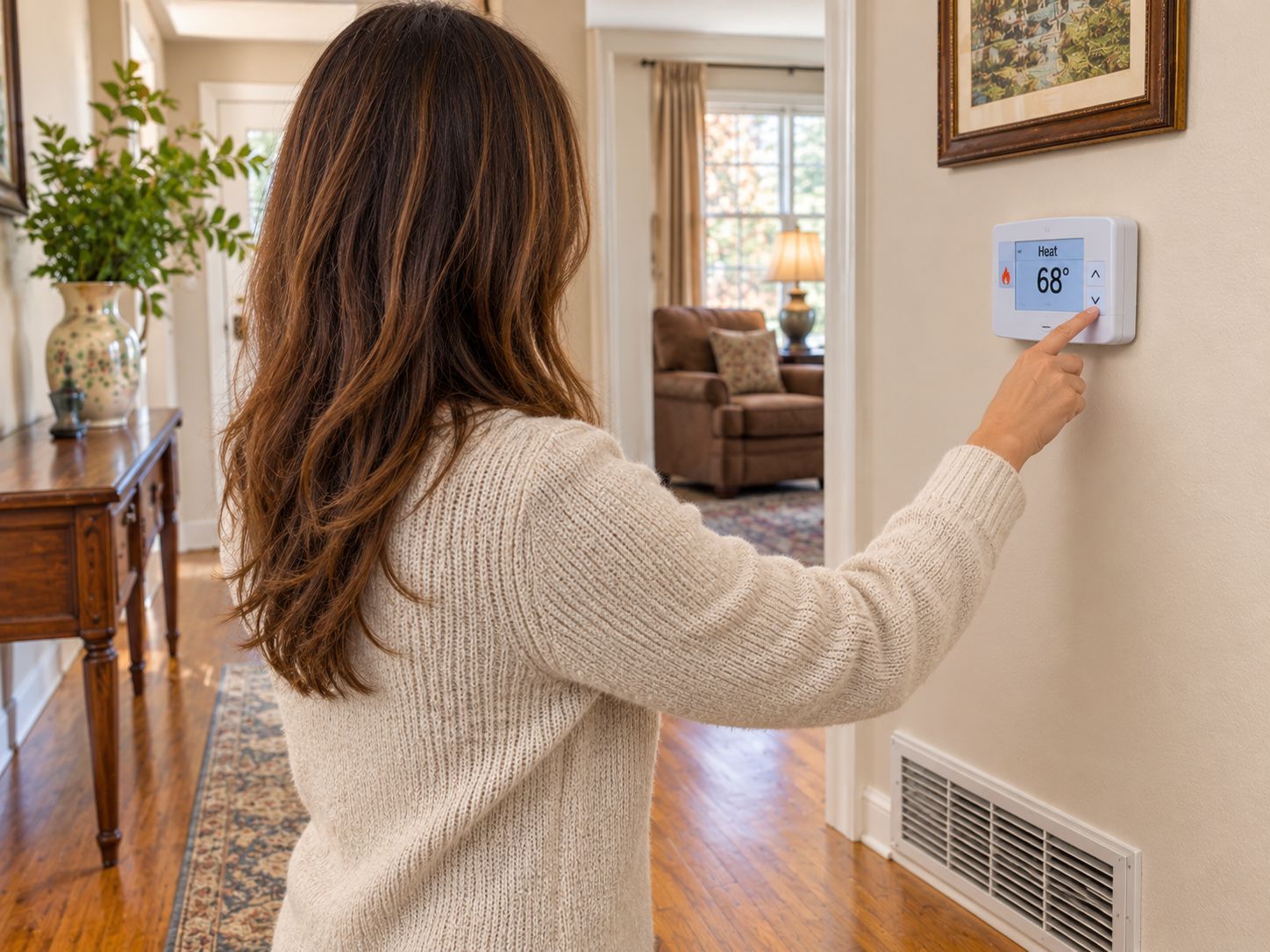
Thermostat mode and fan. When you trial Heat, set Heat and AUTO. Give the system time to answer. Do not judge a heat pump by furnace-blast expectations on a 55-degree afternoon.
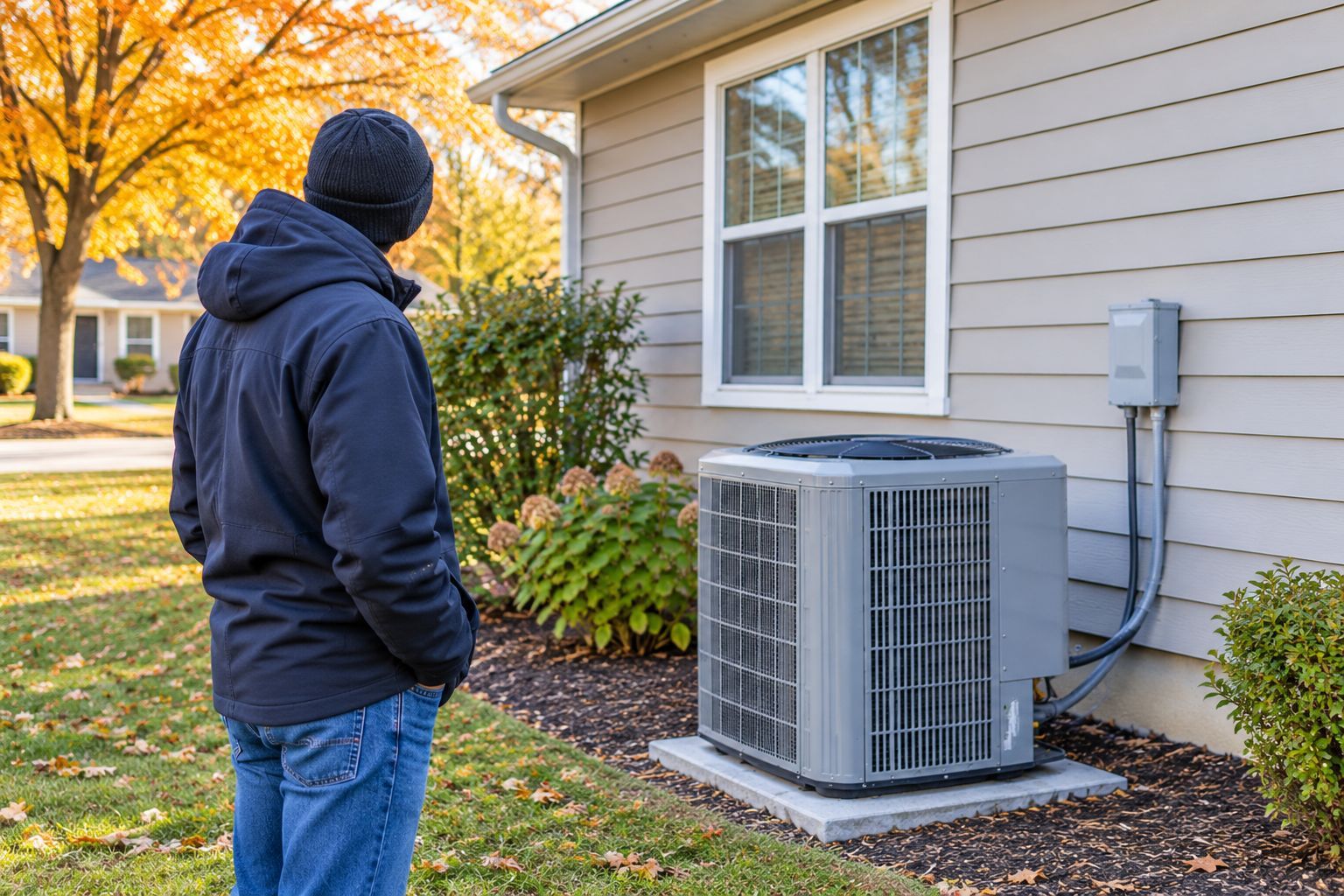
A calm heat test before the first hard cold. On a cool morning that is not an emergency night: set Heat a few degrees above room temperature. Does the system start? Do registers eventually feel warmer than the room? Do rooms respond over a reasonable run? Does anything obvious look blocked at the outdoor unit or filter? You are confirming response. If nothing happens, or only some rooms answer, that is a visit, not a parts guess from this article.
Filter and clear outdoor area. A dirty filter and a buried outdoor unit are ordinary reasons heat feels weak. They are not a full diagnosis.
For service paths when something is wrong, see
heating repair and
maintenance and tune-ups. For whole-system context, see
heating and cooling.
If you wait, and if you rush
Waiting through a stretch of cool mornings while afternoons stay mild is usually comfort management, not neglect. Rushing Heat on the first cool chill can leave you bouncing modes all week. The costly pattern is the opposite extreme: never testing heat until the first hard cold, then discovering the system does not respond when every neighbor wants the same emergency slot.
Older equipment deserves an earlier, calmer check. Age alone does not mean replace. It does mean diagnose before you sell yourself a system, and before a freezing morning decides your schedule.
A calm next step: test heat, then decide
If the equipment is older, or you are already thinking about replacement options, the matching invite is the Initial Comfort Plan. It is free. The in-home visit is about 60–90 minutes and starts with a comfort assessment that looks at temperature consistency, airflow balance, humidity levels, and indoor air quality. You leave with a written Comfort Options Report (likely load range, your goals, and a clear equipment options chart) so sizing and comfort get into the conversation before a panic swap.
If you are unsure heat will run, hear odd noises, or have one cold room after you have tried the basics, book a visit. For non-members, that is an $85 service call. Members on the Home Air Assurance Plan pay $0 for the trip (no trip or service call fee); you only pay for approved repair work, with the member discount. Bring notes: when you switched modes, what the afternoon felt like, and whether heat answered at the registers.
If you want a week of logged indoor data instead of one afternoon, the Home Air Health Study places monitors for about seven days. You get an Air Health Scorecard and the top three next moves. We do not diagnose medical conditions.
If replacement is already clearly on the table after a fair test, heating replacement and installation is the service path, after measurement, not instead of it.
Call
256-203-6612, Monday–Friday, 7:30 a.m.–5:00 p.m. CT. Dickerson Services
is at 2151 Hopewell Rd in Guntersville. Bring the morning/afternoon notes and what happened when you asked for heat.
Frequently Asked Questions
When should I switch from AC to heat in Guntersville?
Switch to Heat when mornings and evenings stay cool for several days and afternoon cooling is no longer needed for how the house feels, not on the first cool morning while afternoons are still mild and humid. Cool mornings usually arrive weeks before highs drop your AC need (early October often upper-50s lows / upper-70s highs; late October often upper-40s / upper-60s). Near the lake, damp or foggy mornings can feel especially cool. Use the full day, overnight lows, dew point context, and house feel. Local climate guidance, not a single magic outdoor number.
Why do cool mornings arrive before I need heat all day?
Overnight lows ease weeks before daytime highs fall enough that cooling is idle. That is ordinary North Alabama shoulder-season weather, not a signal that winter started for the thermostat. Near Lake Guntersville, damp or foggy mornings can feel cooler than the forecast number without meaning nights are colder than inland lots. Warm reservoir water usually keeps shoreline nights milder. Use the full day, not the porch at 7 a.m.
Heat pump or furnace: what should I notice as a homeowner?
At the vents, heat pumps often feel like longer, gentler warm air on mild cool days; furnaces often feel like hotter, shorter blasts. Set Heat, give the system time, and judge whether rooms respond. Do not expect furnace-blast air from a heat pump on a 55-degree afternoon. Equipment choice detail lives on the heat-pump-versus-AC article; this page is about timing and whether heat runs.
When should I test heat before the first hard cold?
On a cool, non-emergency morning in the shoulder season, ideally before the first stretch of hard cold. Set Heat a few degrees above room temperature. Confirm the system starts, air at the registers eventually feels warmer than the room, and rooms respond. Check the filter and that the outdoor unit is not blocked. If nothing happens, book a visit. Do not wait to learn on the coldest night of October.
Should I book an Initial Comfort Plan or an $85 service call?
Use the free Initial Comfort Plan (60–90 minutes) if equipment is older or you want options before replacement. The visit evaluates temperature consistency, airflow balance, humidity, and air quality, then leaves you with a Comfort Options Report. Use an $85 service call (non-members) via book a visit when you need a repair-style visit, including when you are unsure heat will run. Home Air Assurance members pay $0 for the trip. Membership details are on the Home Air Assurance Plan page.
Share this article