
Why Are My Vents Sweating in the Fall? A Guntersville Guide to Wet Registers on Mild, Humid Days

November 7, 2026

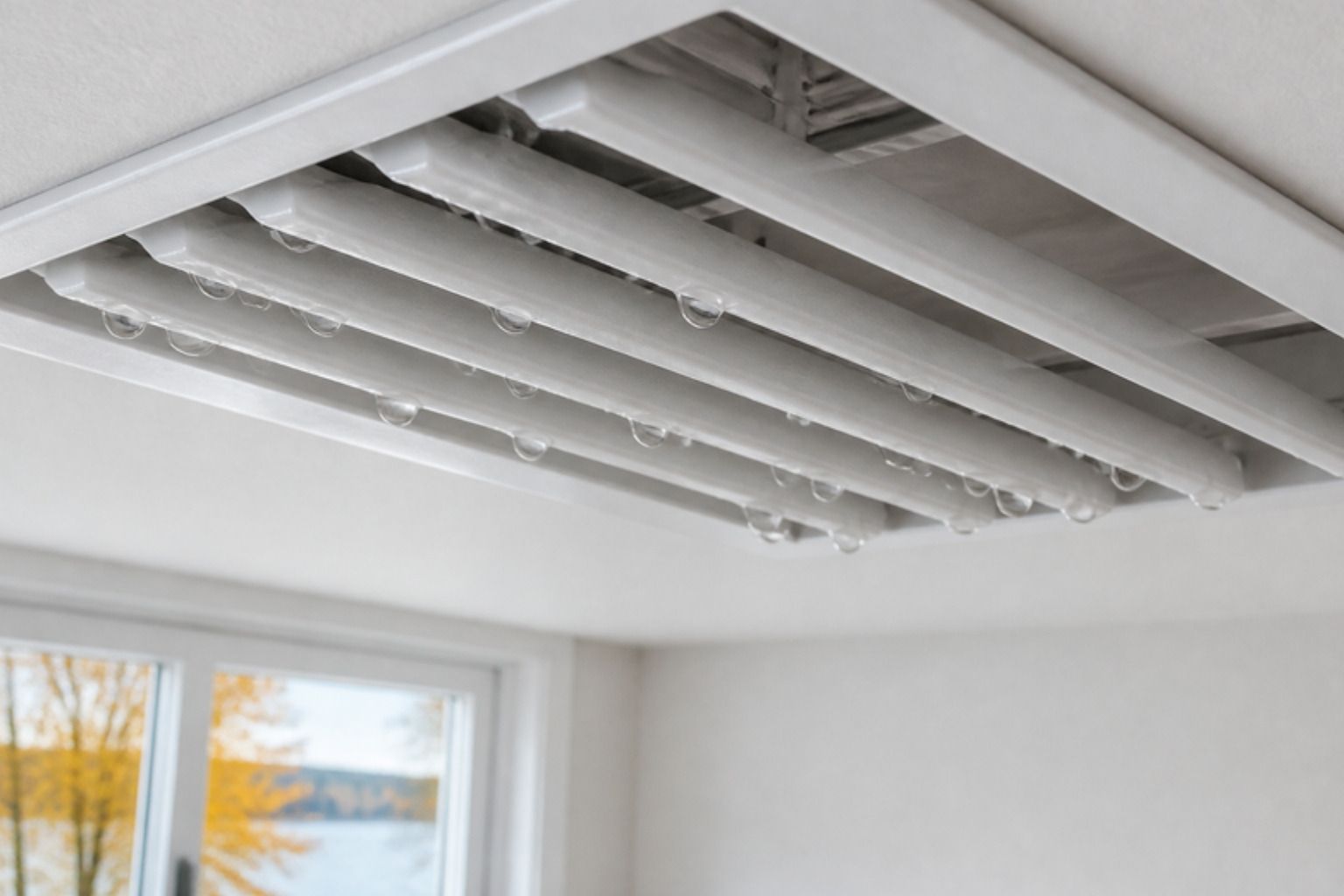
If a vent is sweating on a mild fall day, the room air is usually too damp for how cold the air coming out of that vent is. When the AC runs, the register gets cold. If the air around it holds enough moisture, that moisture condenses on the metal, the same way a cold drink sweats on a porch table.


It is usually not a leak, not a broken duct full of water, and not something duct cleaning fixes. It is a sign the house is holding more moisture than it should. Around Guntersville, where the lake keeps the air damp much of the year, that is a common fall pattern.

Quick Answer

A vent sweats when the metal is colder than the dew point of the air in the room. In the fall, that usually happens on a mild, humid day when the AC kicks on for a short run: the supply air is cold, the room air is damp, and water forms on the register. Damp air often gets into the house from windows left open on cool, wet nights, from rain, or from leaky return ducts in the attic or crawl. Keep indoor humidity under 60 percent, keep windows shut on damp days, run the fan on Auto, and have the return ducts checked if it keeps happening. It is a humidity problem, not dirty ducts.

Why it shows up in the fall

Most people expect sweating vents in August, not November. Fall sets up its own version:


  • Open windows on cool, damp nights. A 60-degree night can feel crisp and still be close to saturated, especially near the water. Leave the windows open and the house fills with that moisture. The next afternoon warms up, the AC comes on, and the first cold air hits a room full of damp air.
  • Short AC runs. On a mild day the air conditioner may run for only a few minutes at a time. That is long enough to make the registers cold, but often not long enough to pull much moisture out of the house.
  • Rain and wet ground. After a fall rain, outdoor air and the ground around and under the house stay wet. More of that moisture finds its way inside.
  • The fan left on. With the thermostat fan set to On instead of Auto, the blower keeps running between cycles and can push moisture from the wet coil back into the rooms.


Mild fall days in Guntersville can feel damper than July for many of the same reasons. That pattern is covered in why your Guntersville house feels stickier on a mild September day.

The lake-area piece

Homes close to the water live in moist air for much of the year. That does not cause sweating vents by itself, but it means the margin is smaller: a few open-window nights, a leaky return, or an oversized system that short-cycles can push indoor humidity high enough for the registers to sweat. More on that in why homes near Lake Guntersville have worse humidity problems.

How cold air and damp air make water

Every room has a dew point, the temperature where its air starts leaving water on a surface. The damper the air, the higher the dew point. As a rough example only, a room around 72°F at about 60 percent humidity has a dew point somewhere in the upper 50s. Air leaving an AC coil is often in the 50s too. Put those together and the register can sit right at or below the dew point, and it beads up.


Bring the room down to around 45 to 55 percent and the dew point drops well below the register temperature. The same vent stays dry. For the full late-summer explanation with more examples, see why supply vents sweat or drip in late summer.

One quick way to sort it out: try it in heat mode

Condensation on a register only happens when the air coming out is colder than the room. Once you switch to heat, the supply air is warm and a register cannot sweat from room air.


  • Wet only when the AC runs: almost always condensation. Read on.
  • Wet with the heat on, or with the system off: that points somewhere else, such as a roof or plumbing leak above the ceiling, a drain problem at equipment in the attic, or water inside the duct. Turn the system off if water is dripping and call for a service visit.


If you are close to switching over for the season, when to switch from AC to heat in Guntersville covers timing.

Where the extra moisture usually comes from

  • Leaky return ducts. A return that is loose or unsealed in the attic or crawl pulls in damp air from that space and sends it through the house. This is one of the most common feeders, and it is easy to miss because you cannot see it from the living space.
  • A damp crawl space. In homes with vented crawls, wet air under the floor rises into the house through gaps and duct leaks. See crawl space encapsulation and moisture control.
  • Everyday moisture. Showers without a working bath fan, cooking, drying clothes indoors, and lots of houseplants all add up in a closed house.
  • Equipment that short-cycles. An oversized system cools the air fast and shuts off before it has dried much. The bigger picture is in why your North Alabama home still feels humid with the AC running and what causes high humidity in your Alabama home.

What helps, and what does not

Usually helps:


  • Put an inexpensive hygrometer in the main living area and one in the room with the wet vent. Keep indoor relative humidity under 60 percent; many homes feel best around 45 to 55 percent. See what indoor humidity should be in a North Alabama home.
  • Keep windows closed on nights that are cool but damp, foggy, or rainy.
  • Set the thermostat fan to Auto.
  • Run bath fans during and after showers, and use the range hood when cooking.
  • Have the return ducts and the crawl or attic checked if the sweating keeps coming back.


Usually does not help:


  • Duct cleaning. The water is condensing out of the room air. It is not coming from dust in the ducts.
  • Closing the register. That moves the problem to another room and can throw off airflow for the whole system.
  • Wiping it and waiting. The vent will dry once the AC stops, but the moisture that caused it is still in the house.

Not the same as water at the air handler

Water dripping from the indoor unit, in the pan under it, or on the closet or attic floor is a different problem, usually a drain issue. Start with clogged AC drain line. Ice on the copper lines or the coil is a different failure again and needs a service call.

A calm next step

If the vents sweat once after an open-window night and then stop, lowering humidity may be all you need. If it keeps happening, or water drips from a ceiling vent, book a visit. A service call is $85 for non-members, and Home Air Assurance Plan members pay no trip fee. We check the system, the return ducts, and where the moisture is coming from before recommending anything. More on that work is on our AC repair page.


If the moisture seems to be coming from under the house, ask for a free moisture inspection quote. You can book a visit online or call 256-203-6612, Monday-Friday, 7:30 a.m.-5:00 p.m. CT. Dickerson Services is at 2151 Hopewell Rd in Guntersville. Bring your humidity readings and a note of when the vents sweat.

Frequently Asked Questions

  • Why are my AC vents sweating in the fall?

    Because cold air from the AC is making the register colder than the dew point of damp room air. In fall that often follows open-window nights, rain, or short AC runs on mild days that cool the house without drying it much.

  • Is a sweating vent dangerous?

    A few beads now and then is not an emergency. Repeated dripping can stain ceilings, damage paint and drywall around the vent, and is a sign indoor humidity is too high, so it is worth fixing rather than ignoring.

  • Will duct cleaning stop my vents from sweating?

    No. The water condenses out of the room air when it touches the cold metal. Lowering indoor humidity and sealing leaky return ducts are what usually stop it.

  • Should I close a vent that keeps sweating?

    Closing it is not a fix. It moves the cold air somewhere else and can upset airflow for the whole system. Bring the humidity down instead and have the ducts checked if it keeps happening.

  • My vent is wet even with the heat on. What does that mean?

    It is probably not condensation, because heated air cannot make a register sweat from room air. Look for a roof or plumbing leak, a drain problem at equipment in the attic, or water in the duct, and call for a service visit if it is dripping.

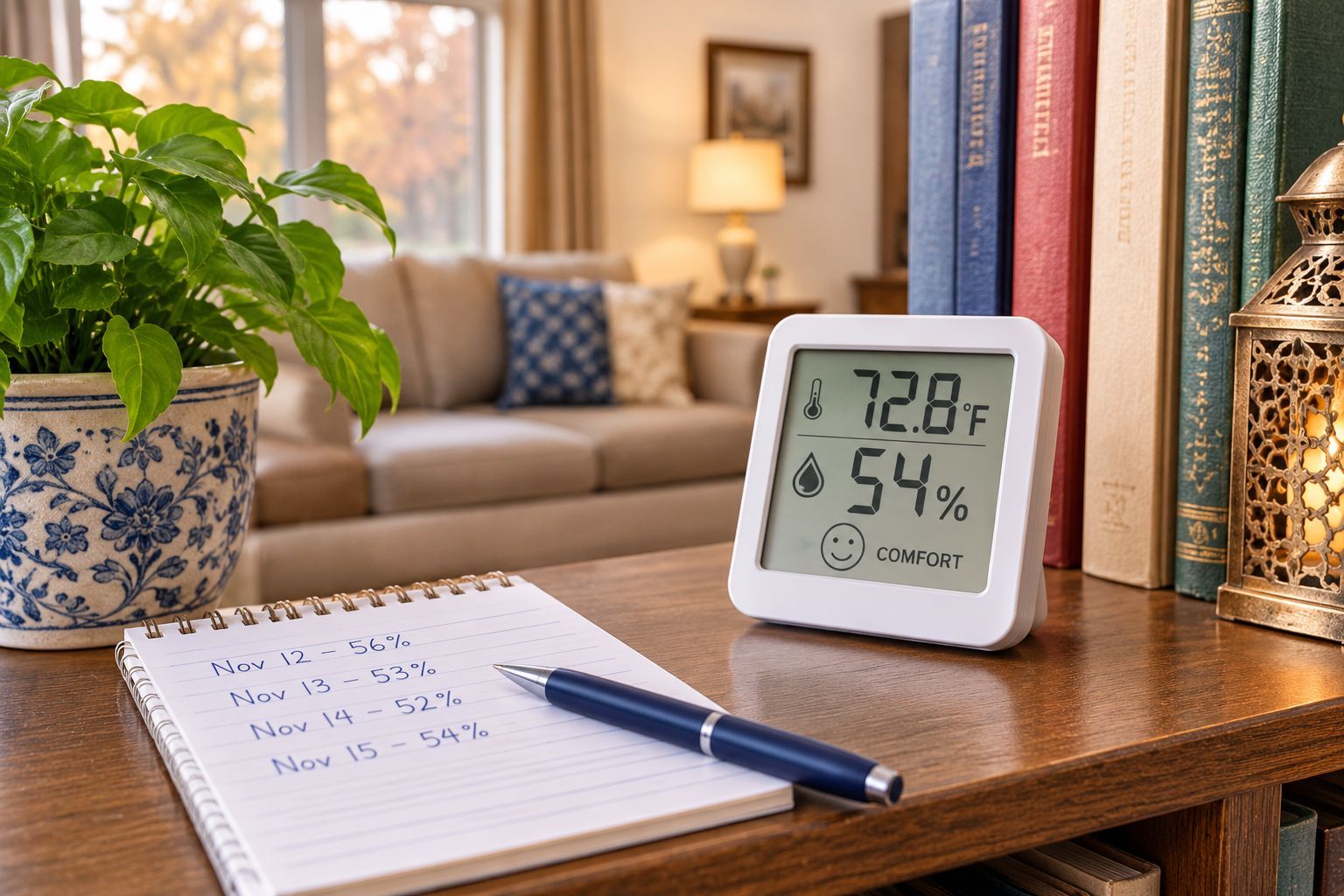
Digital hygrometer and handwritten humidity log on a living room shelf in an Arab home in late fall.
November 17, 2026
Your Arab home's humidity swings between mild damp days and cold snaps. How to log it across the season, what range to aim for, and what a high reading means.
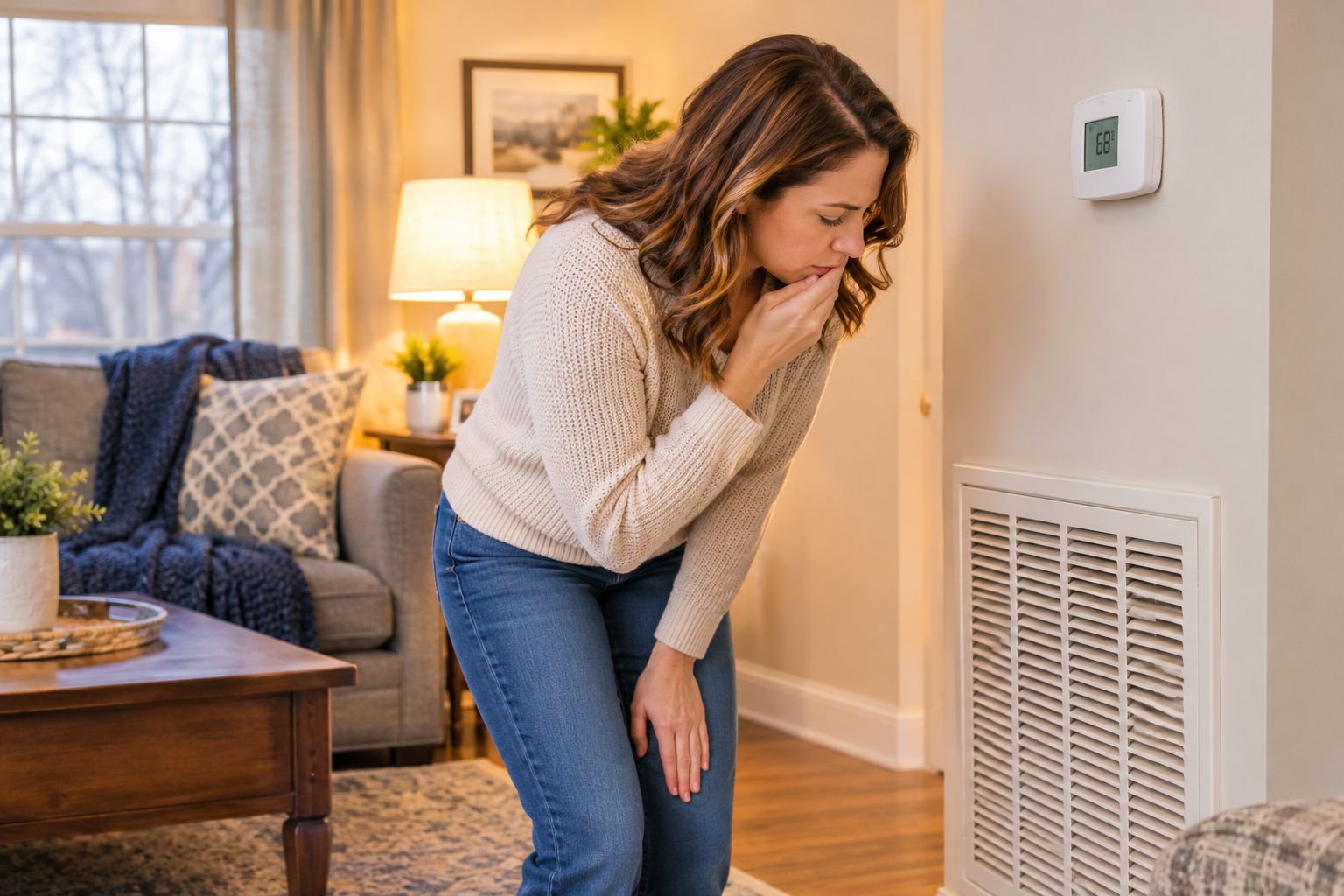
Homeowner checking for a musty smell near a return grille in a closed-up Huntsville crawl space home
November 14, 2026
A musty smell after the house closes up for winter often points to crawl moisture, not the heater. Three simple tests to tell which, for Huntsville crawl homes.
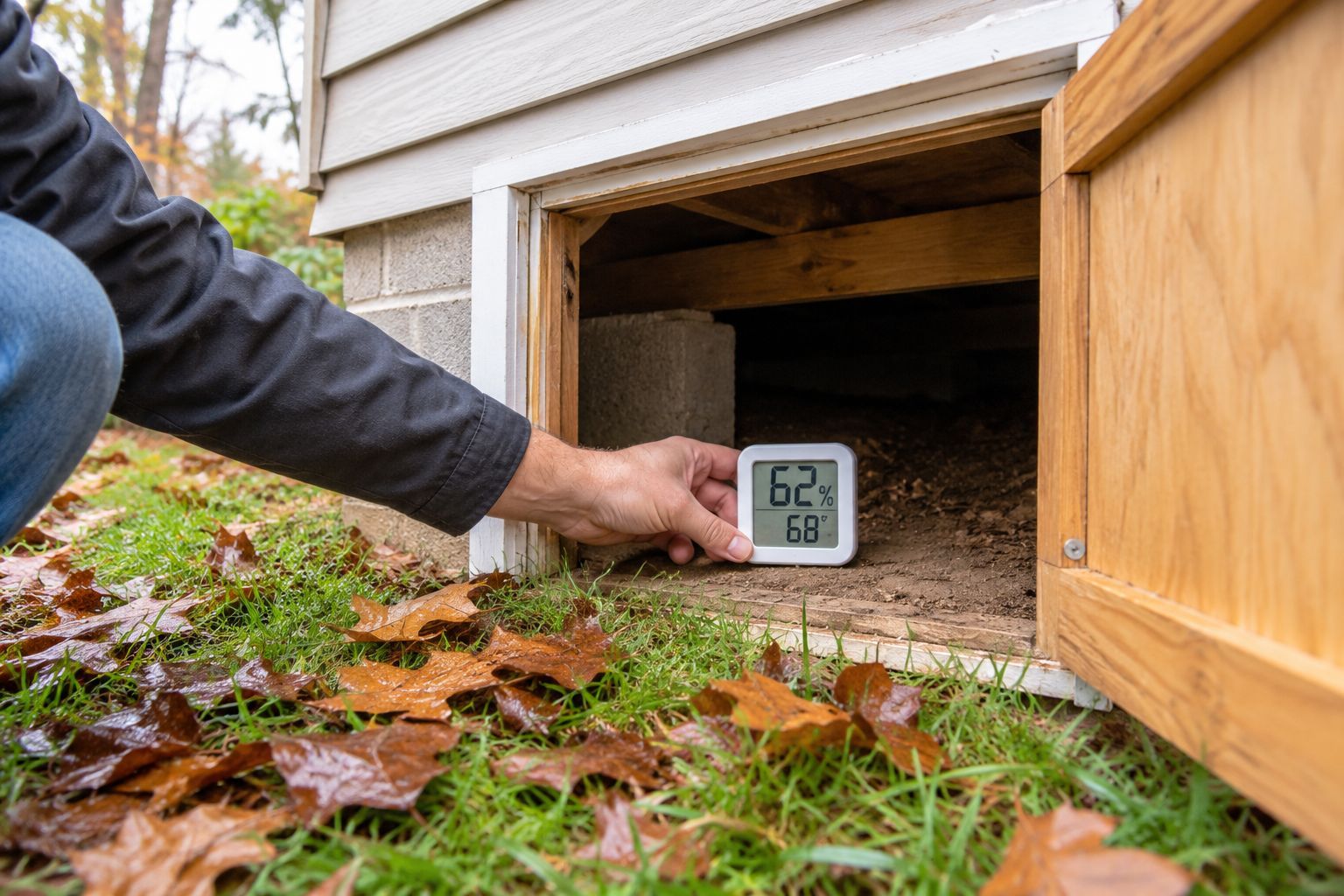
Hand placing a small digital thermometer/hygrometer under a house crawlspace door
November 12, 2026
If your Guntersville crawl stays damp long after a storm, water or wet air is getting in faster than it leaves. A simple dry-down log and what it tells you.
Digital hygrometer and handwritten humidity log on a living room shelf in an Arab home in late fall.
November 17, 2026
Your Arab home's humidity swings between mild damp days and cold snaps. How to log it across the season, what range to aim for, and what a high reading means.
Homeowner checking for a musty smell near a return grille in a closed-up Huntsville crawl space home
November 14, 2026
A musty smell after the house closes up for winter often points to crawl moisture, not the heater. Three simple tests to tell which, for Huntsville crawl homes.
Hand placing a small digital thermometer/hygrometer under a house crawlspace door
November 12, 2026
If your Guntersville crawl stays damp long after a storm, water or wet air is getting in faster than it leaves. A simple dry-down log and what it tells you.

Share this article