
Indoor Humidity in Arab as Fall Turns to Winter: How to Measure Your Home's Real Range

November 17, 2026

Your home does not have one humidity number in late fall. It has a range, and it moves with the weather. Aim to keep it under 60 percent on mild, damp days. When cold weather settles in, expect it to drift lower, and treat a house that stays high during a cold snap as a sign that moisture is coming from somewhere inside the building.


The way to know your range is to measure it across a few kinds of weather, not to trust one reading. That matters in Arab, where many older homes on Brindlee Mountain sit over vented crawl spaces and where late fall often swings between mild, humid stretches and sharp cold fronts.

Why the number moves so much this time of year

Relative humidity is how full the air is of moisture compared with how much it could hold at that temperature. Two things are changing in late fall.

  • Outdoor air gets drier as it gets colder. Cold air simply cannot hold much moisture. When that air leaks into the house and warms up, its relative humidity drops. That is why many homes read lower once real cold arrives.
  • Mild, damp days still show up. A warm front or a rainy stretch can bring back muggy air for a few days. If the heat pump or AC barely runs, very little moisture gets removed, and the indoor number climbs. That pattern is covered in why your Arab house feels sticky on mild fall days.


One more piece: heating does not dry the air. A heat pump or furnace warms the air, which lowers the relative humidity reading, but it does not remove water. If the house has a steady moisture source, the heat just hides part of it.

What range to aim for

  • All year: keep indoor relative humidity under 60 percent.
  • Mild, damp fall days: many homes feel comfortable around 45 to 55 percent.
  • Cold weather: a lower range is normal, and many homes do fine somewhere in the 30s to 40s. The colder it gets outside, the lower the indoor number usually needs to be to keep the inside of the windows from fogging.
  • Very low: if the house drops well below about 30 percent for long stretches, it can feel dry, with more static shocks and gaps in wood floors and trim. That is a comfort and house issue, and it usually points to air leaks bringing in lots of cold outdoor air.


For how to read a meter and why outdoor humidity on your phone is not the indoor target, see what indoor humidity should be in a North Alabama home.

Your windows are a free second gauge

On a cold morning, look at the inside of your windows, especially older single-pane or aluminum-frame windows, and the bottom corners of the glass. A little fog at the edges on the coldest mornings can happen. Water running down the glass, puddles on the sill, or fog on most windows means the indoor air is holding more moisture than those surfaces can handle at that temperature. That is useful information even without a meter.

How to measure your home's real range

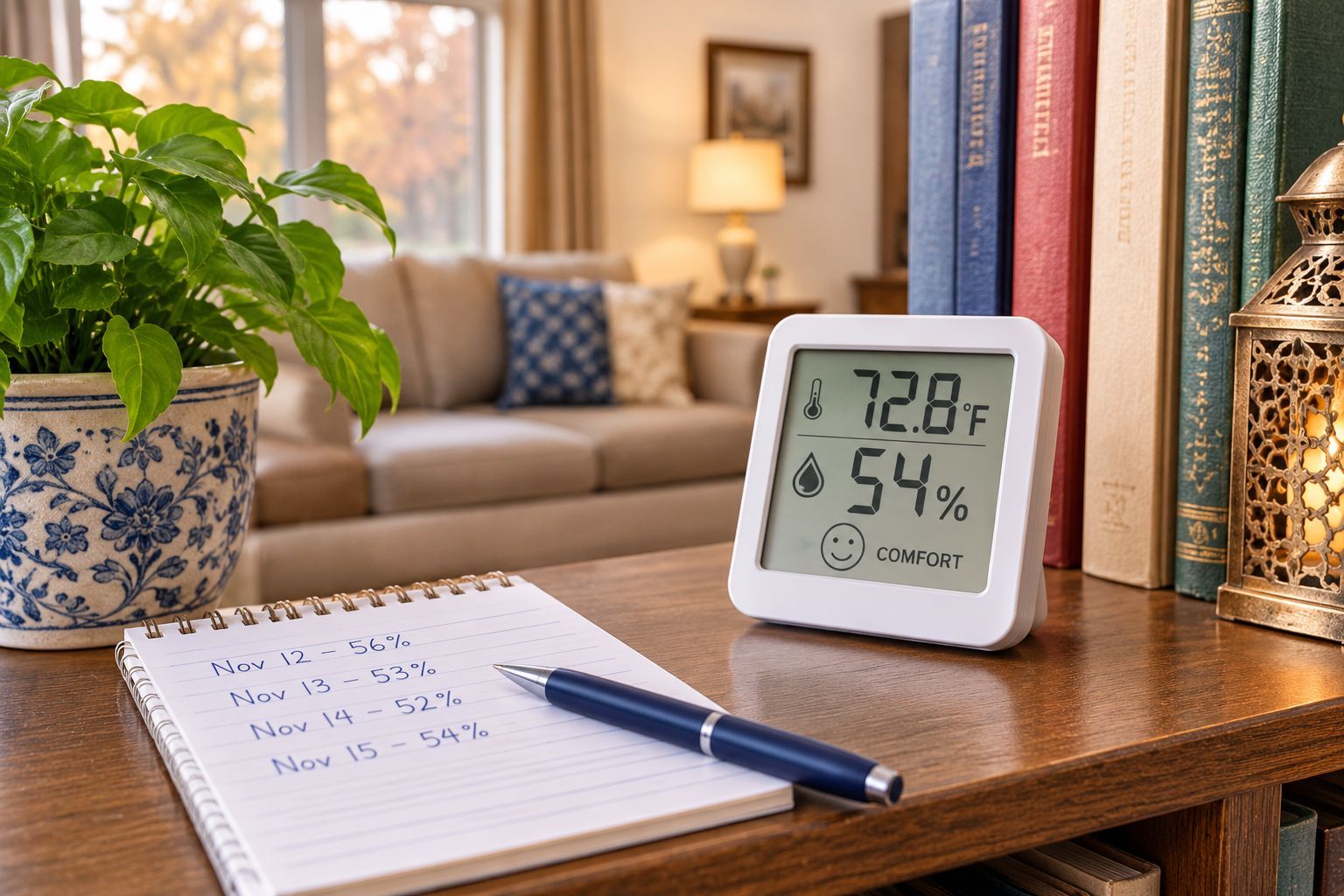
  • Use two inexpensive hygrometers. Put them side by side for a day. If they read close to each other, you can trust the trend. If they disagree by a lot, the readings are not reliable yet.
  • Place one in the main living area, at about chest height, away from sun, vents, the kitchen, and bathrooms.
  • Put the second in the room that bothers you most, often a bedroom over the crawl or a back room that feels damp.
  • Read both once or twice a day at about the same times, and jot down the outdoor weather.
  • Try to capture three kinds of weather: a mild, damp day; a cold, clear morning; and the day or two after a rain.


Two weeks of readings in late fall usually tell you more than a whole summer of guessing.

Reading your log

High on damp days, lower on cold days

That is a normal pattern. If the damp-day readings stay under 60 percent, the house is generally handling moisture. If they push past 60 percent, the issue is usually removing moisture on mild days: short heat pump or AC runs, air leaks, or equipment sizing. Is variable-speed HVAC better for humidity control takes an honest look at the equipment side.


Still near or above 60 percent during a cold snap

Cold weather should be pulling the number down. If it is not, something in the house is adding moisture steadily. In older Arab homes, the crawl space is a common suspect: damp soil, wet insulation, and air moving up through the floor. Everyday sources like long showers without a bath fan, drying clothes indoors, or unvented gas appliances can add to it. The bigger list is in what causes high humidity in your Alabama home.


Jumps a day or two after rain

That points to water getting to or under the house. Check gutters, downspouts, and the crawl from the hatch. A musty smell that rises at the same time is another crawl clue, covered in how to tell if a musty smell is coming from the crawlspace in Arab.


One room much higher than the rest

Often a closed room, a bathroom without good exhaust, or a room over the dampest part of the crawl. Open the door for a few days and see if it settles.

What not to do first

  • Do not add a humidifier because the number dropped once. Check your log and the windows first. Adding moisture to a house that already has a damp crawl or foggy windows makes things worse.
  • Do not buy a bigger system to fix humidity. Bigger equipment tends to run shorter and remove less moisture on mild days.
  • Do not count on gadgets. Duct cleaning and air treatment devices do not change how much water is in the air.

When the crawl is the source

A damp vented crawl affects humidity, cold floors, and smells all at once, which is why the same homes often have all three. Floors are covered in why Arab floors feel cold in October. The long-term fix is usually moisture control under the house, explained in vented versus encapsulated crawl spaces in Alabama and on our crawl space encapsulation and moisture control page. If you have a heat pump and have not checked it yet this season, see a 15-minute heat pump test before the first frost in Arab.

A calm next step

If your log shows the house staying high when it should be dropping, ask for a free moisture and humidity inspection quote. We look at the crawl, the ducts, and how the system runs, and explain where the moisture is likely coming from before recommending anything.


If you want measured data, the Home Air Health Study monitors particles, chemical compounds, CO2, temperature, and humidity for about seven days, then gives you an Air Health Scorecard and the top three next moves. We do not diagnose medical conditions.


For comfort and humidity problems that keep coming back, the Home Comfort Consult is our most in-depth visit: 3-4 hours of in-home testing and a written Comfort Plan. It is $1,000, credited if a qualifying job over $8,000 is booked within 30 days. If you are already thinking about replacing your system, the free Initial Comfort Plan is a 60-90 minute visit that ends with a written Comfort Options Report.


Book a visit online or call 256-203-6612, Monday-Friday, 7:30 a.m.-5:00 p.m. CT. Dickerson Services is at 2151 Hopewell Rd in Guntersville. Bring your humidity log.

Frequently Asked Questions

  • What should indoor humidity be in the winter?

    Under 60 percent at all times, and usually lower once real cold arrives. Many homes do fine somewhere in the 30s to 40s in cold weather. A little fog at the edges on the coldest mornings can happen. If water runs down the glass, pools on the sill, or most windows fog, the house is holding more moisture than it should for that weather.

  • Why is my house humidity still high when it is cold outside?

    Cold outdoor air is dry, so a house that stays near 60 percent in a cold snap usually has a steady moisture source inside. In crawl space homes, damp crawl air moving up through the floor is a common one.

  • Does running the heat dry out the house?

    Not really. Heating warms the air, which lowers the relative humidity reading, but it does not remove water. Drier winter readings come mostly from cold, dry outdoor air leaking in.

  • How many days should I log humidity?

    About two weeks in late fall is a good start, with readings once or twice a day. Try to catch a mild, damp day, a cold, clear morning, and the day after rain so you see the full range.

  • Should I run a humidifier if my humidity is low?

    Check first. Look at a week or two of readings and the inside of your windows on cold mornings. If the house reads very low for long stretches with no window fogging, a humidifier may help comfort, but sealing air leaks often helps more, and adding moisture to a house with a damp crawl is a step backward.

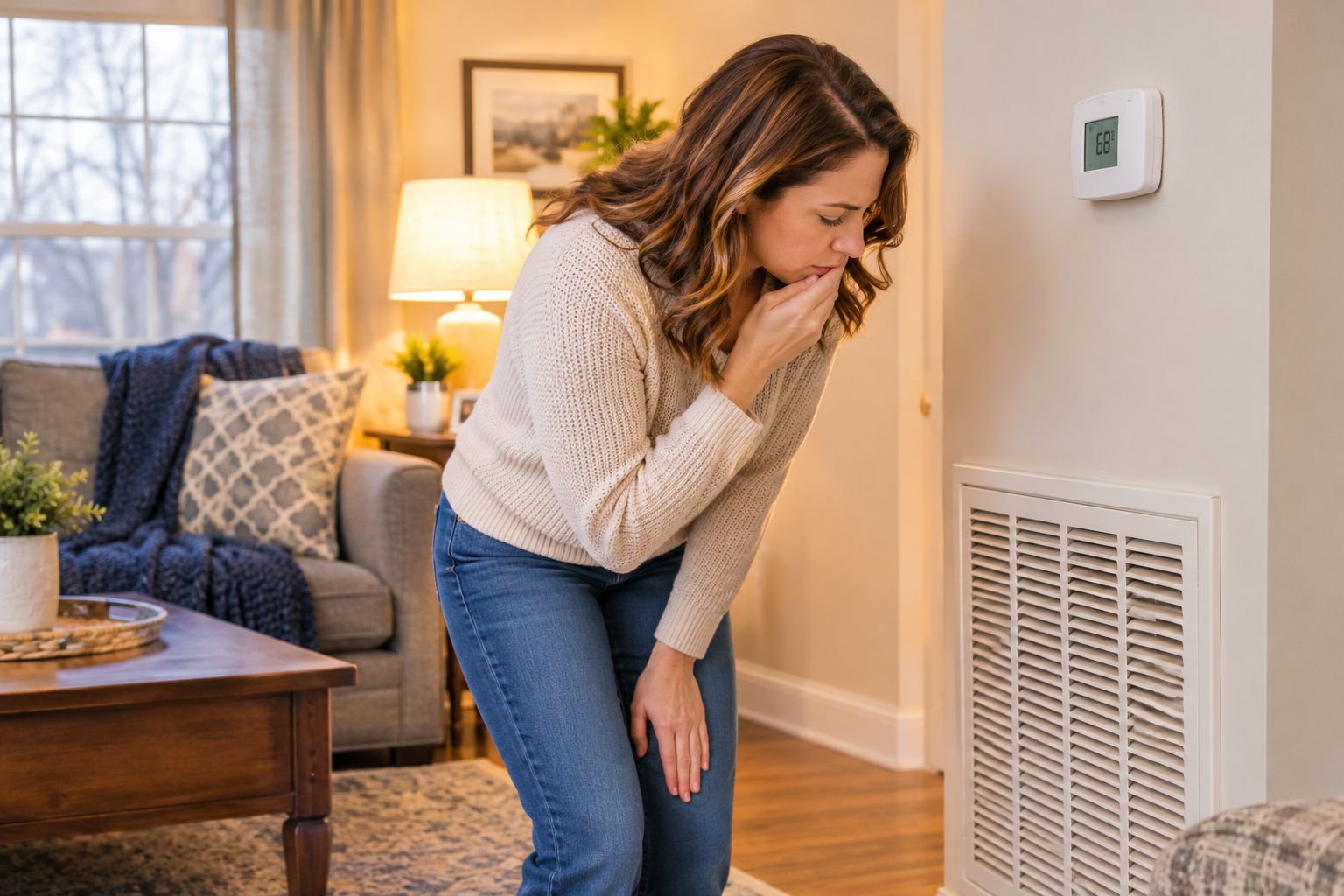
Homeowner checking for a musty smell near a return grille in a closed-up Huntsville crawl space home
November 14, 2026
A musty smell after the house closes up for winter often points to crawl moisture, not the heater. Three simple tests to tell which, for Huntsville crawl homes.
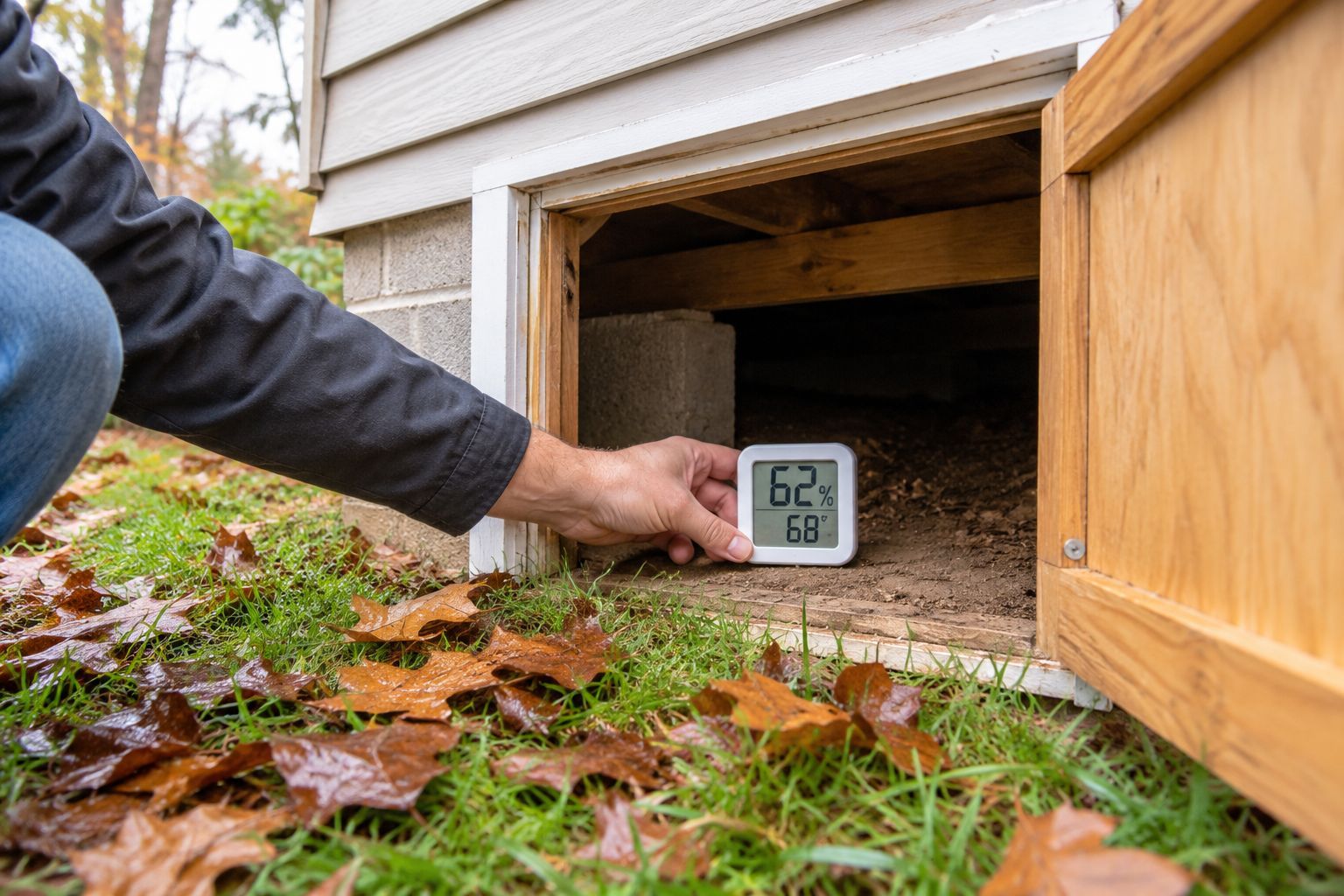
Hand placing a small digital thermometer/hygrometer under a house crawlspace door
November 12, 2026
If your Guntersville crawl stays damp long after a storm, water or wet air is getting in faster than it leaves. A simple dry-down log and what it tells you.
Person wiping a kitchen floor beside a wooden cabinet and sink with a cloth
November 10, 2026
Cold floors in a Huntsville crawl space home usually come from air leaking under the floor. Where the leaks hide, why sealing comes first, then insulation.
Homeowner checking for a musty smell near a return grille in a closed-up Huntsville crawl space home
November 14, 2026
A musty smell after the house closes up for winter often points to crawl moisture, not the heater. Three simple tests to tell which, for Huntsville crawl homes.
Hand placing a small digital thermometer/hygrometer under a house crawlspace door
November 12, 2026
If your Guntersville crawl stays damp long after a storm, water or wet air is getting in faster than it leaves. A simple dry-down log and what it tells you.
Person wiping a kitchen floor beside a wooden cabinet and sink with a cloth
November 10, 2026
Cold floors in a Huntsville crawl space home usually come from air leaking under the floor. Where the leaks hide, why sealing comes first, then insulation.

Share this article