
Musty Smell in Your Huntsville House Now That the Heat Is On? How to Tell the Heating System From the Crawl Space

November 14, 2026

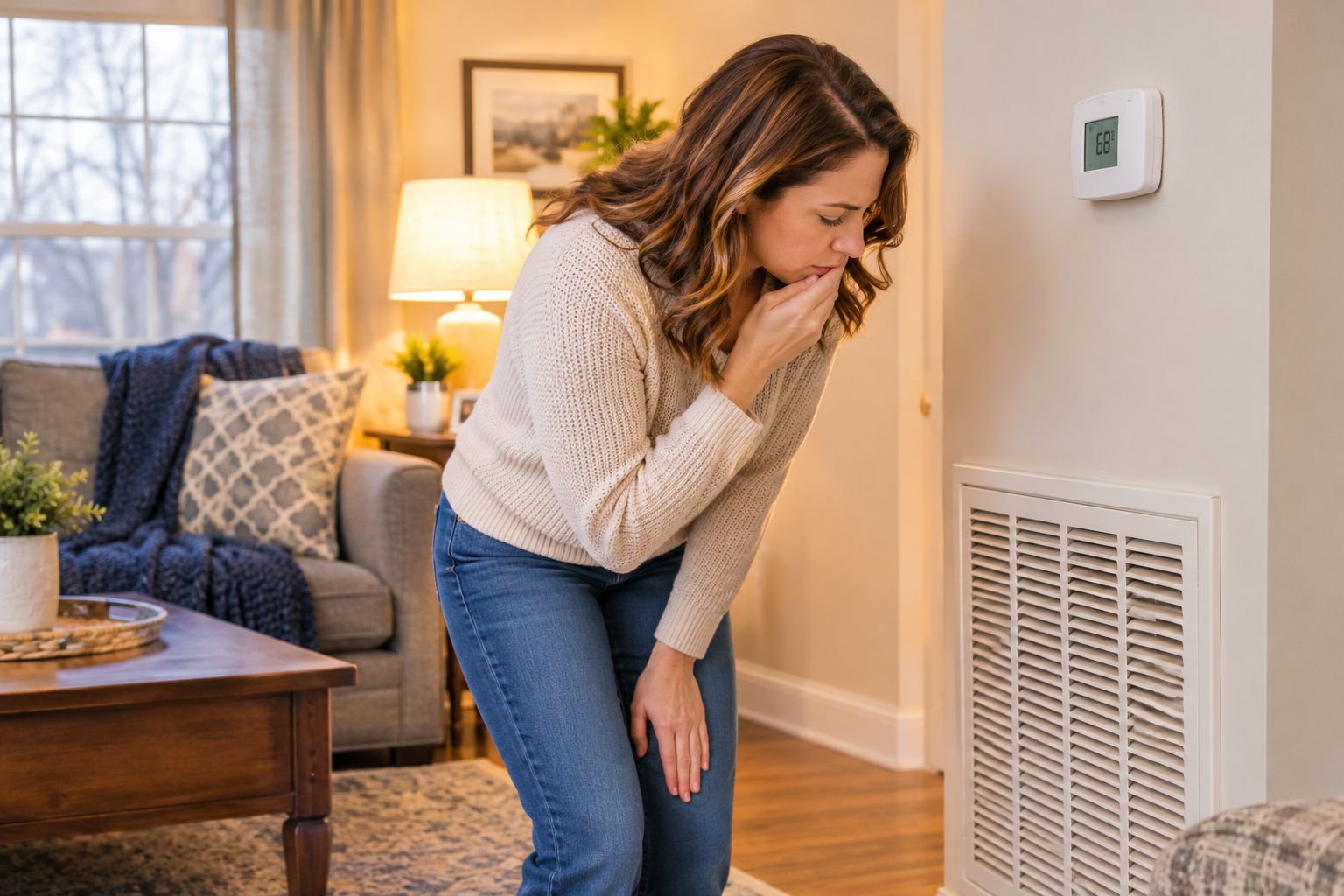
If your house started smelling musty around the time you closed the windows and turned on the heat, the heating system often gets blamed, but the crawl space is usually the bigger suspect. If the smell is there even when the system is off, it is very likely coming from moisture in or under the house, not from the heater itself.


The good news is that you can narrow it down yourself in an evening or two, without tools and without going under the house. Many Huntsville homes in older neighborhoods and on rural lots sit over crawl spaces, and late fall is when this question comes up most.

First: musty is not the same as first-heat dust

A dry, slightly burnt smell during the first few heating runs of the season is dust burning off. It fades within a run or two and does not come back. That is a different situation, covered in which first-heat smells are normal.


A musty smell is earthy, damp, or basement-like. It tends to linger, come back day after day, or get stronger with certain weather. That is a moisture clue, and it is what this article is about. If you ever smell hot plastic, electrical burning, gas, or see smoke, turn the system off and call for help. With a gas smell, leave the house and call your gas utility or 911 from outside.

Why a closed-up house can suddenly smell musty

All summer the AC was removing some moisture from the air, and on nice fall days the windows were open. Once the house is shut for cold weather, two things change.


  • The house starts pulling air from below. On cold nights, warm indoor air rises and leaks out near the top of the house. Replacement air gets drawn in low, and in a crawl space home much of it comes up from the crawl, through gaps around plumbing, the rim joist, and leaky ducts. If the crawl is damp, its smell comes up with it.
  • Less air is being swapped out. With the windows closed, any smell that is already there tends to build up instead of airing out.


So a crawl that was damp all along can become much more noticeable in late fall, even if nothing new went wrong.

Three tests to sort it out

Do these on a cold evening when the house has been closed up for a while. Step outside for a few minutes before each one so your nose resets.


Test 1: System off


Turn the heating system off at the thermostat for an hour or so. Then walk the house, especially the lowest floor, rooms over the crawl, closets on exterior walls, and the area near the crawl door if it opens into the house.

  • Still musty with the system off: the source is probably the building, most often crawl air coming up through the floor. The HVAC system is not required to deliver it.
  • Smell fades a lot with the system off: the system is likely moving it. Go to Test 2.


Test 2: Fan only


Set the thermostat fan to On with heating off, and stand near a supply vent and near the main return grille for a few minutes.

  • Musty air from the supply vents within a minute or two: the ducts or the indoor unit are involved. Leaky return ducts in the crawl can pull damp crawl air straight into the system, and moisture left at the indoor coil or drain pan from cooling season can also smell musty.
  • No change: the fan is not the delivery path. The building is.

Set the fan back to Auto afterward.


Test 3: Heat on


Turn the heat back on and pay attention to the first few minutes of a cycle.

  • A musty puff at startup that fades: usually points to the ducts, the indoor coil, or a return pulling crawl air. Worth a service visit.
  • Dusty smell that fades and does not return: normal first-heat dust.
  • Musty smell all the time, unrelated to cycles: back to the building and crawl.

Two weather clues worth writing down

  • Worse on cold, windy nights. That is when the house pulls the most air up from below. A smell that tracks the cold points toward crawl air finding its way in.
  • Worse a day or two after rain. That points toward water getting into the crawl. Fall rain and crawl space moisture in Huntsville covers what to look for outside and at the hatch.

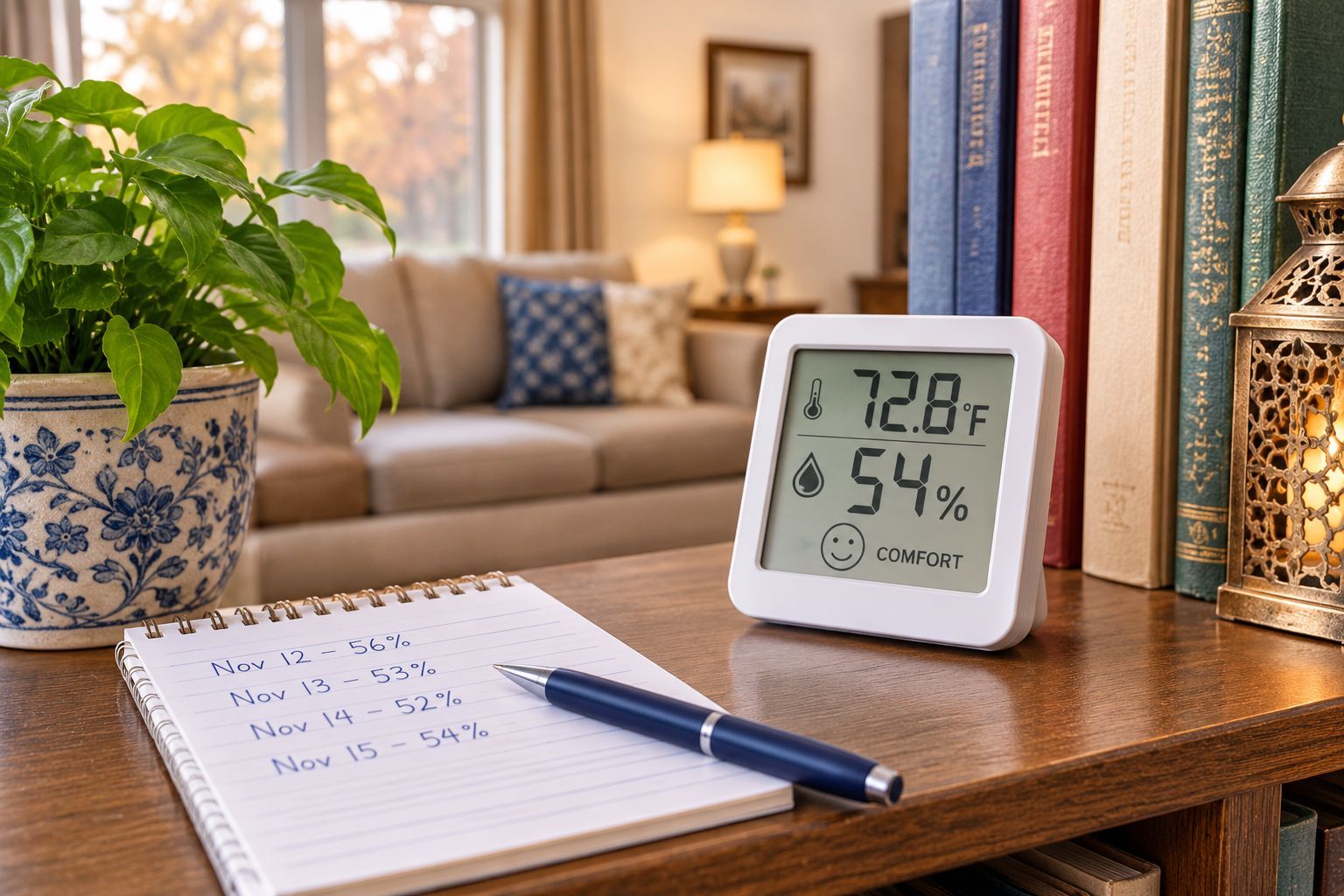
A cheap hygrometer in the main living area helps too. Keep indoor relative humidity under 60 percent; many homes feel best around 45 to 55 percent. In cold weather the indoor number often drops, so a house that still reads high in late fall is holding more moisture than it should. See what indoor humidity should be in a North Alabama home.

What each answer usually leads to

  • Building or crawl source: the long-term fix is usually moisture control under the house: handling water, sealing the ground and air paths, and keeping the crawl dry. The tradeoffs are covered in vented versus encapsulated crawl spaces in Alabama. For a room-by-room way to locate the smell, see how to tell if a musty smell is coming from the crawlspace.
  • Ducts or indoor unit: a service visit to look at the coil, the drain pan, and the return ducts, especially any that run through the crawl.
  • Not sure, or a mix: measuring the air over several days usually tells you more than another guess.


What usually does not help: air fresheners and fragrance, which only cover the smell, and duct cleaning as a first step, which does not change where the moisture is coming from.

A calm next step

If your tests point to the crawl, ask for a free crawl space quote. We look at the crawl, the ducts, and the moisture sources, then explain what would actually help before recommending anything. More on that work is on our crawl space encapsulation and moisture control in Huntsville page.


If you would rather have numbers, the Home Air Health Study places monitors in your home for about seven days to track particles, chemical compounds, CO2, temperature, and humidity, then gives you an Air Health Scorecard and the top three next moves. We do not diagnose medical conditions.


If the smell comes from the vents at startup, book a service call. It is $85 for non-members, and Home Air Assurance Plan members pay no trip fee. See our heating repair page, and if you have not checked the system yet this season, test your heat before the first cold night.

Book a visit online or call 256-203-6612, Monday-Friday, 7:30 a.m.-5:00 p.m. CT. Dickerson Services is at 2151 Hopewell Rd in Guntersville. Bring your notes from the three tests.

Frequently Asked Questions

  • Why does my house smell musty in the winter?

    In a crawl space home, cold weather makes the house pull air up from below, and closed windows let smells build. If the crawl is damp, its musty smell comes up into the living space, often more in winter than in summer.

  • Is a musty smell when the heat comes on normal?

    A dry, dusty smell on the first few heating runs is normal and fades. A musty smell that returns every time the heat starts is not the usual first-heat smell. It often points to moisture in the ducts, at the indoor coil, or in crawl air pulled into the system.

  • How can I tell if the musty smell is from my crawl space?

    Turn the heating system off for an hour and walk the house. If the smell is still there, especially on the lowest floor or near the crawl door, and it gets worse on cold, windy nights or after rain, the crawl is the likely source.

  • Can my heating system make the house smell musty?

    Yes, if the indoor coil or drain pan held moisture from cooling season, or if leaky return ducts in the crawl are pulling damp air into the system. A musty puff from the vents when the system starts is the usual sign.

  • Will duct cleaning get rid of a musty smell?

    Usually not on its own. A musty smell comes from moisture, so the lasting fix is finding and controlling where that moisture is coming from, whether that is the crawl, the ducts, or the indoor unit.

Digital hygrometer and handwritten humidity log on a living room shelf in an Arab home in late fall.
November 17, 2026
Your Arab home's humidity swings between mild damp days and cold snaps. How to log it across the season, what range to aim for, and what a high reading means.
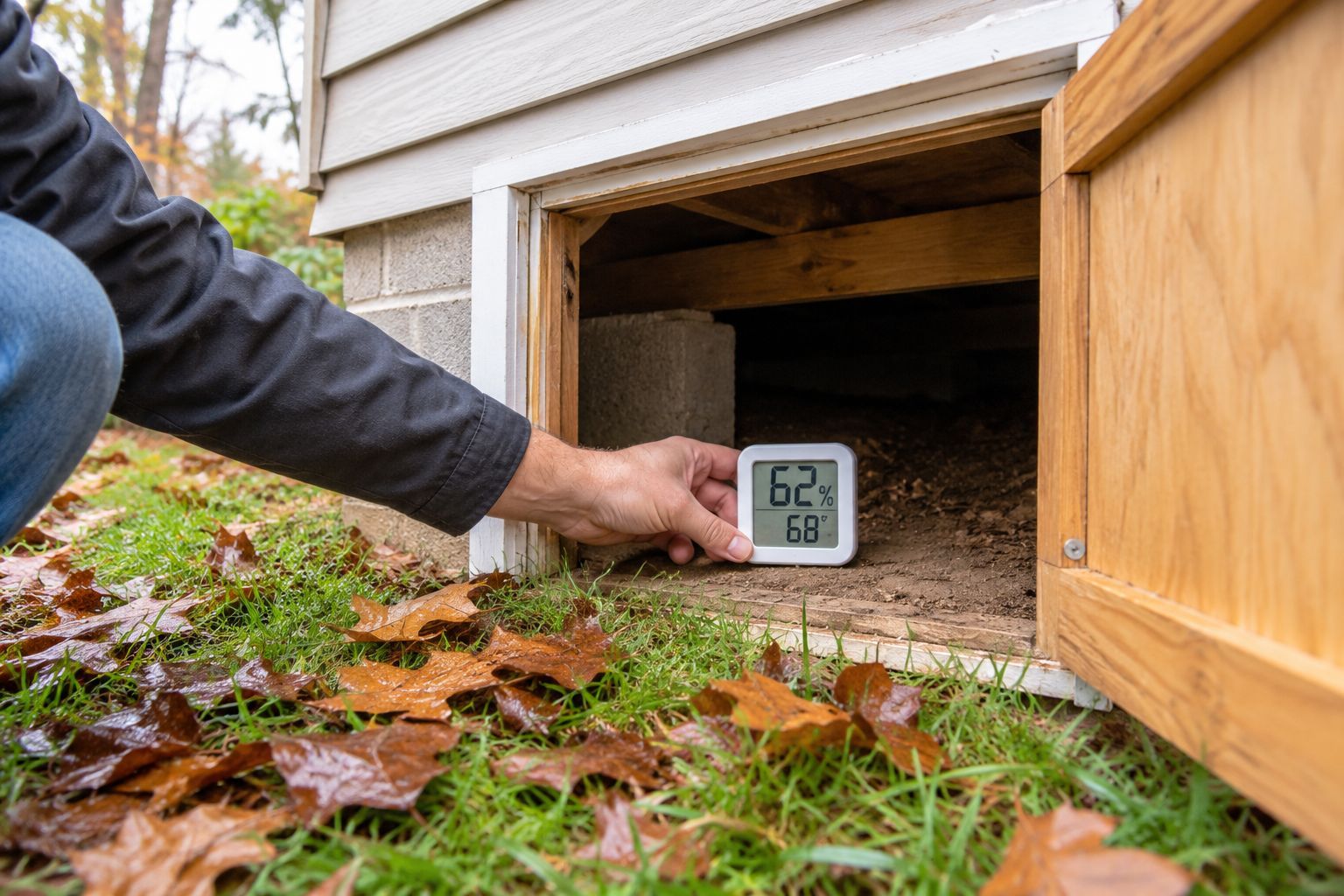
Hand placing a small digital thermometer/hygrometer under a house crawlspace door
November 12, 2026
If your Guntersville crawl stays damp long after a storm, water or wet air is getting in faster than it leaves. A simple dry-down log and what it tells you.
Person wiping a kitchen floor beside a wooden cabinet and sink with a cloth
November 10, 2026
Cold floors in a Huntsville crawl space home usually come from air leaking under the floor. Where the leaks hide, why sealing comes first, then insulation.
Digital hygrometer and handwritten humidity log on a living room shelf in an Arab home in late fall.
November 17, 2026
Your Arab home's humidity swings between mild damp days and cold snaps. How to log it across the season, what range to aim for, and what a high reading means.
Hand placing a small digital thermometer/hygrometer under a house crawlspace door
November 12, 2026
If your Guntersville crawl stays damp long after a storm, water or wet air is getting in faster than it leaves. A simple dry-down log and what it tells you.
Person wiping a kitchen floor beside a wooden cabinet and sink with a cloth
November 10, 2026
Cold floors in a Huntsville crawl space home usually come from air leaking under the floor. Where the leaks hide, why sealing comes first, then insulation.

Share this article