
How Long Should a Guntersville Crawl Space Take to Dry Out After a Storm?

November 12, 2026

It is normal for a crawl space to pick up some dampness during a heavy rain. What matters is the days after. If the crawl looks and measures drier within a few days once the sun comes back, it is probably handling rain the way it should. If it stays wet, or the air under the house stays damp for a week or longer, water or wet air is coming in faster than it can get out.


That is especially worth checking on the hillside lots and lake-area homes around Guntersville, where both the ground and the air give a crawl less chance to dry.


If you want the walk-around version, with gutters, downspouts, and what to look for at the hatch, see what to look for in the days after a fall storm. This post is about timing: how long drying should take and what it means when it does not happen.

Why Guntersville crawls can stay wet longer

  • Slopes. Many lots around Guntersville sit on hillsides. Rain that soaks in uphill does not stop at the property line. It keeps moving downhill through the soil, and the foundation wall on the uphill side is often where it meets the house.
  • Lake-area air. Vented crawls are supposed to dry with outdoor air. Near the water, the air outside is often damp too, especially in the days after a storm, so it has little drying power left. Why homes near Lake Guntersville have worse humidity problems explains the bigger picture.
  • Fall and winter weather. Cooler days and lower sun usually slow evaporation. A crawl that dried in a couple of days in summer may take much longer in November.
  • Heavier soils. Clay-rich soils, common across this region, tend to hold water and release it slowly.

A simple dry-down log

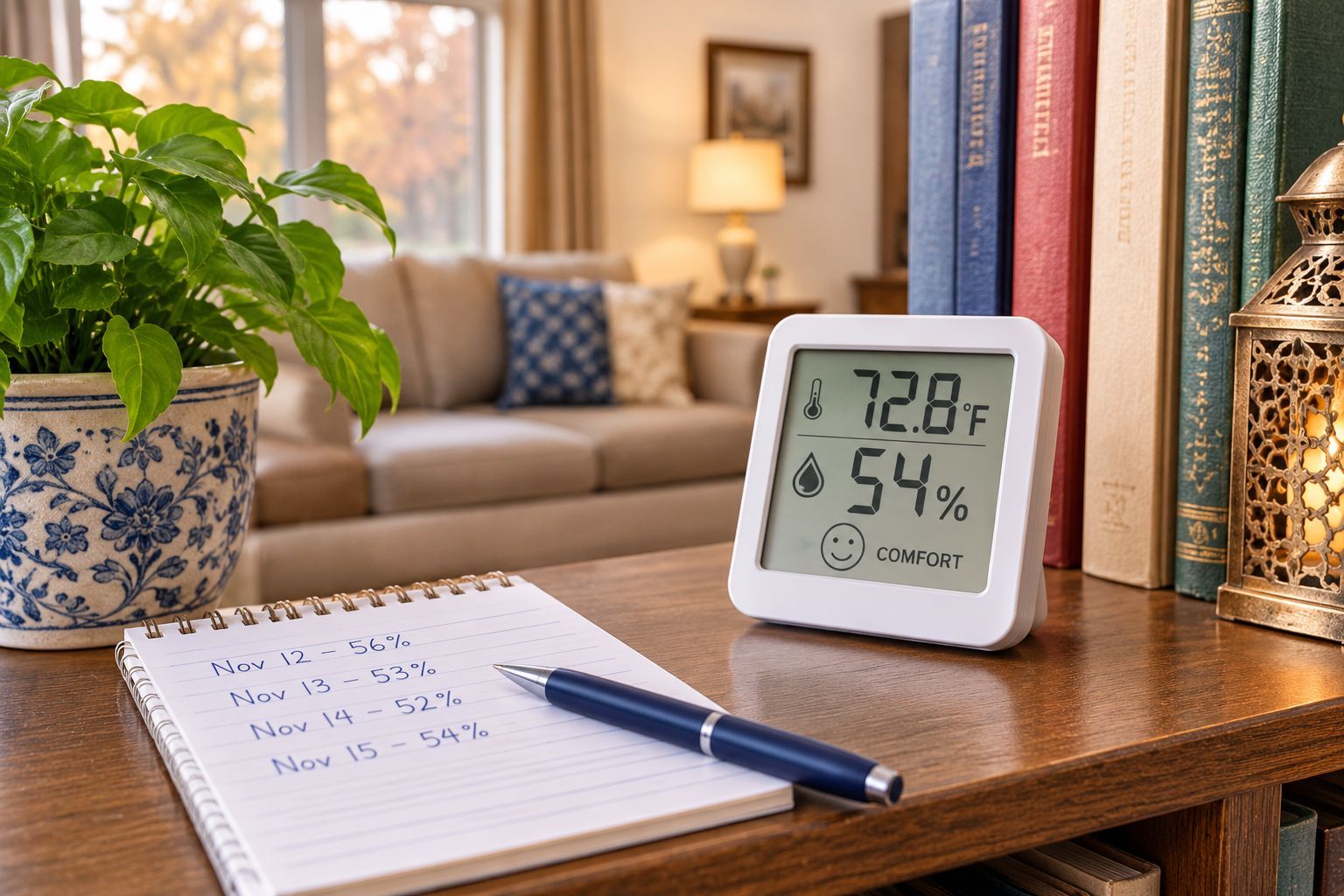
You do not need special equipment or to go under the house. An inexpensive digital hygrometer, ideally one that remembers highs and lows, does most of the work.


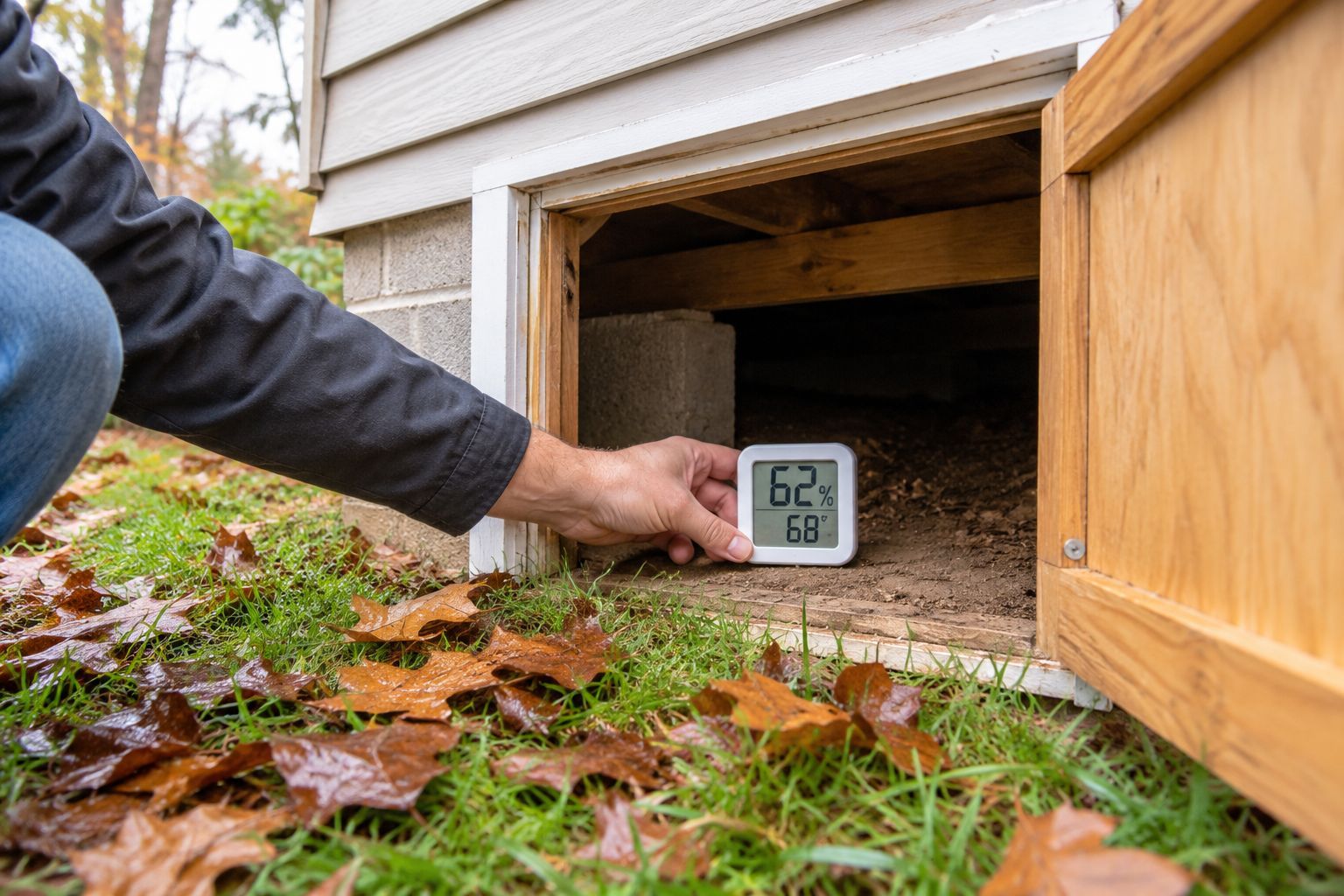
  1. Place it just inside the crawl door or hatch, as far in as you can reach safely, off the ground. Stay out of any tight, wet, or unsafe space.
  2. Put a second one in the main living area of the house.
  3. Read both once a day at about the same time, starting the day after a good rain and going for about a week. Jot down the outdoor weather too: sunny, cloudy, more rain.
  4. Look for wet spots with a flashlight once or twice during that week and note which side of the house they are on.
  5. Take a phone photo from the same spot each time.


Indoors, the goal is to keep relative humidity under 60 percent, and many homes feel best around 45 to 55 percent. See what indoor humidity should be in a North Alabama home. Under the house, there is no single magic number from a log like this, but the trend tells you a lot.

What the pattern usually tells you

The crawl reading rises and falls with the weather outside

If the crawl stays damp on muggy days and only improves on dry, breezy ones, outdoor air coming through the vents is a big part of the story. In this climate, that usually means venting is working against you. The pros and cons are laid out in vented versus encapsulated crawl spaces in Alabama, and the late-summer version of this pattern is in why crawl spaces stay wet into late summer.


A wet band along the uphill wall that lingers

Dark, damp soil or block along the uphill side, sometimes with a muddy line or white mineral crust on the wall, often means water is moving downhill through the soil and pushing in at the foundation. Clean gutters will not stop that. It usually takes drainage designed for the slope, outside the house, inside the crawl, or both.


Wet spots under one corner of the roof

If the damp area lines up with a downspout, a roof valley, or a low spot in the yard, the source is likely surface water. That is often the simplest kind to fix, with gutters, downspout extensions, and grading.


The crawl never really dries, even in dry weather

That can point to a water source that does not depend on the weather, like a slow plumbing leak, a condensate line draining into the crawl, or groundwater that stays high. It is worth having someone look.


The crawl dries, but the house stays damp

Then the crawl may not be the main source. Leaky ducts, everyday moisture, or equipment that short-cycles may be doing more of the work.

Why it matters going into winter

A crawl that stays wet through the fall carries that moisture into heating season. Insulation under the floor gets heavy and sags, ductwork in the crawl sits in damp air, and the house pulls some of that air upward as the weather gets colder. That can show up as floors that feel cold in October or a faint musty smell when the heat runs. If the smell is the bigger issue, how to tell if a musty smell is coming from the crawlspace walks through it.

What the fix usually looks like, matched to the source

  • Surface water: gutters, downspout extensions, and grading so water runs away from the house.
  • Water moving down the slope: a drainage plan for the uphill side, which may include drainage outside, a perimeter drain inside the crawl, and a sump to carry water out.
  • Damp outdoor air: a sealed crawl with a continuous vapor barrier, closed vents, and a way to keep it dry, usually a dehumidifier sized for the space.
  • Most crawls: some combination, in the order water first, then sealing, then drying, then insulation.


Sealing a crawl that still takes on water from the slope just traps the problem, which is why the drainage question comes first. More on how we approach it is on our crawl space encapsulation and moisture control page.

A calm next step

If your dry-down log shows a crawl that stays damp for a week or more after rain, ask for a free crawl space quote. Bring your readings and photos. We check the crawl, how water moves across your lot, and the ducts under the floor, then walk you through what is most likely feeding the moisture before we suggest any fix. You can book a visit online or call 256-203-6612, Monday-Friday, 7:30 a.m.-5:00 p.m. CT. Dickerson Services is at 2151 Hopewell Rd in Guntersville.

Frequently Asked Questions

  • How long should it take a crawl space to dry after rain?

    There is no exact number, but a crawl that handles rain well usually looks and measures noticeably drier within a few days of clear weather. If it is still wet or reads high humidity a week later, something is letting water or damp air in faster than it leaves.

  • Why is only one side of my crawl space wet?

    On a sloped lot, the uphill side often takes on water moving down through the soil. If the wet side lines up with a downspout or a low spot instead, surface water is the more likely source.

  • Will a dehumidifier fix a wet crawl space?

    Not by itself if water is still coming in. A dehumidifier is meant to manage humidity in a sealed, drained crawl. Liquid water from the slope or the roof needs to be handled first.

  • Do I need a sump pump in my crawl space?

    Only if water collects in the crawl that cannot be stopped from the outside. That is more common on hillside lots where groundwater moves toward the house. An inspection can tell you whether drainage inside the crawl makes sense.

  • Can I check my crawl space myself?

    Yes, from the door or hatch. Place a hygrometer as far in as you can reach safely, read it daily for about a week after a storm, and note where wet spots show up. Stay out of any tight, wet, or unsafe space, and leave the full inspection to a pro.

Digital hygrometer and handwritten humidity log on a living room shelf in an Arab home in late fall.
November 17, 2026
Your Arab home's humidity swings between mild damp days and cold snaps. How to log it across the season, what range to aim for, and what a high reading means.
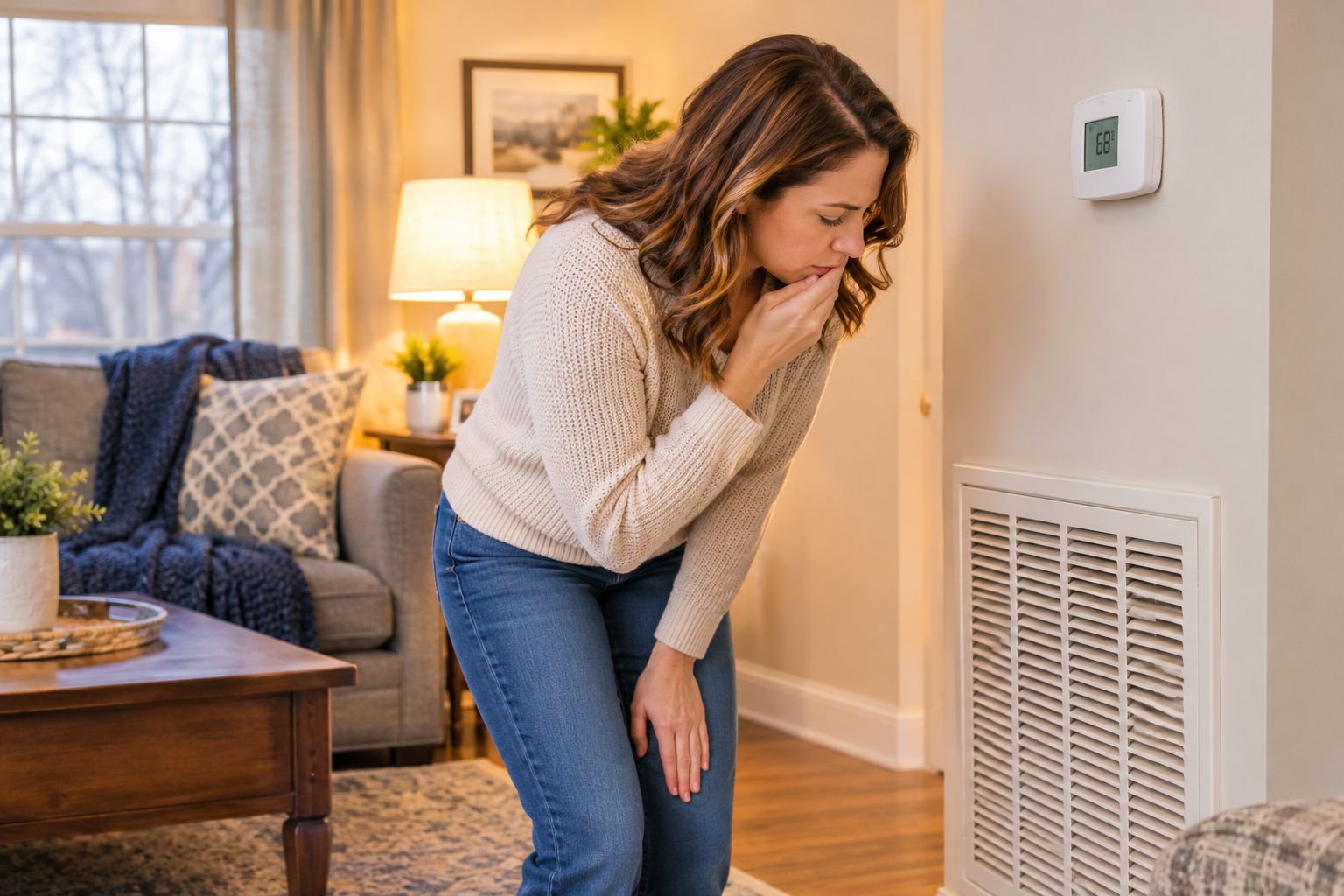
Homeowner checking for a musty smell near a return grille in a closed-up Huntsville crawl space home
November 14, 2026
A musty smell after the house closes up for winter often points to crawl moisture, not the heater. Three simple tests to tell which, for Huntsville crawl homes.
Person wiping a kitchen floor beside a wooden cabinet and sink with a cloth
November 10, 2026
Cold floors in a Huntsville crawl space home usually come from air leaking under the floor. Where the leaks hide, why sealing comes first, then insulation.
Digital hygrometer and handwritten humidity log on a living room shelf in an Arab home in late fall.
November 17, 2026
Your Arab home's humidity swings between mild damp days and cold snaps. How to log it across the season, what range to aim for, and what a high reading means.
Homeowner checking for a musty smell near a return grille in a closed-up Huntsville crawl space home
November 14, 2026
A musty smell after the house closes up for winter often points to crawl moisture, not the heater. Three simple tests to tell which, for Huntsville crawl homes.
Person wiping a kitchen floor beside a wooden cabinet and sink with a cloth
November 10, 2026
Cold floors in a Huntsville crawl space home usually come from air leaking under the floor. Where the leaks hide, why sealing comes first, then insulation.

Share this article