
Why New HVAC Fail Early: The Hidden Problem With High Duct Pressure
January 8, 2026
If you’ve installed a new Heating and A/C in your home around Huntsville, Arab, Guntersville, or Albertville and noticed it’s noisy, running hard, or already had a fan motor fail, you’re not alone.
A recentish (2019) Department of Energy mandate requires a more efficient type of fan motor in new furnaces. The goal was good: reduce energy use. But in a lot of homes, this change is exposing a hidden problem in the ductwork and creating new headaches for homeowners.
In this article, Dickerson Services explains:
- Why these new motors are different
- How duct pressure works (in simple terms)
- Why high duct pressure can shorten motor life, increase noise, and waste energy
- What to do before replacing your HVAC system
We will keep the focus where it belongs: comfort, air quality, and long-term reliability, with energy savings as a helpful side benefit.
TL;DR
- New furnace and heatpumps now use more efficient, more sensitive fan motors because of Department of Energy rules.
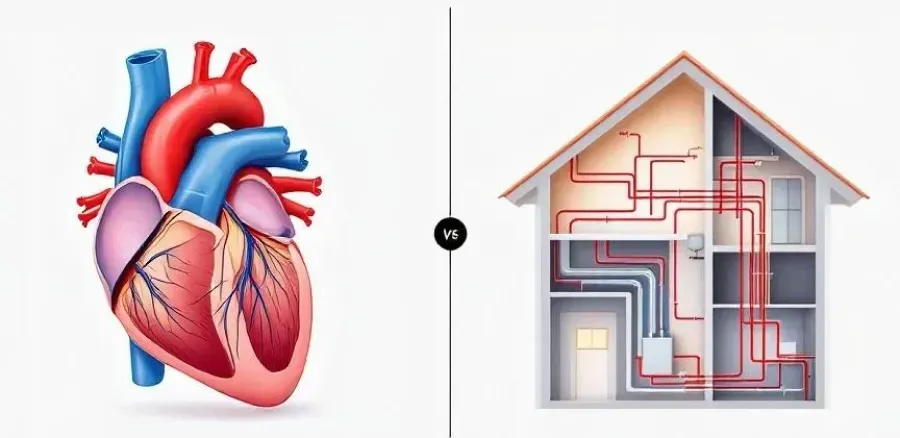
- These motors react strongly to duct pressure, similar to how your heart reacts to blood pressure.
- High duct pressure makes the fan work too hard, which can lead to early motor failure, more noise, and higher operating cost.
- Most homes already have higher-than-ideal duct pressure, so simply swapping equipment without testing can be risky.
- Before you replace your HVAC system, ask for a duct pressure test so you understand your risk and options.
- A properly designed system with the right duct pressure will be quieter, more comfortable, and more efficient
How Your Furnace and Ducts Work Like Your Heart and Blood Vessels
A helpful way to understand this is with a simple analogy:
- Your furnace fan is like your heart.
- Your ductwork is like your blood vessels.
- Duct pressure is like blood pressure.
Your blood pressure shouldn’t be too high or too low. The same is true for duct pressure inside your HVAC system:
- If it’s just right, air can move smoothly through the ducts.
- If it’s too high, the “heart” (your fan motor) is forced to work much harder than it should.
High blood pressure increases the risk of a heart attack.
High duct pressure increases the risk of fan motor failure and other system problems.
What Changed: New DOE-Mandated Furnace Fan Motors
The Department of Energy required manufacturers to use more efficient fan motors in new furnaces. These motors use less energy when the system is set up correctly.
The downside:
These new motors are far more sensitive to duct pressure than the old style.
With older motors, many duct systems were “good enough” even if they were a bit restrictive. The fan just muscled through it.
With the new motors:
- If duct pressure is correct, the system runs:
- Quieter
- More efficiently
- With less wear and tear
- If duct pressure is too high, the system:
- Can be noisy
- Can be expensive to operate
- May wear out the motor in as little as a few years
Why High Duct Pressure Is So Common
Most existing homes were not designed with these new sensitive motors in mind.
Common issues include:
- Undersized ductwork that can’t move enough air
- Too many sharp turns, restrictions, or bottlenecks in the duct system
- Poorly sealed or improperly installed ducts
- Registers and grilles that are too small or partially blocked
The result is high duct pressure, even if:
- Your equipment is new
- Your filter is clean
- Your thermostat settings are reasonable
So when you install a new, more efficient motor into a high-pressure duct system, you’ve just put a highly sensitive heart into a body with high blood pressure.
That is why we are seeing:
- Early fan motor failures
- Noisy operation
- Higher-than-expected operating costs
What High Duct Pressure Feels Like in Your Home
You might not see duct pressure, but you can feel its effects in your comfort and hear it in your system:
- Loud whooshing or whistling from vents when the system runs
- Rooms that are hard to heat or cool even with a new system
- A furnace or air handler that sounds like it’s working way too hard
- Short equipment life, especially fan motor failures earlier than expected
Even if the motor doesn’t die early, running constantly against high duct pressure means:
- More noise
- More wear
- More electricity use than necessary
Why A Duct Pressure Test Matters Before Replacing Your System
If you are considering replacing your HVAC system in North Alabama, you should not just look at the box (the furnace or air handler). You also need to understand what is happening in the ducts.
A duct pressure test:
- Measures the pressure inside your ductwork while the system runs
- Tells us whether the “blood pressure” in your HVAC system is:
- Too high
- Too low (Very Rare)
- Or just right
- Helps identify where the biggest restrictions and problems are
Without this test, you are essentially:
Installing a new “heart” without ever checking the “blood pressure.”
That is how homeowners end up with:
- Brand new systems that are noisy and uncomfortable
- Motors that fail in less than three years
- Extra money spent on repairs that could have been prevented
How Fixing Duct Pressure Protects Your Investment
When duct pressure is brought into the proper range, you get a system that is:
- Quieter
- More comfortable across all rooms
- Less likely to suffer early motor failure
- More efficient, because the fan isn’t fighting against the ductwork
Balancing duct pressure can involve:
- Adjusting or enlarging duct sizes in problem areas
- Reducing unnecessary restrictions and sharp turns
- Correcting register and grille sizing
- Addressing return air issues so the system can “breathe”
The goal is not just to meet a code number. The goal is a system that moves air smoothly, supports better comfort and indoor air quality, and protects:
- Your fan motor
- Your equipment investment
- Your long-term comfort
Why Most Systems Carry Some Risk Today
Because these more sensitive motors have only been standard for a short time, most existing homes still have duct systems designed for the older, more forgiving fans.
That means:
- Most systems today have higher-than-ideal duct pressure.
- Many homeowners are unaware of the risk until:
- A motor fails early
- The system becomes obviously loud
- They see repair bills stacking up
If you are in Huntsville, Arab, Guntersville, or Albertville and you’re about to:
- Replace a furnace
- Replace an air handler
- Upgrade to a new “high-efficiency” system
…this is the perfect time to insist on a duct pressure test before signing off on the work.
How Dickerson Services Thinks About Your System
At Dickerson Services, we look at your HVAC system as a complete system, not just boxes and parts. That means:
- Treating your fan motor and ducts like a heart and blood vessels that must work together
- Prioritizing:
- Comfort
- Indoor air quality
- Reliability and clarity of diagnosis
- Considering energy savings as a valuable secondary benefit, not the only goal
In a recent video from HVAC 2.0, this duct pressure issue was highlighted as a key reason many new fan motors are failing early. We agree: testing and understanding duct pressure is essential before making major equipment decisions.
How Dickerson Services Can Help
If you are worried about:
- A noisy new furnace
- Uneven comfort in different rooms
- Early fan motor failures or repeated repairs
- Or you’re considering replacing your system soon
Dickerson Services can help you:
- Evaluate your duct pressure so you understand your system’s “blood pressure.”
- Explain your risk of early fan motor failure in clear, non-technical language.
- Recommend practical options to bring duct pressure into a healthier range so your system runs quieter and lasts longer.
You do not have to guess.
If you live in or around Huntsville, Arab, Guntersville, or Albertville, Alabama, contact Dickerson Services to schedule an HVAC evaluation that includes a look at your duct pressure so you can make informed decisions about your comfort system.
Frequently Asked Questions
What is duct pressure, in simple terms?
Duct pressure is the air pressure inside your ductwork when your HVAC system is running. If it’s too high, your fan has to work harder to push air, similar to how your heart struggles when blood pressure is too high.
Why are new furnace fan motors failing faster?
New motors are more efficient but also more sensitive. When they are installed on duct systems with high pressure, they can be overworked, which increases noise, energy use, and the risk of early failure.
How do I know if I might have high duct pressure?
Common signs include noisy vents, uneven temperatures in different rooms, and a system that sounds like it’s straining. The only way to know for sure is with a duct pressure test.
Can high duct pressure affect indoor air quality?
Yes. When air cannot move properly, it can lead to poor circulation, stagnant areas, and comfort issues, all of which affect how your home’s air feels and behaves.
Do I need new ducts if my duct pressure is high?
Not always. Sometimes targeted changes such as resizing specific ducts, adding returns, or changing grilles can bring pressure into a healthier range. A test and professional evaluation will show what’s needed.
When should I ask for a duct pressure test?
The best time is before replacing your HVAC system or when you are seeing signs like noise, uneven comfort, or early motor failures. It helps you protect your investment and improve comfort at the same time.
Climate and Plant Selection
Selecting appropriate vegetation is crucial for the success of green roofs in the Mid-Atlantic region. Native and drought-tolerant plants are ideal, ensuring survival during dry spells and high-intensity storms. Sedums, grasses, and other hardy species maintain runoff retention and resist seasonal stress, supporting regulatory compliance throughout the year.
Share this article